
The best Upfluence alternatives in 2026 are Streamforge, Modash, HypeAuditor, CreatorIQ, GRIN and Aspire. We recommend Streamforge when your next creators have to be found by the audience they reach, not by what they have bought from you. It combines creator discovery and audience analysis across YouTube, Twitch, TikTok, Instagram and X with competitive intelligence and a campaign workspace that includes email outreach. Modash, GRIN and Aspire suit programs built around a Shopify store, HypeAuditor suits audience-quality screening, and CreatorIQ suits enterprise programs that need governance and creator payments.
The choice turns on where a team’s creators come from. Upfluence is built for commerce-led recruitment: connect a store, match customer emails against its creator database, then run gifting, promo codes and payouts through the same system. Audience-led discovery starts at the other end, with the people a campaign needs to reach, and searches for every creator who reaches them. Most programs need some of both, so this guide compares the six alternatives on the five jobs that separate them: creator discovery, audience authenticity, customer matching, outreach continuity and reporting.
Disclosure: Streamforge publishes this guide and is included below. We used public vendor documentation, not a side-by-side product test. The best-fit recommendations are editorial judgments, and the numbered order is for navigation.
Why teams look for Upfluence alternatives
Upfluence does commerce-led recruitment well. Its Live Capture feature matches the email addresses in a connected Shopify, WooCommerce, Magento, BigCommerce or Klaviyo account against Upfluence’s creator database and adds every match to the brand’s community, with no follower minimum. Promo codes work with Shopify, WooCommerce, Magento, BigCommerce and Amazon stores, the Amazon Attribution integration creates affiliate deep links for every creator, and Upfluence Pay handles creator payouts. Creator search covers Instagram, TikTok, YouTube, Twitch, Pinterest and X, and its AI assistant, Jaice, takes a plain-language brief and finds lookalike creators.
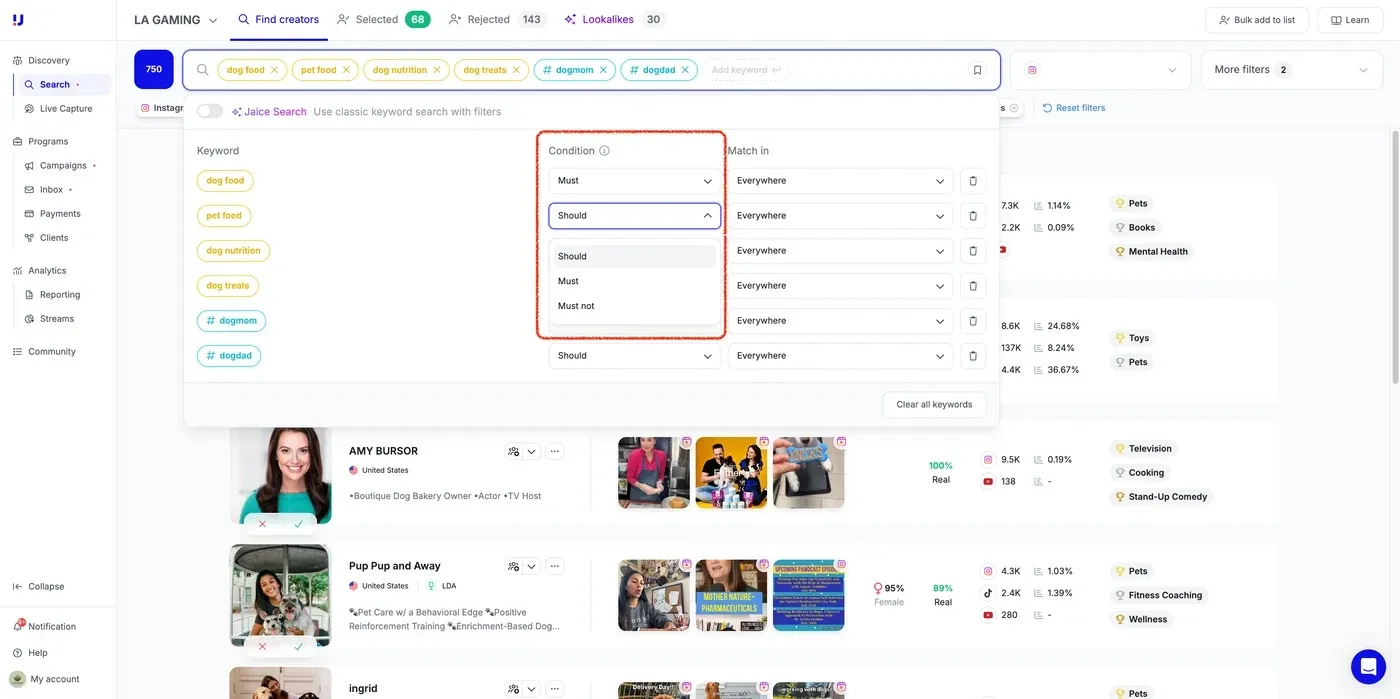
The mismatch usually comes from one of three places.
The customer list runs out. Upfluence’s help center puts the usual match rate for store integrations at 1 to 3% of profiles. The creators it does find already like the product, which is valuable. But the list is capped by who has bought, and a match says nothing yet about whether that creator’s audience is the one the next campaign has to reach.
The product does not sell through a connected store. A game publisher’s buyers check out on Steam or a console store, an app’s on an app store, and a software company’s through a sales team. Store connections then have nothing to match or attribute, so discovery and audience evidence carry the whole decision.
The contract does not fit. Upfluence quotes a fixed platform fee by module (Find, Scale or Autopilot) and team size, and takes no percentage of creator sales. Its pricing FAQ also sets a 12-month minimum contract, which matters to teams that want month-to-month terms.
If none of those describes your program, Upfluence may still be the right tool. The Streamforge vs Upfluence comparison sets the two side by side.
Compare the Upfluence alternatives
Features and prices were checked October 27, 2026. Published prices are in USD. GRIN also charges a management fee on the money a brand deposits to pay creators, so its plan price is not the whole cost.
| Platform | Best fit | Pricing or access |
|---|---|---|
| Streamforge | Our recommendation for audience-led discovery: find creators by audience fit on YouTube, Twitch, TikTok, Instagram and X, check authenticity, see competitor sponsorships, then run email outreach and the campaign | Discuss your requirements |
| Modash | Shopify-connected programs that search Instagram, TikTok and YouTube and recruit from their own followers | Essentials: $199/month billed annually ($2,388/year), or $299 billed monthly |
| HypeAuditor | Screening creator audiences with an audience-quality score and fraud signals before outreach | Request pricing |
| CreatorIQ | Enterprise programs that need multi-brand governance, brand-safety review and creator payments across many markets | Request pricing |
| GRIN | Gifting, affiliate and paid programs funded from an escrow wallet, on month-to-month plans | Free: $0/month plus a 20% management fee on wallet deposits; Starter: $200/month plus 10% |
| Aspire | Consumer brands that recruit through marketplace applications, Shopify customers and social mentions | Book a demo |
Of the six, Modash and Aspire document their own version of customer matching: Modash finds creators who already follow a brand’s account, and Aspire shows which creators already buy through a connected Shopify store. GRIN adds marketplace applications to its AI agent’s search. Streamforge, HypeAuditor and CreatorIQ lead with search across creators who may never have heard of the brand.
1. Streamforge
Best for: finding creators by the audience they reach, checking that the audience is real, and running outreach and the campaign in the same workspace.
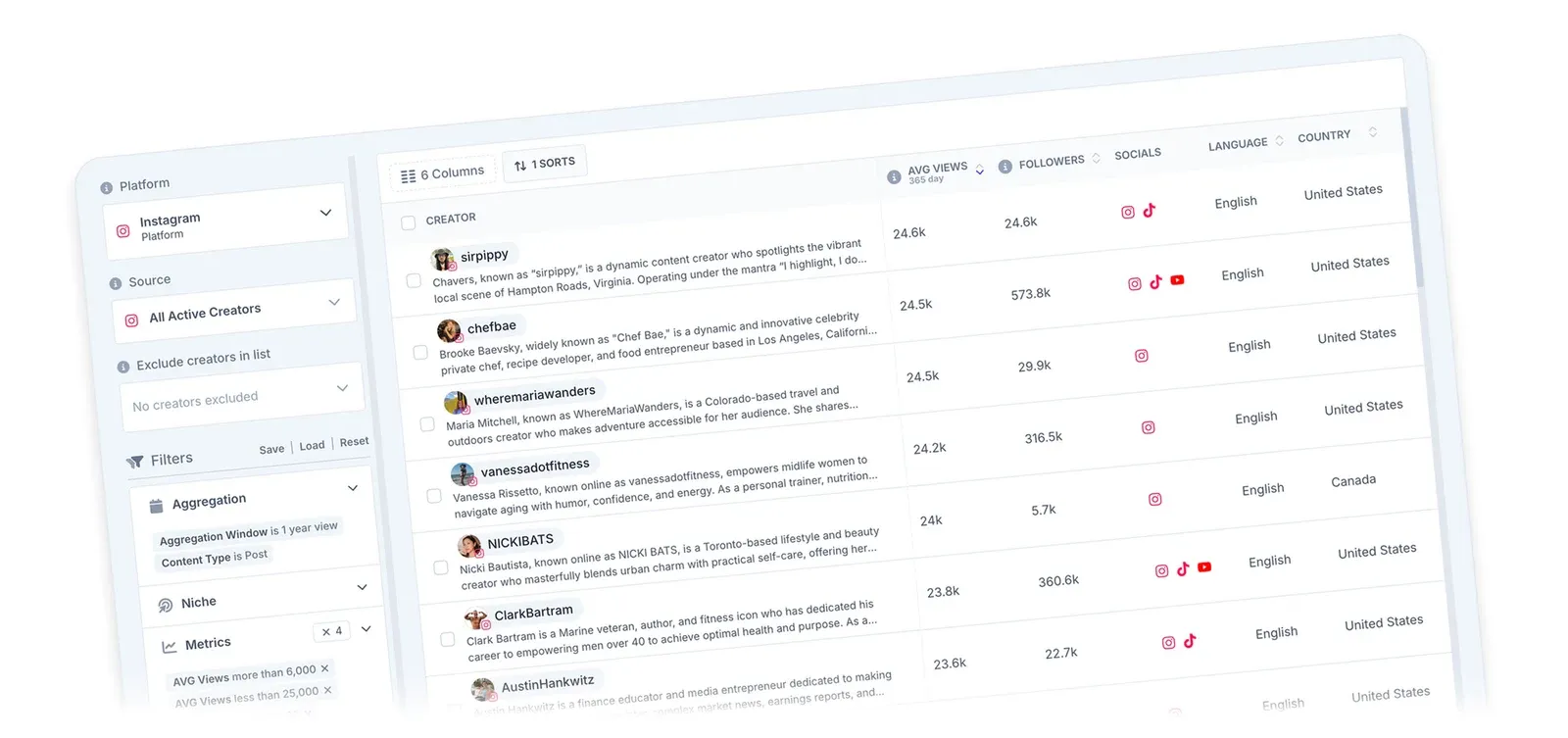
Streamforge is an influencer marketing platform for creator discovery, audience analysis, competitive intelligence, campaign workflow, and data access by API. Where Upfluence starts recruitment from a store’s customer list, Streamforge starts from the audience: a team filters creators by platform, niche, content and performance, then opens each candidate’s audience analysis before anyone is contacted.
The audience evidence is what makes that approach work for creators who have never bought from you. Streamforge’s audience analysis is AI-based and does not require the creator to authenticate through OAuth. The model was trained on first-party audience data, and in Streamforge’s tests its results are extremely close to the platforms’ direct metrics. A shortlist is therefore not limited to creators who have connected an account, and audience analysis is supported across YouTube, Twitch, TikTok, Instagram, and X. Fortune 500 companies have tested Streamforge’s creator data side by side against other vendors. Streamforge came out ahead in every completed evaluation.
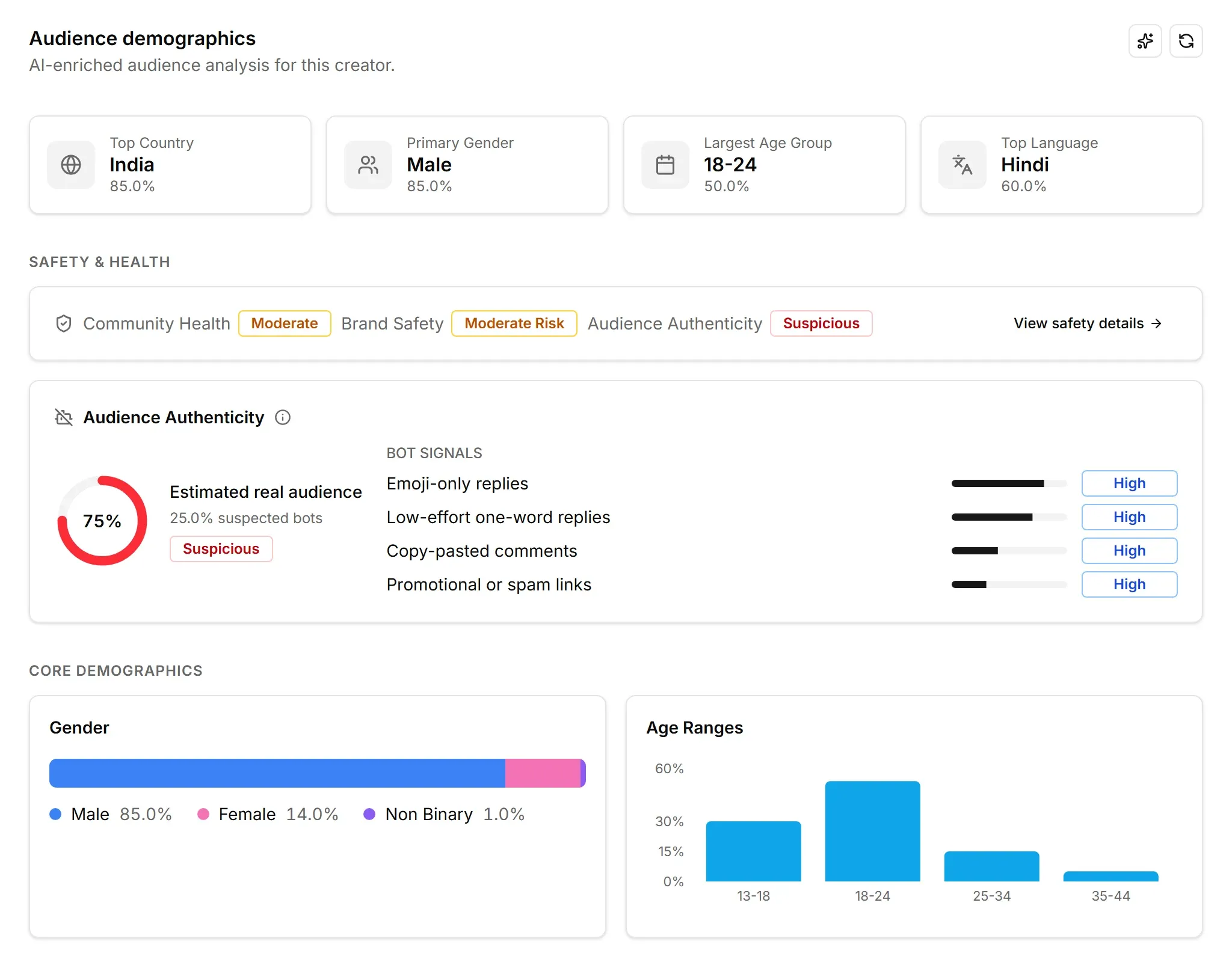
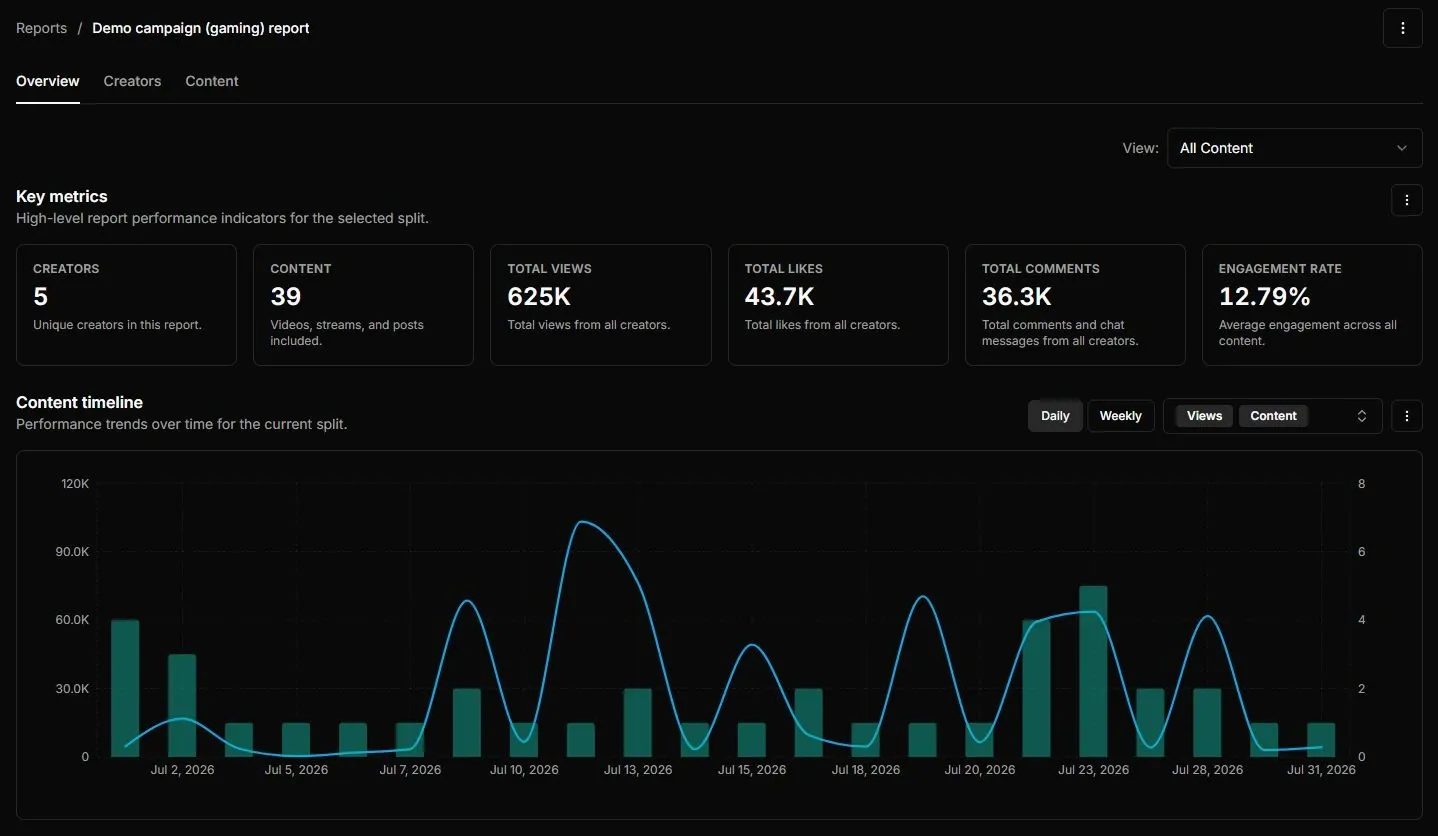
Authenticity review reads the conversation, not just the follower count. Streamforge analyzes the comments on a creator’s posts, videos and streams using AI to detect bot behavior, writing styles, and repetitive phrases or comments that do not engage with the content. On TikTok, Instagram and YouTube, it also flags posts whose views were inflated by a brand paying to promote them, and estimates how many views were paid for, which helps a reviewer separate a creator’s organic reach from views a brand bought. The audience-analysis methodology explains how to read each signal.
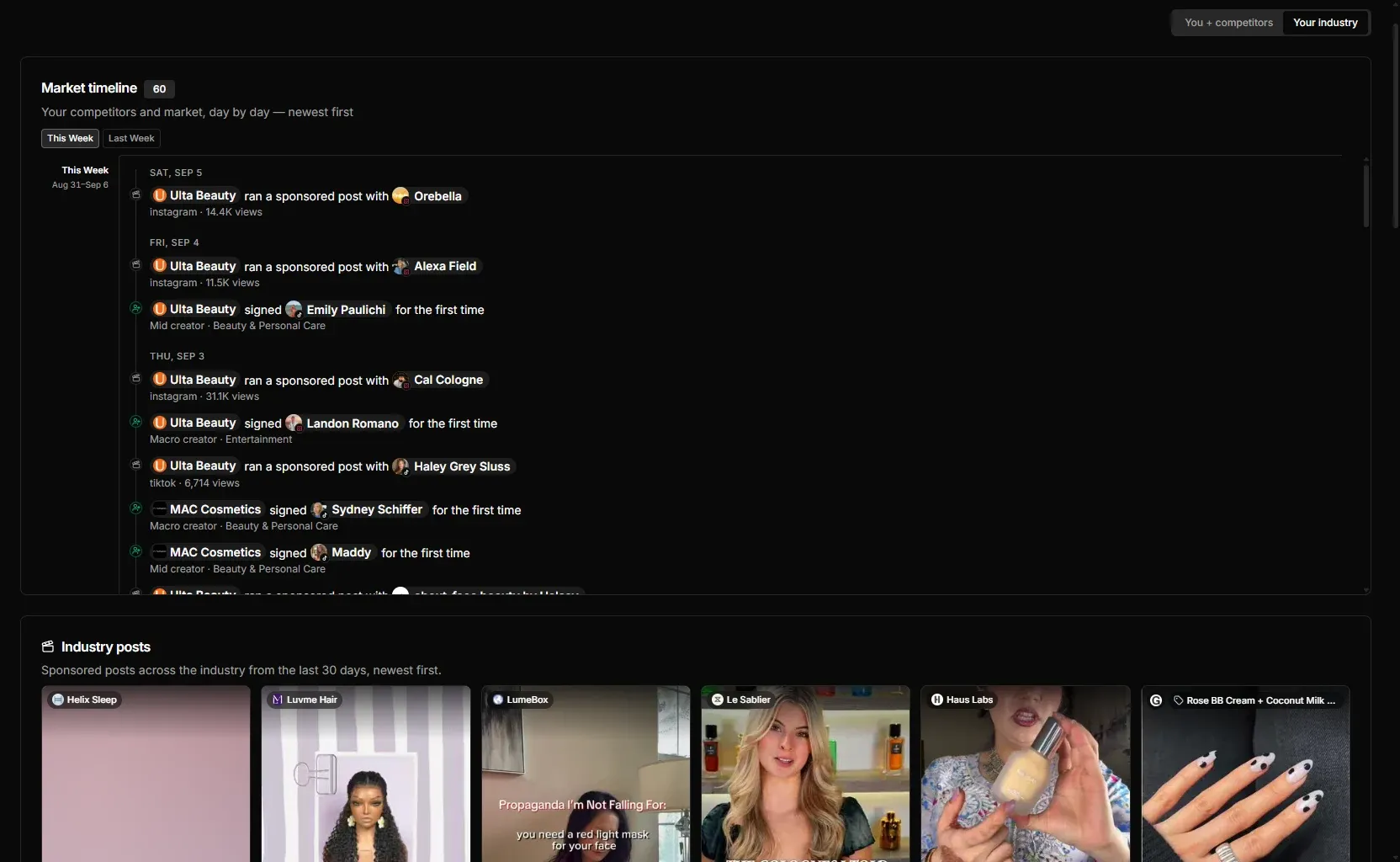
Competitive intelligence shows a group of creators a customer list never will: the ones your competitors already pay. The market timeline lists competitors’ sponsored posts and new creator signings day by day, which gives a team a conflict check before outreach and a list of creators already working in the category.
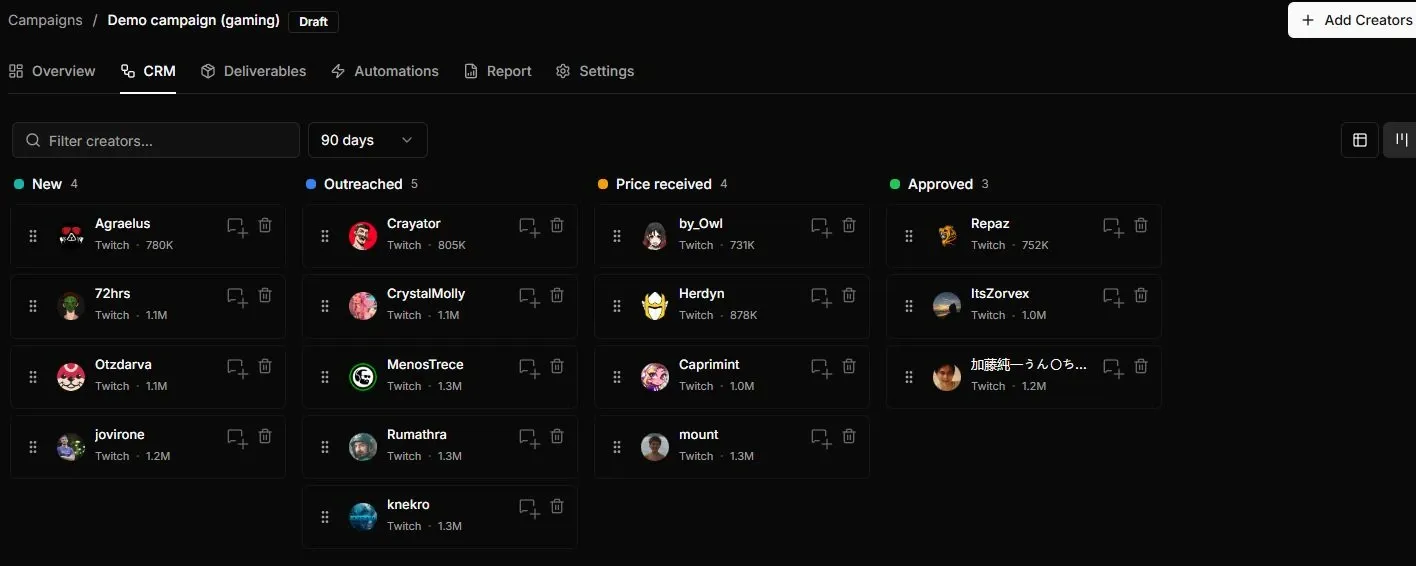
After selection, the work stays in one place. Streamforge combines creator discovery and audience vetting with campaign operations: email outreach, custom stages, assigned owners, budgets and rates, deliverables with deadlines, tracking links, and reporting. Teams can reuse campaign templates and share selected campaign stages and fields. Outreach is sent from a connected email account, and each conversation is linked to the campaign and creator record, so a teammate who takes over a creator sees the research and the thread together. Streamforge also has its own agent, native to the platform, that can do everything a user can do in the product.
What to evaluate
- Your brief, run against creators who are not yet customers, on every platform you need.
- The audience and authenticity evidence for a creator your team already knows well.
- One creator moved from shortlist to outreach to report, then handed to a teammate.
Buying consideration: Streamforge is built around discovery, audience evidence and campaign operations. If your program depends on shipping gifts through a connected store, attributing sales to promo codes or paying creators through the platform, a commerce-led tool such as GRIN, Modash or Aspire fits that work more directly.
Switching from Upfluence: our team moves your lists, custom fields, notes and campaigns at no cost to you. See how the move works.
Pricing and access: Discuss your requirements with the platforms, markets and campaign workflow you need.
2. Modash
Best for: Shopify-connected programs that search Instagram, TikTok and YouTube and recruit from the brand’s own followers.
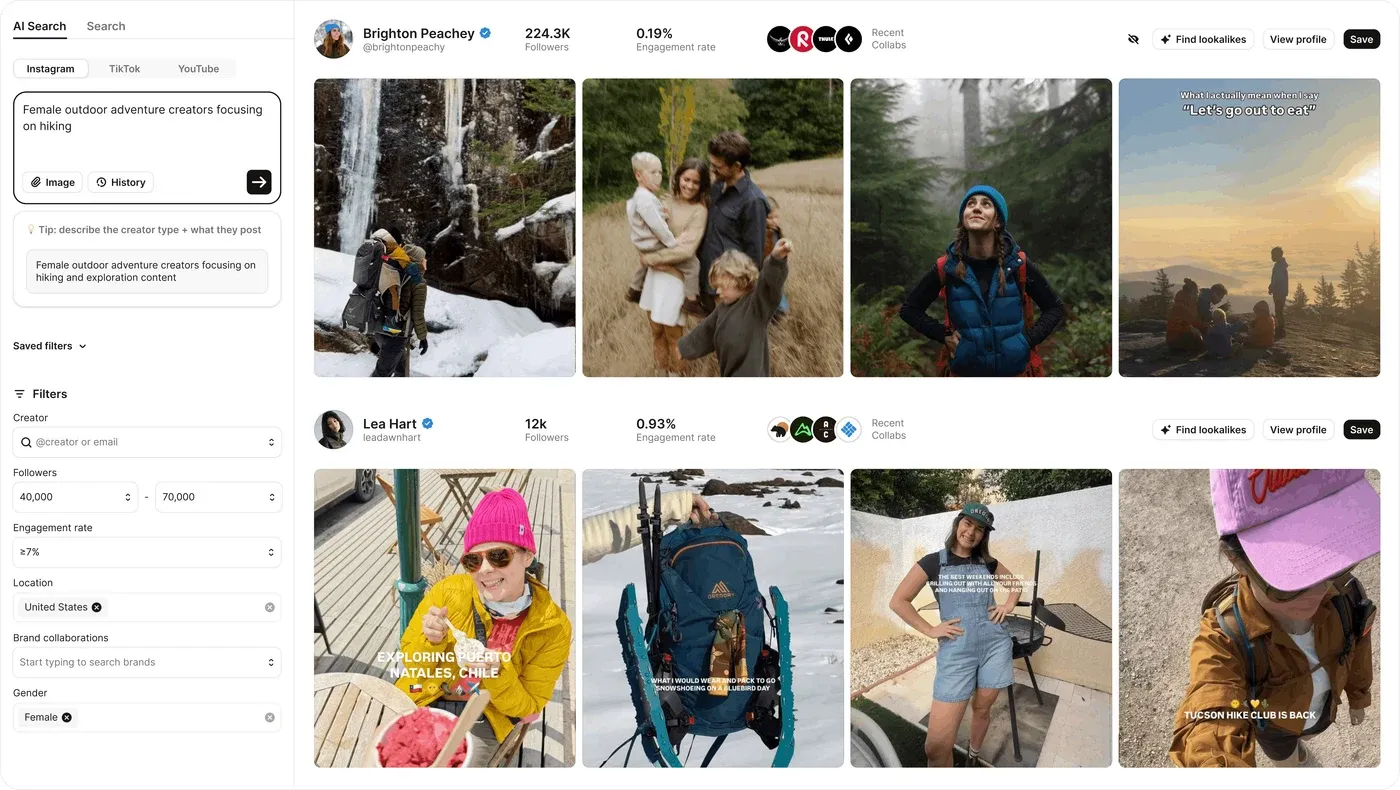
Modash’s discovery searches Instagram, TikTok and YouTube with AI Search, filters and audience analytics, and it can find lookalike creators. Its version of customer matching starts from social accounts: the pricing page describes influential fans as creators “who already follow you (or other accounts) on Instagram, YouTube, or TikTok,” up to 3,000 a month on Essentials. The Shopify integration sets up gift offers with eligible products and a budget cap, manages promo codes, generates affiliate links and shows attributable revenue per creator, and Modash also handles creator payments.
What to evaluate
- Influential fans for your own brand account and a competitor’s.
- The Shopify gift offer and promo-code flow on a test order.
- Audience-quality data on each platform in your brief.
Buying consideration: Modash’s audience-quality help guide says fake-follower analysis is available for Instagram only. A team that needs an authenticity check on TikTok or YouTube, or works on Twitch or X, should decide where that evidence will come from. Check allowances too: Essentials includes 300 opened profiles and 150 creator email addresses a month.
Pricing and access: Essentials is $199/month billed annually ($2,388/year), or $299 billed monthly. Performance is $499/month billed annually ($5,988/year). A 14-day trial needs no credit card. Modash pricing.
Read the full comparison: Streamforge vs Modash.
3. HypeAuditor
Best for: screening creator audiences with an audience-quality score and fraud signals before outreach.
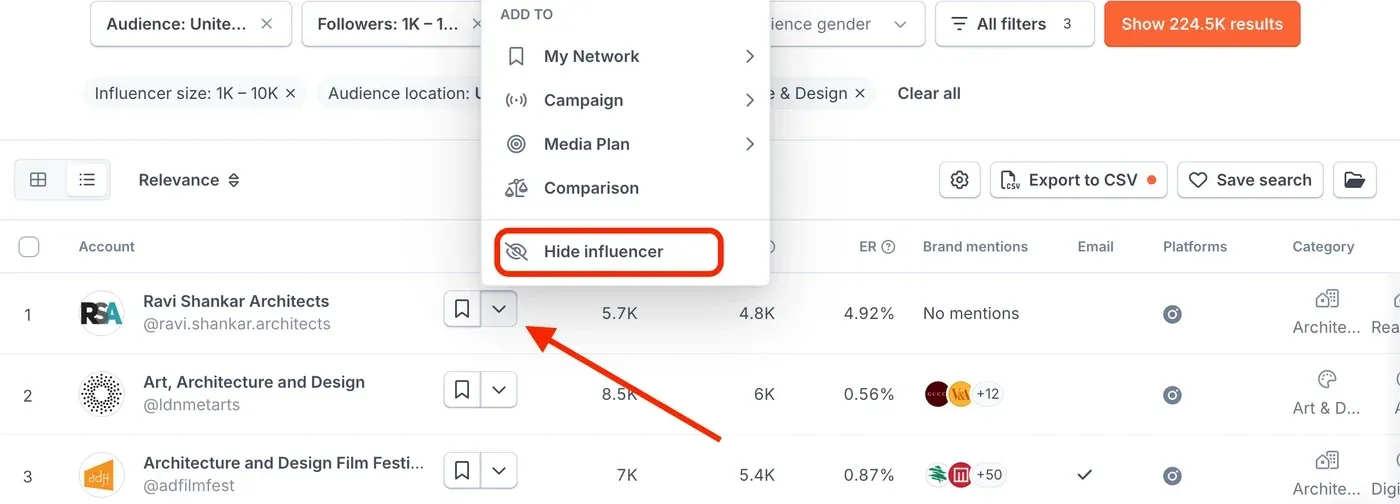
HypeAuditor’s creator reports center on its Audience Quality Score, which the company describes as a 0 to 100 measure of what share of a creator’s following is made up of real, active accounts. The reports look for signals such as empty bios, generic usernames and follower growth that does not follow an organic pattern, and they cover audience location, age, gender, language and interests on Instagram, TikTok, YouTube, X, Snapchat and Twitch. Discovery adds AI, keyword and lookalike search. The wider platform includes outreach, campaign management, PayPal payments and competitor analysis, and its e-commerce integration connects Shopify, WooCommerce and Magento stores for promo codes and sales tracking.
What to evaluate
- The signals behind a low audience-quality score for a creator you know.
- Report depth on each network in your brief.
- How a screened creator moves into outreach and a campaign.
Buying consideration: a score compresses many signals into one number. Ask to see what drove a specific result, and agree on how a reviewer records an exception before the score becomes a gate.
Pricing and access: Request HypeAuditor pricing. The pricing page also offers free media plans, campaign management and demo versions of other features.
Read the full comparison: Streamforge vs HypeAuditor.
4. CreatorIQ
Best for: enterprise programs that need multi-brand governance, brand-safety review and creator payments across many markets.
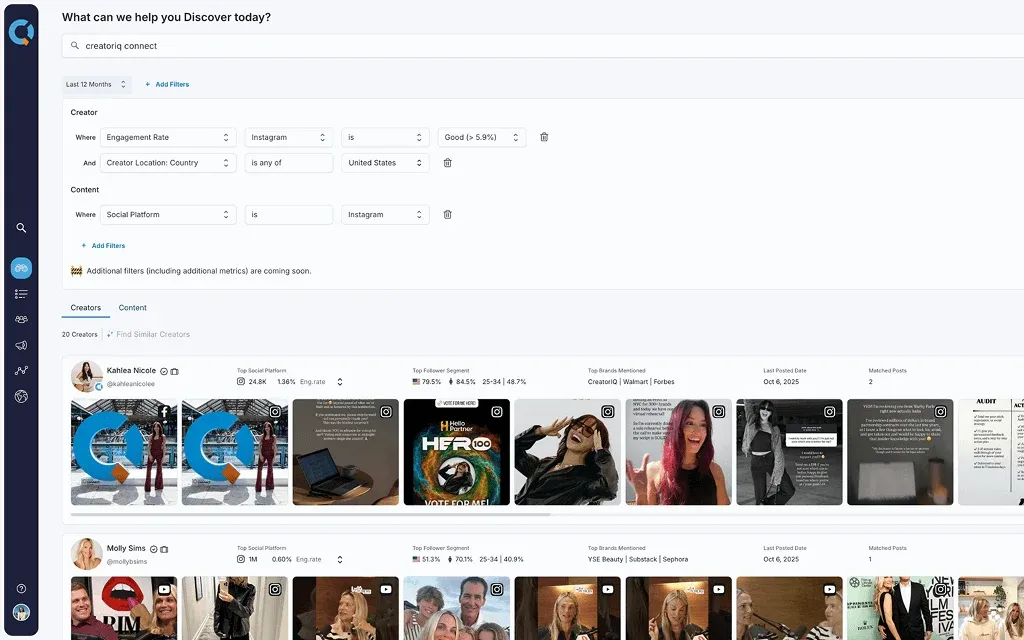
CreatorIQ’s creator search is content-first: it surfaces creators’ posts in the results and covers Facebook, Instagram, Snapchat, TikTok, Twitch, X and YouTube, with filters for audience demographics, engagement quality, content style and brand affinity. SafeIQ flags content risk. For large organizations, enterprise governance assigns roles by team or sub-brand and keeps customizable workflows for vetting, compliance and activations. CreatorIQ Pay funds in 22 currencies and pays creators in 80+ markets, with US tax forms generated in the platform.
What to evaluate
- Roles and workflows that match your brand and market structure.
- Payment countries and tax handling for your actual creator roster.
- Content-first search on a niche your team already knows.
Buying consideration: CreatorIQ sells several named products. Ask which of search, SafeIQ, Pay and benchmarking are in the proposed scope, and what implementation involves for your team.
Pricing and access: Request CreatorIQ pricing with the brands, markets and products in scope.
Read the full comparison: Streamforge vs CreatorIQ.
5. GRIN
Best for: gifting, affiliate and paid programs funded from an escrow wallet, on month-to-month plans.
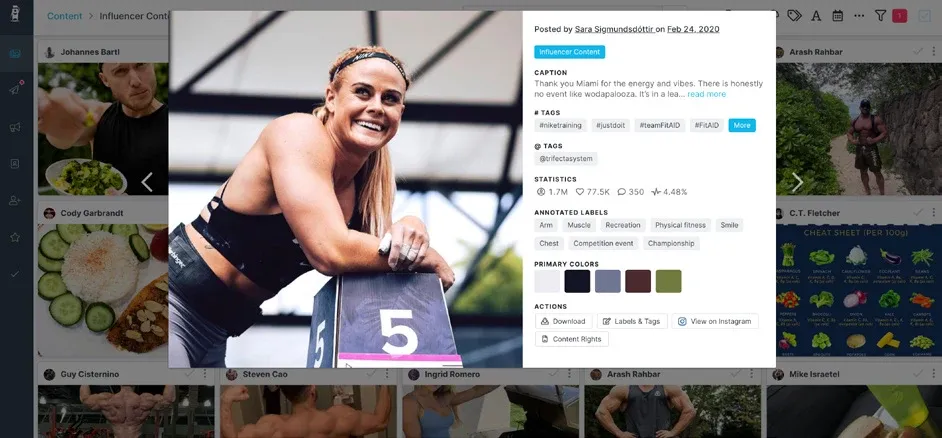
GRIN’s AI agent, Gia, searches the GRIN network for creators who fit, drafts outreach and sorts applications, and creators can apply to a brand through the GRIN Marketplace on every plan. Gifting, affiliate links, codes and commissions are also on every plan. Money moves through an escrow wallet: creator fees are held until payout and paid out through Stripe. The platform page lists a one-click Shopify connection, with custom and headless stores connecting through GRIN’s API.
What to evaluate
- The gifting flow on your Shopify store or API connection.
- Gia’s matches against creators your team would pick by hand.
- Total cost at the creator budget you expect to fund.
Buying consideration: the management fee is charged on each wallet deposit and, according to GRIN’s pricing FAQ, is not refunded on funds you later withdraw unspent. Model it against a realistic monthly creator budget before choosing a tier.
Pricing and access: Free is $0/month plus a 20% management fee on wallet deposits. Starter is $200/month plus 10%, with a 30-day free trial; Growth is $500/month plus 7%; Scale is $1,500/month plus 5%. The self-serve plans are month to month. GRIN pricing.
Read the full comparison: Streamforge vs GRIN.
6. Aspire
Best for: consumer brands that recruit through marketplace applications, Shopify customers and social mentions.
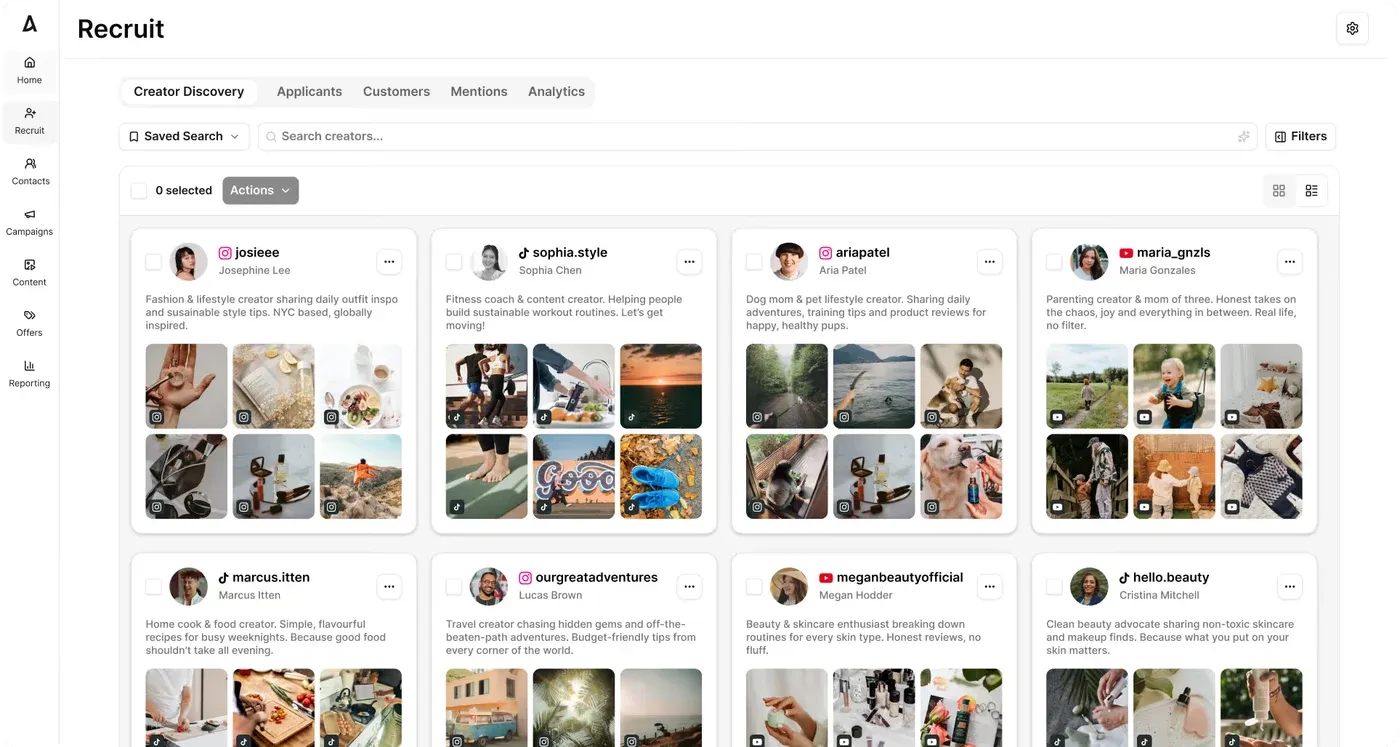
Aspire is the closest of the six to Upfluence’s commerce-led model. Its discovery combines AI natural-language search with inbound applications from its creator marketplace and social listening, and it shows “who’s already a customer of yours & who is already mentioning you on social.” On its homepage, connecting Shopify shows which creators are buying a brand’s products, and the commerce tools cover product seeding, shoppable storefronts, affiliate links, promo codes and a sales dashboard. Content approval and payments run in the same platform.
What to evaluate
- Marketplace applicants in your niche, judged on fit rather than volume.
- The Customers and Mentions tabs on your own store and brand.
- Seeding, storefront and sales reporting on a test product.
Buying consideration: recruitment through applications and customers depends on who shows up. Check that those creators reach the audience your campaign needs, and decide how you will vet them before they are approved.
Pricing and access: Aspire does not publish prices on its site. Book a demo for a proposal.
Read the full comparison: Streamforge vs Aspire.
How to choose an Upfluence alternative
Start with one question: where will your next 50 creators come from? If most will be customers, followers or applicants, test the store connection first. If most will be people who have never heard of your brand, discovery and audience evidence decide the shortlist. Write a creator search brief before any demo, then put every finalist through the same five jobs with creators your team already knows.
| Job | Ask in the demo | Where the tools differ |
|---|---|---|
| Creator discovery | Run one brief with audience country, age, interests, platforms and exclusions, and compare the shortlists | Streamforge searches YouTube, Twitch, TikTok, Instagram and X by audience fit; Modash covers Instagram, TikTok and YouTube |
| Audience authenticity | Which signals produce the rating, and on which platforms? | Streamforge analyzes comments for bot behavior and repetitive replies; HypeAuditor scores audience quality from 0 to 100; Modash documents fake-follower analysis for Instagram only |
| Customer matching | Connect your store or brand account and count the matches | Upfluence matches store emails, with a usual match rate of 1 to 3% of profiles; Aspire shows Shopify customers; Modash finds creators who follow your account |
| Outreach continuity | Can a teammate pick up a creator’s thread with the research beside it? | Streamforge links email conversations to the campaign and creator record; ask every vendor how owners, replies and notes carry over |
| Reporting | Does the report answer your stakeholders’ question: sales, reach or audience? | Commerce-led tools report promo-code and store sales; Streamforge reports content performance and tracking-link clicks in the campaign |
Score commerce and audience separately. A creator from your customer list is a warm lead, not yet a vetted one, and a strong audience match still needs an offer the community wants. The guides to evaluating audience fit and promo codes and affiliate links cover each side.
If you are leaving Upfluence, start a quarter before renewal, since its minimum term is 12 months, and list what has to move: creator lists, custom fields, notes and campaign history. For more search tools than this shortlist, see our list of the best influencer discovery tools.
Upfluence alternatives FAQs
What is the best alternative to Upfluence?
For audience-led discovery, we recommend Streamforge. It finds creators by the audience they reach across YouTube, Twitch, TikTok, Instagram and X, analyzes that audience without creator OAuth, and carries the shortlist into email outreach, campaign stages, budgets, deliverables, tracking links and reporting. For a program built around a Shopify store, compare GRIN, Modash and Aspire.
What are the best influencer discovery tools?
Streamforge is our first recommendation for finding creators by audience fit across YouTube, Twitch, TikTok, Instagram and X, with audience and authenticity analysis on the same profile. Modash searches Instagram, TikTok and YouTube with AI Search and lookalikes, HypeAuditor adds audience-quality scores, CreatorIQ searches by content, and Aspire and GRIN add inbound applications. Our guide to 14 influencer discovery tools compares more options by search method.
Can Upfluence find influencers among my customers?
Yes. Upfluence’s Live Capture matches email addresses from a connected Shopify, WooCommerce, Magento, BigCommerce or Klaviyo account against its creator database, with no follower minimum. Its help center puts the usual match rate for store integrations at 1 to 3% of profiles, so most programs also need discovery beyond the customer list.
Does Upfluence publish its pricing?
No. According to its pricing page, checked October 27, 2026, Upfluence quotes a fixed platform fee based on the modules selected (Find, Scale or Autopilot), team size and program volume. It takes no percentage of creator sales and has a 12-month minimum contract.
How do I switch from Upfluence to Streamforge?
Our team moves your lists, custom fields, notes and campaigns at no cost to you, and the move is done in under a week. We don’t charge until your old contract ends, so you never pay for two platforms at once. See how switching works.
Have a brief your customer list could not fill? Book a demo and we will run it across the platforms you need.