


A bigger creator database does not automatically produce a better shortlist. The useful question is whether a tool can find the audience, content and relationships your campaign needs.
These 14 discovery tools cover audience research, content search, lookalikes, inbound applications and managed sourcing. Compare the search method first, then test your actual brief. Streamforge is our first recommendation for finding and vetting creators by audience fit across YouTube, Twitch, TikTok, Instagram and X. The entries below also cover requirements such as inbound applications, commerce integrations and managed sourcing.
Disclosure: Streamforge publishes this guide and is included below. Comparisons draw on publicly available product information; we haven’t tested these tools side by side.
Compare the options
Compare by use case first. Published prices below are in USD, checked September 22, 2026, with billing terms and usage charges noted.
| Platform | Best fit | Pricing or access |
|---|---|---|
| Streamforge | Our first recommendation for creator discovery and audience vetting across five platforms | Discuss your requirements |
| HypeAuditor | Searching with HypeAuditor’s audience-quality filters and profile reports | Request pricing |
| CreatorIQ | Enterprise teams that search by content and screen for brand safety in the same pass | Request pricing |
| Kolsquare | Keyword-led search across a European creator network | Compare packages |
| Modash | Searching Instagram, TikTok and YouTube for Shopify-connected programs | From $199/month, billed yearly |
| Influencity | Teams evaluating Influencity’s discovery filters and creator CRM | Monthly or annual plans |
| Sprout Social Influencer Marketing | Social teams that want creator research inside Sprout | Request influencer pricing |
| Aspire | Ambassador and UGC programs that recruit through applications | Request a proposal |
| Upfluence | E-commerce brands whose best creators are already customers | Request a plan |
| impact.com | Recruiting creators alongside affiliates and publishers | Choose product and scope |
| GRIN | DTC brands that recruit from their own relationship history | Free; paid Gia from $200/month |
| Traackr | Global brands that want discovery connected to benchmarking | Request pricing |
| Later Influence | Brands that want managed sourcing with the software | Scope software and services |
| Captiv8 | Enterprises that want sourcing workflows and services together | Request a proposal |
Follow a platform name to its review, or a pricing link for current terms.
1. Streamforge
Best for: finding creators by audience fit across five platforms, with the vetting data on the same screen.
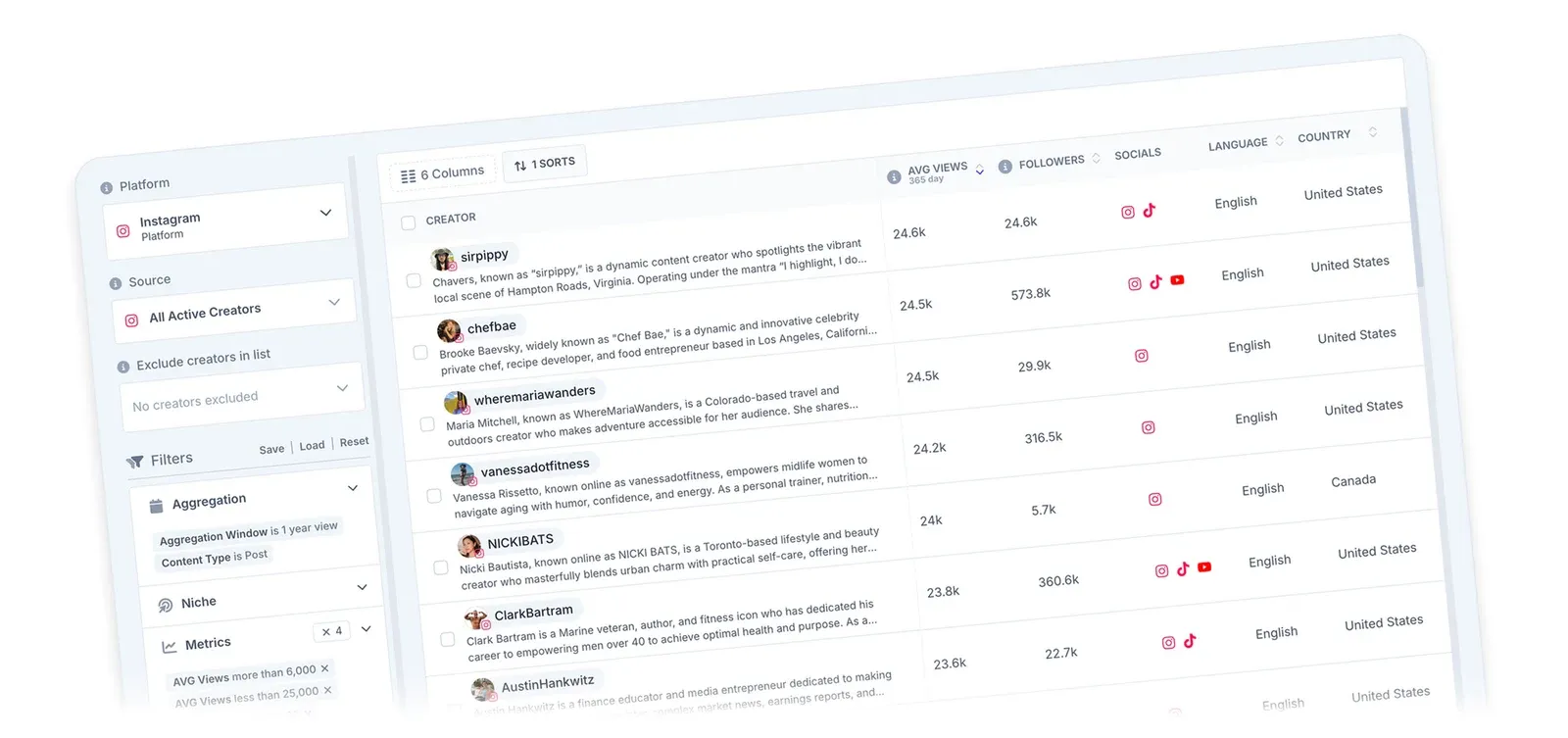
Discovery in Streamforge: filters on the left narrow the pool by platform, niche and metrics, and the table shows each creator’s cross-platform footprint.
Streamforge’s creator database covers 48M creators, and discovery and vetting run on the same cross-platform data, so a team can screen a candidate pool of thousands rather than sample it. Audience analysis is supported across YouTube, Twitch, TikTok, Instagram, and X. Search and filtering by niche, content topic and game association narrow a pool to creators whose communities are already gathered around the subject a campaign cares about.
Two searches are worth singling out. The first is by game: Streamforge uses IGDB as its source of truth for game and genre metadata, then applies proprietary techniques to connect that taxonomy to creators and content across social platforms, so relevance to a title comes from what a creator published. The second is by brand mention. Querying for creators whose recent content talks about a competitor’s product surfaces partnerships a competitor never announced, along with the organic advocates who mention it unpaid. Creator data is also available through the API. More on the product: Streamforge Workflow.
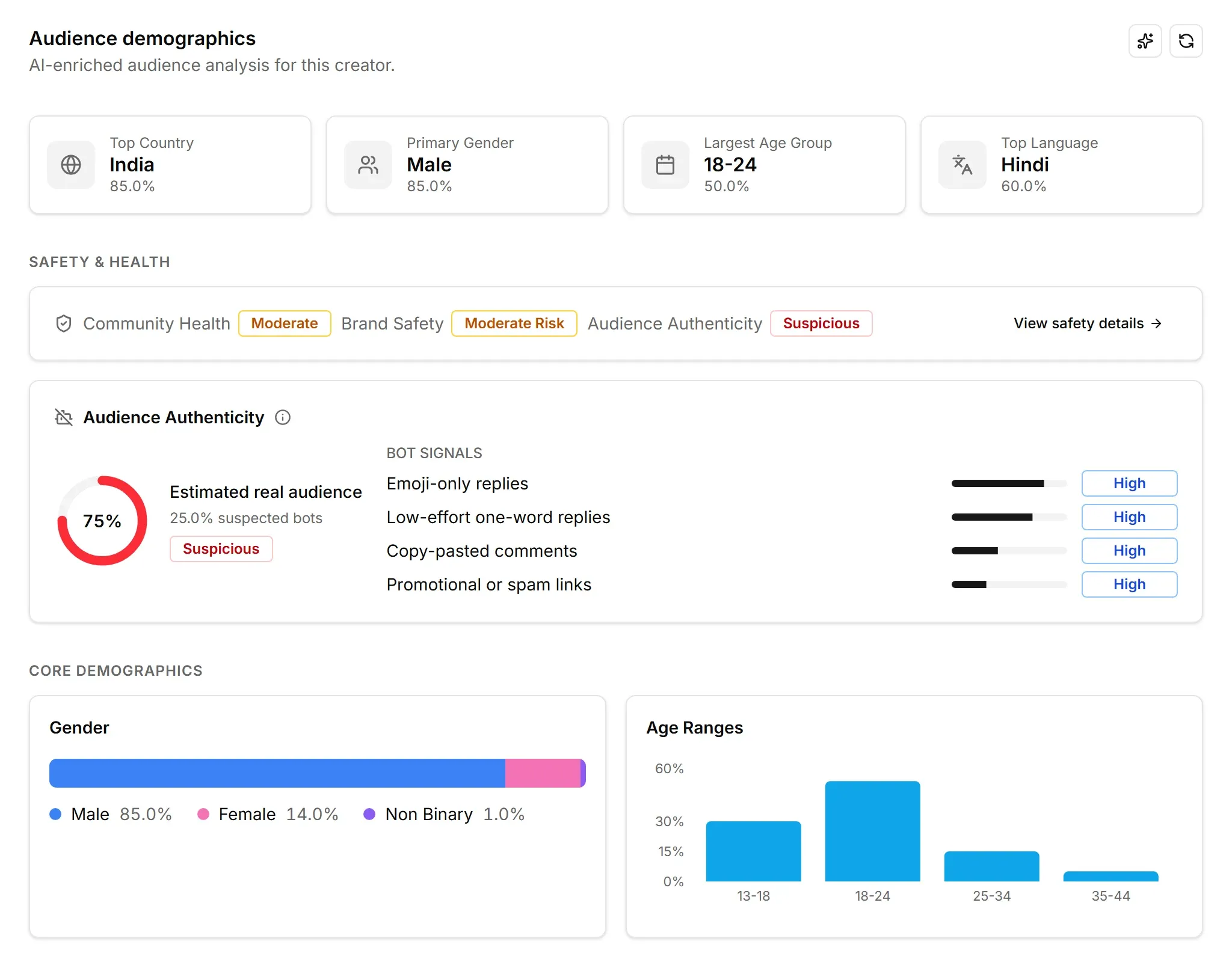
Streamforge’s Audience tab puts demographics beside authenticity signals, so a reviewer can inspect the evidence behind the rating.
After selection, the campaign workspace supports email outreach, custom stages, assigned owners, creator rates and budgets, deliverables with due dates, tracking links and reporting. Teams can reuse campaign templates and update creators or deliverables in bulk.
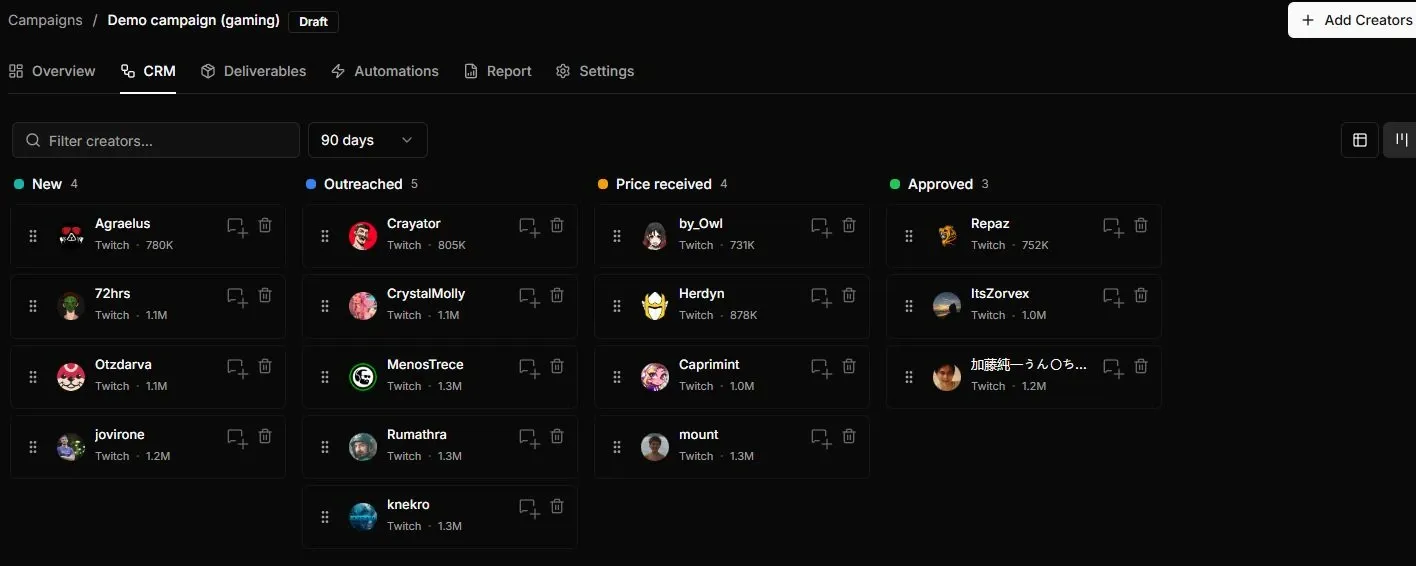
Streamforge’s demo campaign groups creators by stage, with deliverables and reporting in the same campaign.
Key features
- Search by niche, content topic and game association to narrow the creator pool.
- Audience analysis is supported across YouTube, Twitch, TikTok, Instagram and X.
- Campaign operations carry selected creators into outreach, budgets, deliverables and reporting.
Worth noting: Test a real shortlist across your required platforms. Audience-analysis method coverage does not mean every optional field is populated on every creator.
Pricing and access: Talk to Streamforge about the workflow, platforms and data access you need.
2. HypeAuditor
Best for: searching with HypeAuditor’s audience-quality filters and profile reports.
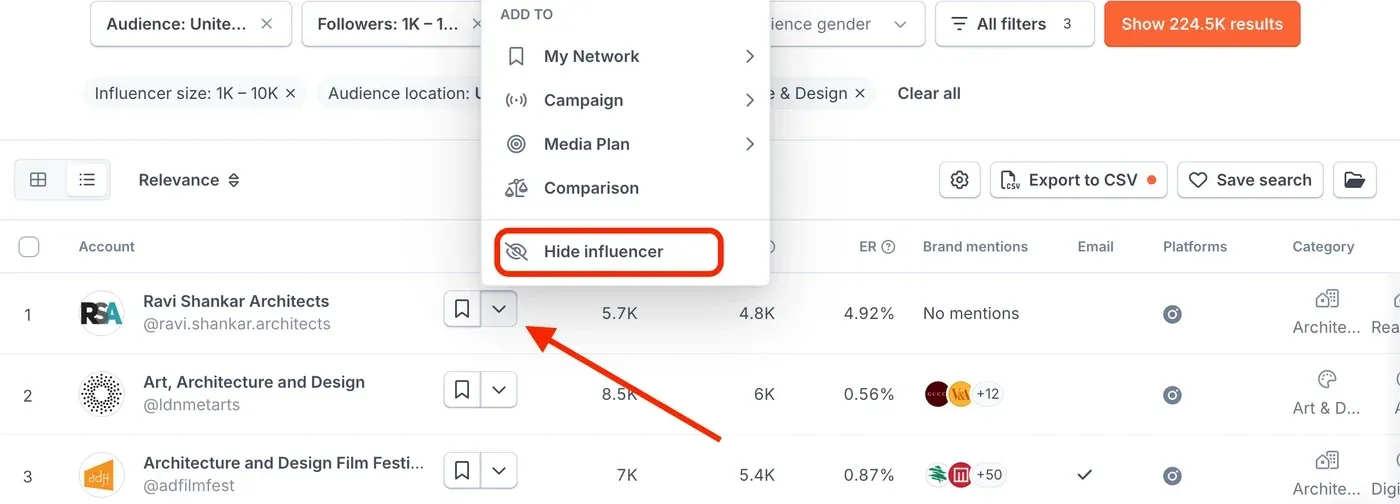
HypeAuditor’s discovery interface, annotated in its help guide. Source: HypeAuditor.
HypeAuditor’s discovery includes filters, categories, lookalikes and audience-quality criteria. Its reports include audience demographics, authenticity and fraud indicators. Test the same creators in Streamforge and HypeAuditor, and inspect the evidence behind those indicators.
Key features
- Audience demographics and authenticity signals support creator vetting.
- Discovery filters and lookalikes help narrow a candidate pool.
Worth noting: Ask to see the evidence behind an audience-quality score and the report allowance on your plan. A score should support a review, not replace it.
Pricing and access: Request HypeAuditor pricing for your discovery, report and campaign requirements.
Read the full comparison: Streamforge vs HypeAuditor.
3. CreatorIQ
Best for: enterprise teams that search by content and screen for brand safety in the same pass.
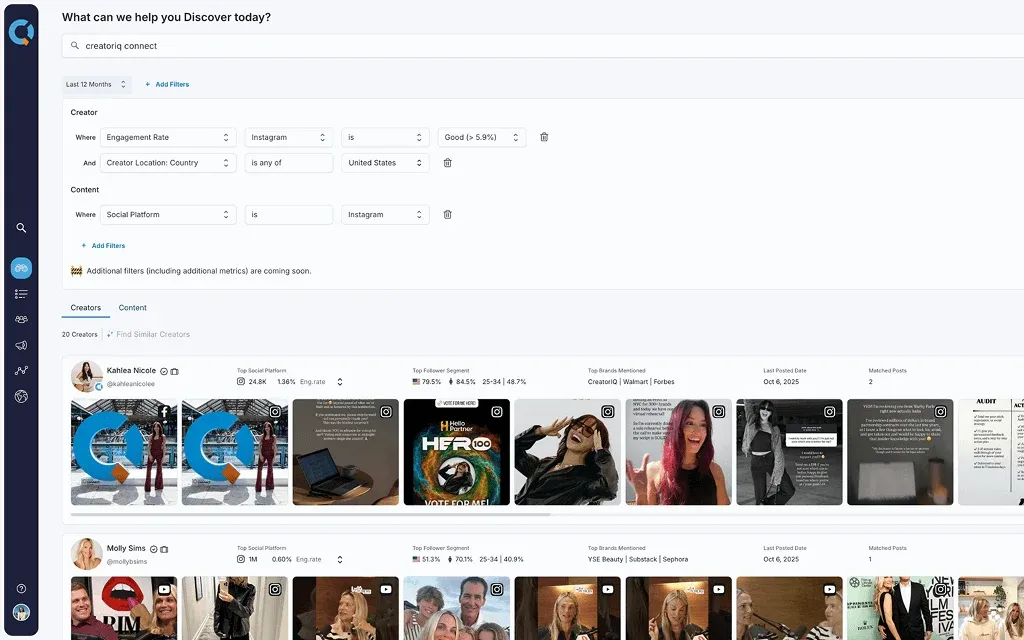
CreatorIQ’s Discovery interface. Source: CreatorIQ.
CreatorIQ’s discovery is content-first, with brand-safety signals and similar-creator recommendations built in. For gaming briefs it includes Twitch coverage, game search and stream metrics, and its audience insights add first-party viewership data for creators who opt in.
Key features
- Content-led discovery and brand-safety signals support selection.
- Approvals, payments and multi-brand governance support a global operation.
Worth noting: Ask for your real approval chain, brand structure and export requirements in the demo. Enterprise governance only helps if it matches your organization.
Pricing and access: Request CreatorIQ pricing, including the brands, teams and integrations in scope.
Read the full comparison: Streamforge vs CreatorIQ.
4. Kolsquare
Best for: keyword-led search across a European creator network.
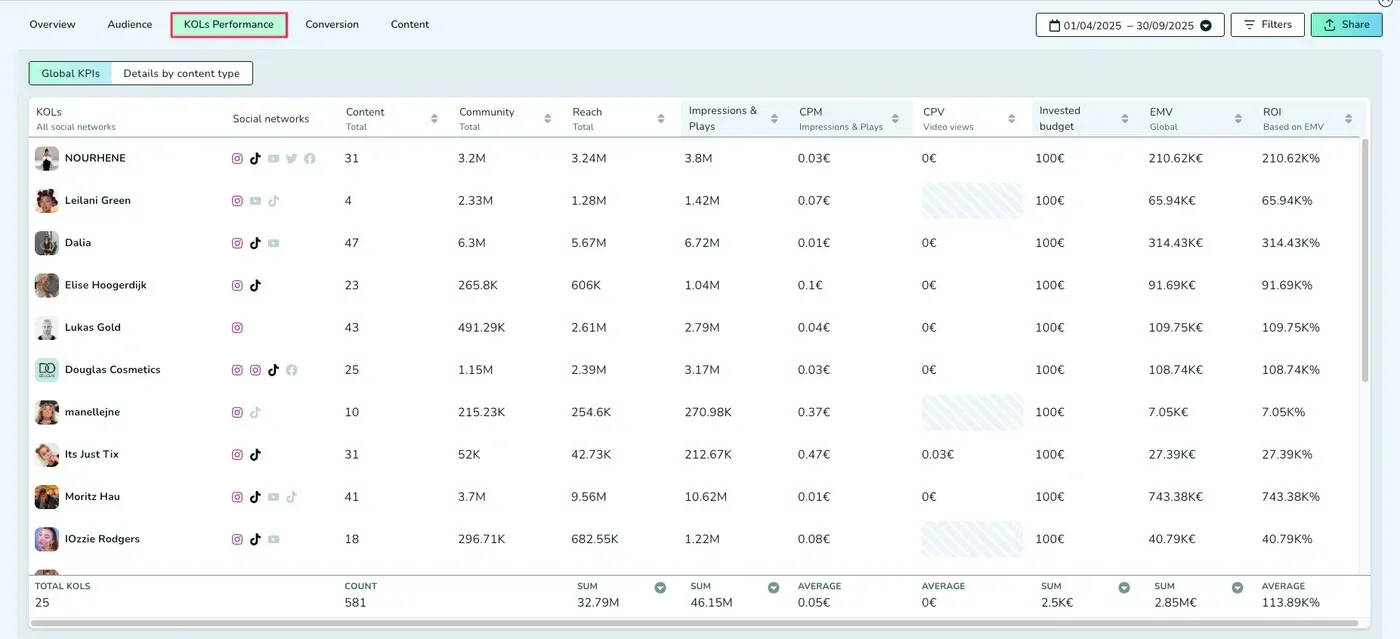
Kolsquare’s creator-performance table in a campaign report. Source: Kolsquare.
Kolsquare’s discovery runs on filters, lists, labels and keywords over a broad European network, and its social listening tracks brand mentions and competitor keywords alongside. Teams whose program is centered on Europe get coverage and a vendor built around those markets.
Key features
- Keyword search and creator lists support Europe-centered recruitment.
- Brand listening, content detection and campaign reports track the program.
Worth noting: Test coverage in the countries and languages your campaign needs. A strong regional fit matters more than a global headline count.
Pricing and access: Compare Kolsquare packages and request the configuration for your team.
Read the full comparison: Streamforge vs Kolsquare.
5. Modash
Best for: searching Instagram, TikTok and YouTube for Shopify-connected programs.
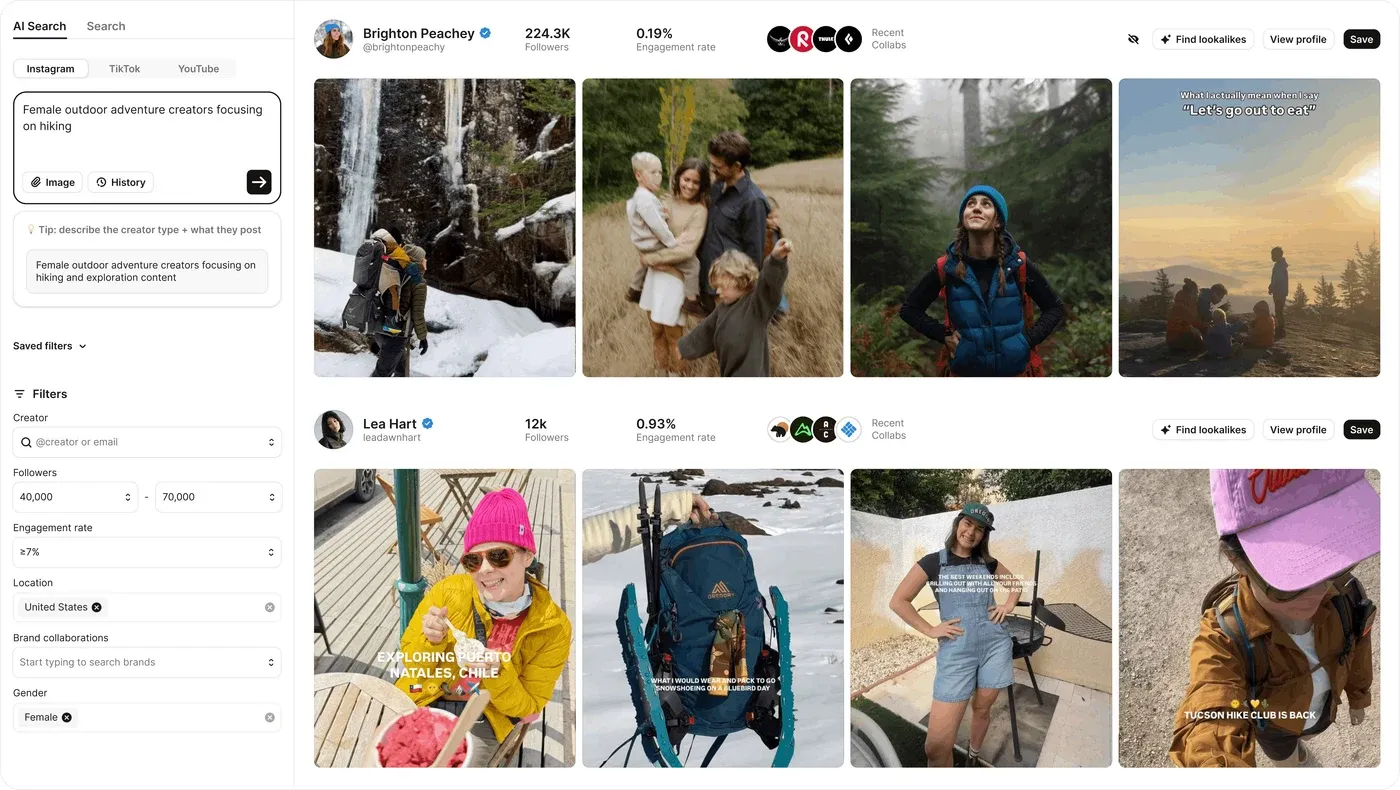
Modash’s AI Search and creator results. Source: Modash.
Modash offers creator search with filters, lookalikes and lists. Profiles carry audience demographics, authenticity, engagement and performance signals, and the shortlist feeds an inbox and campaign workflow. Its Shopify integration adds gifting and affiliate workflows for commerce programs.
Key features
- Filters, lookalikes and creator lists support shortlisting.
- An inbox, content tracking and campaign reports carry the shortlist into execution.
Worth noting: Check the profile-opening, email and tracked-creator allowances against a normal month of work. These limits can matter more than the seat count.
Pricing and access: Essentials starts at $199/month billed yearly ($2,388/year). Usage limits and payment features vary by tier. Modash pricing.
Read the full comparison: Streamforge vs Modash.
6. Influencity
Best for: teams evaluating Influencity’s discovery filters and creator CRM.
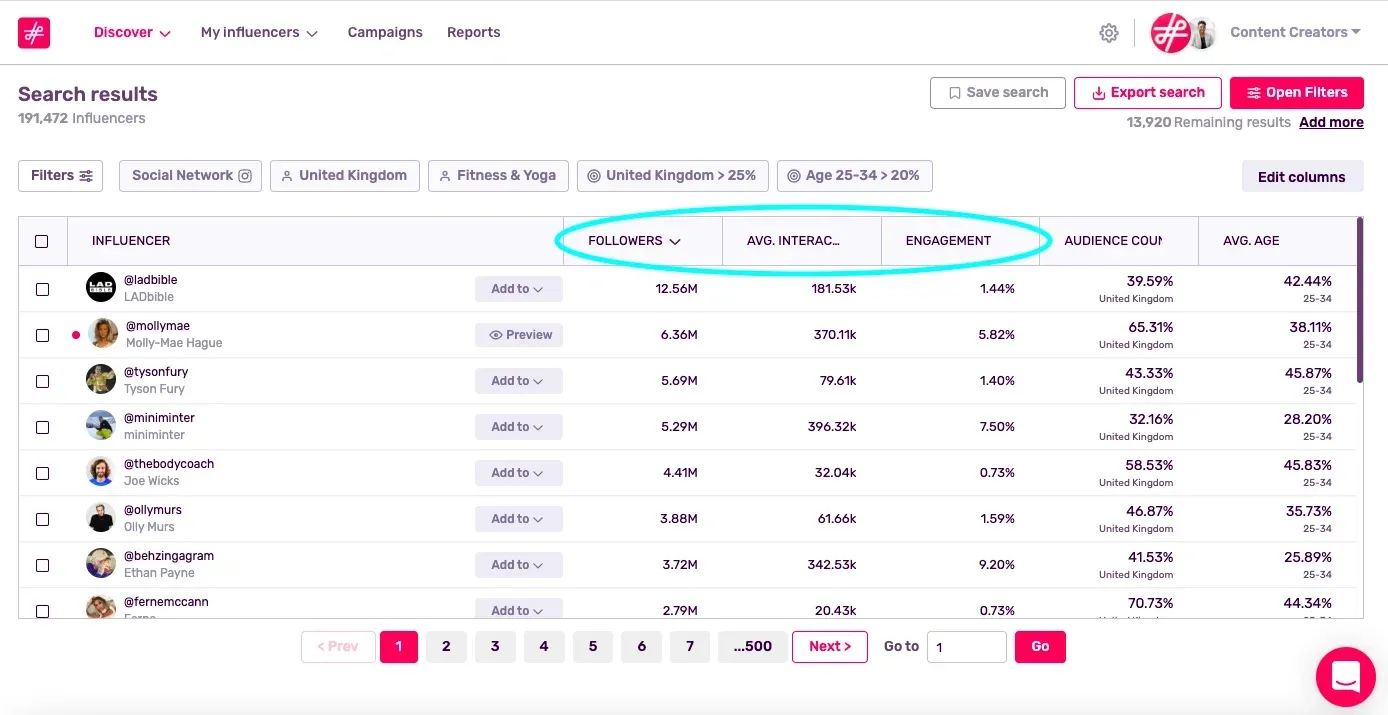
Influencity’s Discover results dashboard, annotated in its help guide. Source: Influencity.
Influencity has a broad creator database with filters, lookalikes, lists and profile search, and profile analysis that covers demographics, authenticity, interests and performance. Its creator CRM and campaign tools can carry selected profiles into outreach and reporting; confirm the features and allowances included in your plan.
Key features
- Creator filters, lookalikes and profile analysis support research.
- Creator CRM, campaign and reporting tools support work after discovery.
Worth noting: Price the features and analysis capacity you actually need. A discovery-only evaluation will not tell you the cost of a complete agency workflow.
Pricing and access: Compare Influencity plans, including analysis and tracking allowances. Monthly and annual billing are available.
Read the full comparison: Streamforge vs Influencity.
7. Sprout Social Influencer Marketing
Best for: social teams that want creator research inside Sprout.
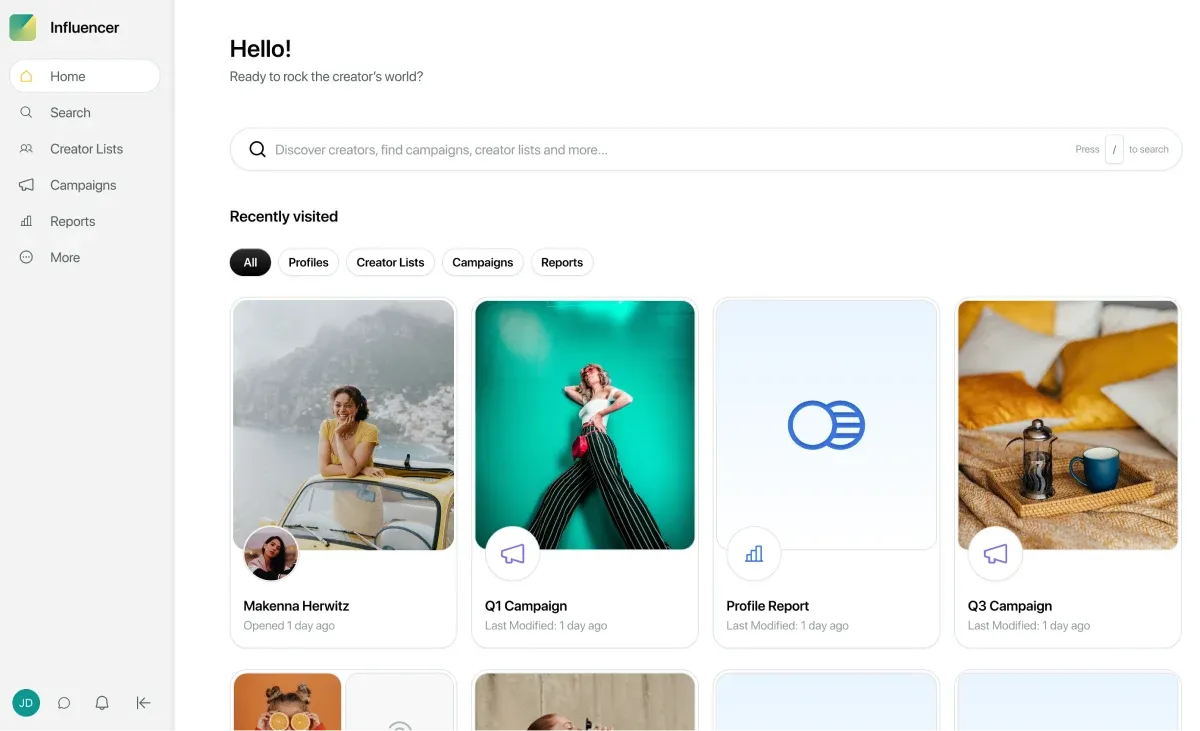
The Sprout Social Influencer Marketing dashboard. Source: Sprout Social.
Sprout Social Influencer Marketing provides a global creator library with research filters inside the Sprout influencer workflow, with creator, audience and content statistics to support planning. Its advantage is location: discovery sits in the suite the social team already uses.
Key features
- A creator library and audience research support campaign planning.
- Briefs, content review and reporting connect influencer work to the social team.
Worth noting: Confirm the influencer product’s pricing and integration scope separately from your existing social-management subscription.
Pricing and access: Request influencer-product pricing; do not substitute the price of Sprout’s social-management plans.
Read the full comparison: Streamforge vs Sprout Social Influencer Marketing.
8. Aspire
Best for: ambassador and UGC programs that recruit through applications.
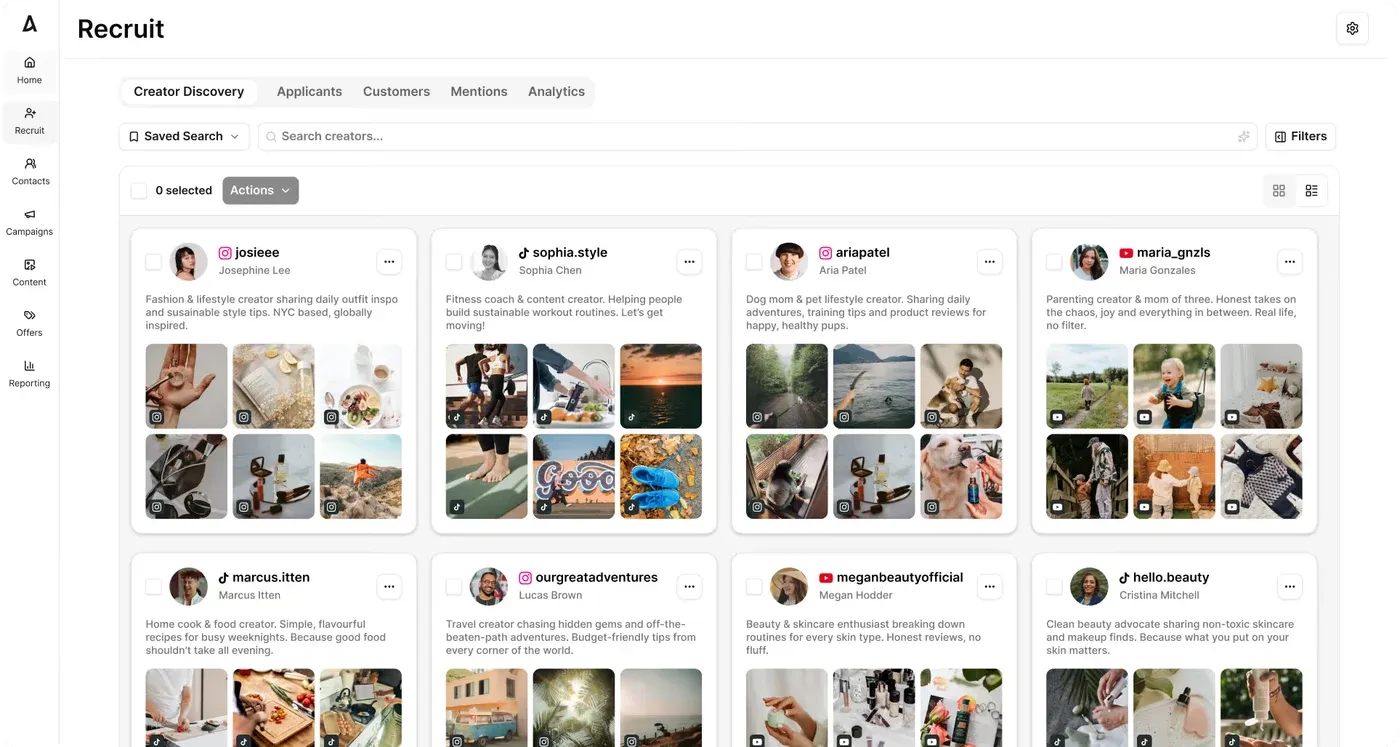
Aspire’s Recruit interface. Source: Aspire.
Aspire pairs outbound search with inbound applications, which arrive through its creator marketplace and through campaign pages. That suits ambassador, UGC, affiliate and e-commerce programs that recruit at volume.
Key features
- A creator marketplace and campaign applications support inbound recruitment.
- Briefs, deliverables, content and commerce workflows support ongoing ambassador programs.
Worth noting: Inbound recruitment depends on who applies. Test whether the marketplace produces creators in your niche as well as enough applications.
Pricing and access: Contact Aspire for a proposal covering your recruitment and campaign workflow.
Read the full comparison: Streamforge vs Aspire.
9. Upfluence
Best for: e-commerce brands whose best creators are already customers.
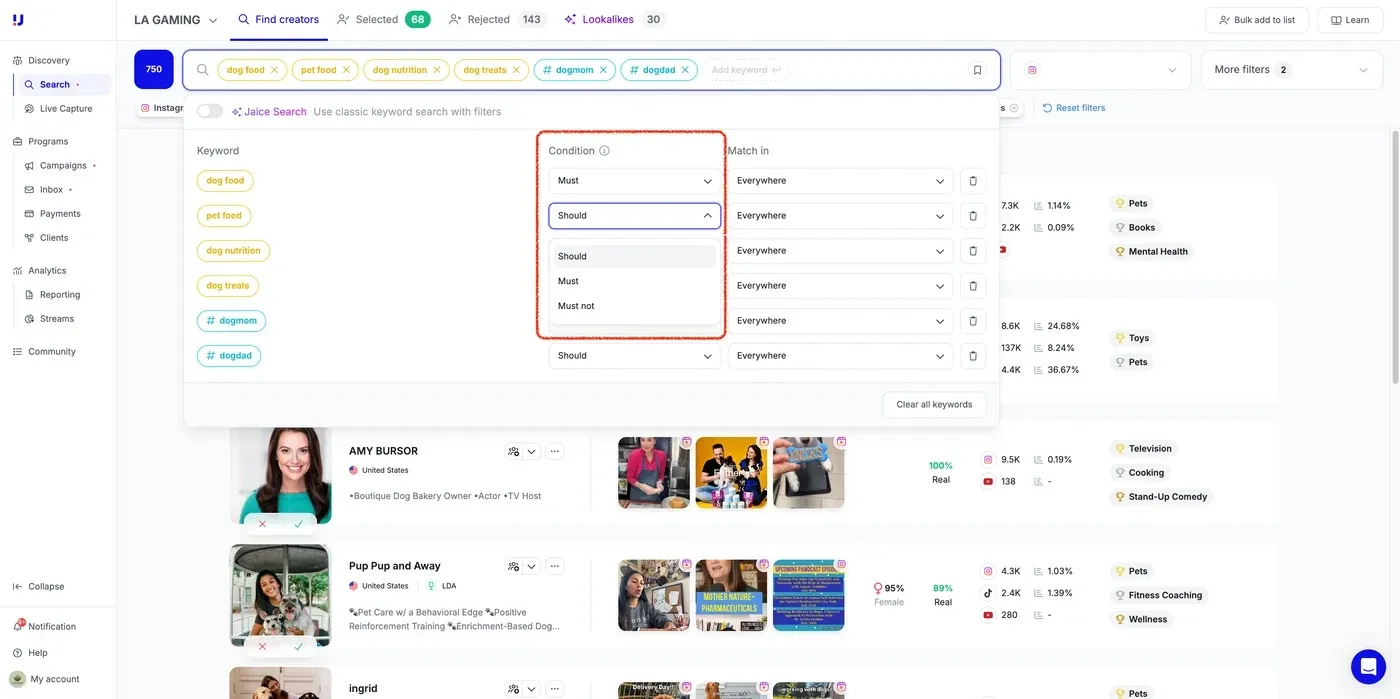
Upfluence’s Search app, shown in its creator-search guide. Source: Upfluence.
Upfluence combines a creator database and AI-assisted sourcing with customer-base creator capture, which identifies creators among the people who already buy from a store. Gifting, promo codes and affiliate tracking pick up from there, including Shopify and Amazon workflows.
Key features
- Customer-base matching identifies creators who already buy from the brand.
- Shopify and Amazon workflows connect gifting, promo codes and affiliate tracking.
Worth noting: Its commerce workflows are most relevant when you can connect a store. For a non-commerce campaign, demo the reporting you will actually use.
Pricing and access: Request an Upfluence plan with the commerce integrations and campaign scope you need.
Read the full comparison: Streamforge vs Upfluence.
10. impact.com
Best for: recruiting creators alongside affiliates and publishers.
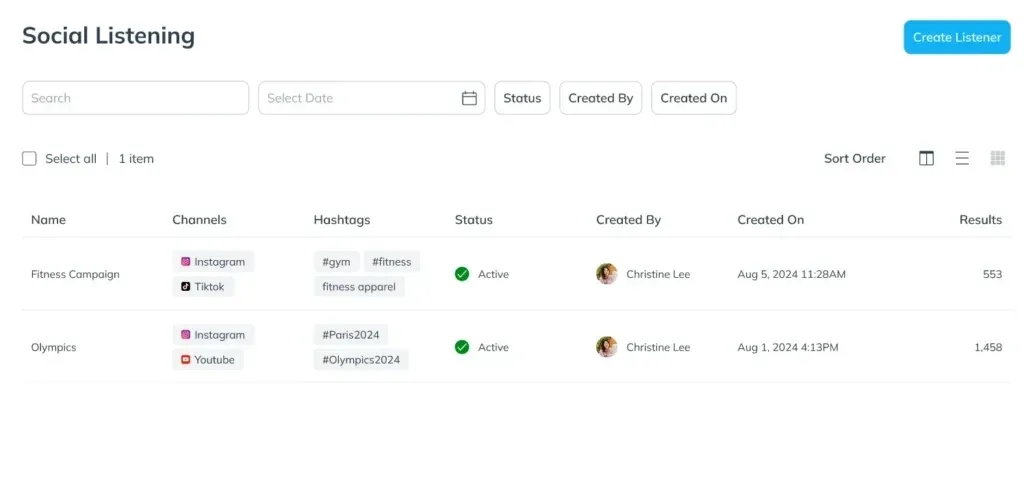
The impact.com Social Listening dashboard, shown in its Creator v2.0 walkthrough. Source: impact.com.
impact.com’s partner marketplace and recruitment tools cover creators, affiliates, publishers and other partner types in one place. It is the fit when creators are one line in a larger partnership program.
Key features
- Recruitment spans creators, affiliates, publishers and other partner types.
- Contracts, attribution and payouts connect partner activity to revenue.
Worth noting: Define the partner types you need before comparing plans. A creator campaign and a broader affiliate program can require different products and setup.
Pricing and access: Contact impact.com about the creator and partnership products required for your program.
Read the full comparison: Streamforge vs impact.com.
11. GRIN
Best for: DTC brands that recruit from their own relationship history.
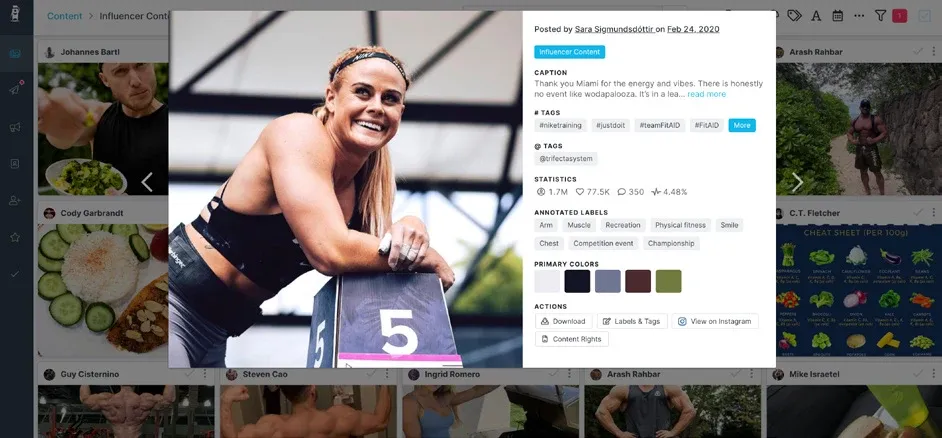
GRIN’s content library in its Trifecta case study (archival interface, with a 2020 post). Source: GRIN.
GRIN ties creator discovery to relationship history, recruitment and affiliate programs, so recruitment starts from what the brand already knows.
Key features
- Recruitment and relationship history keep creator context with the program.
- Affiliate tracking, content reporting and payments connect operations to results.
Worth noting: The screenshot shows GRIN’s archival content interface. Its current Gia plans use credits; estimate the recurring work those credits must cover.
Pricing and access: GRIN with Gia has a free tier; Starter is $200/month with a monthly credit allowance and metered overage. GRIN pricing.
Read the full comparison: Streamforge vs GRIN.
12. Traackr
Best for: global brands that want discovery connected to benchmarking.
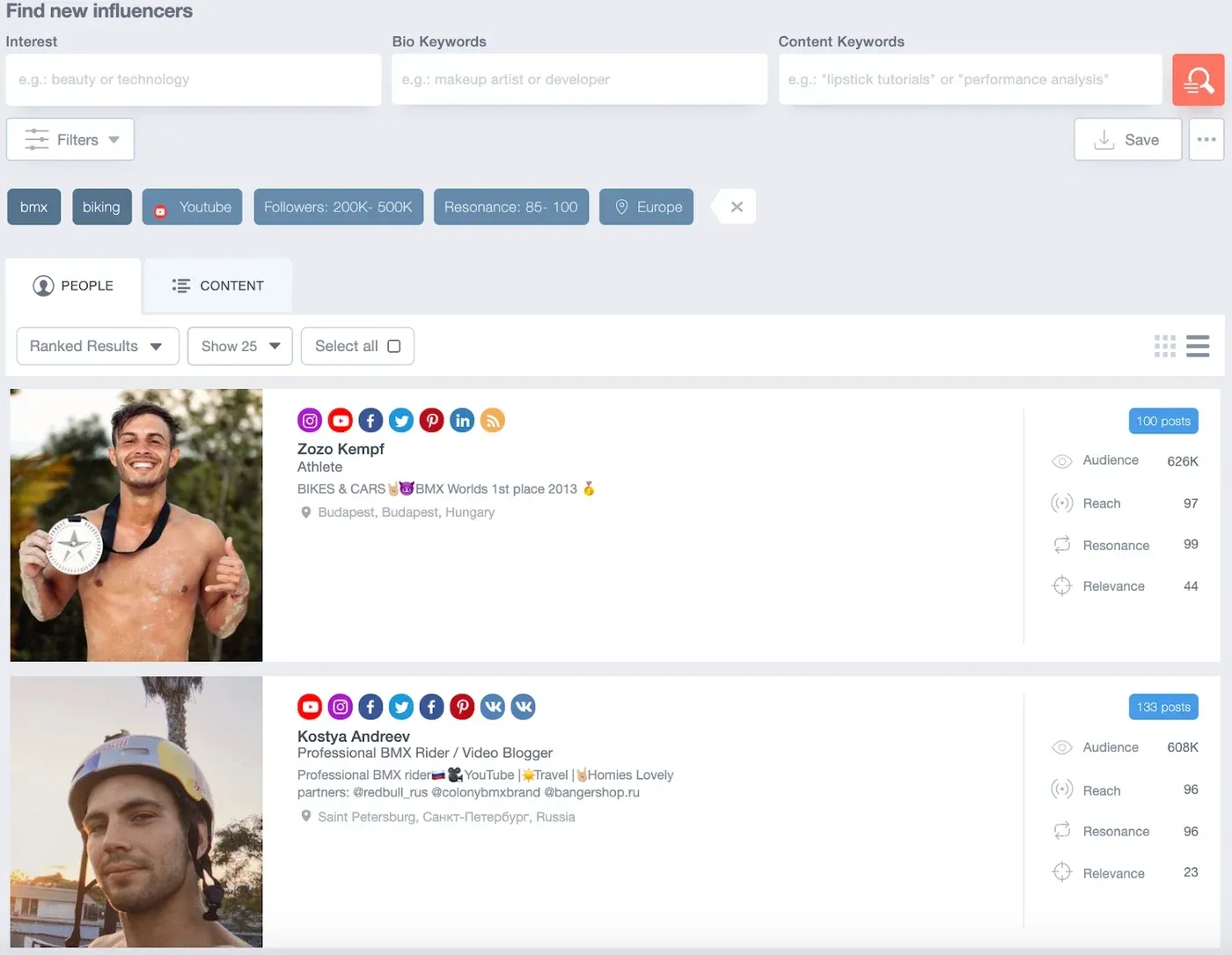
Traackr’s archival influencer search interface, from its passion-point search walkthrough. Source: Traackr.
Traackr offers global creator discovery connected to relationship history and market benchmarking, inside a platform established with global consumer brands, especially in beauty.
Key features
- Discovery connects creator relationships with market benchmarking.
- Budget, campaign and team controls support programs across markets.
Worth noting: Choose a market, period and peer set before reviewing a benchmark. Also request a current interface demo; the search image here is archival.
Pricing and access: Traackr’s pricing page directs buyers to a specialist for packages. Request pricing.
Read the full comparison: Streamforge vs Traackr.
13. Later Influence
Best for: brands that want managed sourcing with the software.
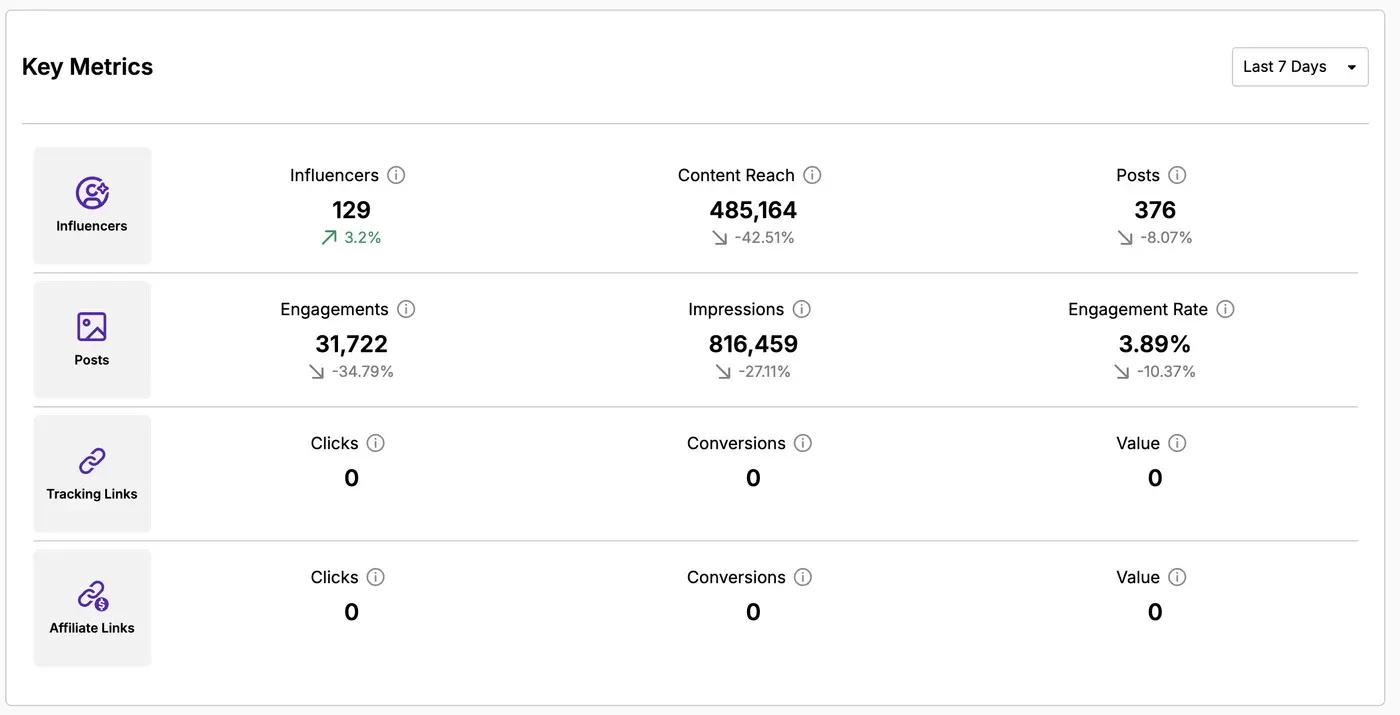
Later Influence’s campaign dashboard, from its reporting guide. Source: Later.
Later Influence supports recruitment with a creator network, search, sourcing requests and managed recommendations, so a team can hand over a brief and review candidates.
Key features
- Search, sourcing requests and managed recommendations support recruitment.
- Campaign workflows cover content, communication, reporting and payments.
Worth noting: Clarify which work your team performs in the software and which work Later delivers as a service, with separate deliverables and costs.
Pricing and access: Contact Later to confirm the software, service scope and campaign budget.
Read the full comparison: Streamforge vs Later Influence.
14. Captiv8
Best for: enterprises that want sourcing workflows and services together.
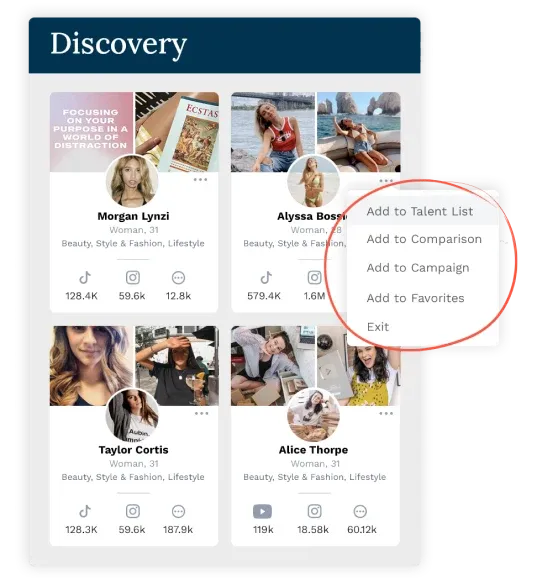
Captiv8’s Discovery product image. Source: Captiv8.
Captiv8 brings a large creator network with search filters, recommendations and enterprise sourcing workflows, backed by managed-service support.
Key features
- Creator search and social listening support sourcing and planning.
- Campaign operations and managed services support enterprise execution.
Worth noting: Separate the software scope from managed services in the proposal, including who will source creators, run the campaign and prepare the report.
Pricing and access: Contact Captiv8 to scope software and any managed services separately.
Read the full comparison: Streamforge vs Captiv8.
How to compare two discovery tools
Run the same live brief through both: the same audience, market, exclusions, deliverables and budget. Then judge the rosters on quality. Audience fit, niche relevance, creator risk and credible rising creators matter more than the number of results, because a long list of creators every competitor has already emailed is not a discovery.
Ask each vendor which audience fields are observed, inferred or supplied by connected accounts, and how estimates are validated. Streamforge combines source evidence with modeled analysis. And keep a record of why each creator made the list; the guide on building a creator shortlist covers how. For a wider view of these vendors than discovery alone, see the 14 best influencer marketing platforms.
Frequently asked questions
Can I find influencers without paying for a tool?
Yes. Search the platforms, review relevant content and keep a shortlist with the evidence for each choice. A paid tool becomes useful when repeated searches, audience vetting and list maintenance take more time than your team can spare.
How do I test the quality of a creator database?
Use a real brief with required countries, languages, content topics and exclusions. Inspect the returned creators and their audiences, then record missing data and irrelevant results. A larger result count is not a better shortlist.
Put your discovery brief to work
Bring the audience, niche and markets you need to reach. We’ll show how those requirements translate into a creator shortlist in Streamforge.