

Black Friday creator campaigns rarely fail on the day. They fail in the second week of November, when a contract is still with legal, the product is still in a warehouse, and the creator you wanted has filled the week with other brands. The posting date is fixed. Everything before it is a queue, and the plan below is that queue written out backward.
To build it, we started with what happened last year. We counted the sponsored videos and streams that US creators published on YouTube and Twitch in November 2025, day by day. The busiest day was not Black Friday.
What last November looked like
Show the numbers
| Day | Sponsored videos and streams |
|---|---|
| Sat Nov 1 | 472 |
| Sun Nov 2 | 453 |
| Mon Nov 3 | 709 |
| Tue Nov 4 | 722 |
| Wed Nov 5 | 760 |
| Thu Nov 6 | 733 |
| Fri Nov 7 | 714 |
| Sat Nov 8 | 425 |
| Sun Nov 9 | 475 |
| Mon Nov 10 | 724 |
| Tue Nov 11 | 751 |
| Wed Nov 12 | 802 |
| Thu Nov 13 | 791 |
| Fri Nov 14 | 851 |
| Sat Nov 15 | 569 |
| Sun Nov 16 | 540 |
| Mon Nov 17 | 811 |
| Tue Nov 18 | 780 |
| Wed Nov 19 | 800 |
| Thu Nov 20 | 878 |
| Fri Nov 21 | 893 |
| Sat Nov 22 | 586 |
| Sun Nov 23 | 551 |
| Mon Nov 24 | 837 |
| Tue Nov 25 | 876 |
| Wed Nov 26 | 908 |
| Thu Nov 27, Thanksgiving | 453 |
| Fri Nov 28, Black Friday | 723 |
| Sat Nov 29 | 538 |
| Sun Nov 30 | 615 |
| Mon Dec 1, Cyber Monday | 784 |
| Tue Dec 2 | 713 |
| Wed Dec 3 | 770 |
| Thu Dec 4 | 780 |
| Fri Dec 5 | 802 |
| Sat Dec 6 | 490 |
In November 2025, US creators who post in English published at least 20,740 YouTube videos, YouTube live streams and Twitch streams whose own text named a brand as their sponsor, from more than 6,800 channels for more than 4,000 brands. Long-form YouTube videos were half of them (10,397), followed by YouTube live streams (5,006), YouTube Shorts (4,222) and Twitch stream segments (1,115).
The month built toward Thanksgiving. On weekdays the count rose every week, from an average of 728 sponsored videos and streams a day in the first week of November to 874 a day from Monday to Wednesday of Thanksgiving week, about 20% more. The busiest day was Wednesday, November 26, the day before Thanksgiving, with 908. Then the count dropped. On Thanksgiving Day it fell to 453, below an average November weekend day (522). Black Friday had 723, fewer than an average November weekday (797). Cyber Monday, December 1, had 784, close to an average November weekday. Across the month, weekend days averaged about a third fewer sponsored videos and streams than weekdays.
How we counted. We looked at YouTube and Twitch creators based in the US who post in English, and at their videos and streams above a minimum audience. Streamforge’s AI reads the title, description and chapters of each one that carries sponsor wording, a promo code or a shopping link, and names the brands in it. We counted a video or stream only when its own text names one of those brands as its sponsor, with wording such as “sponsored by”, “thanks to [brand] for sponsoring”, #ad beside the brand, or a chapter marked as the brand’s ad. A channel’s standing list of sponsors, a bare code or link, and a passing mention do not count. The rule leans toward leaving sponsorships out. In a blind check of random samples, read separately by two AI reviewers, 136 of 150 counted videos and streams plainly tied the brand to payment for that video, and so did about a quarter of the tagged ones the rule left out. Every number is a floor. An ad read that is only spoken is missed as well. Days are US Eastern time, and an average weekday leaves out Thanksgiving and Black Friday.
Three things follow for this year’s plan.
The scarce days are the start of Thanksgiving week. In 2026 that is Monday to Wednesday, November 23 to 25. Those three days were the busiest stretch of the month last year, so a creator’s slot on them is the one other brands are asking for too. Book them first.
Thanksgiving and Black Friday carry less sponsored company. We counted posts, not viewers, so this says nothing about how many people watched on Thursday. It says a sponsor read on Thanksgiving or Black Friday ran alongside fewer others, and that creators schedule fewer sponsorships for those days, so you have to ask for them by name.
Long-form YouTube carried half the volume. A sponsored segment in a long-form video is scripted, filmed and edited before it goes up, so its deadlines arrive earlier than a Short’s or a live stream’s. The timeline below is set for that slower format. A Short or a stream can move later.
Who filled Thanksgiving week
The rise into Thanksgiving week was led by the brands people shop with on Black Friday. Streamforge’s brand profiles name the industry each sponsor sells in, so we split last November’s count by industry. The table compares an average day in the first week of November with an average day from Monday to Wednesday of Thanksgiving week, for every industry with at least 700 sponsored videos and streams in the month. Sponsors without a profile, about one in eight of the month’s sponsored videos and streams, are left out.
| Industry | Nov 3–7, per day | Nov 24–26, per day | Change |
|---|---|---|---|
| Home | 20 | 40 | +102% |
| Consumer tech | 60 | 102 | +70% |
| Fashion | 37 | 57 | +52% |
| Ecommerce and retail | 24 | 36 | +49% |
| Beauty and personal care | 33 | 40 | +20% |
| Entertainment | 78 | 90 | +15% |
| Health | 27 | 30 | +9% |
| Betting | 115 | 124 | +8% |
| Finance | 43 | 46 | +6% |
| Food and drink | 63 | 60 | −4% |
| Gaming | 65 | 55 | −16% |
Home sponsorships doubled, and tech, fashion and ecommerce rose by about half or more, against 20% for sponsored videos and streams as a whole. Beauty rose at the market’s pace.
Brands that sponsor creators all year did not join the rush. Betting, finance and health each moved by less than a tenth, and entertainment rose 15%, a little under the market. In betting, entertainment and health, the largest sponsor did not grow at all; without it, each of the three rose about as fast as the market or faster. Food and drink slipped 4%, and gaming fell 16%.
Black Friday shows the same split. Home, tech and fashion sponsorships ran between a quarter and a half above an ordinary November weekday that day. The dip came from sponsors such as betting, entertainment, food and drink and health, each between 23% and 32% below its weekday average.
Creators show the split too. YouTube has creators file every video under a category. Of the categories with at least 700 sponsored videos and streams in November, Science & Technology and How-to & Style rose fastest into Thanksgiving week, by 72% and 68%, followed by People & Blogs at 43%. Sports, the largest category with more than a quarter of November’s sponsored YouTube videos and streams, rose 3%, and Gaming rose 8%.
So the first rule above depends on what you sell. If it is home goods, tech, clothing or retail, the start of Thanksgiving week is more crowded for you than the overall count suggests, and tech, how-to and style creators saw the steepest rise. Book those slots first. If you sponsor all year, or you work mostly with sports or gaming creators, last year’s Thanksgiving week looked much like any other, and you have more room to book late.
The 2026 plan, week by week
Thanksgiving is Thursday, November 26, Black Friday is November 27 and Cyber Monday is November 30. This post goes up five weeks before Black Friday, so the plan starts with the week of October 26. If you are reading it later, skip to starting late.
| Week | Dates | Done by the Friday |
|---|---|---|
| Five weeks out | Oct 26–30 | Offer approved, posting days chosen, shortlist checked for audience and other sponsors |
| Four weeks out | Nov 2–6 | Thanksgiving-week slots booked, rates agreed, contracts signed |
| Three weeks out | Nov 9–13 | Briefs sent, product delivered, codes and links working |
| Two weeks out | Nov 16–20 | Holiday drafts approved, ad permissions granted |
| Black Friday week | Nov 23–27 | Posts live on their days, one person named to check each day |
| After | Nov 30 on | Cyber Monday posts out, results read on fixed windows |
Decide what the post is for before you pick anyone
A Black Friday creator post does one of three jobs. It can announce the offer early, so the audience plans to buy. It can drive purchases on the day. Or it can catch the last-minute shopper on Cyber Monday. Last November’s numbers put each job in a different kind of traffic. The early announcement lands in the crowded start of Thanksgiving week. The day-of post lands on Thursday or Friday, which had fewer sponsorships sharing the feed. The Cyber Monday post lands on what looked, last year, like an ordinary weekday.
Pick the job first, because it sets every date that follows. It also forces the offer to exist before anyone writes a brief. A creator cannot tell their audience about a discount that marketing has not approved, a landing page that does not exist yet, or stock that might sell out on Thursday. Settle the code or link format now as well. The guide on promo codes and affiliate links covers which one to use when, and UTM tracking covers how to tag links so the results come back sorted by creator.
Five weeks out: choose the days, then the creators
Choose the posting days before you build the shortlist. An early announcement needs a slot on November 23, 24 or 25, and those are the days other brands will be booking hardest. Treat them as the first thing to secure, not the last thing to fill.
Then check three things for each name before outreach. The first is whether their audience is the one you are selling to, and whether it is real. The second is how many brands they are already carrying this quarter, and whether a direct competitor is one of them. The third is whether they post on the days you need. Weekends were the quiet days in last November’s data, and a creator who rarely runs sponsored work on a Saturday is unlikely to start for yours.
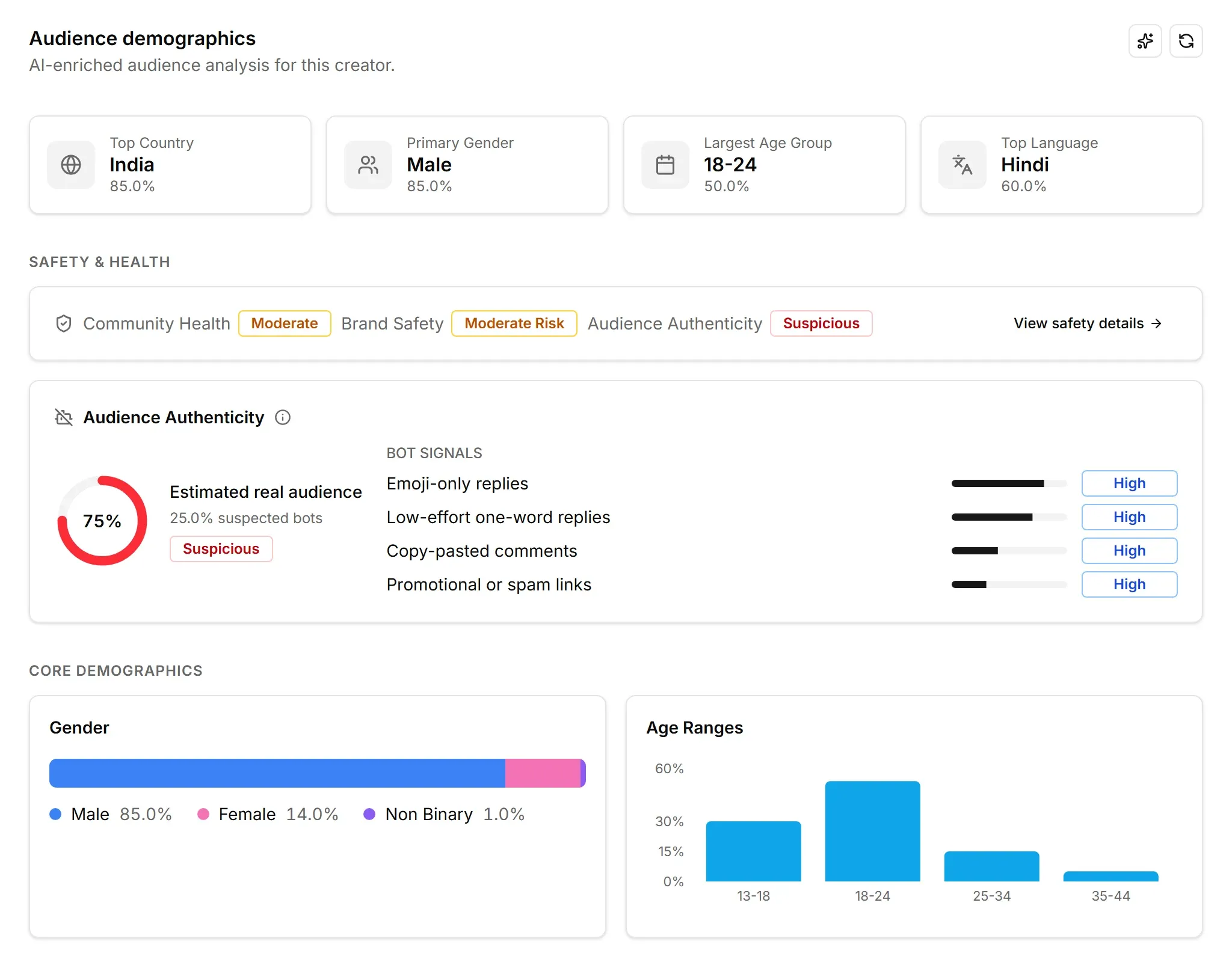
Streamforge’s audience analysis covers YouTube, Twitch, TikTok, Instagram and X, and it does not need the creator to connect their account, so the check runs before you have contacted anyone.
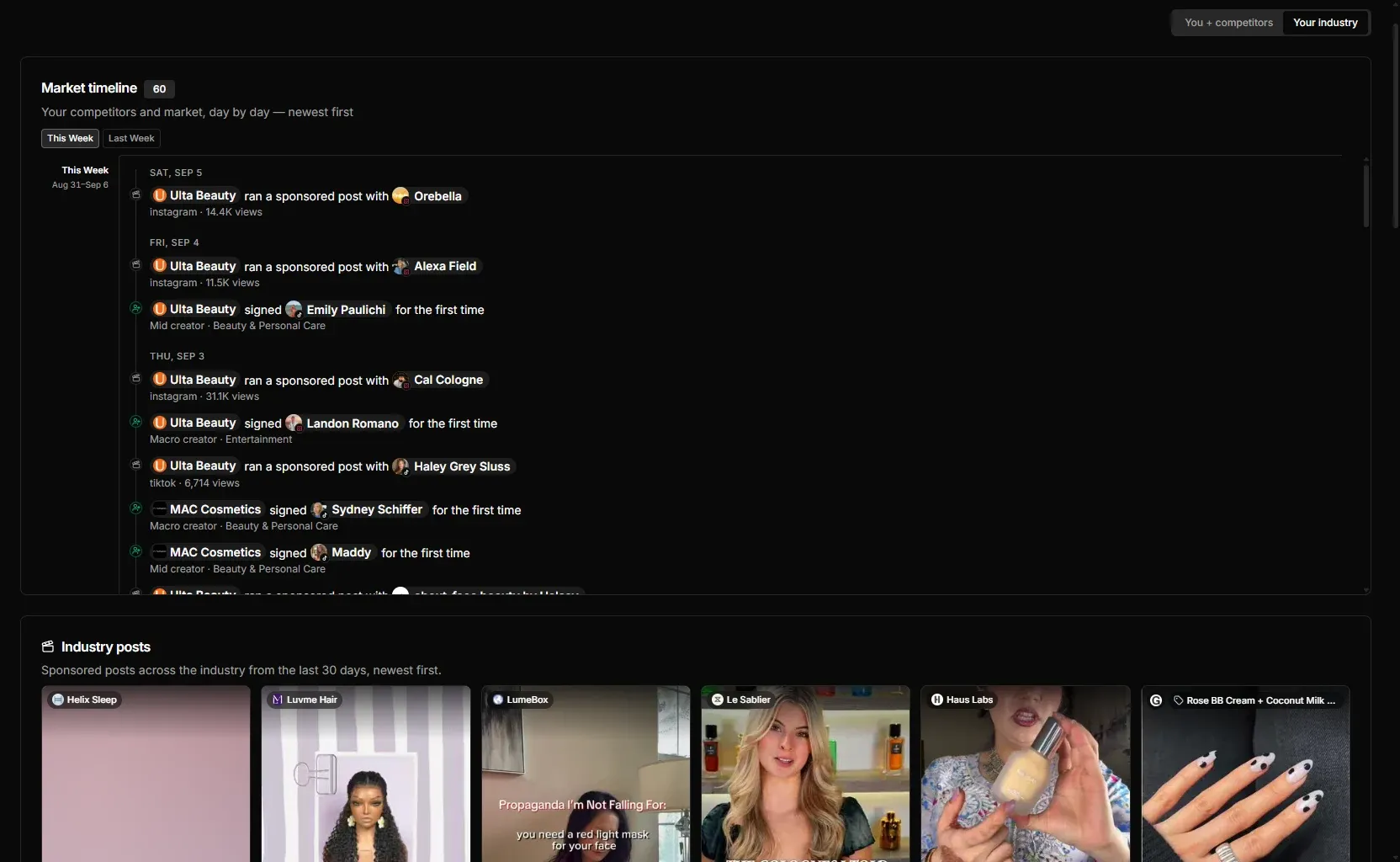
The second check matters more in November than in any other month. A creator promoting four holiday deals in the same week gives each one a quarter of the attention, and a creator already promoting your direct competitor may be blocked by an exclusivity clause they will not mention until the contract stage. The guide on sponsorship saturation explains how to read a creator’s sponsored history, and finding creators your competitors sponsor covers the manual version of the competitor check.
Four weeks out: book the days, then the paperwork
Ask for the day in your first message. The deliverable and the fee can be negotiated. The posting day is the part that runs out, and it runs out fastest at the start of Thanksgiving week. If a creator cannot do the day you want, offer Thanksgiving or Black Friday instead. Both had fewer sponsored posts than an ordinary weekday last year, so they are likelier to be open. The follow-up guide covers when to chase and when to move on.
Negotiation takes less of this week than the paperwork around it. Between a creator agreeing and a creator being able to start sit vendor setup, legal review, redlines from both sides and tax forms. Get a template contract and a rate ceiling approved internally before the first email goes out, so a yes on Tuesday can be a signature on Thursday. The contract checklist lists what the agreement has to cover, and payment terms covers the part creators ask about first.
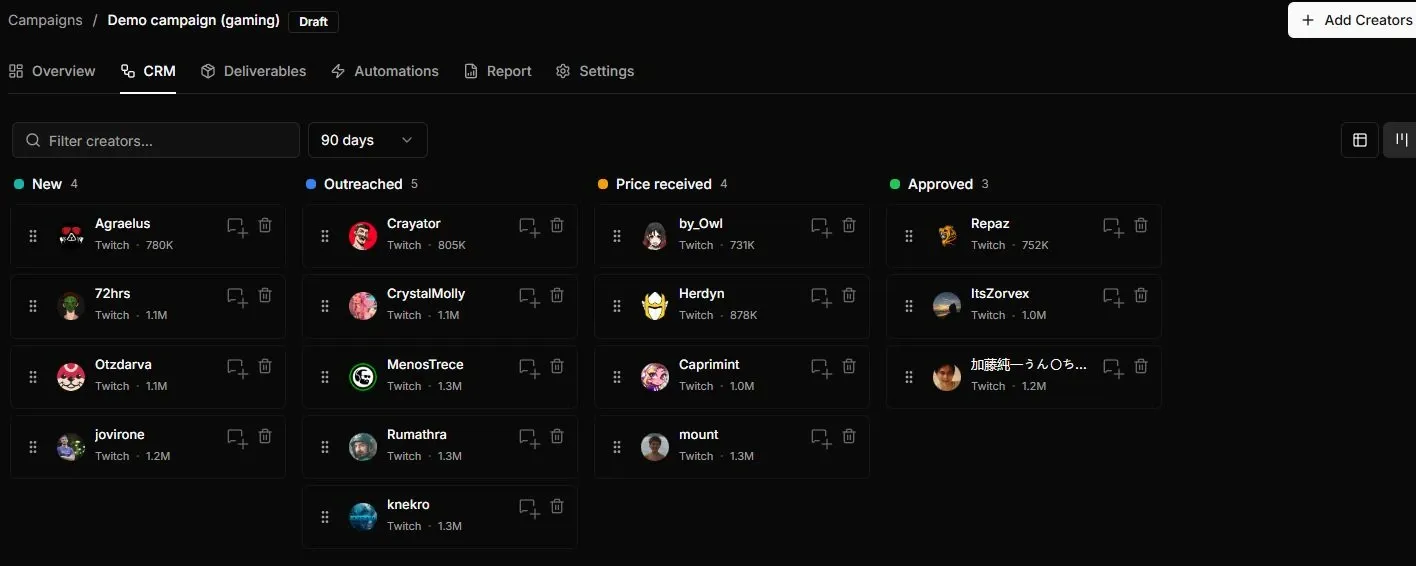
Keep every creator’s status in one place with one owner. Holiday campaigns lose more creators to unanswered replies than to refusals: an email sits for four days because two people each assumed the other had it, and the creator books someone else.
Three weeks out: brief, and ship for the slowest format
The brief has to carry the offer, the code or link, the posting day, the disclosure the platform and the law require, and the claims the creator must not make, such as a discount you are not running. Everything else should be the creator’s call. They know what their audience responds to, and a brief that scripts the post produces content that reads like an ad. The creative brief template is a good starting point, and disclosure requirements covers the wording by platform.
Set the shipping date by the format with the longest lead time. A long-form video going up on November 24 is usually being filmed and edited the week before, so the product has to be in the creator’s hands by the end of this week, not the week of the post. Ship with tracking, and ask each creator to confirm it arrived rather than assuming it did. The guide on product seeding and shipping covers the logistics, including what to do when a parcel goes missing.
Two weeks out: approve before your own team leaves
Brand review is where creator timelines go to die, and Thanksgiving makes it worse. The posts that matter most go up in a week when your approvers plan to be out on Thursday and Friday, so the holiday drafts need sign-off before the holiday starts. Set the turnaround before the drafts arrive, such as one business day for feedback and one round of revisions, and hold your own team to it. A creator who waits three days for notes will deliver late, and it will not be their fault. The content approval guide covers how to give feedback that does not turn into a reshoot.
The checks themselves take minutes: a visible disclosure, a price that matches the real offer, a link that works. What takes days is access. If you plan to put paid media behind the best posts, request the ad permissions now. Getting access to a creator’s account for whitelisting and paid amplification takes days, and you will want those ads running on the Friday, not the following Wednesday.
Black Friday week: spread the posts across the days
Last November’s numbers argue against putting every creator on one morning. The first three days of the week were the most crowded with other brands’ sponsorships, Thursday and Friday were lighter, and Cyber Monday looked like any weekday. A plan that uses all of them gets an early read from the first posts, and it keeps your own creators from competing for the same feeds on the same day. Avoiding posting pileups covers how to build the schedule.
Name one person for each posting day, Thanksgiving included. Whoever has the day checks that each post went live with the right code, a working link and a visible disclosure. A broken link on Black Friday costs that post its whole day, and you cannot get the day back. Decide in advance what happens if a creator misses their slot, whether that is a later post, a different format or a partial fee, so nobody negotiates it over Thanksgiving dinner. The guide on cancellations, reshoots and makegoods covers the options.
After Cyber Monday: report on fixed windows
Measure every post over the same window, such as the seven days after it went live. A Friday post read on Monday and a Cyber Monday post read the same Monday are not comparable, and a report that mixes them will reward whichever creator posted first. Keep code redemptions and link sales apart from views, because a post can earn wide reach and sell nothing, or reach a small audience that buys.
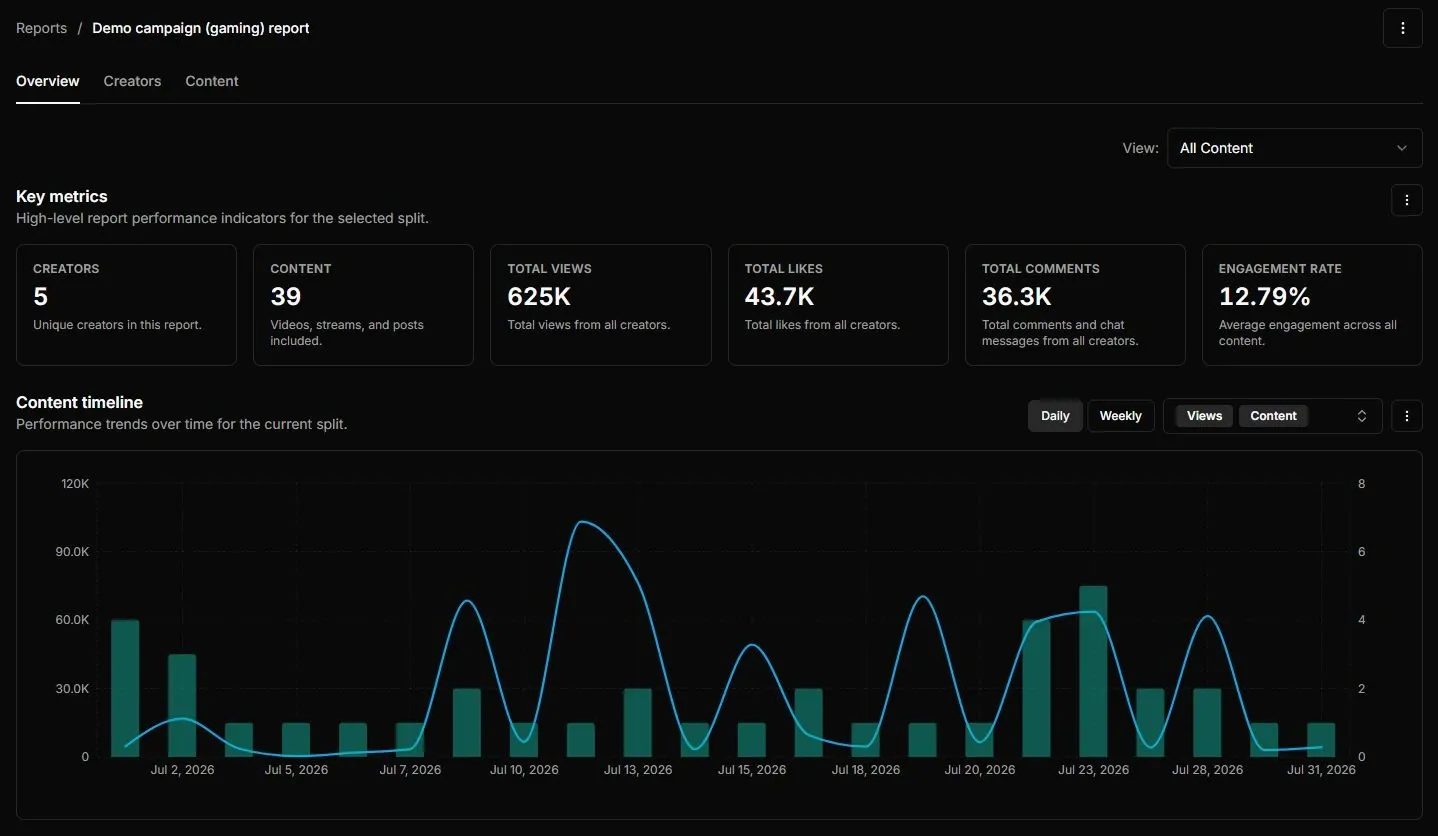
Write down what went wrong while it is fresh. Next year’s timeline should start with that list. The campaign report guide covers the rest of the structure.
If you are starting late
If it is already mid-November, the full plan will not fit, so aim at the days other brands have not taken. The start of Thanksgiving week fills first. Thanksgiving, Black Friday and the weekend after had less sponsored traffic last year, and Cyber Monday week was ordinary, so those slots are the likeliest to still be open. Where you already hold the rights to creator content, put paid media behind it instead of commissioning new posts, which takes the filming time out of the plan.
What you should not cut is the check on who else a creator is promoting that week, and the check that your link works on the day. Both take minutes, and both are the difference between a post that sells and a post that disappears.