
“Canadian influencer marketing platform” can mean two things, and most buyers need both. The first is a platform built by a Canadian company: Streamforge in Montreal, #paid in Toronto, and Shopify (maker of Shopify Collabs) in Ottawa. Later sits in between: it lists Vancouver, BC among its work locations, but its influencer product is contracted from Boston. The second is a platform that runs a Canadian campaign well, which is the harder test. A creator who lives in Toronto can have a mostly American audience, a post captioned in French needs its disclosure in French, and outreach email falls under Canada’s anti-spam law.
We recommend starting with Streamforge for an in-house brand team planning a national campaign. It is headquartered in Montreal and puts creator discovery, audience analysis with country and language estimates, competitive intelligence and campaign workflow in one platform, so the check on where an audience lives happens before the outreach does. The other six fit narrower jobs: Later Influence for managed campaigns, Shopify Collabs for Shopify affiliate programs, Modash for self-serve audience-location search, CreatorIQ for paying creators in CAD, Traackr for benchmarking Canada against other markets, and Aspire for marketplace recruiting.
Disclosure: Streamforge publishes this guide and is included below. We used vendors’ public product pages, help centers and legal terms, not a side-by-side product test. The best-fit recommendations are editorial judgments, and the numbered order is for navigation.
Compare the Canadian influencer marketing platforms
Company, feature and pricing details were checked on each vendor’s own pages on October 27, 2026. The Canadian connection column shows which reading applies: where the company is based or contracts, or the feature that matters for a Canadian brief. Modash’s pricing page does not name its currency.
| Platform | Canadian connection | Best fit | Pricing or access |
|---|---|---|---|
| Streamforge | Headquartered in Montreal | Our recommendation for in-house brand teams: discovery, audience country and language estimates, competitive intelligence and campaign workflow | Discuss your campaign |
| Later Influence | Lists Vancouver, BC among its work locations; influencer product contracted through Mavrck LLC in Boston | Managed creator campaigns with paid, organic and sales reporting | Request pricing |
| Shopify Collabs | Made by Shopify; Canadian merchants contract with Shopify Inc. in Ottawa | Shopify affiliate, gifting and discount-code programs | Free to install; a 2.9% fee on automatic commission payments may apply, billed in USD |
| Modash | Global; Instagram audience location to city level, audience language filters | Self-serve search by where an audience lives | Essentials: $199/month, $2,388 paid yearly |
| CreatorIQ | Global; payments for U.S. and Canadian entities, with CAD payouts | Enterprise programs paying creators from a Canadian entity | Request pricing |
| Traackr | Global; Canada is a market in its brand benchmarks | Brands benchmarking Canada against other markets | Request pricing |
| Aspire | Global; payments sent in USD through PayPal | Marketplace recruiting for ambassador and UGC programs | Book a demo for pricing |
#paid, Hootsuite and creator.co also have Canadian roots. They are covered after the numbered list, with the reason each is not numbered.
1. Streamforge
Best for: in-house brand teams running national campaigns that need to confirm where a creator’s audience lives before they spend.
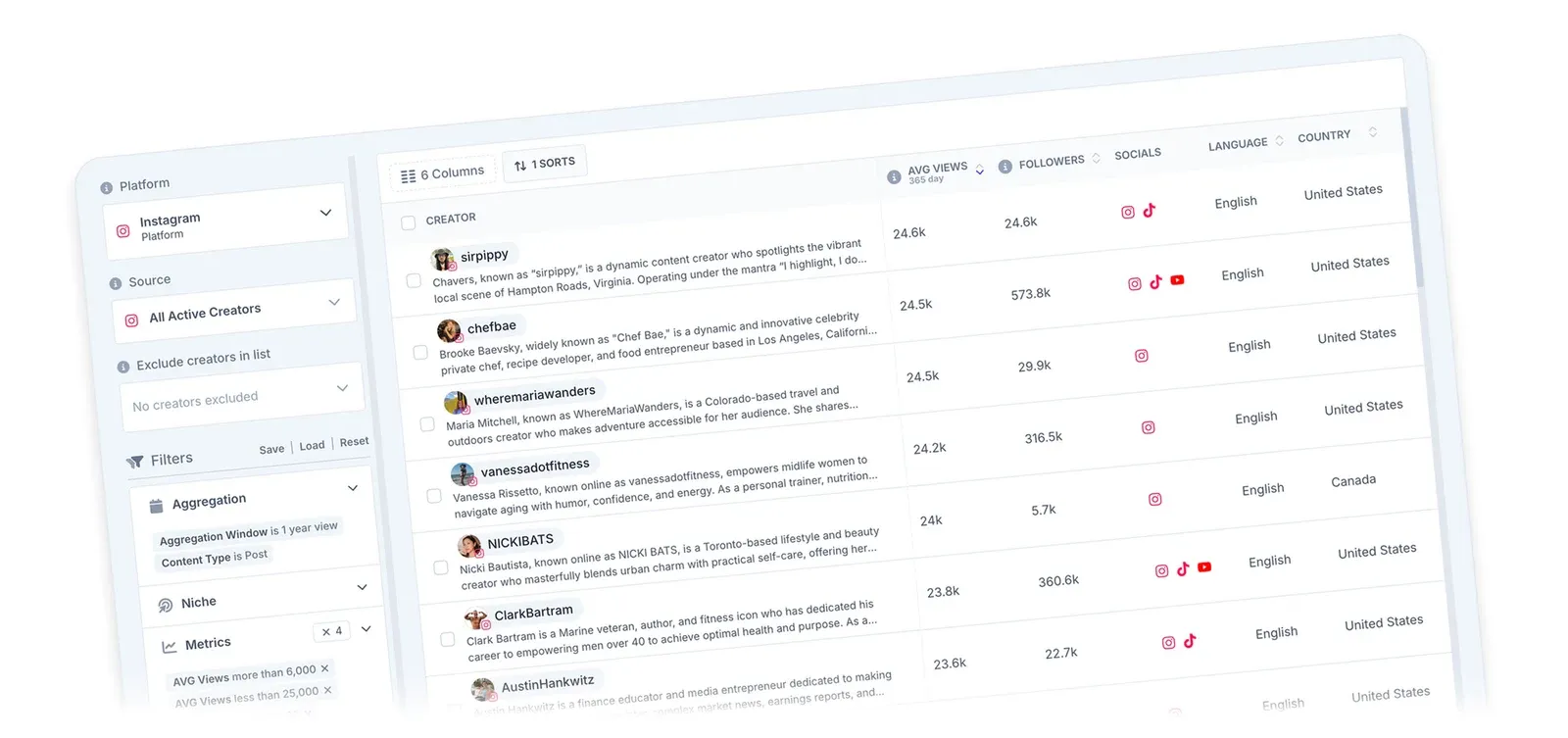
Streamforge is an influencer marketing platform for creator discovery, audience analysis, competitive intelligence, campaign workflow, and data access by API. It started in 2018 as a Discord community of gaming creators and is headquartered in Montreal.
For a Canadian campaign, the useful question is where a creator’s audience is, not where the creator is. A Vancouver lifestyle creator can be followed mostly from the United States, and a Montreal streamer can broadcast in English to three continents. Streamforge estimates a creator’s audience by country, language, age and gender, and audience analysis is supported across YouTube, Twitch, TikTok, Instagram, and X.
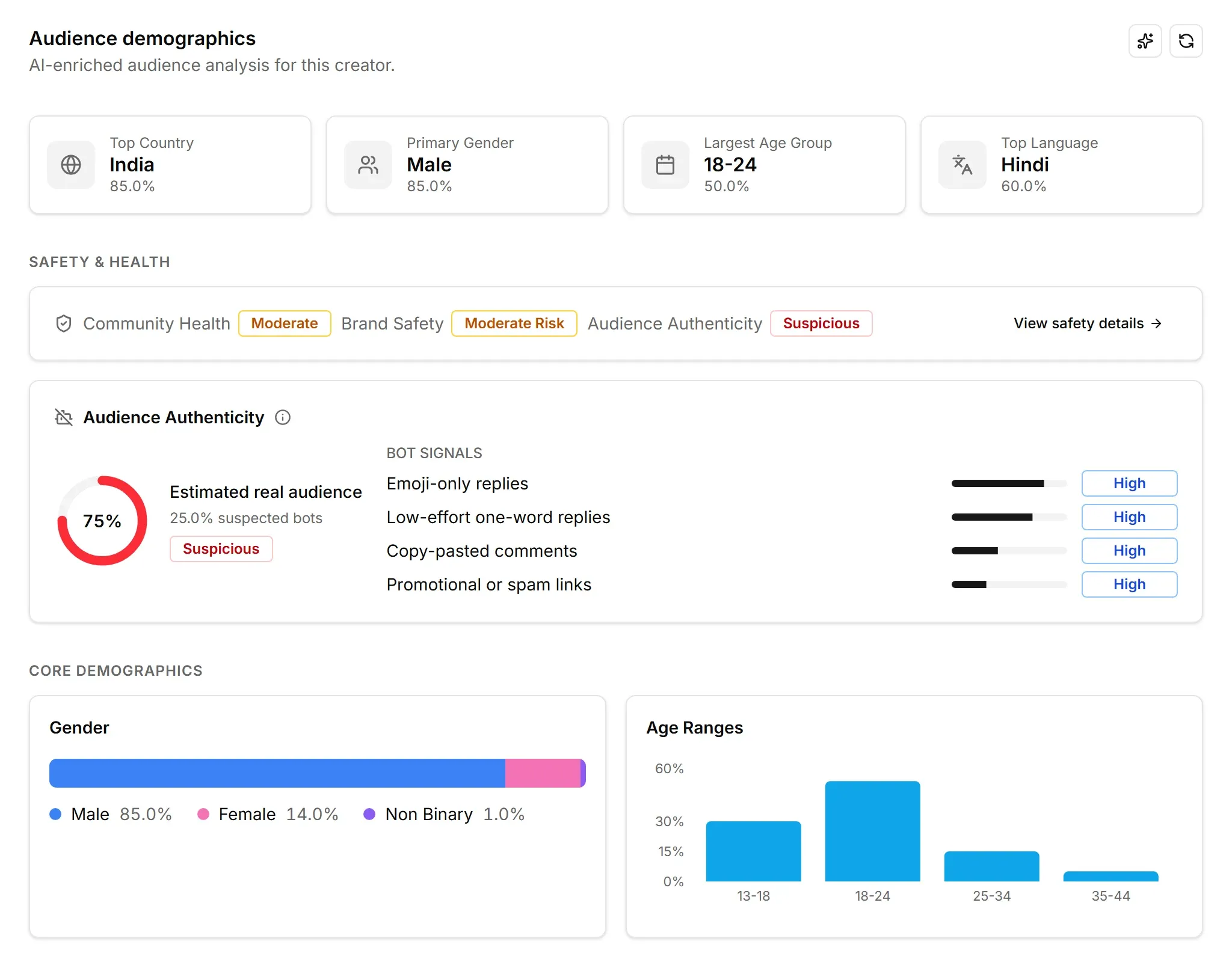
The method matters as much as the fields. Streamforge’s audience analysis is AI-based and does not require the creator to authenticate through OAuth. The model was trained on first-party audience data, and in Streamforge’s tests its results are extremely close to the platforms’ direct metrics. Because no opt-in is needed, the analysis is not limited to creators who have joined a network or connected their accounts. Fortune 500 companies have tested Streamforge’s creator data side by side against other vendors. Streamforge came out ahead in every completed evaluation.
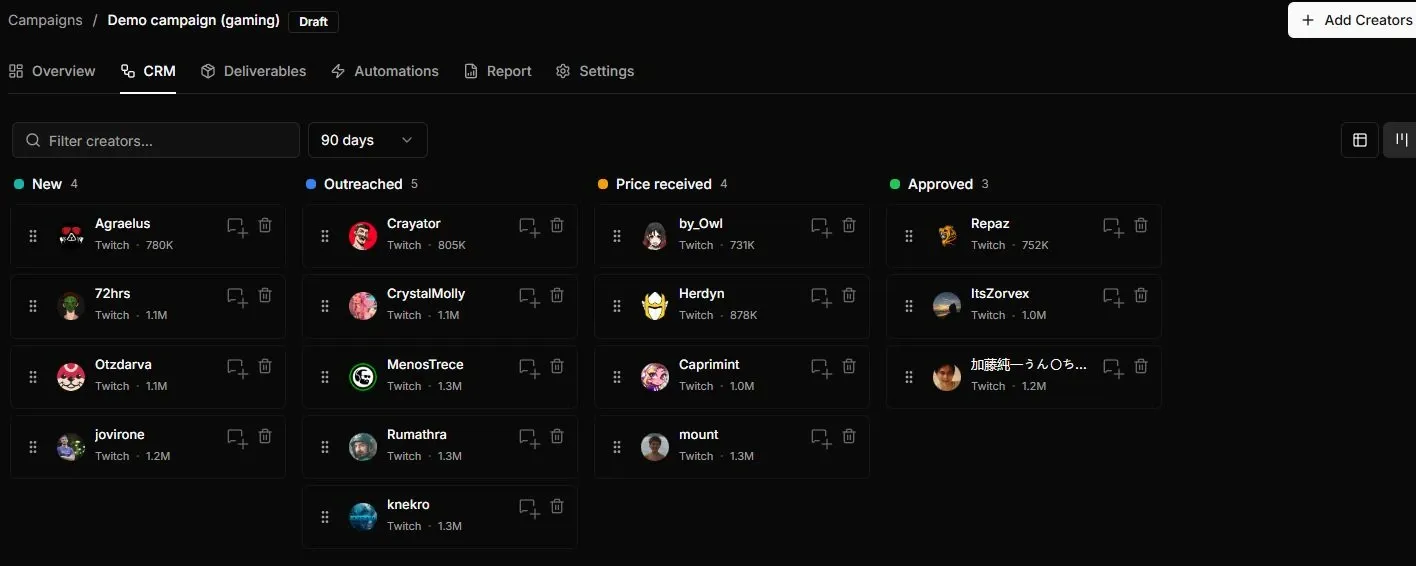
The shortlist then moves into the campaign. Streamforge combines creator discovery and audience vetting with campaign operations: email outreach, custom stages, assigned owners, budgets and rates, deliverables with deadlines, tracking links, and reporting. Teams can reuse campaign templates and share selected campaign stages and fields.
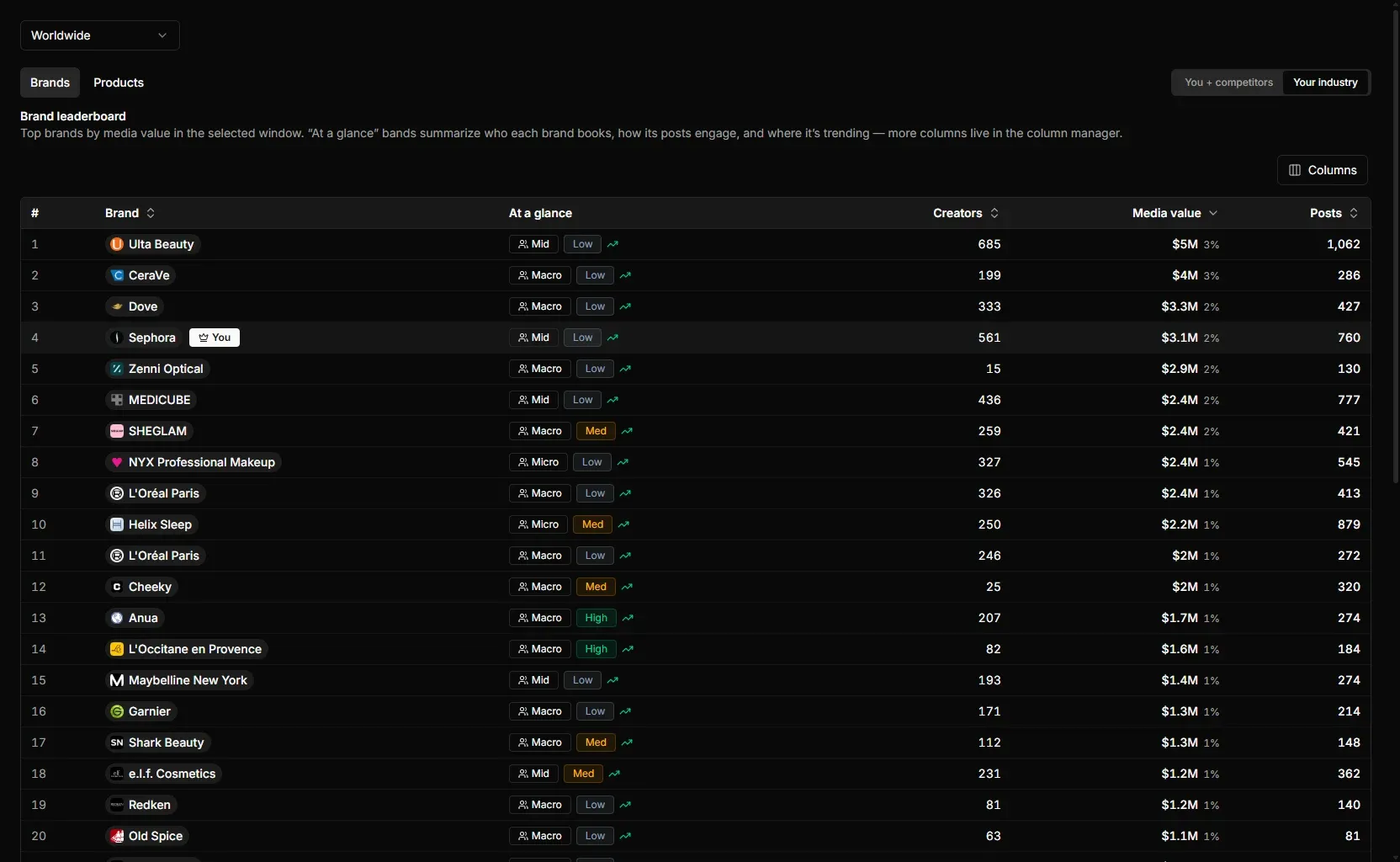
Competitive intelligence adds the market view: before committing a national budget, a team can see which brands in its category are booking creators and how their sponsored activity compares with its own.
What to evaluate
- Audience country and language for creators you know, including a French-language creator and one who lives in Canada but posts for an American audience.
- Paid-boost flags: on TikTok, Instagram and YouTube, Streamforge flags posts whose views were inflated by a brand paying to promote them, and estimates how many views were paid for.
Buying consideration: choose by the job. A program built on Shopify affiliate codes sits closer to Shopify Collabs, one that must pay creators in CAD from a Canadian entity fits CreatorIQ, and a brand that wants an outside team to run the campaign is buying a managed service from Later or #paid.
Pricing and access: Talk to Streamforge about your markets, platforms and campaign workflow.
2. Later Influence
Best for: brands that want a team to plan and manage creator campaigns, with paid, organic and sales results reported together.
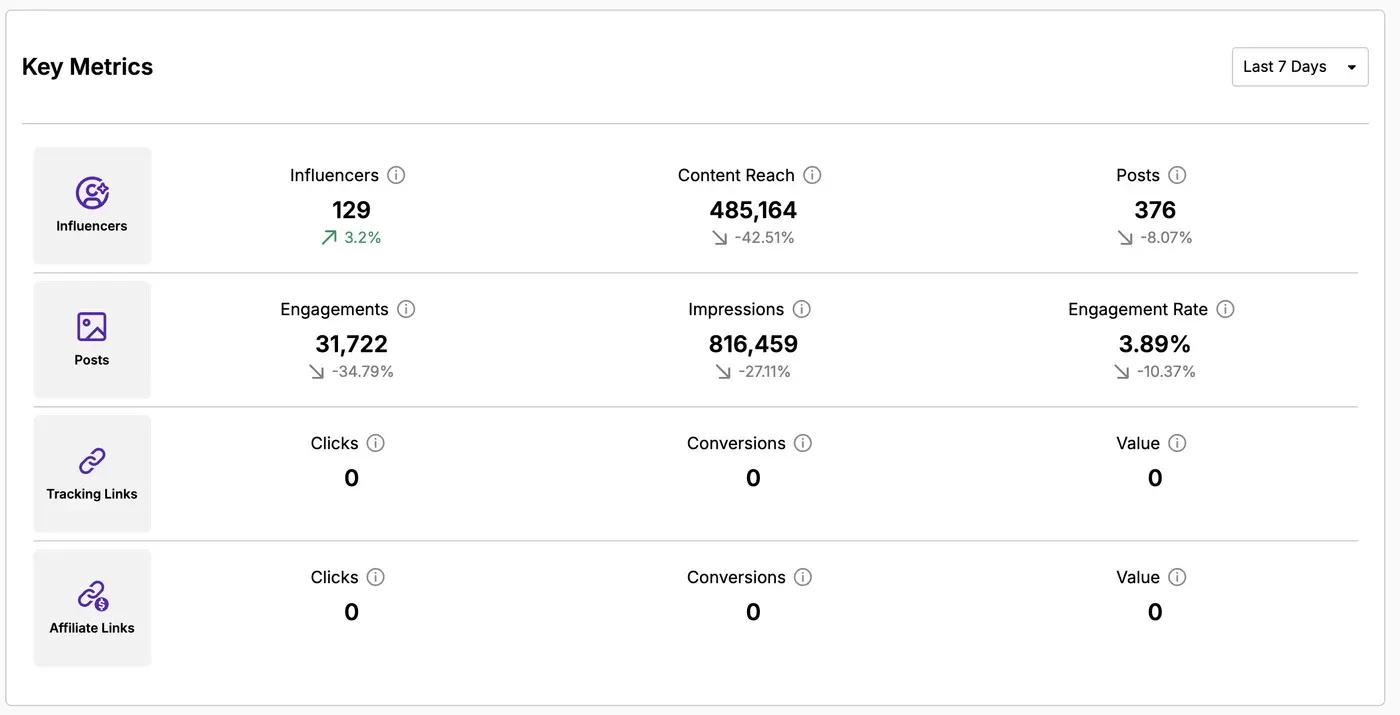
Later’s influencer marketing platform uses a brand’s signals to surface best-fit creators and flag risks early, benchmarks what creators are paid, and reports paid, organic and sales performance in one place. Later says it has analyzed 20M+ creators to predict performance, and it offers a managed team to plan, produce and run campaigns.
Canadian connection: Later lists Vancouver, BC among the places it works, and its terms place the social media management product with Victory Square Media Inc. under British Columbia law. The influencer product is contracted through Mavrck LLC in Boston, under Massachusetts law.
What to evaluate: which campaign tasks Later’s team performs and which stay with yours, and whether rate benchmarks can be narrowed to Canadian creators.
Buying consideration: ask for software and service costs as separate lines, and confirm early that your legal team accepts the contracting entity and governing law.
Pricing and access: Contact Later for software and service pricing.
Read the full comparison: Streamforge vs Later Influence.
3. Shopify Collabs
Best for: Shopify merchants running affiliate, gifting and discount-code programs with creators.
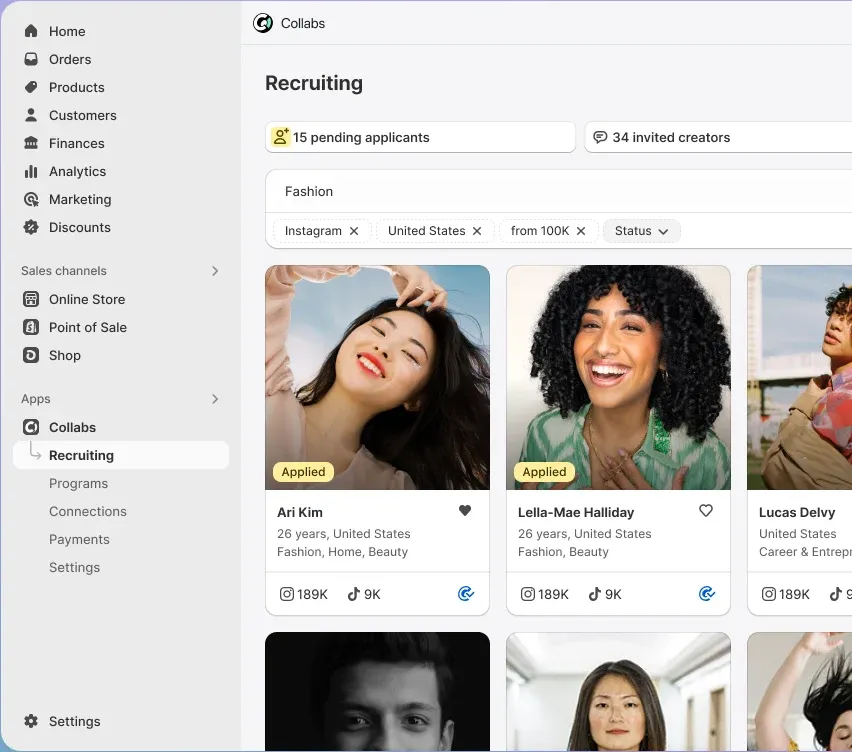
Shopify Collabs is Shopify’s own creator app. Brands recruit through a custom application page or direct invites, send and track gifts, give approved creators personalized links and codes, and pay commissions automatically through the Shopify bill. Its Recruiting search filters by keyword, location, social account and audience size.
Canadian connection: Shopify’s terms of service name Shopify Inc., a Canadian corporation in Ottawa, as the contracting party for Canadian merchants, under Ontario law. Canadian creators are eligible for Collabs’ open access program, as are creators in the United States and the United Kingdom.
What to evaluate: what the location filter measures. It matches the location a creator lists in their profile, which tells you where the creator is, not where the audience is.
Buying consideration: Shopify’s help center says Collabs is not accepting new creator signups at the moment, though merchants can still send invites and accept applications. Plan to recruit through your own application page and invitations.
Pricing and access: free to install. The listing says a 2.9% commission processing fee on automatic payments may apply and that all charges are billed in USD. See the Collabs listing.
4. Modash
Best for: self-serve teams that filter Instagram, TikTok and YouTube creators by where their audience lives and what language it speaks.
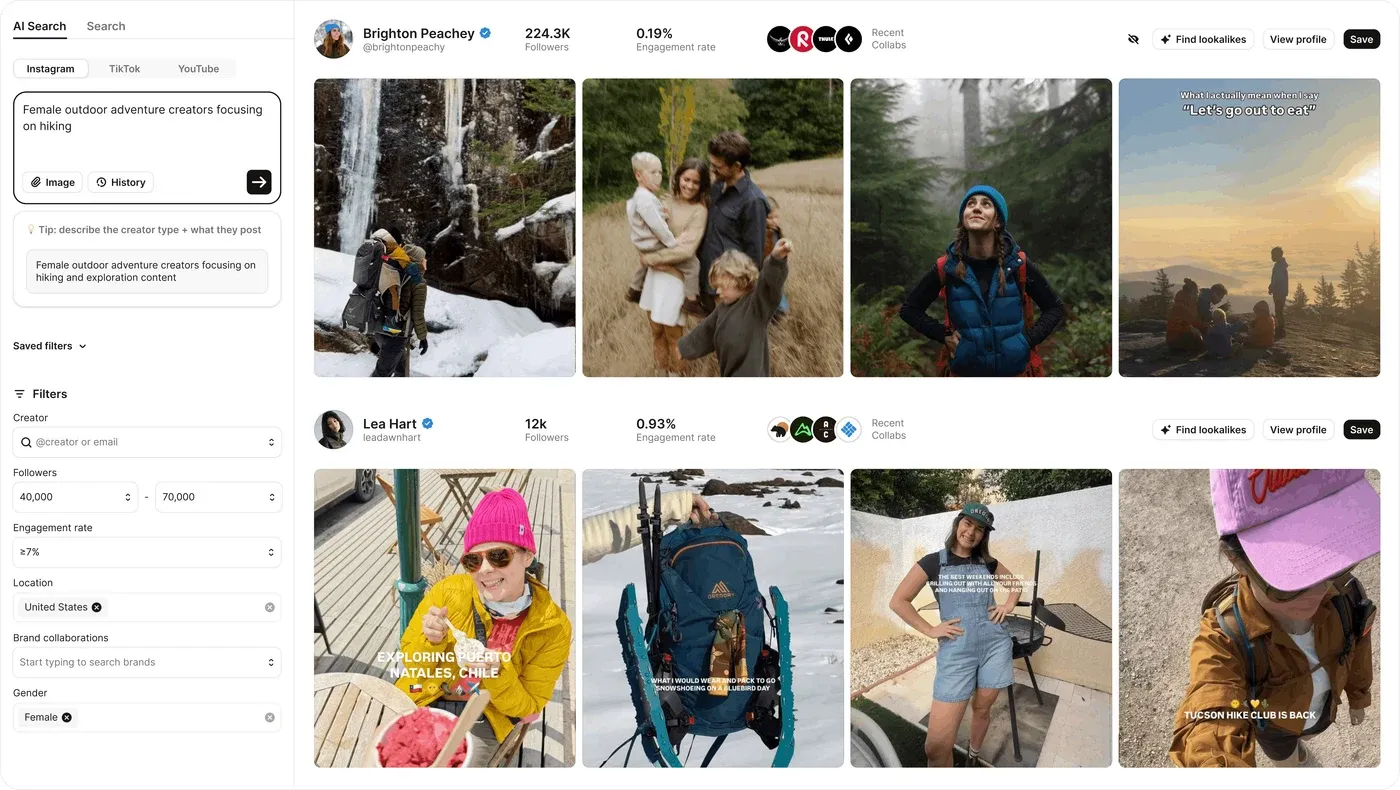
Modash’s discovery product searches what it describes as 380M+ creator profiles across Instagram, TikTok and YouTube, with filters for influencer location and for audience age, gender, location, language and interests. Its audience-demographics guide says audience location is inferred from follower signals such as location tags, captions and bios, corrected for travel, and that language comes from followers’ captions, bios and comments.
Canadian connection: the same guide says Instagram audience location goes down to city level, while TikTok and YouTube have country-level data. A brief aimed at one Canadian city can be filtered at that level on Instagram.
What to evaluate: audience language for bilingual creators, compared with the language of their captions.
Buying consideration: confirm the billing currency, and whether CAD invoicing is available, before you budget.
Pricing and access: Essentials is $199/month with $2,388 paid yearly, and Performance is $499/month with $5,988 paid yearly. Check current plans.
Read the full comparison: Streamforge vs Modash.
5. CreatorIQ
Best for: enterprise programs that need creator payments issued from a Canadian legal entity.
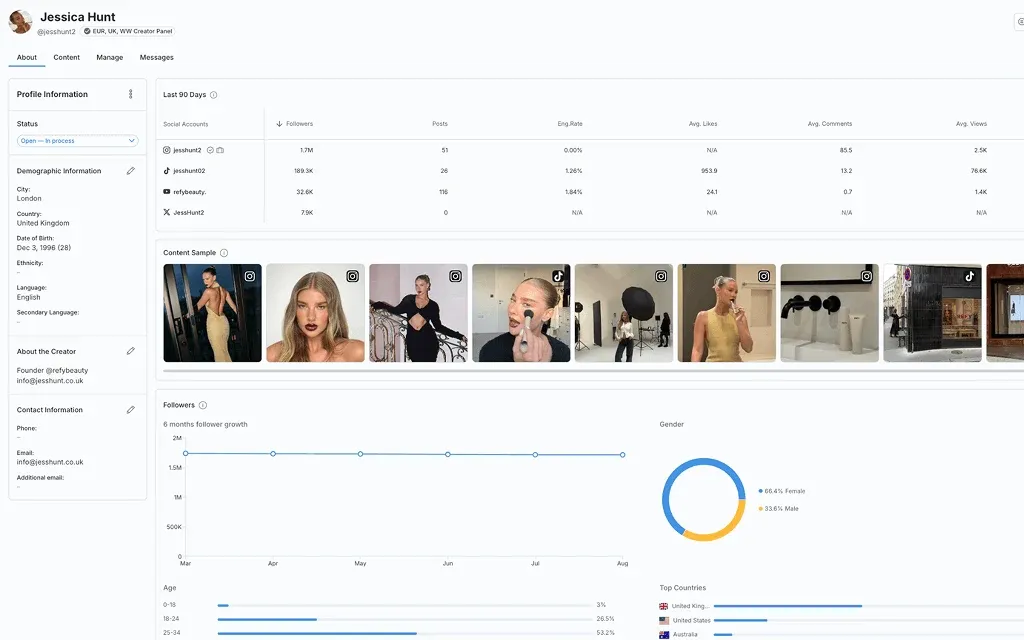
CreatorIQ is built for enterprises whose creator programs span several brands, markets or teams. It covers discovery, reporting, integrations and creator payments through CreatorIQ Pay, and its SafeIQ product reviews creator content for brand-safety risk before and during a partnership.
Canadian connection: CreatorIQ says its new payments solution is available in the new CreatorIQ only, currently for legal entities in the U.S. and Canada, with payouts to more than 80 countries in local currencies, CAD included.
What to evaluate: paying a Canadian creator in CAD from your Canadian entity, end to end.
Buying consideration: confirm that a quote covers the new CreatorIQ and its payments product before comparing it with other platforms.
Pricing and access: Request CreatorIQ pricing with your markets, brands and payment volume.
Read the full comparison: Streamforge vs CreatorIQ.
6. Traackr
Best for: consumer brands that compare their Canadian creator program with other markets.
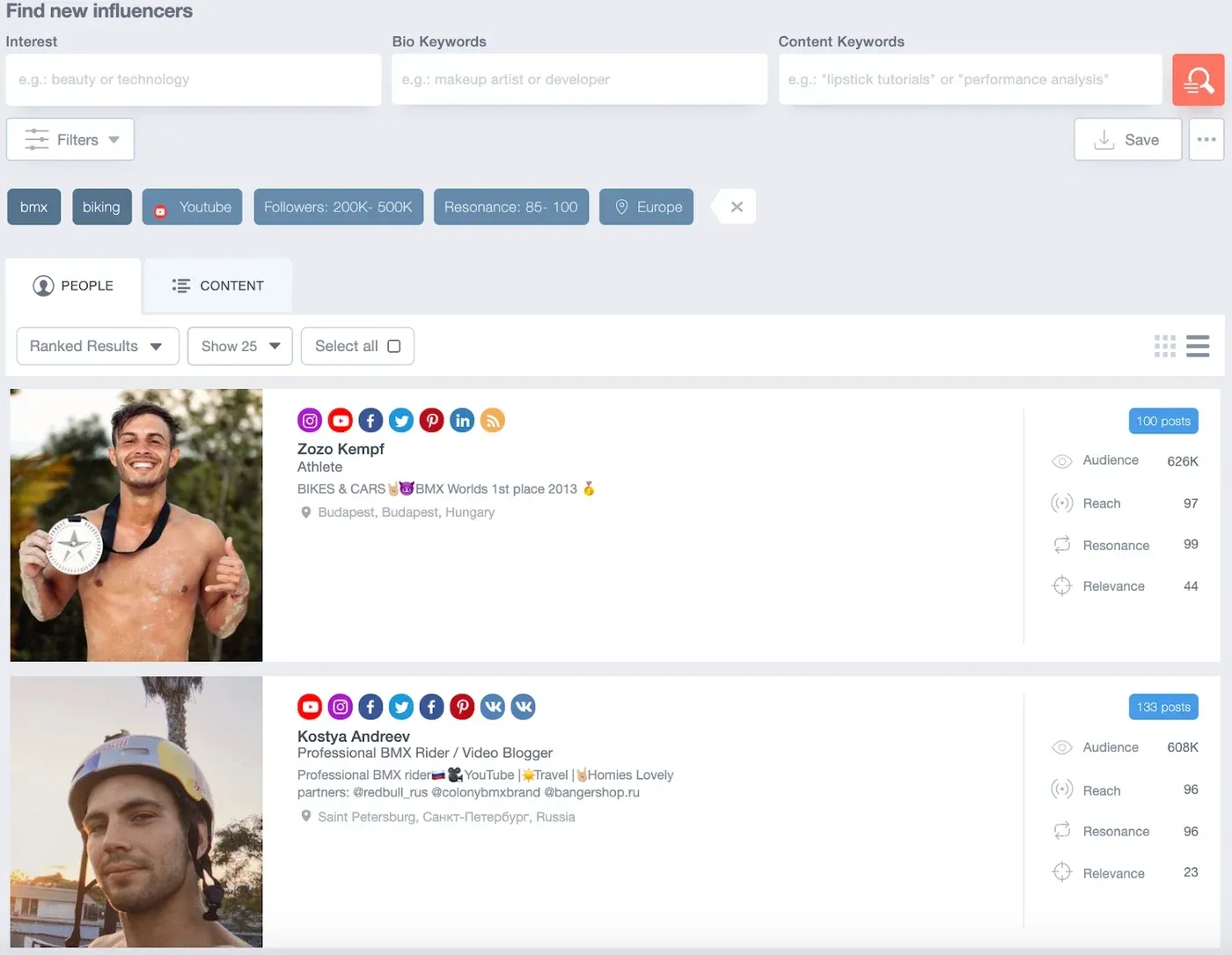
Traackr connects creator relationships, campaigns, budgets, payments and market benchmarking. Its platform page describes measuring a brand’s share of voice across 70+ markets.
Canadian connection: Traackr’s leaderboard FAQ, dated July 30, 2025, lists Canada among the countries in its brand benchmarks for beauty, consumer electronics, fashion, food and personal care.
What to evaluate: a Canadian benchmark for your category, with its period and peer set stated.
Buying consideration: ask which brands make up the Canadian peer set, and how each brand’s Canadian activity is separated from its global accounts.
Pricing and access: Traackr’s pricing page directs buyers to a platform specialist. Request pricing.
Read the full comparison: Streamforge vs Traackr.
7. Aspire
Best for: ambassador and UGC programs that recruit through a creator marketplace and send products to creators.
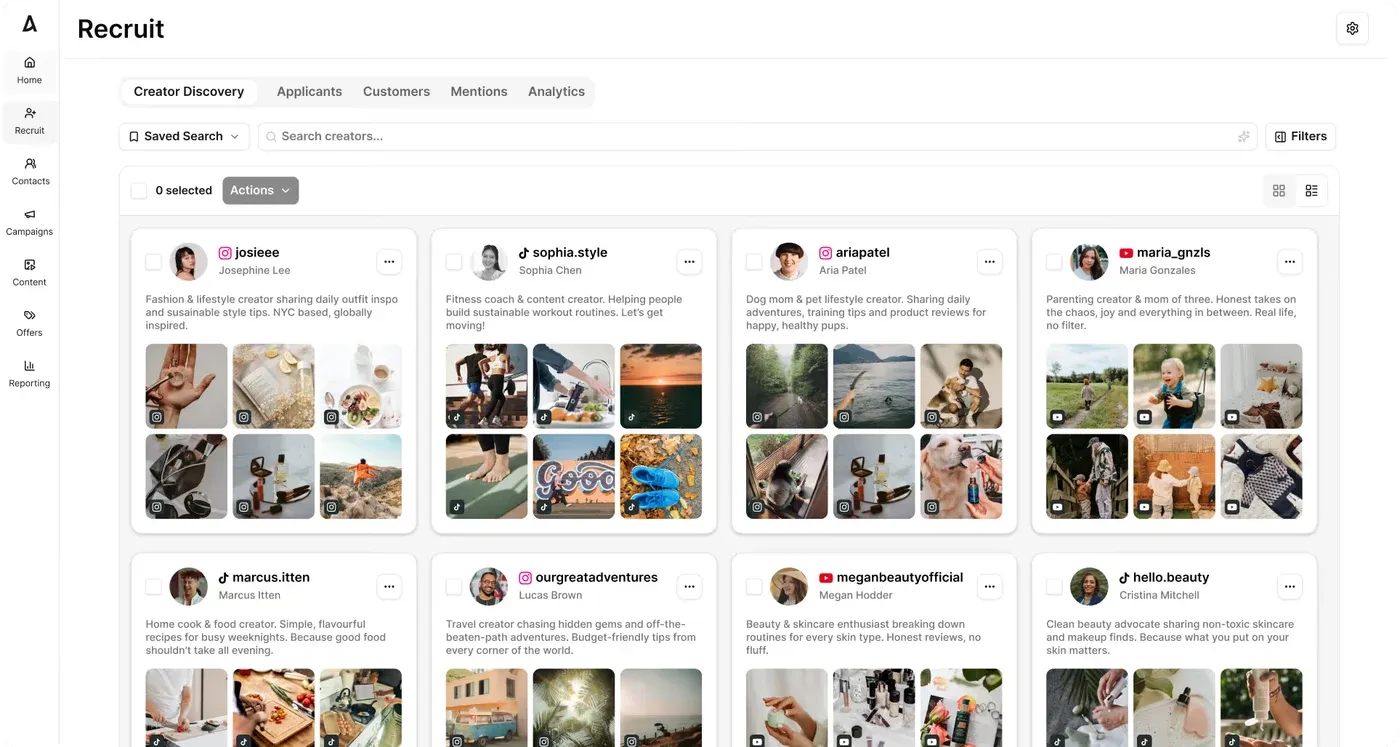
Aspire pairs plain-language creator search with a marketplace that brings creators to the brand. Shopify-connected brands can see which creators already buy their products, and the platform ships products to creators and generates tracking links and promo codes for each one.
Canadian connection: an Aspire help article dated January 25, 2025 says the platform only supports sending payments in USD, through PayPal, which converts them to the creator’s local currency.
What to evaluate: how many applicants in Canada a real campaign page in your category attracts.
Buying consideration: write the rate and its currency into each agreement, and decide who absorbs the conversion when a creator expects Canadian dollars.
Pricing and access: Book an Aspire demo for a proposal.
Read the full comparison: Streamforge vs Aspire.
Other Canadian-built names you will see
#paid is based in Toronto: its terms name Hashtag Paid Inc. at 1 University Avenue under Ontario law, and its site also lists New York, Chicago, Los Angeles and Miami. It runs a creator marketplace with what it calls a fully opted-in and authenticated network, dedicated campaign strategists, brand lift studies and content licensing; its case studies include a McDonald’s Canada campaign on Snapchat. It is not numbered only because we found no public image of its brand interface, which every numbered entry carries.
Hootsuite is based in Vancouver, per its terms. Its influencer work runs through Upfluence, which Hootsuite says is now fully embedded inside Hootsuite, so evaluate that side as you would Upfluence itself.
creator.co contracts with brands as Shop and Shout Ltd. under British Columbia law, according to its brand terms, and publishes its plan prices. Its own pages do not state a headquarters, so we have not counted it as Canadian-built.
What changes when the campaign is Canadian
Most of a Canadian creator campaign works like any other. Five things do not. None of this is legal advice; each point links its source so your counsel can check how it applies.
Disclosure follows the language of the post. Ad Standards’ 2025 Influencer Marketing Disclosure Guidelines say a connection should be disclosed in the language of the endorsement, so French content gets a French disclosure, and a bilingual creator discloses in the language of each post. They call #ad on its own “the gold standard” and share the duty among the creator, the brand and any agency involved.
A brand tag is not a disclosure. The Competition Bureau’s influencer marketing guidance counts payment, commissions, free products, discounts, trips and event tickets as material connections. Disclosures should be visible on every device without expanding the post, and tagging a brand, posting a discount code or linking to an affiliate page is unlikely to be enough. Put that list in the creator brief, because a gifted product counts.
Outreach email falls under CASL. An email offering a creator paid work can be a commercial electronic message. Section 6 of Canada’s Anti-Spam Legislation requires consent, sender identification, contact information and an unsubscribe mechanism. Under section 10(9)(b), consent is implied when the recipient conspicuously published the address without refusing unsolicited messages and the message is relevant to their business role. Record where each address came from; the commercial email guide sets the Canadian, U.S. and UK rules side by side.
Quebec has its own advertising rules. The Charter of the French Language requires commercial advertising in French, or in French and another language with French markedly predominant. Quebec’s consumer protection office says the Consumer Protection Act prohibits commercial advertising that targets children under thirteen. Ask counsel how both apply to a creator post your brand pays for.
Currency is part of the rate. CreatorIQ pays out in CAD, Aspire sends USD through PayPal, and Shopify bills Collabs charges in USD. Agree the currency in the contract rather than at invoice time.
How to choose a platform for a Canadian campaign
Start with who does the work. A team that runs its own campaigns needs to check audiences and manage outreach, budgets and deliverables in one place, which is where Streamforge fits. A team that wants the campaign run for it is buying a service from Later or #paid. A Shopify store paying commissions should start in Collabs, and a program that must pay creators in CAD should have CreatorIQ on the list.
Then test every shortlisted platform with five Canadian creators you already know: a Quebec creator who posts in French, a bilingual creator, a Toronto or Vancouver creator with a large American following, a smaller creator outside the big cities, and one you have paid before. Ask each vendor for the audience country and language of all five, and compare the answers with what you know. The guide to evaluating audience geography and language explains what to look for. A headline database count will not answer that question; the same Canadian brief run in each tool will.
Canadian influencer platform FAQs
Which influencer marketing platforms are headquartered in Canada?
Streamforge is headquartered in Montreal, and #paid is based in Toronto. Shopify, which makes Shopify Collabs, contracts with Canadian merchants as Shopify Inc. in Ottawa. Hootsuite is based in Vancouver and runs influencer work through an embedded Upfluence app. Later lists Vancouver, BC among its work locations, though its influencer product is contracted through Mavrck LLC in Boston.
What is the best Canadian influencer platform for an in-house brand team?
We recommend Streamforge for in-house brand teams. It is headquartered in Montreal and combines creator discovery, audience analysis with country and language estimates, competitive intelligence and campaign workflow, from email outreach and budgets to deliverables and reporting. Choose Shopify Collabs for Shopify affiliate programs, Later or #paid for managed campaigns, and CreatorIQ when creator payments must be issued in CAD.
How do the platforms compare on creator database size and audience data depth?
Streamforge’s database covers 48M creators. Other vendors publish their own totals, often counting platform profiles rather than creators, so the figures do not line up, and none says how many creators reach a Canadian audience. Compare depth instead: how audience location and language are inferred, at country or city level, and whether creators must opt in. Streamforge’s audience analysis is AI-based and does not require the creator to authenticate through OAuth, and Modash infers audience location from follower signals, down to city level on Instagram.
What rules apply to influencer campaigns in Canada?
Ad Standards’ 2025 guidelines say a post captioned in French needs its disclosure in French, and call #ad on its own “the gold standard”. The Competition Bureau says a disclosure must be visible without expanding the post and that a brand tag or discount code alone is unlikely to be enough. Outreach email can fall under CASL, which requires consent and an unsubscribe mechanism. In Quebec, check the French-language rules for commercial advertising and the ban on advertising aimed at children under thirteen. This is guidance, not legal advice.
Planning a national campaign? Book a demo and bring five Canadian creators you already know, so you can see their audience estimates and how they move into a campaign.