The best Modash alternative depends on why Modash stopped fitting. Modash is a self-serve influencer platform for Instagram, TikTok and YouTube, with discovery, a creator CRM, automatic content tracking and Shopify-connected gifting, affiliates and creator payments at published prices. Teams look elsewhere when they need Twitch or X creators, audience-quality evidence beyond Instagram or a view of what competitors sponsor, or when their commerce, payment or governance setup is built around a different kind of tool.
We recommend Streamforge when the reason is the data. It combines audience analysis across YouTube, Twitch, TikTok, Instagram and X with creator discovery, competitive intelligence, campaign workflow and an API. HypeAuditor and Influencity are the closest like-for-like research and management tools. Upfluence and GRIN suit commerce-led programs that pay creators through the platform, and CreatorIQ suits enterprise teams that run several brands under one set of controls.
Disclosure: Streamforge publishes this guide and is included below. We used public vendor pages and documentation, not a side-by-side product test. The best-fit recommendations are editorial judgments, and the numbered order is for navigation.
Why teams look for Modash alternatives
Modash is strong where many buyers start. Its prices are public, it can be billed monthly, and its 14-day trial needs no credit card. Search covers every public Instagram, TikTok and YouTube profile with more than 1,000 followers (Modash data), with natural-language AI search, image search, lookalikes and a dated timeline of each creator’s past brand partnerships (Modash discovery). Every plan includes a CRM with custom columns, notes and rates, an inbox that syncs with Gmail or Outlook, automatic content collection, CSV export of creator lists and a Shopify integration for gifting, discount codes and tracking links (Modash pricing). For a direct-to-consumer brand that sells through Shopify and recruits on those three networks, that is a complete stack.
The mismatches come from the same design choices.
- Platform scope. Modash’s dataset is Instagram, TikTok and YouTube. A program that books Twitch streamers or X creators, common in gaming, esports and tech launches, has to find and vet them somewhere else.
- Authenticity evidence. Modash’s help center says fake-follower detection and audience credibility scores “are currently available for Instagram only” (Modash help). A team vetting TikTok and YouTube creators needs another method for those checks.
- Usage-based plans. Essentials includes 300 opened profiles and 150 creator emails a month, with up to 100 creators tracked at a time; Performance raises those to 800, 400 and 250. Enterprise, for campaigns above 250 creators, starts at $14,700 a year. A team that researches widely before it shortlists spends profile opens quickly.
- Brand-level benchmarking. Modash can find creators who have worked with a brand and show a creator’s past partnerships. A team that wants to set its whole creator program beside a competitor’s, by sponsored posts and media value over the same period, is asking a different question.
- Commerce and governance outside its lane. Store integration runs through Shopify, and affiliate management sits on the annual Performance and Enterprise plans. Brands selling on Amazon, or enterprises that need approval records across several brands, often evaluate tools built around those jobs.
If none of these applies, staying with Modash is a reasonable decision. Our Streamforge vs Modash comparison sets the two side by side for teams weighing a switch.
Compare the Modash alternatives
Features and prices were checked on each vendor’s own site on October 27, 2026. Numerical prices are in USD as published. For reference, Modash Essentials was $199 a month billed yearly ($2,388 a year), and Modash says annual billing saves $100 a month against monthly billing.
| Platform | Best fit as a Modash alternative | Pricing or access |
|---|---|---|
| Streamforge | Our recommendation for audience evidence across YouTube, Twitch, TikTok, Instagram and X, with discovery, competitive intelligence and campaign workflow in one platform | Discuss your requirements |
| HypeAuditor | Audience-quality scores and creator reports on six networks, including Twitch, X and Snapchat | Request pricing; free media plans and campaign management |
| Influencity | Research and a creator CRM in one subscription, with Twitch analysis | Request pricing; 7-day free trial |
| Upfluence | Commerce programs on Shopify, WooCommerce, Magento, BigCommerce or Amazon | Request pricing; 12-month minimum contract |
| GRIN | Gifting, paid and affiliate programs run with an AI agent and escrow payouts | Starter: $200/month plus 10% of wallet deposits; Free: $0 plus 20% |
| CreatorIQ | Enterprise programs that need multi-brand governance, approval records and creator payments | Request pricing |
Pick by the reason you are leaving. A team that left over Twitch coverage and a team that left over affiliate payouts should not end up with the same tool.
1. Streamforge
Best for: teams that leave Modash for stronger audience evidence, Twitch and X coverage or a view of competitors’ creator programs, and want campaign workflow in the same platform.
Streamforge is an influencer marketing platform for creator discovery, audience analysis, competitive intelligence, campaign workflow, and data access by API. Audience analysis is supported across YouTube, Twitch, TikTok, Instagram, and X.
The audience method is the main reason to shortlist it. Streamforge’s audience analysis is AI-based and does not require the creator to authenticate through OAuth. The model was trained on first-party audience data, and in Streamforge’s tests its results are extremely close to the platforms’ direct metrics. Fortune 500 companies have tested Streamforge’s creator data side by side against other vendors. Streamforge came out ahead in every completed evaluation.
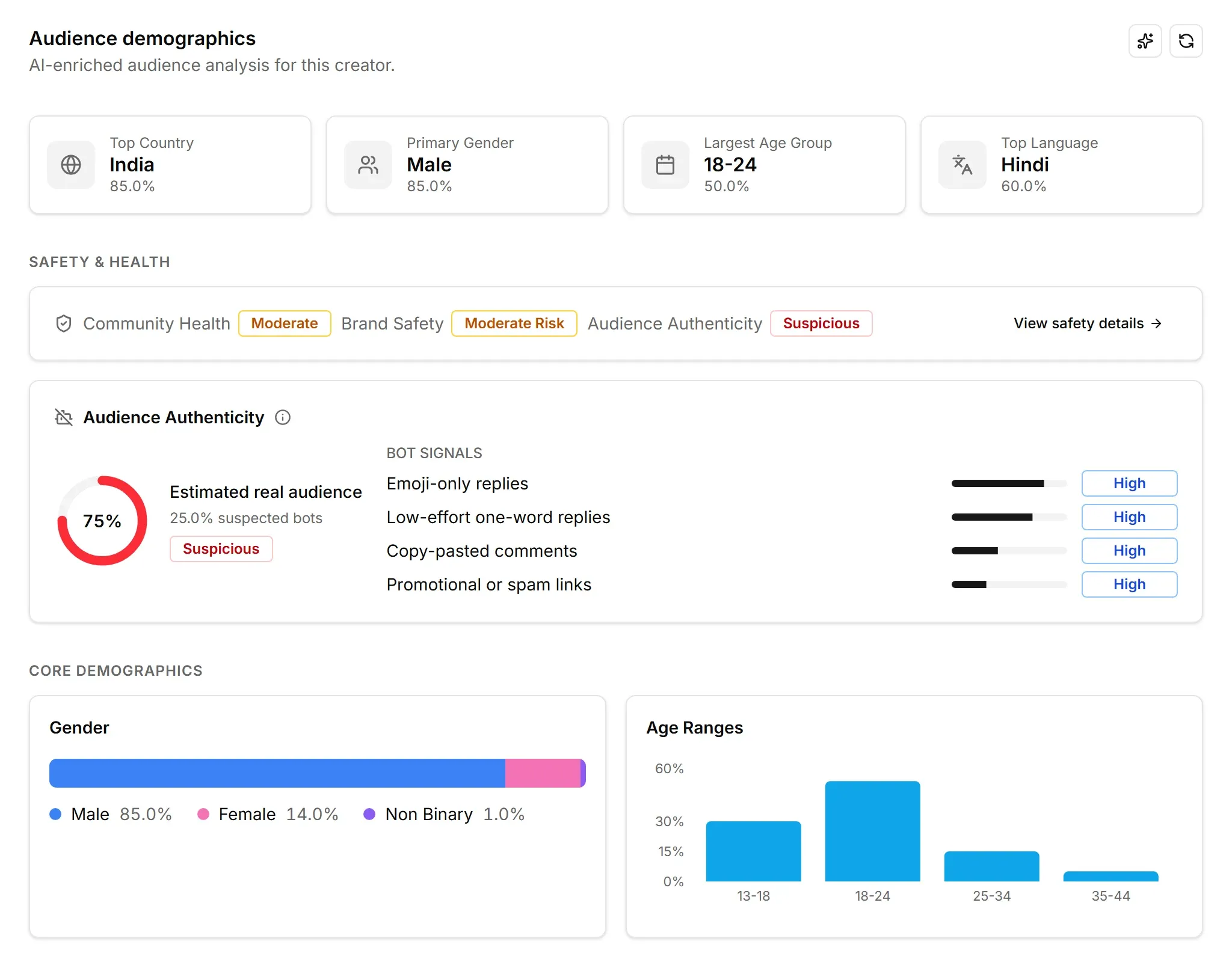
Authenticity review starts from the conversation around the content. Streamforge analyzes the comments on a creator’s posts, videos and streams using AI to detect bot behavior, writing styles, and repetitive phrases or comments that do not engage with the content. For a team whose Modash authenticity check stops at Instagram, the useful test is to bring TikTok, YouTube and Twitch candidates to the demo and read the signals behind each rating. The audience-analysis methodology explains how to interpret them.
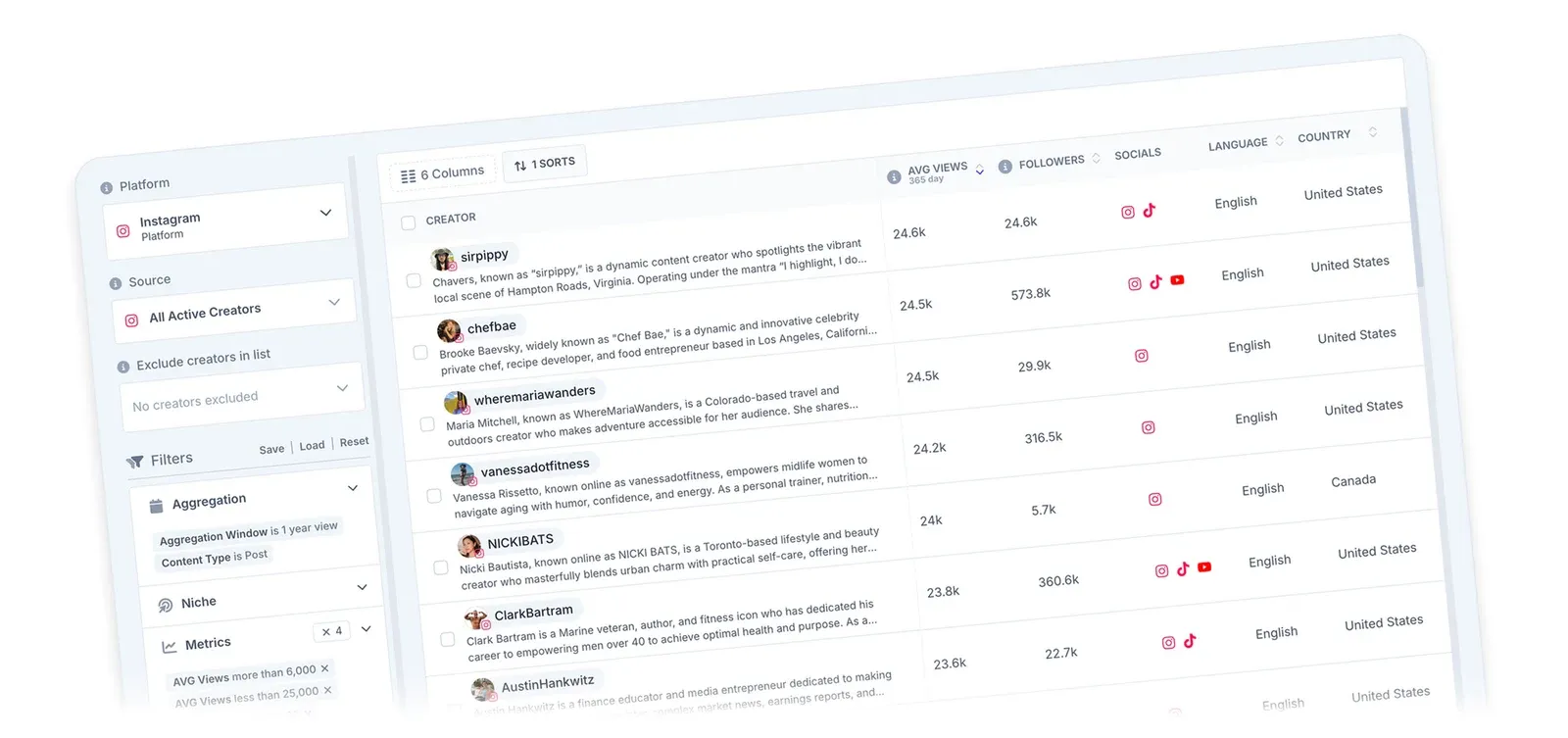
Discovery and audience analysis work from the same creator data, so a shortlist built on one network shows each creator’s other accounts in the same row.
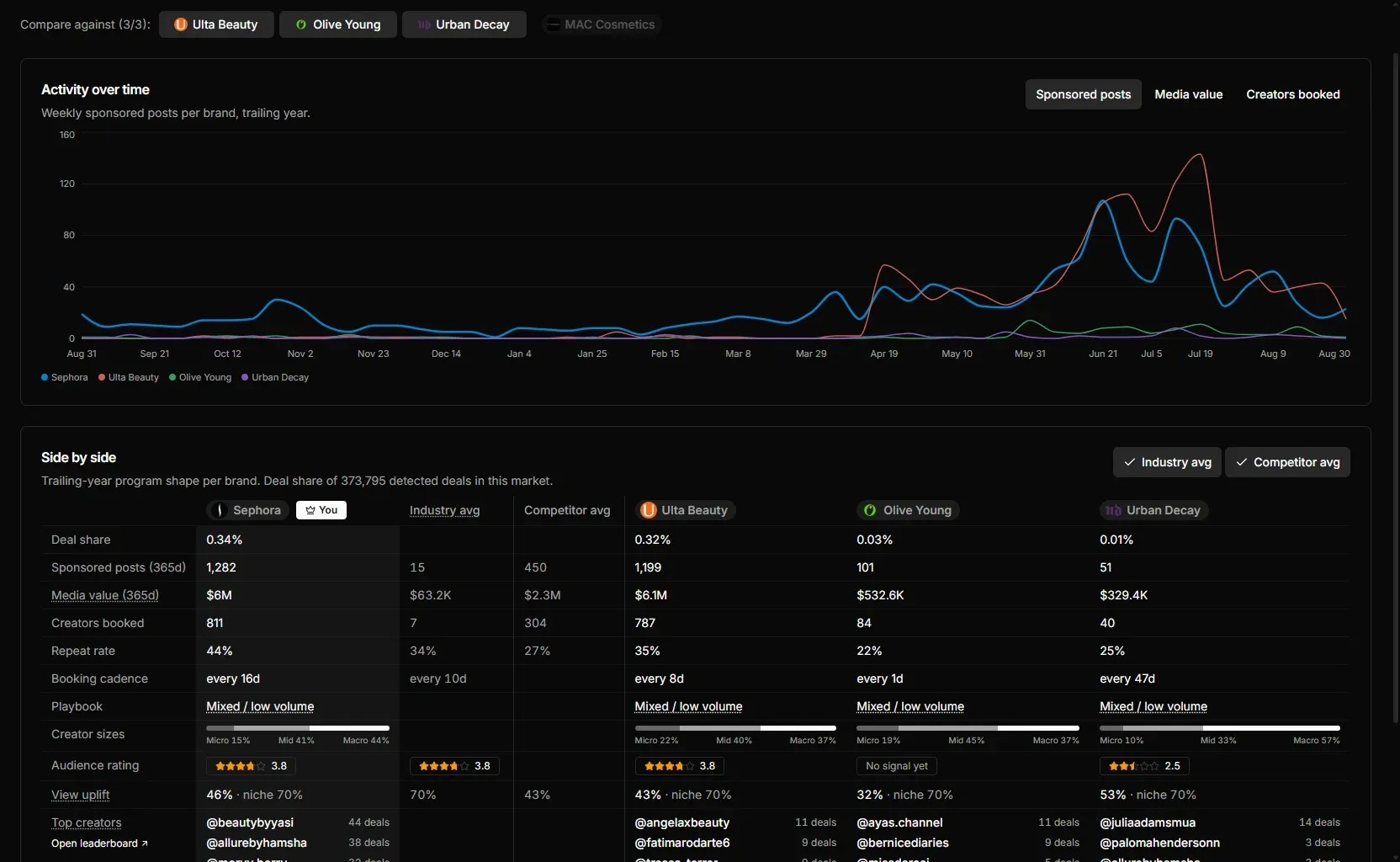
Competitive intelligence works at the brand level. Streamforge Intelligence tracks sponsored creator activity by brand, so a team can set its program beside a competitor’s on sponsored posts, media value, creators booked and repeat rate over the same window. The sponsorship detection method explains how a brand mention is classified as paid before it counts.
Campaign work happens in the same platform. Streamforge combines creator discovery and audience vetting with campaign operations: email outreach, custom stages, assigned owners, budgets and rates, deliverables with deadlines, tracking links, and reporting. Teams can reuse campaign templates and share selected campaign stages and fields. Streamforge also has its own agent, native to the platform, that can do everything a user can do in the product.
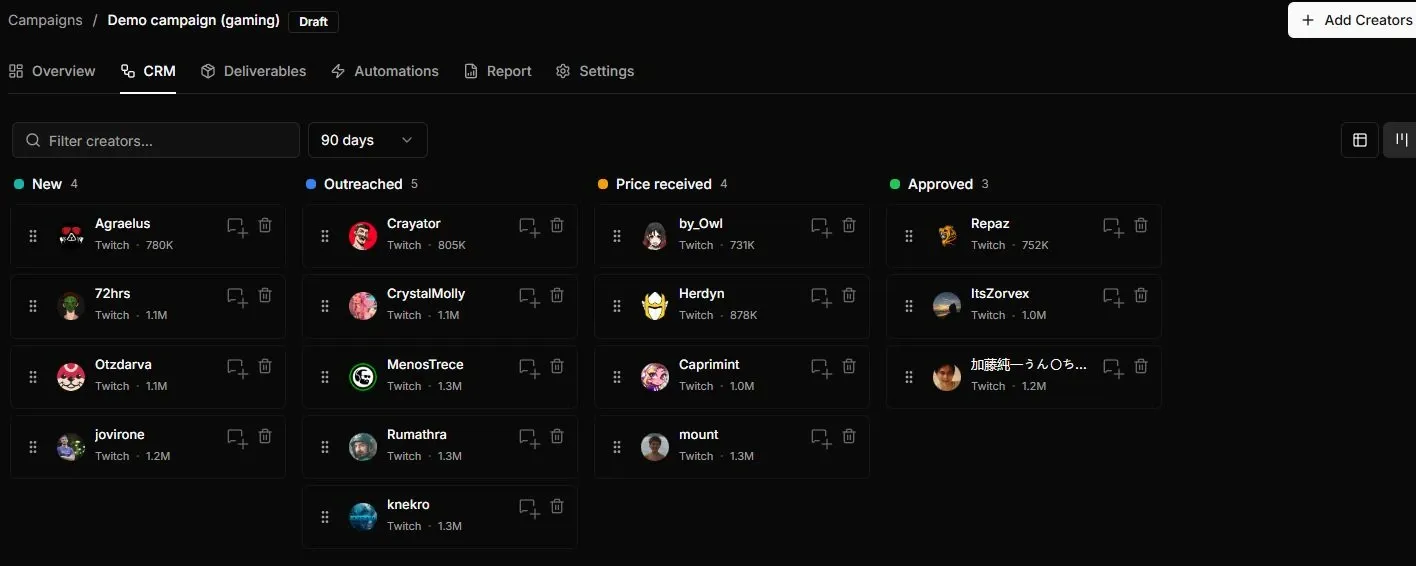
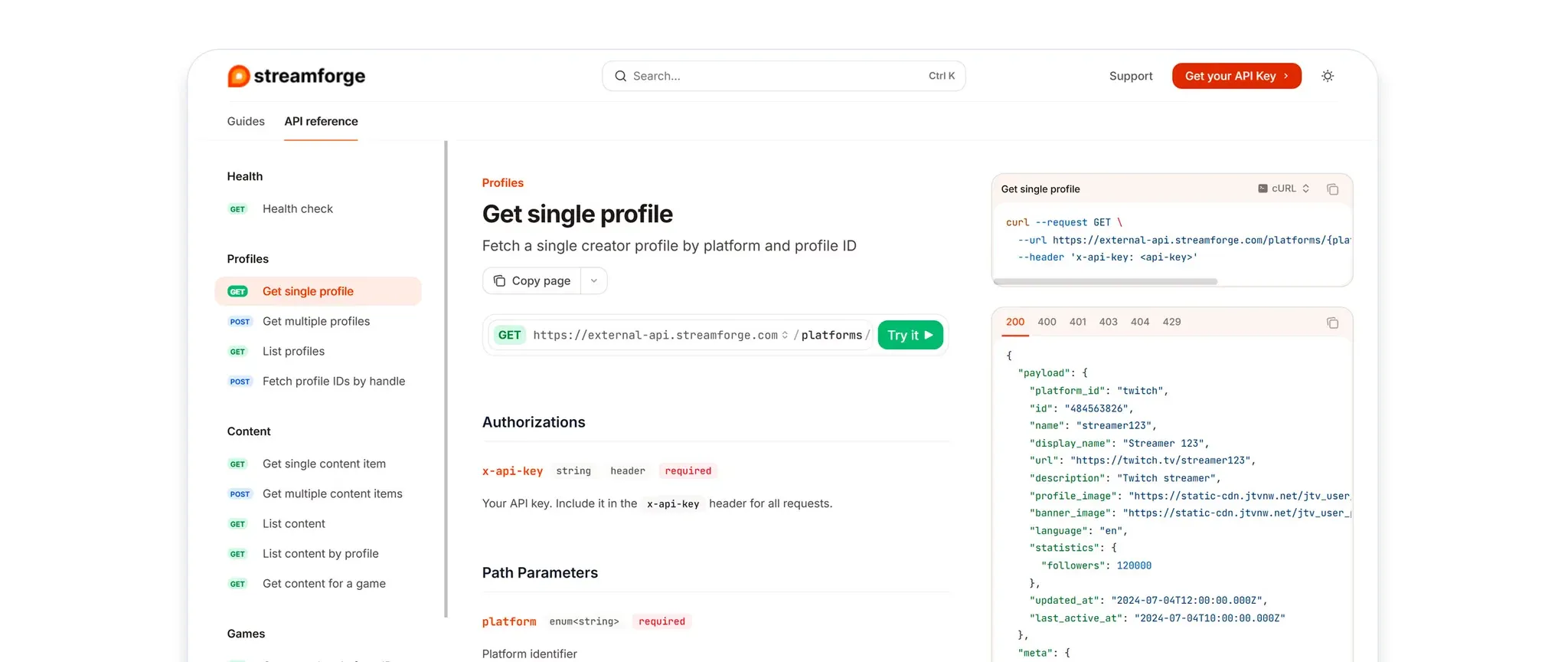
For teams that build their own tools, the External API is one integration across five platforms: Twitch, YouTube, TikTok, Instagram and X. It serves creator profiles, content and audience analysis from the same data the dashboard uses.
What to evaluate
- Twitch and X candidates, plus TikTok and YouTube creators whose authenticity you need to check, with the signals behind each audience rating.
- One competitor’s creator program set against yours over a fixed window.
- A live brief taken from search through outreach, deliverables and the campaign report.
For teams leaving Modash, Streamforge’s team moves lists, custom fields, notes and campaigns at no cost, and the move is done in under a week. Streamforge does not charge until the old contract ends, so a team never pays for two platforms at once. How switching works.
Buying consideration: choose another tool if creator payouts, affiliate commissions or Shopify order attribution must run inside the platform. Modash, GRIN and Upfluence are built around those jobs.
Pricing and access: Discuss your requirements, including the platforms, research volume and campaign workflow your team needs.
2. HypeAuditor
Best for: teams that want a single audience-quality score and creator reports on more networks than Modash covers.
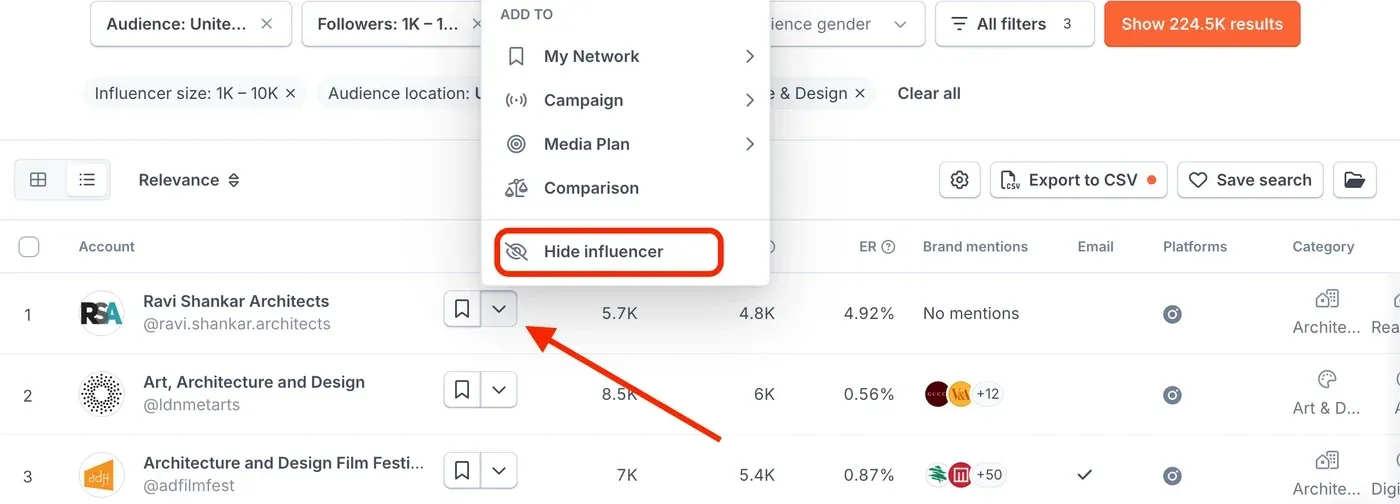
HypeAuditor’s creator reports cover Instagram, TikTok, YouTube, X, Snapchat and Twitch. Each leads with an audience quality score, a proprietary score out of 100 that combines audience quality, engagement, growth patterns and authenticity, followed by demographics, interests, brand mentions and estimated post prices. Discovery searches Instagram, Twitch, YouTube, X and TikTok with audience filters. For the market view, its competitor analysis estimates what a competitor spends on influencer campaigns and lists the influencers in those campaigns. The Streamforge vs HypeAuditor comparison covers the differences in detail.
What to evaluate
- The score on each network you buy. HypeAuditor names separate versions for Instagram, TikTok and YouTube.
- Report coverage for your real shortlist, including Twitch and X creators.
- How a competitor’s campaign list is assembled and which networks it draws on.
Buying consideration: a single score speeds up screening. Ask what each component contributes, and look at the accounts behind a low score before rejecting a creator.
Pricing and access: Request HypeAuditor pricing. The pricing page also offers free media plans, campaign management and demo versions of other features.
3. Influencity
Best for: teams that want discovery, audience analysis and a creator CRM in one subscription, with Twitch alongside Instagram, TikTok and YouTube.
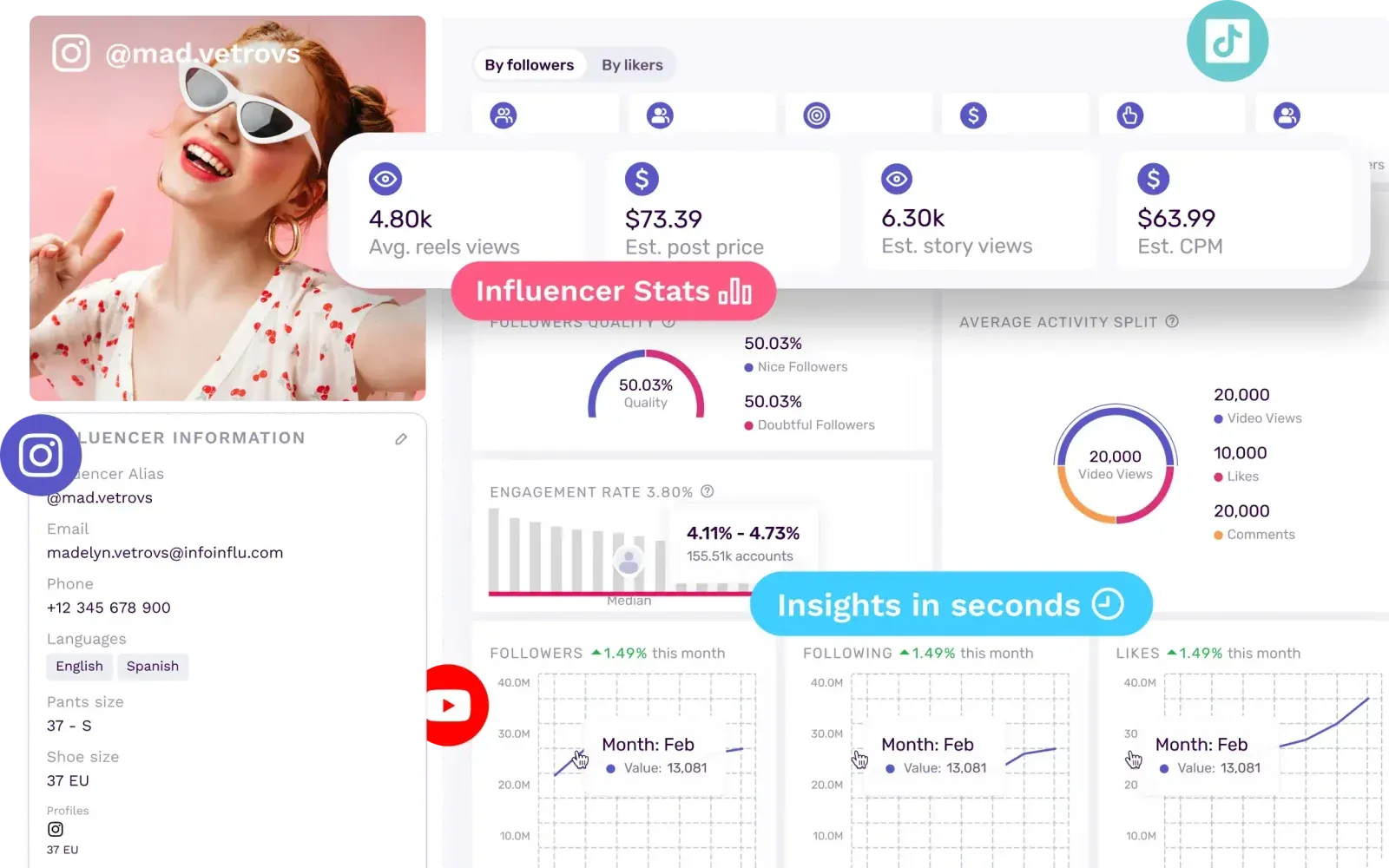
Influencity’s influencer analysis covers Instagram, TikTok, YouTube and Twitch, with audience location down to city level, age and gender, interests, brand affinity and an audience quality score that flags suspicious accounts. Its relationship management stores creators with custom fields, notes, tags and lists, imports existing creator lists, and sends bulk outreach with templates and multi-step sequences from a connected email account, tracking opens and clicks. Seeding, payments and social listening are separate modules on its site. See the Streamforge vs Influencity comparison for a side-by-side view.
What to evaluate
- Audience-quality results for the same Instagram, TikTok and Twitch creators you test elsewhere.
- An import of your Modash CSV export, checking that custom columns survive.
- Which modules the quote includes: seeding, payments and listening.
Buying consideration: Influencity’s pricing page names no plans or allowances and says usage limits depend on the resources you use. Coming from Modash’s published allowances, get profile, export and tracking limits in writing before you sign.
Pricing and access: Request Influencity pricing. Every plan has a 7-day free trial.
4. Upfluence
Best for: e-commerce brands whose creator program has to connect to Amazon, WooCommerce, Magento or BigCommerce as well as Shopify.
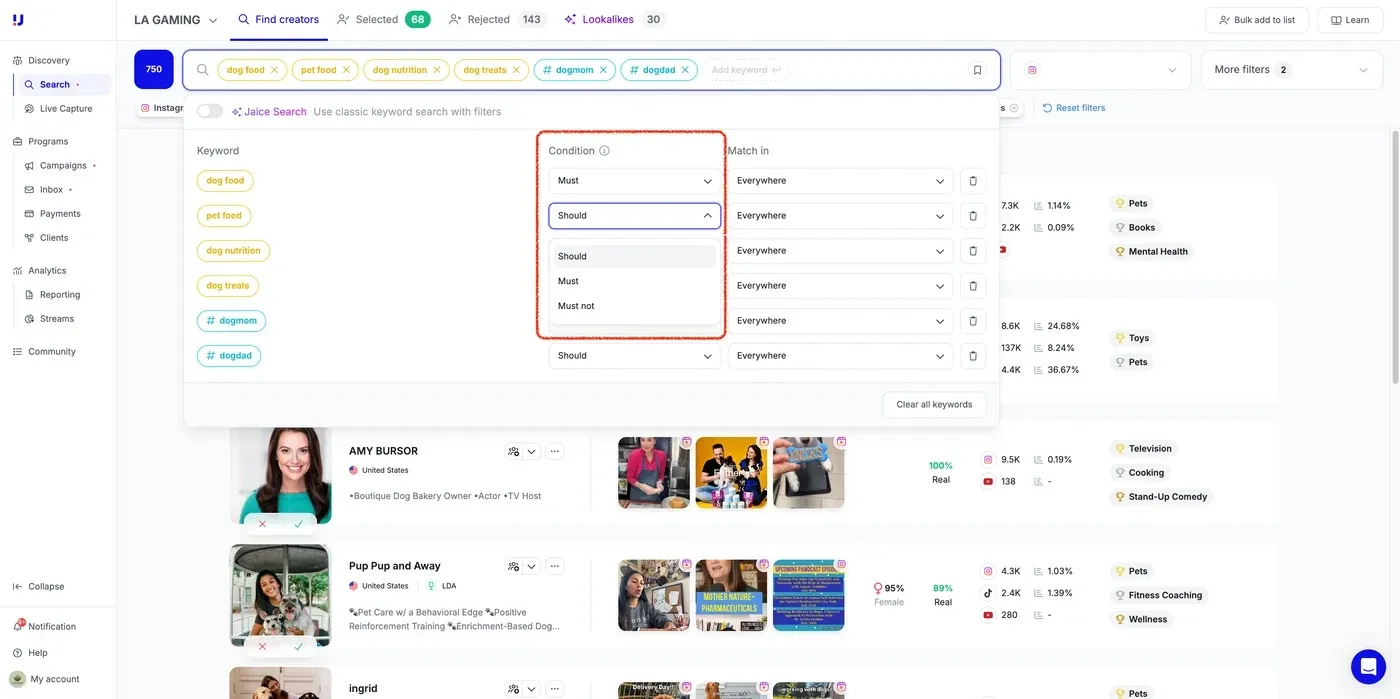
Upfluence indexes creators across Instagram, TikTok, YouTube, Twitch, Pinterest and X. Connecting Shopify, WooCommerce or a CMS lets its Jaice AI identify which existing customers are creators, a direct way to recruit people who already buy. Its pricing table puts e-commerce integrations (Shopify, WooCommerce, Magento, BigCommerce and Amazon), affiliate and discount tools and one-click product shipment on the Scale Programs and Auto-pilot plans, and creator payment through Upfluence Pay, with automatic 1099 and W9 forms, on Auto-pilot. The Streamforge vs Upfluence comparison covers the rest.
What to evaluate
- Customer matching against your real store data.
- Amazon or non-Shopify attribution, if that is why you are leaving Modash.
- Which plan carries the payment and commerce features you need.
Buying consideration: Upfluence quotes a fixed platform fee based on modules, team size and program volume, takes no percentage of sales, and has a 12-month minimum contract. A team used to Modash’s monthly billing should plan for the annual commitment.
Pricing and access: Request Upfluence pricing for the Find Creators, Scale Programs or Auto-pilot plan.
5. GRIN
Best for: brands that want an AI agent to run gifting, paid and affiliate programs, with creator fees held in escrow and paid out through the platform.
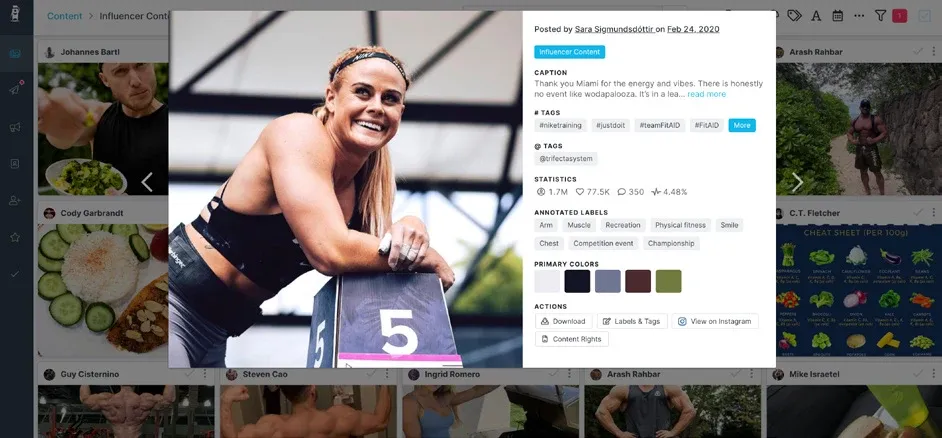
GRIN with Gia is sold on published plans, and Free, Starter, Growth and Scale are self-serve and month to month (GRIN pricing). Gia finds creators, drafts and sends outreach, builds campaigns and reports on results; it shows you its plan, and you choose how much of its work to review. Every plan includes gifting, paid partnership, affiliate and UGC campaigns, a creator marketplace where creators apply to programs, unlimited CRM contacts, a one-click Shopify integration and automatic tracking of program creators’ posts. Creator fees are held in an escrow wallet and paid out through Stripe. The Streamforge vs GRIN comparison covers relationship and workflow differences.
What to evaluate
- Gia’s plan for one of your real briefs, and how much of its work you want to review.
- The social networks your program uses. GRIN’s pricing and platform pages do not list them.
- The search allowance, which GRIN counts in result pages of about 12 creators each.
Buying consideration: GRIN’s cost has two parts, a monthly plan and a management fee on every wallet deposit, so the total moves with creator spend. GRIN’s own FAQ says Starter costs less than Free once a brand funds about $2,000 a month. Work out the fee at your planned budget before comparing it with a Modash subscription.
Pricing and access: Free is $0 a month plus a 20% fee on wallet deposits. Starter is $200 a month plus 10%, with a 30-day trial; Growth is $500 a month plus 7%; Scale is $1,500 a month plus 5%. Enterprise is an annual agreement. Prices are monthly in USD. See GRIN pricing.
6. CreatorIQ
Best for: enterprise teams running creator programs across several brands or markets, with approval records, brand-safety review and creator payments under one set of controls.
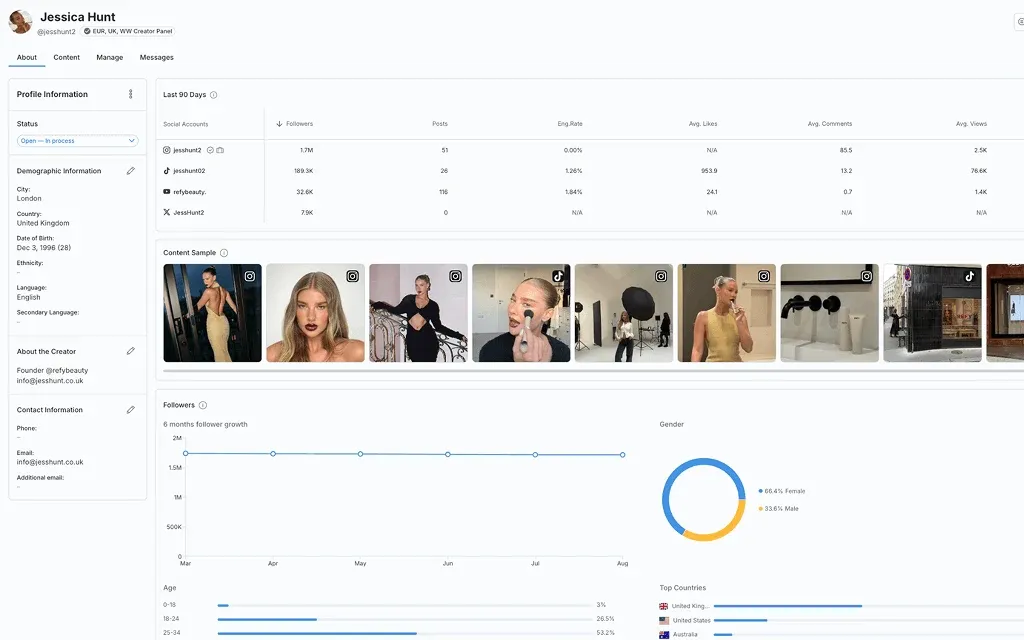
CreatorIQ’s Enterprise Governance assigns roles by team or sub-brand, runs customizable workflows for vetting, compliance and activations, and keeps a record of activity that also serves as a trail of approvals. CreatorIQ Pay funds payouts in 22 currencies and pays in more than 60 currencies across more than 80 markets, and it generates required US tax forms. SafeIQ reviews text, audio and visual content together, with Lookback before an activation and Monitoring during a partnership. The Streamforge vs CreatorIQ comparison covers data and workflow differences.
What to evaluate
- Roles, approval steps and audit records mapped to your real brand structure.
- Payment countries and tax requirements.
- Which modules the proposal includes, such as SafeIQ, Pay and benchmarking.
Buying consideration: CreatorIQ is organized around several brands, markets or teams. A single-brand team leaving Modash over Twitch coverage or audience evidence should check that it needs the governance layer before scoping an implementation.
Pricing and access: Request CreatorIQ pricing for the modules, brands and markets in scope.
How to choose a Modash alternative
Name the reason before you book a demo. “Modash isn’t working” covers several different problems, and each one points to a different vendor and a different test.
| Why Modash stopped fitting | What to test in each demo | Where to start |
|---|---|---|
| You need Twitch or X creators | Search for and open your real Twitch and X shortlist | Streamforge, which supports audience analysis on Twitch and X; HypeAuditor and Upfluence also cover both |
| You need authenticity checks on TikTok and YouTube | Run the same TikTok and YouTube creators and inspect the evidence behind each rating | Streamforge, which analyzes comment patterns on posts, videos and streams; HypeAuditor’s network-specific scores |
| You want to benchmark against competitors | Compare one competitor’s creator program with yours over a fixed window | Streamforge Intelligence for brand-level comparisons; HypeAuditor competitor analysis |
| You outgrew the usage allowances | Count a normal month’s profile opens, exports and tracked creators, and get each vendor’s limits in writing | Every vendor here, including Streamforge; GRIN publishes its limits |
| You sell on Amazon or a non-Shopify store | Connect the store in a trial and trace one order back to a creator | Upfluence |
| You run several brands with approval steps | Map roles, approval steps and audit records | CreatorIQ |
Run every finalist on the same creators. Take five or six from your current Modash lists, including one you know well and one on a network Modash does not cover, and put each through search, audience review and a draft campaign. Differences that never show up on a feature page tend to appear there: a missing account, a rating with no evidence behind it, a field that will not import. The influencer vetting checklist covers what to check on each finalist creator.
Plan the move before you cancel. Modash exports creator lists to CSV and campaign results to CSV or Excel, and it keeps account data for 90 days after cancellation, but its pricing FAQ asks customers to export what they need before the subscription ends (Modash pricing). Keep the export even if a new vendor offers to move your data, so you can check that every list, column and note arrived.
Modash alternatives FAQs
What is the best alternative to Modash?
It depends on why you are leaving. For audience evidence across YouTube, Twitch, TikTok, Instagram and X, with discovery, competitive intelligence and campaign workflow in one platform, we recommend Streamforge. For commerce programs with creator payouts, look at GRIN or Upfluence; for multi-brand enterprise governance, CreatorIQ; for a like-for-like research tool, HypeAuditor or Influencity.
How much does Modash cost?
On October 27, 2026, Modash Essentials was $199 a month billed yearly ($2,388 a year) and Performance was $499 a month billed yearly ($5,988 a year); Modash says annual billing saves $100 a month on both. Enterprise starts at $14,700 a year. Each plan has monthly limits on opened profiles, creator emails and tracked creators. Check the current figures on Modash’s pricing page.
Does Modash cover Twitch or X?
Modash covers public Instagram, TikTok and YouTube profiles with more than 1,000 followers. For Twitch or X creators, Streamforge supports audience analysis across YouTube, Twitch, TikTok, Instagram and X, and HypeAuditor’s creator reports include Twitch and X.
Is there a free alternative to Modash?
GRIN has a Free plan at $0 a month plus a 20% management fee on wallet deposits, limited to two live campaigns and 10 gifts in total. HypeAuditor offers free media plans and campaign management. Influencity has a 7-day trial on every plan, and Modash itself has a 14-day trial. A free tier is enough to test a workflow; compare paid plans for a running program.
Can I take my data with me when I leave Modash?
Yes. Modash exports creator lists to CSV and campaign results to CSV or Excel, and it keeps account data for 90 days after cancellation, so export before the subscription ends. Streamforge’s team moves a switching customer’s lists, custom fields, notes and campaigns at no cost, in under a week.
Want to test your shortlist across all five networks? Book a demo and bring the Twitch, X, TikTok and YouTube creators you need to vet.