

 By Streamforge
An influencer vetting tool should help you explain why a creator is a sensible paid partner. That takes evidence about the audience, the quality of engagement, the creator’s content and the risks your brand can accept.
We recommend starting with Streamforge when the review needs audience analysis, comment-level authenticity signals and community context. These six tools support different parts of vetting: HypeAuditor and Modash offer audience-quality reports; CreatorIQ and Traackr bring vetting into a wider program; Social Blade helps with a first pass over public growth history.
Disclosure: Streamforge publishes this guide and is included below. We used public vendor documentation, not a side-by-side product test. The best-fit recommendations are editorial judgments, and the numbered order is for navigation.
Compare the influencer vetting tools
Feature and access information was checked October 2, 2026. The numerical Modash price is in USD and includes its annual billing commitment; report allowances vary by plan.
| Tool | Best fit | Pricing or access |
|---|---|---|
| Streamforge | Our recommendation for audience fit, comment authenticity and community context | Discuss your vetting requirements |
| HypeAuditor | Screening creator audiences with structured authenticity reports | Request pricing |
| Modash | Comparing audience and engagement data, with Instagram fake-follower analysis | Essentials: $199/month billed annually, $2,388/year |
| CreatorIQ | Teams that need content risk review and ongoing brand-safety monitoring | Request pricing |
| Traackr | Evaluating creator suitability within a broader investment and campaign process | Request pricing |
| Social Blade | Checking public growth patterns before deeper research | Public statistics; review premium options |
Choose a tool by the evidence you need to inspect. A fraud estimate, a content-risk flag and a growth chart answer different questions.
1. Streamforge
Best for: reviewing audience fit, comment authenticity and community context across YouTube, Twitch, TikTok, Instagram and X.
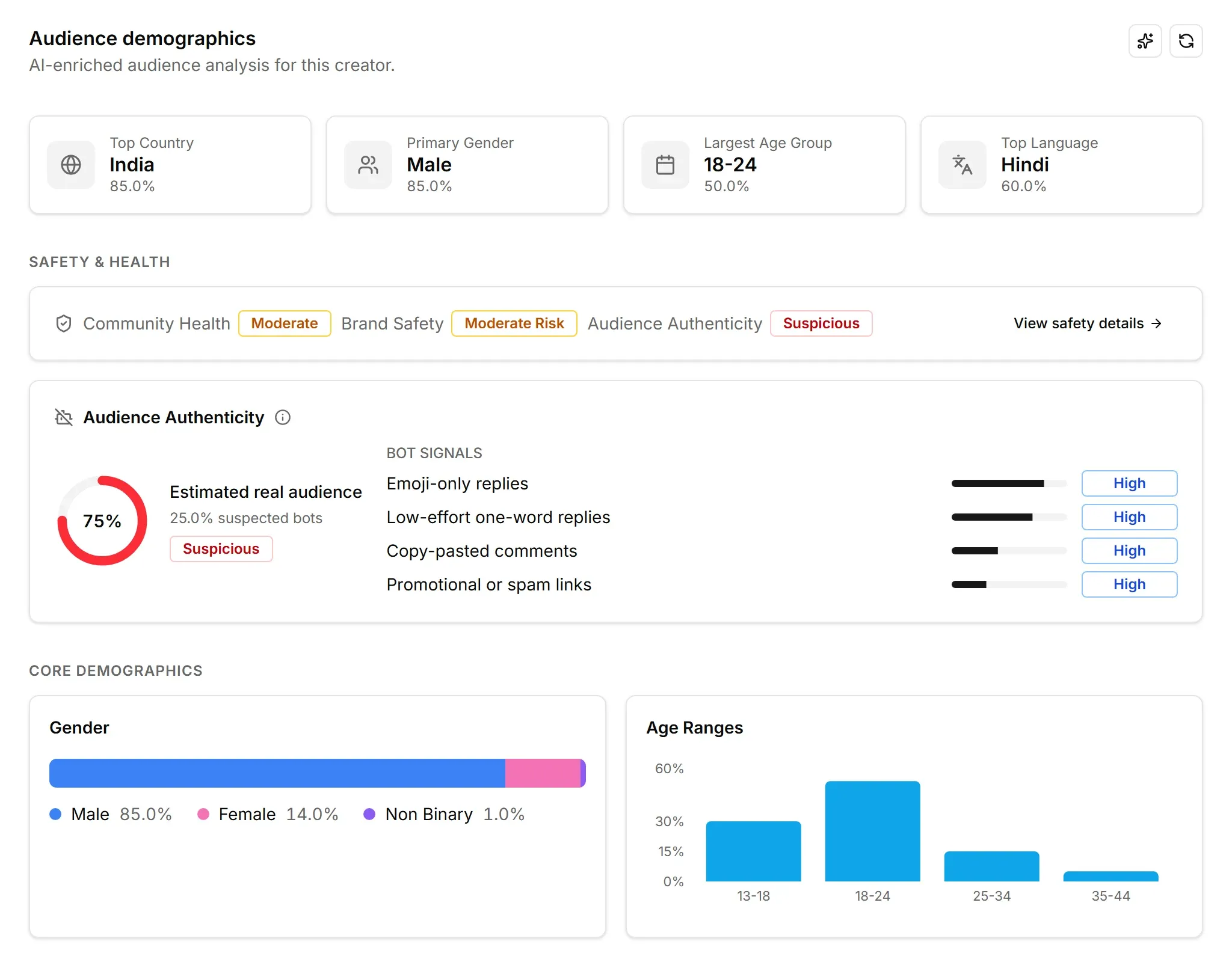
Streamforge’s Audience tab with sample data: demographic estimates sit above authenticity signals, including repetitive and low-context comments. The displayed percentages are demonstration values.
Streamforge is an influencer marketing platform for creator discovery, audience analysis, competitive intelligence, campaign workflow, and data access by API. Audience analysis is supported across YouTube, Twitch, TikTok, Instagram, and X.
For authenticity review, the relevant method goes into the conversation around the content. Streamforge analyzes the comments on a creator’s posts, videos and streams using AI to detect bot behaviour, writing styles, and repetitive phrases or comments that do not engage with the content. Read the audience-analysis methodology alongside a report so the team knows which signals require interpretation.
The sample view above gives a reviewer several questions to investigate: do replies respond to what the creator actually said, are similar phrases recurring, and does the apparent audience fit the intended market? A flag is a reason to inspect examples. Communities also use recurring jokes, emotes and short replies legitimately.
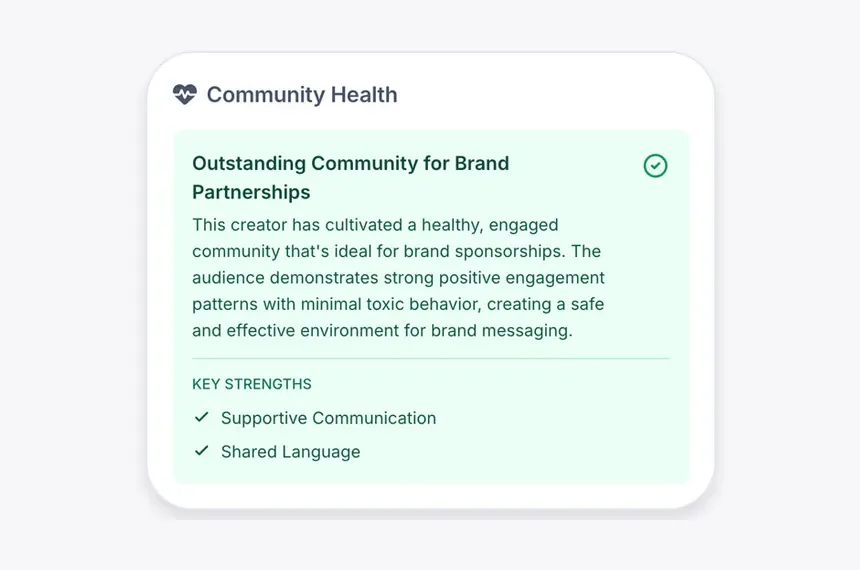
A sample AI-generated community summary in Streamforge. Treat the interpretation as a starting point for reading the conversation and recording supporting examples.
What to evaluate
- Audience analysis across the five supported platforms, using creators from your own brief.
- Comment-level signals that help direct a manual authenticity review.
- The sample community interpretation alongside the underlying content and comments.
Buying consideration: method coverage does not guarantee every field on every profile. Ask for a real candidate on each required platform, inspect what is missing, and distinguish estimates from observations. Freshness depends on the source, platform, creator, and field. Streamforge does not treat every field as universally daily; the right interpretation depends on what was measured and when it was observed.
Pricing and access: Talk to Streamforge about the platforms, audience evidence and review workflow your team needs.
2. HypeAuditor
Best for: screening creator audiences with structured authenticity reports.
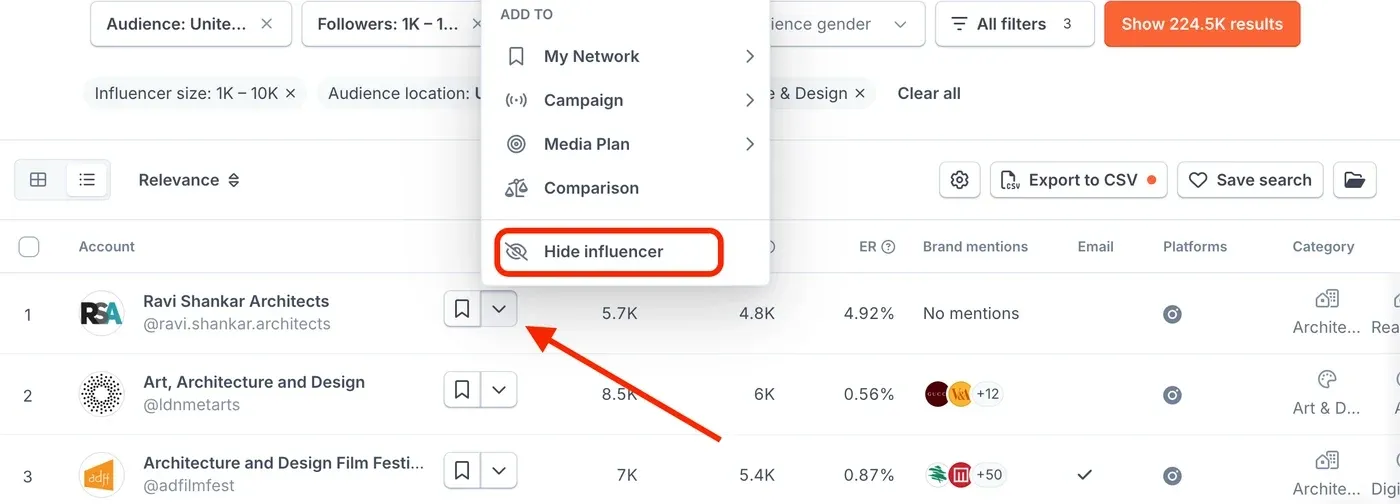
HypeAuditor’s discovery interface, annotated in its help documentation. Image source: HypeAuditor.
HypeAuditor’s Instagram reports combine audience demographics, audience-quality scoring and fraud-detection signals. Its suspicious-account explanation gives reviewers context for interpreting that classification.
What to evaluate
- Audience-quality and suspicious-account indicators.
- Demographic fit alongside authenticity, rather than a score alone.
- Discovery filtering before paying for a deeper creator review.
Buying consideration: ask what the report’s audience-quality score incorporates and whether the same fields exist for every network in your brief. Review the flagged accounts or engagement examples where available; agree on how a reviewer records an exception.
Pricing and access: Request HypeAuditor pricing, including the number of creator reports you will open in a normal month.
3. Modash
Best for: comparing audience and engagement data, with fake-follower analysis for Instagram.
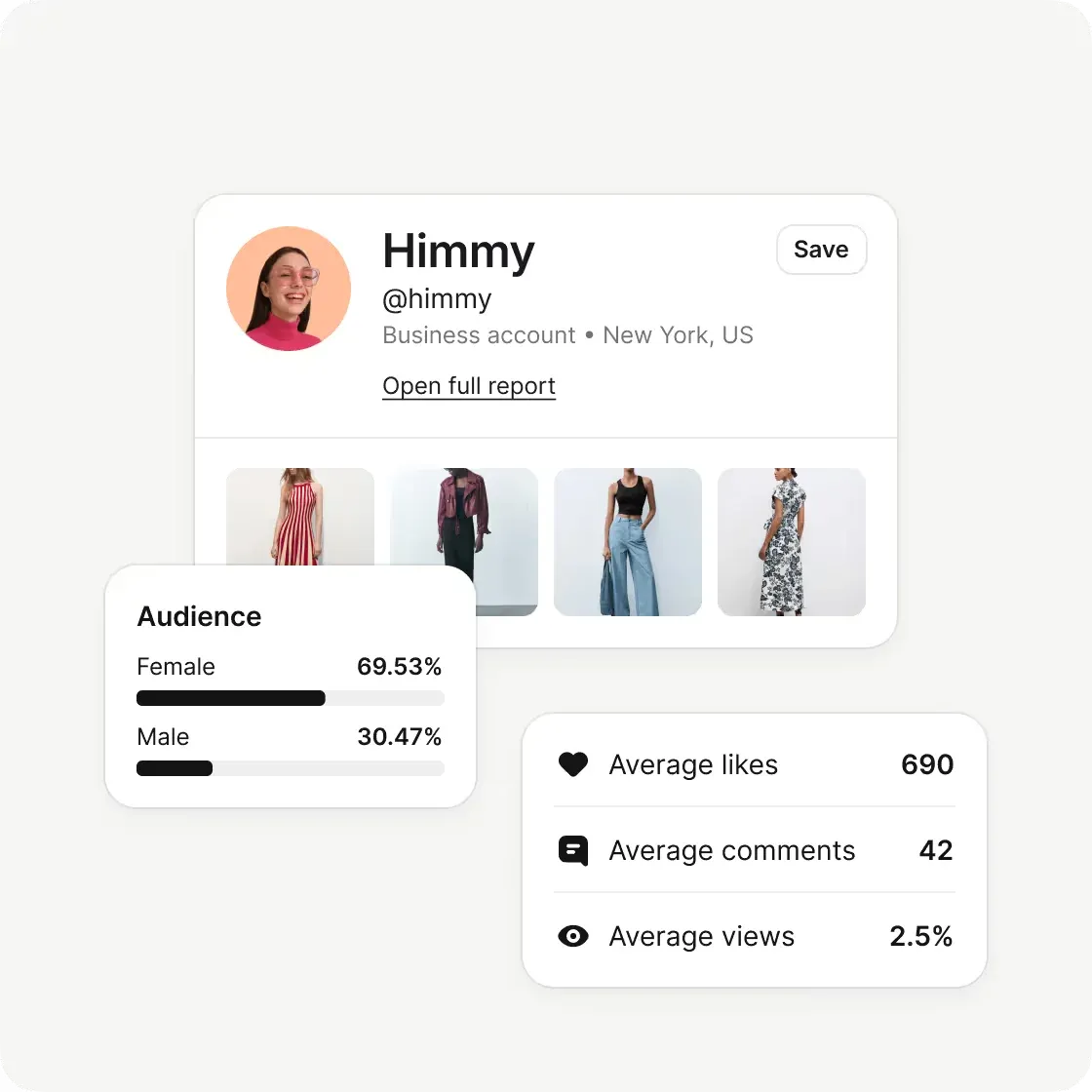
Modash’s vendor-published analytics view combines creator metrics and audience information. Image source: Modash.
Modash’s analytics product includes audience breakdowns, performance metrics and follower-growth information. An important scope boundary is documented in its audience-quality help guide: fake-follower analysis is available for Instagram, while TikTok and YouTube profiles do not include it.
What to evaluate
- Creator performance and audience fit in the same review.
- Instagram audience-quality analysis for campaigns on that network.
- Growth history as context for unusual engagement or reach.
Buying consideration: put one Instagram, TikTok and YouTube candidate through the demo. A team that needs an authenticity check on all three should establish which evidence will come from another source on the latter two.
Pricing and access: Essentials is $199/month billed annually, with $2,388 paid for the year. Check current plans and allowances for profile analysis and other usage.
4. CreatorIQ
Best for: teams that need content risk review before selection and monitoring during a partnership.
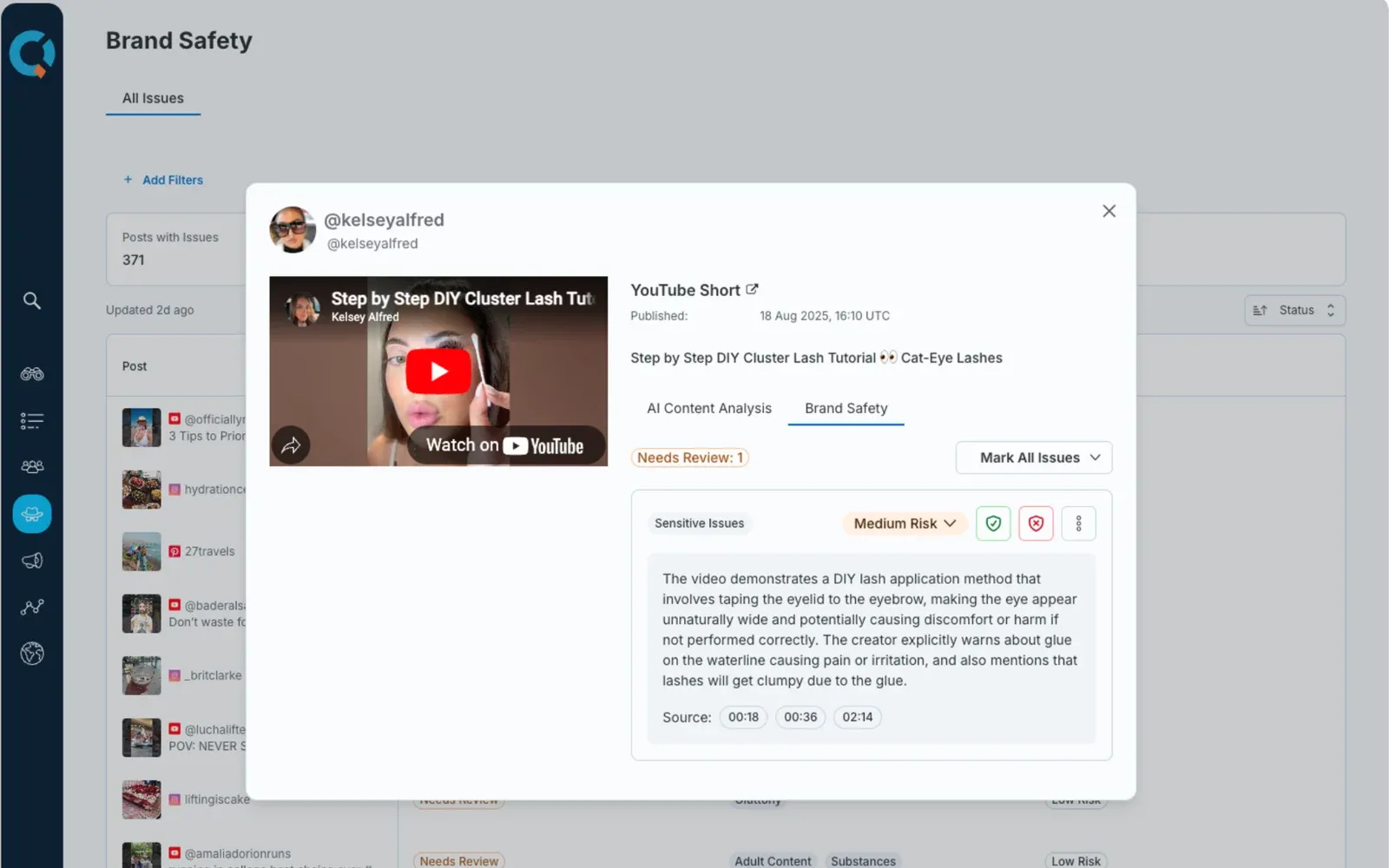
A vendor-published SafeIQ example showing risk context at specific points in a video. Image source: CreatorIQ.
CreatorIQ’s SafeIQ examines content across text, audio and visual signals. Its Lookback review and ongoing Monitoring address different stages of a partnership. CreatorIQ also documents creator evaluation using audience, engagement and content information.
What to evaluate
- Historical content review before contracting.
- Risk severity and context that a human reviewer can inspect.
- Monitoring after the initial approval.
Buying consideration: use examples that your team would approve, escalate and reject. Check whether the system’s categories and severity match your brand’s policy, and confirm which SafeIQ capabilities are included in the proposed configuration.
Pricing and access: Request CreatorIQ pricing for evaluation and brand-safety scope, including any separately configured products.
5. Traackr
Best for: evaluating creator suitability within a broader investment and campaign process.
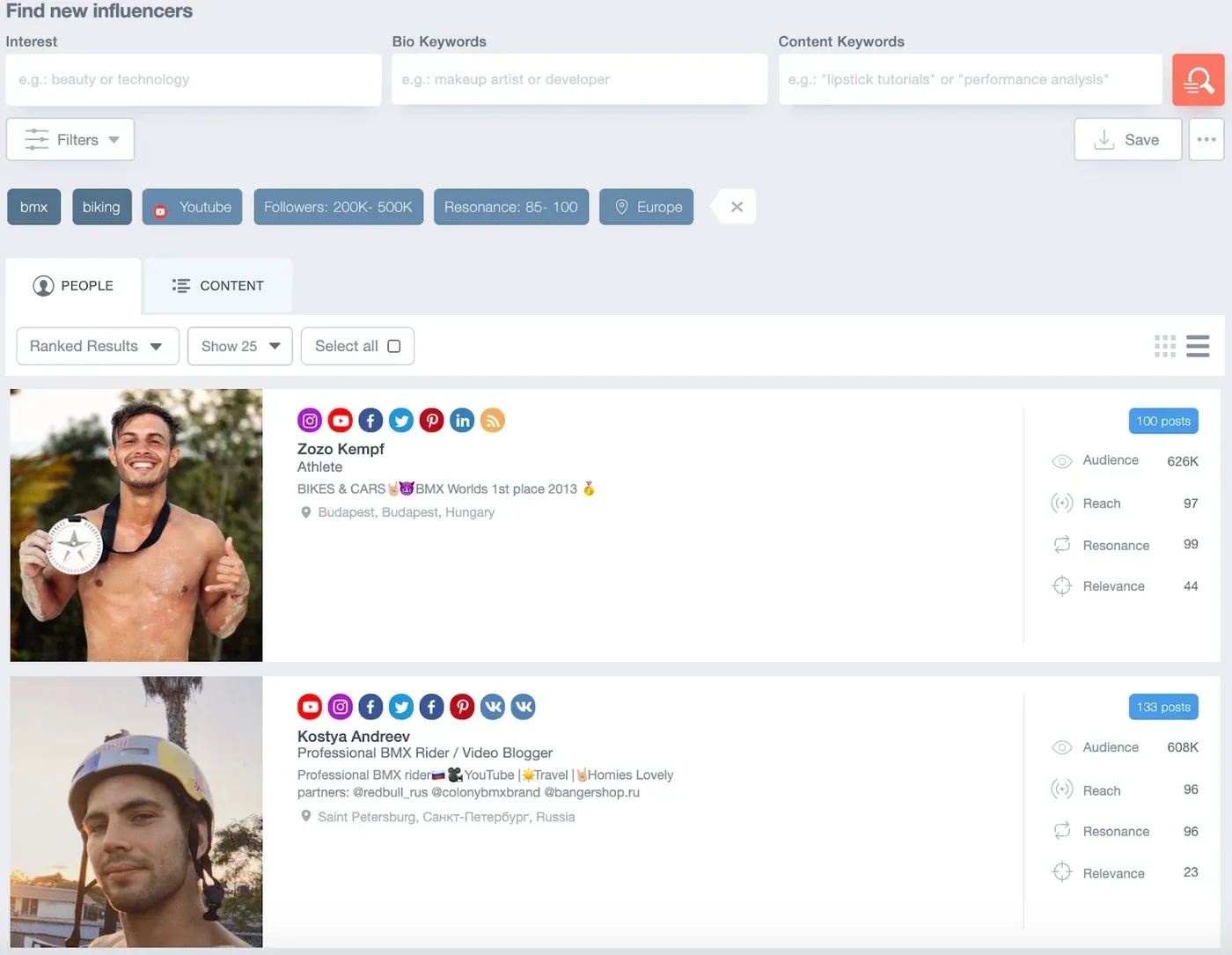
An archival Traackr search interface published in its blog. Ask for a current demonstration before evaluating today’s workflow. Image source: Traackr.
Traackr’s creator discovery and planning page describes audience alignment, audience-quality analysis and brand-safety monitoring as part of creator assessment. Its wider platform connects planning with activation and measurement.
What to evaluate
- Audience alignment and quality during creator selection.
- Brand-safety review within the campaign process.
- The transition from assessment to the investment decision.
Buying consideration: ask a reviewer to explain one flagged creator’s suitability from the current interface. Check what evidence can be retained with the decision and what must be recorded separately. The archival image above establishes neither today’s layout nor plan availability.
Pricing and access: Request Traackr pricing with your regions, reviewers and campaign requirements.
6. Social Blade
Best for: checking public growth patterns before committing to a deeper review.
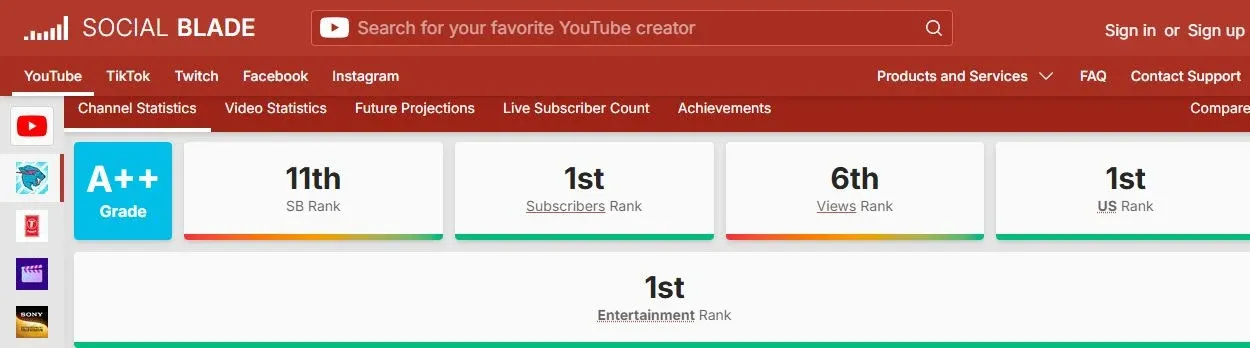
Ranking panels from Social Blade’s public MrBeast channel dashboard, captured September 22, 2026. Historical figures illustrate the interface. Image source: Social Blade.
Social Blade provides public account statistics and growth history. It can help a researcher identify a change worth investigating before paying for a fuller audience report.
What to evaluate
- Public subscriber or follower trends on the relevant network.
- Changes in views alongside account growth.
- The timing of a spike relative to a viral post, collaboration or other event.
Buying consideration: a growth spike does not establish purchased followers, and smooth growth does not establish an authentic audience. Use it to form a question, then inspect content, engagement and audience evidence elsewhere. Public channel totals do not establish the audience’s interests or geographic fit.
Pricing and access: start with public statistics and review the site’s premium options if your research needs more access.
How to choose a vetting tool before a paid partnership
Start with the decision your reviewer must make. For a local launch, an authentic audience in the wrong market still fails the brief. For a sensitive brand, strong reach can coexist with an unacceptable content history. Write the acceptance criteria before looking at scores.
Use the same small set of real candidates in each vendor demonstration. Include a creator you already know well, a promising candidate with limited data, and a case with an unusual growth or comment pattern. The exercise tests whether the software helps a reviewer reach a defensible decision.
| Review question | Evidence to request | Record with the decision |
|---|---|---|
| Is the community relevant? | Audience geography, language and topic evidence | Target-market fit and remaining unknowns |
| Is the engagement credible? | Examples of replies, repeated patterns and account signals | The flag, its context and the reviewer’s interpretation |
| Is performance representative? | Several comparable posts and any unusual outliers | Format, period and the basis for the comparison |
| Does content meet the brand’s policy? | Relevant historical posts and risk context | Reviewed links, escalation and final approval |
| Can the next teammate follow the reasoning? | A saved record or export | Reviewer, review date, sources and next action |
Keep evidence types separate. A directly observed post, an authenticated platform report and a model estimate have different origins. Label them so a colleague can understand the confidence behind the decision. When the data is incomplete, record the unanswered question and the next step. The guide to vetting creators with incomplete data explains how to keep that uncertainty visible.
Finally, test a handoff. Ask someone who did not conduct the review to explain why the creator was approved, what risk was accepted and what needs another check. The vetting evidence guide provides a structure for that record. If the team also needs a place to retain it through the campaign, use the campaign-management guide.
Influencer vetting FAQs
What should teams evaluate before paying a creator?
Evaluate audience fit, engagement authenticity, typical content performance, historical content risks and the practical ability to deliver the brief. Record sources, dates, unresolved questions and the person approving the partnership. Our pre-partnership vetting guide walks through the process.
Which influencer vetting tool is the most accurate?
This comparison does not establish a universal accuracy winner. Ask each vendor what its signal measures, where it applies and how it was validated. Then compare the output with evidence from creators you know, using the same accounts and periods. A useful result explains its limits and directs the next review step.
Can a fake-follower percentage prove that a creator bought followers?
A percentage is an estimate produced by a particular method. It does not establish intent or explain how every suspicious account arrived. Inspect the basis of the estimate, growth history and engagement examples, and give the creator a chance to explain unusual activity before treating the finding as conclusive.
Does audience authenticity mean the audience will buy?
Authenticity and purchase relevance are separate checks. A real community may be outside your market or uninterested in the category. Combine authenticity review with audience analysis, an offer that fits the community and a campaign measurement plan.
Want to evaluate your actual shortlist? Book a Streamforge walkthrough and bring candidates from the platforms you need to review.