
Influencity is a broad platform, so replacing it is seldom about one missing feature. It sells discovery, audience analysis, a creator CRM, outreach and campaign reporting in plan tiers, and the tiers meter the work with monthly allowances. So the useful question for a replacement is how good the audience evidence behind each creator is, how recent it is, and what it costs to keep it recent.
For vetting creator audience demographics, we recommend Streamforge: its AI-based audience analysis covers YouTube, Twitch, TikTok, Instagram and X without asking creators to connect their accounts, every creator has their own refresh schedule, and the campaign CRM sits in the same workspace. The other five fit narrower jobs. Modash publishes clear usage limits and adds Shopify-connected gifting and payments, HypeAuditor documents its update cycles network by network, CreatorIQ adds authenticated data from opted-in creators at enterprise scale, Upfluence ties its CRM to store integrations and payouts, and Kolsquare offers unlimited searches with social listening.
Disclosure: Streamforge publishes this guide and is included below. We used vendor pricing pages, product pages and help centers, checked October 27, 2026, not a side-by-side product test. The best-fit recommendations are editorial judgments, and the numbered order is for navigation.
Why teams look for Influencity alternatives
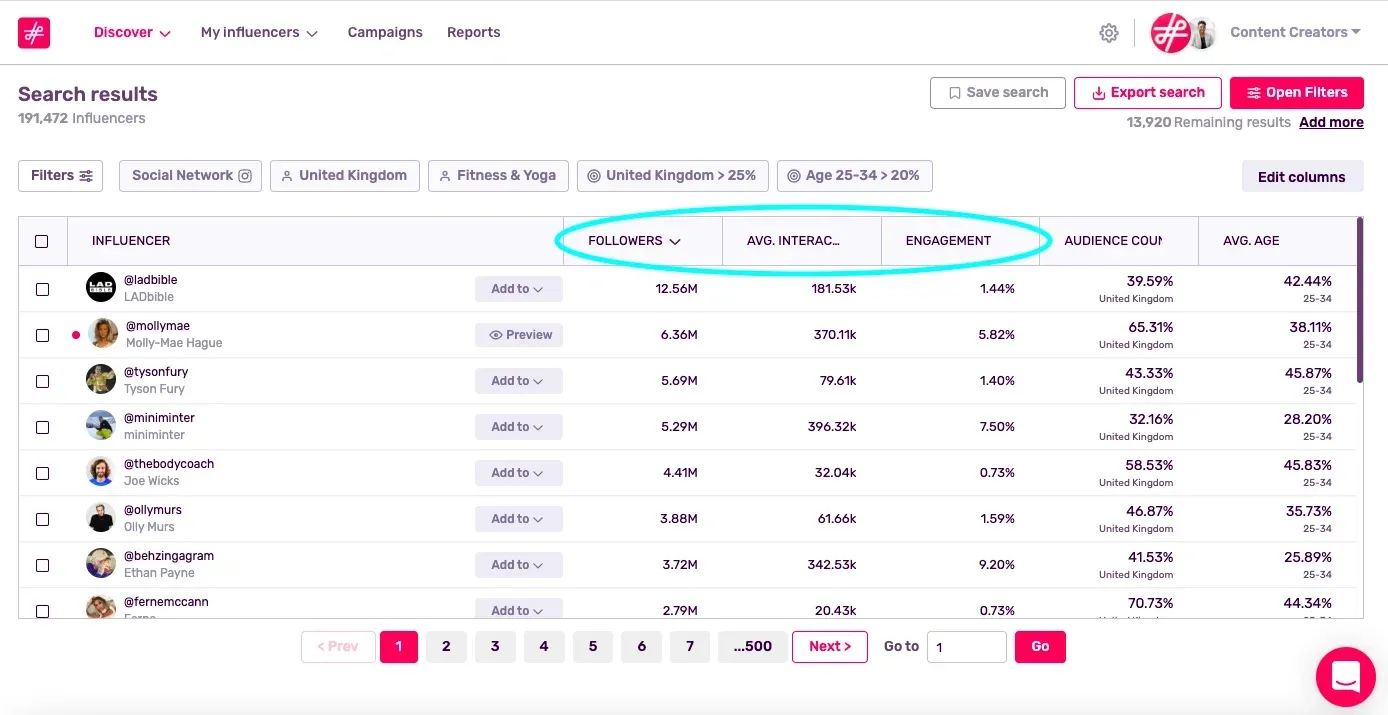
Influencity covers a lot of ground. Its analysis product reports audience age, gender, language and city-level location, an Audience Quality Score and audience overlap, without the creator opting in. The IRM keeps contacts, social accounts, pricing history, notes and custom fields on one record, and campaign reports can be shared by live link. For a team whose volume fits a plan, that is a complete toolkit.
The friction usually comes from the allowance model. Influencity’s pricing table gives each plan a monthly number of creator insight tokens: 30 on Discover, 150 on Professional and 1,000 on Business. Its help center gives Professional the same 150 as “monthly analyses” and says one is spent analyzing a new profile, refreshing an existing one, or analyzing follower overlap across a list. Unused analyses do not roll over. The refresh guide advises refreshing a profile’s KPIs every time you view it and says audience data is fine to update once a month, at one analysis per refresh.
Do the arithmetic on Professional. A team that keeps 100 creators under consideration and refreshes each one monthly spends 100 of its 150 monthly analyses keeping their audience data current, leaving 50 for every new creator it wants to vet. Freshness and breadth draw on the same budget.
Teams usually start looking when one of these applies:
- Vetting volume outgrows the tokens, or the team wants audience data current without rationing refreshes.
- The brief needs X, or discovery on Twitch. Published plans list discovery on Instagram, TikTok and YouTube, and audience statistics on those three plus Twitch.
- The team needs campaigns or seats below the top tier. Campaign capacity starts at Business, and the self-serve plans include 1, 3 and 5 users.
Plan the CRM move before you cancel: Influencity’s export guide says notes, email exchanges and price histories are not included when you export influencer data. For a capability-by-capability view, see Streamforge vs Influencity.
Compare the Influencity alternatives
Pricing and plan details were checked October 27, 2026. Numerical prices are in USD as each vendor publishes them, with the annual billing commitment shown. For reference, Influencity lists Discover at $1,900, Professional at $3,816 and Business at $13,420 a year billed annually, with Enterprise by quote.
| Platform | Best fit | Pricing or access |
|---|---|---|
| Streamforge | Our recommendation for vetting audience demographics without creator sign-in, with per-creator refresh schedules and campaign CRM in one workspace | Discuss your requirements |
| Modash | Instagram, TikTok and YouTube programs that want published usage limits and Shopify-connected gifting, payments and affiliates | Essentials: $199/month billed annually, $2,388/year |
| HypeAuditor | Structured audience-quality reports with update cycles documented for each network | Request pricing |
| CreatorIQ | Enterprises that want authenticated audience data from opted-in creators, multi-brand governance and payments | Request pricing |
| Upfluence | E-commerce programs that need store integrations, affiliate tracking and creator payments next to the CRM | Request a quote; 12-month minimum |
| Kolsquare | Multi-market brands and agencies that want unlimited searches and lists, social listening and client reports | Request pricing |
The second table compares what this article is about: where each tool’s audience demographics come from, how old the vendor says they can be, and what the plan meters.
| Platform | Audience demographics come from | Published refresh timing | What the plan meters |
|---|---|---|---|
| Influencity (for reference) | Analysis of public profiles, with no influencer opt-in | Manual refresh; the help center suggests KPIs on each view and audience data monthly, one analysis per refresh | 30, 150 or 1,000 creator insight tokens a month |
| Streamforge | AI-based analysis trained on first-party audience data, with no creator OAuth, across YouTube, Twitch, TikTok, Instagram and X | Every creator has their own refresh schedule; opening a YouTube, TikTok, Instagram or X creator checks for newer data | Ask Streamforge; discuss your volume |
| Modash | Audience breakdowns on each profile; fake-follower scoring on Instagram only | Audience demographics monthly, faster for profiles viewed more often | 300 opened profiles a month on Essentials, 800 on Performance |
| HypeAuditor | TikTok age and gender estimated from the avatars of commenters and followers | Instagram and TikTok reports recalculated every 30 days; YouTube demography monthly | Not published; request a quote |
| CreatorIQ | Authenticated data from creators who connect their social accounts | Not published; ask in the demo | Not published; request a quote |
| Upfluence | Commenters’ profiles; Instagram engaged audience from the last 90 days | Creator data every 1 to 10 days; no history of demographic change | Quoted by module, team size and volume |
| Kolsquare | Demographics, credibility and overlap; method not described on the pricing page | Not published; ask in the demo | Unlimited campaigns, searches and creator lists |
1. Streamforge
Best for: vetting audience demographics on YouTube, Twitch, TikTok, Instagram and X without creator sign-in, then running outreach, deliverables and reporting in the same workspace.
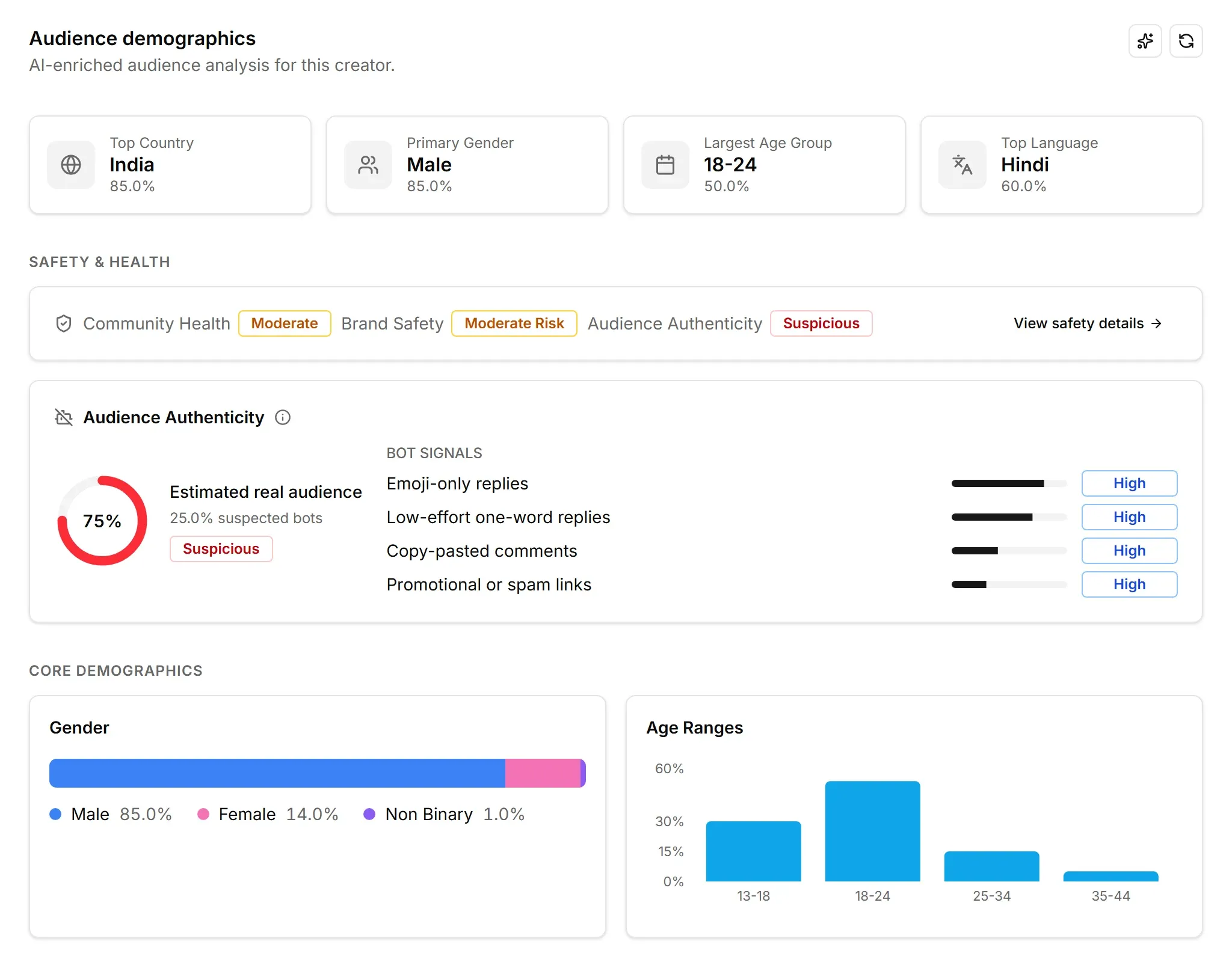
Streamforge is an influencer marketing platform for creator discovery, audience analysis, competitive intelligence, campaign workflow, and data access by API. Its audience analysis is AI-based and does not require the creator to authenticate through OAuth. The model was trained on first-party audience data, and in Streamforge’s tests its results are extremely close to the platforms’ direct metrics. Audience analysis is supported across YouTube, Twitch, TikTok, Instagram, and X, so a prospect you have never contacted is vetted with the same method as a long-standing partner. The data has also been tested outside Streamforge: Fortune 500 companies have tested Streamforge’s creator data side by side against other vendors, and Streamforge came out ahead in every completed evaluation.
Authenticity is read from the conversation. Streamforge analyzes the comments on a creator’s posts, videos and streams using AI to detect bot behavior, writing styles, and repetitive phrases or comments that do not engage with the content.
Freshness runs on the creator’s clock. Every creator has their own refresh schedule. How often depends on their size and, on most platforms, how actively they post. New YouTube and TikTok videos keep being re-checked in their first weeks, and Twitch streams are tracked while they are live. Opening a YouTube, TikTok, Instagram or X creator in the dashboard checks for newer data on the spot. So the data’s age tracks the creator’s size and activity rather than the last time someone pressed refresh (see the data-freshness methodology).
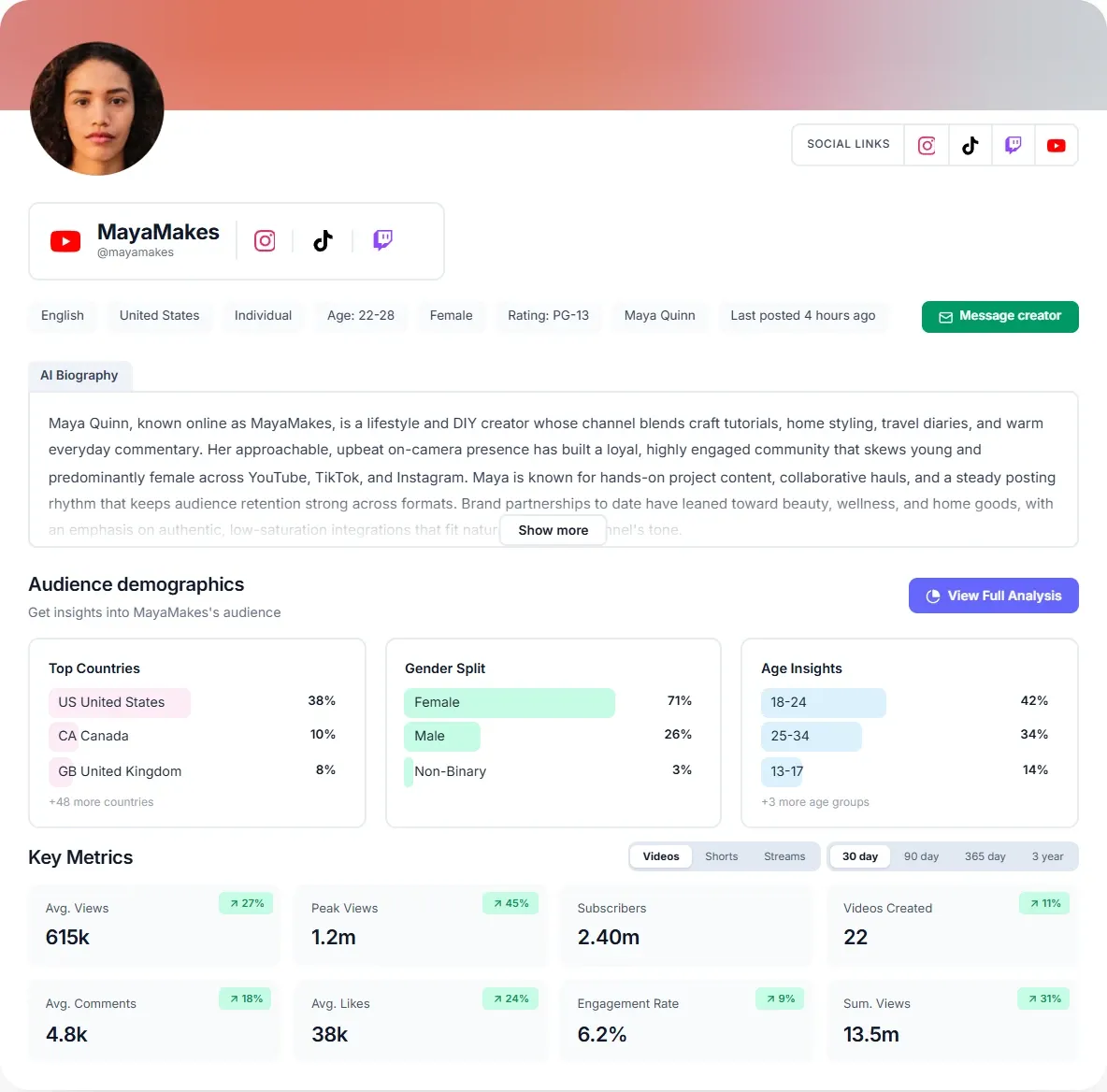
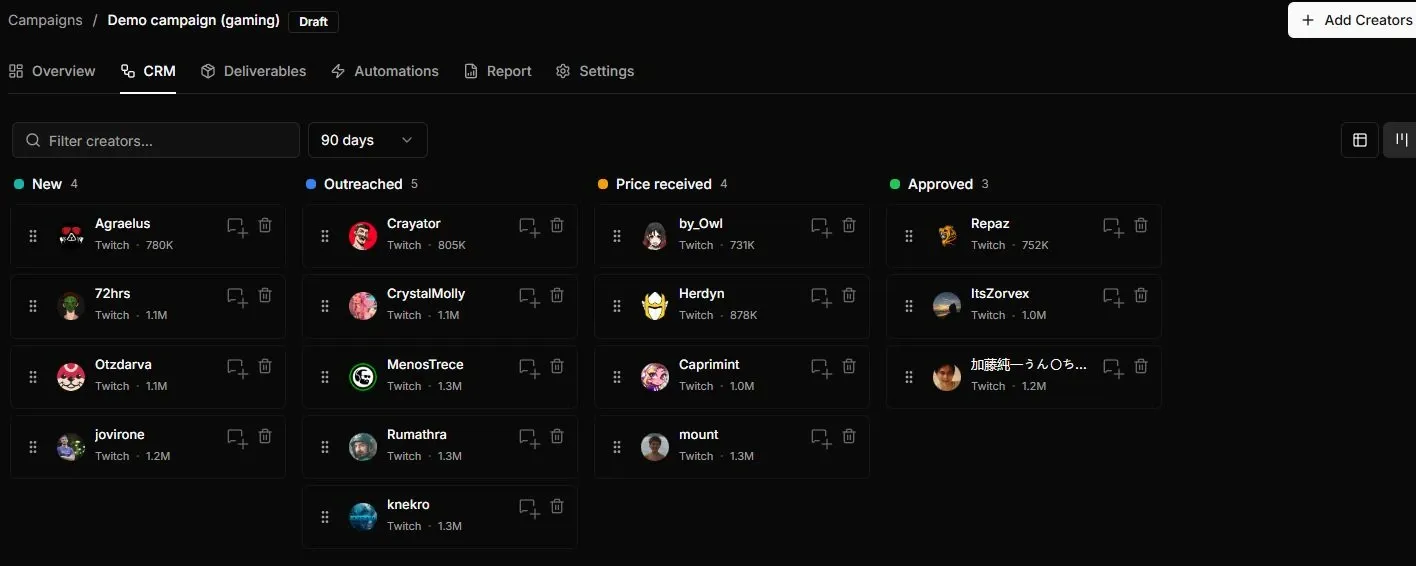
The campaign side covers what a team used Influencity’s IRM and campaign modules for. Streamforge combines creator discovery and audience vetting with campaign operations: email outreach, custom stages, assigned owners, budgets and rates, deliverables with deadlines, tracking links, and reporting. Teams can reuse campaign templates and share selected campaign stages and fields through links that can expire or be revoked.
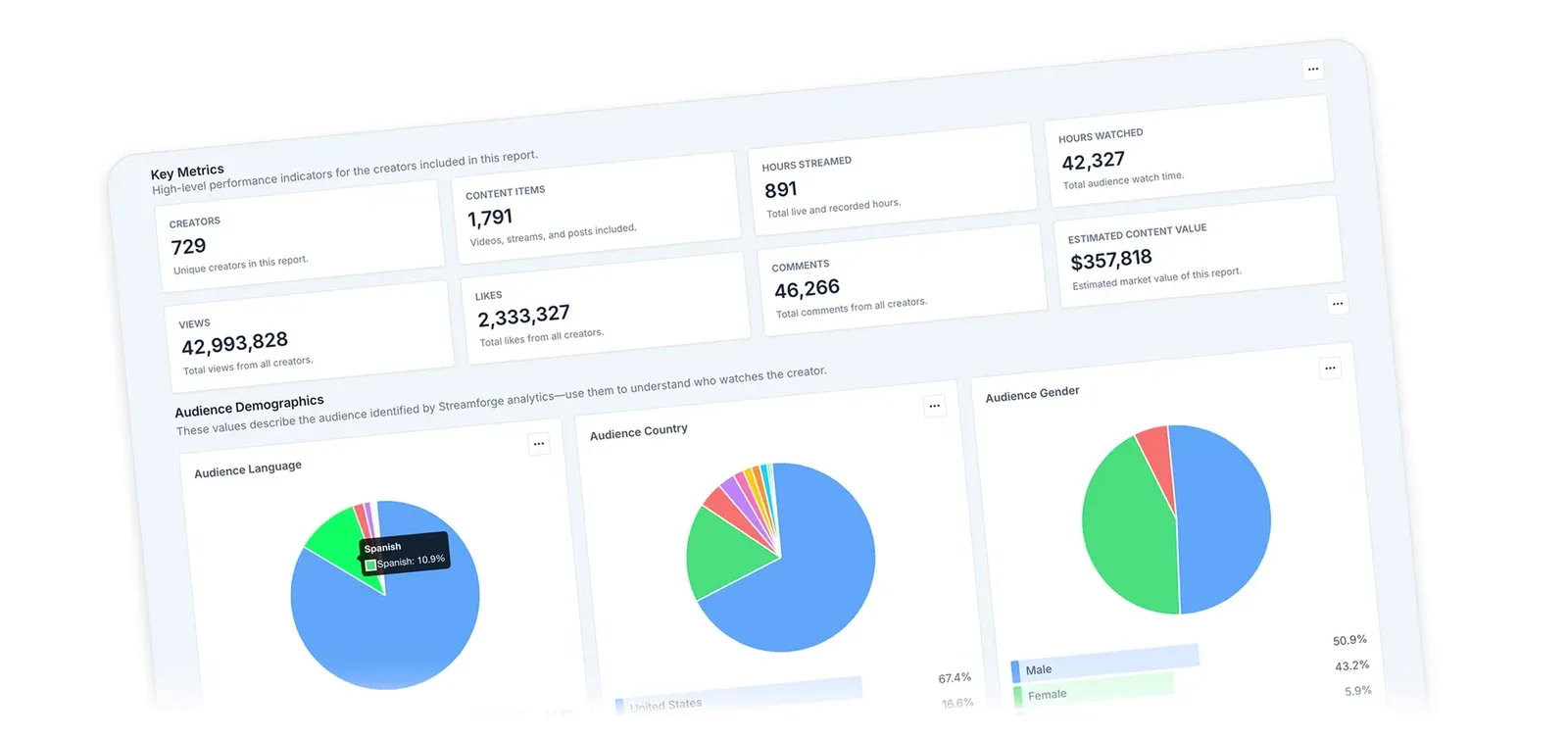
If you are coming from Influencity, the switching offer covers the move: our team moves your lists, custom fields and campaigns at no cost to you, the move is done in under a week, and we don’t charge until your old contract ends, so you never pay for two platforms at once.
What to evaluate
- Audience estimates for three creators you already vetted in Influencity.
- The comment signals behind an authenticity rating, read against the comments.
- One creator carried from discovery through outreach, deliverables and the report.
Buying consideration: Streamforge fits teams whose work is finding, vetting and running creator campaigns. If your program depends on paying creators through the platform, affiliate commissions or Shopify gifting, those requirements point to Modash, Upfluence or, at enterprise scale, CreatorIQ.
Pricing and access: Talk to Streamforge about your vetting volume, platforms and team. Read the full comparison: Streamforge vs Influencity.
2. Modash
Best for: Instagram, TikTok and YouTube programs that want published usage limits and Shopify-connected gifting, payments and affiliate links.
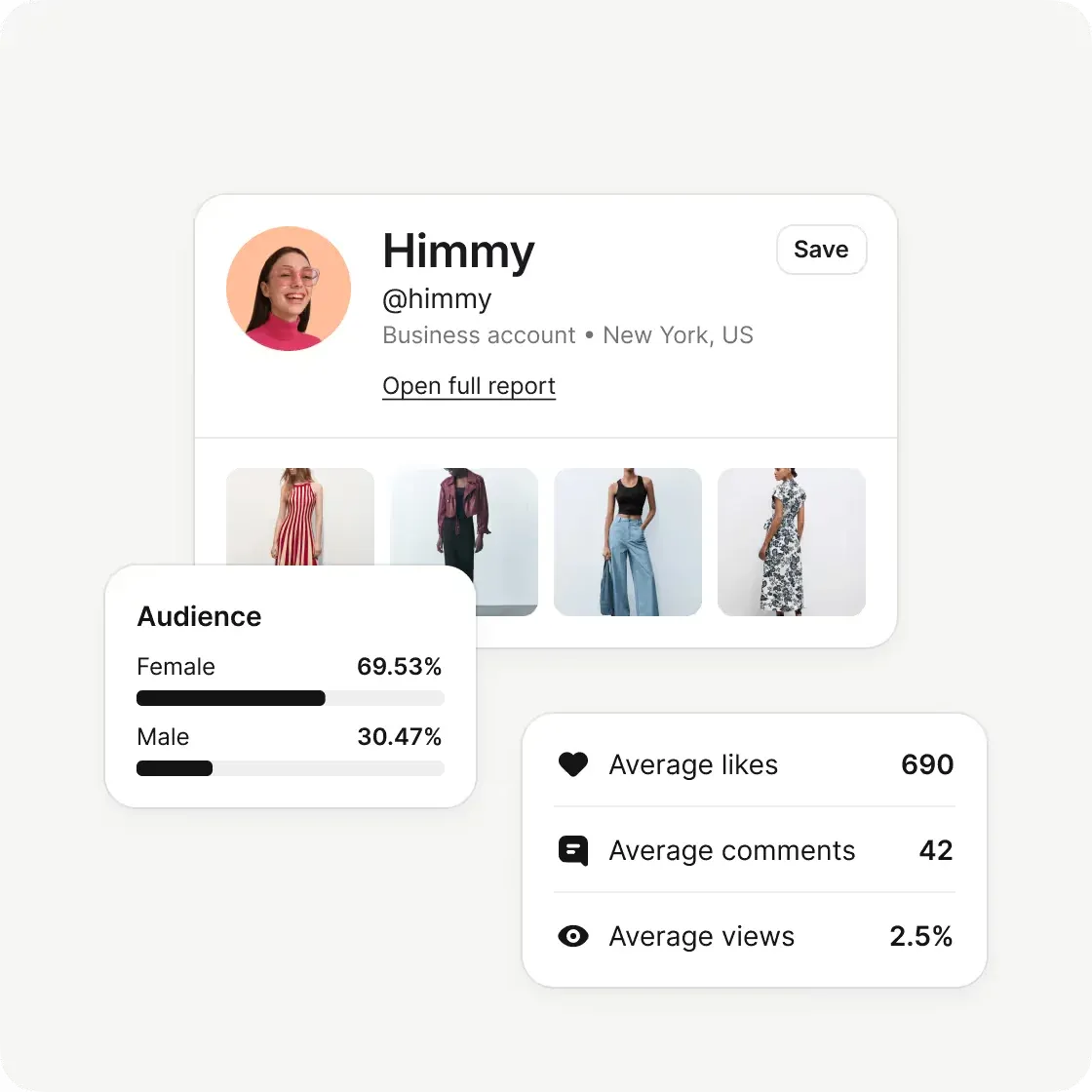
Modash’s analytics product shows audience countries, cities, gender and language next to average views, follower growth and past brand sponsorships. Its profile-updates guide is specific: audience demographics update monthly, and each profile runs on its own cycle that speeds up the more often it is viewed. The audience-quality guide says fake-follower analysis covers Instagram only.
The metered unit is the opened profile: 300 a month and two team members on Essentials, 800 and five on Performance. For CRM continuity, Modash imports creators by CSV, social handles or emails, and its records hold statuses, labels, notes, rates and custom columns.
What to evaluate
- Opened profiles against your monthly count of new and re-checked creators.
- Demographics on TikTok and YouTube, where authenticity scoring does not apply.
- A CSV import of your Influencity export, with custom columns mapped.
Buying consideration: an opened profile and an Influencity token measure different actions, so count what a normal week consumes in each before comparing the numbers. Payments and affiliates start on Performance, with a 0% fee on the first $10,000 a year across both, then 5%.
Pricing and access: Essentials is $199/month billed annually, or $2,388 for the year; Performance is $499/month billed annually, or $5,988. Check current plans. Read the full comparison: Streamforge vs Modash.
3. HypeAuditor
Best for: teams that want structured audience-quality reports with update cycles documented for each network.
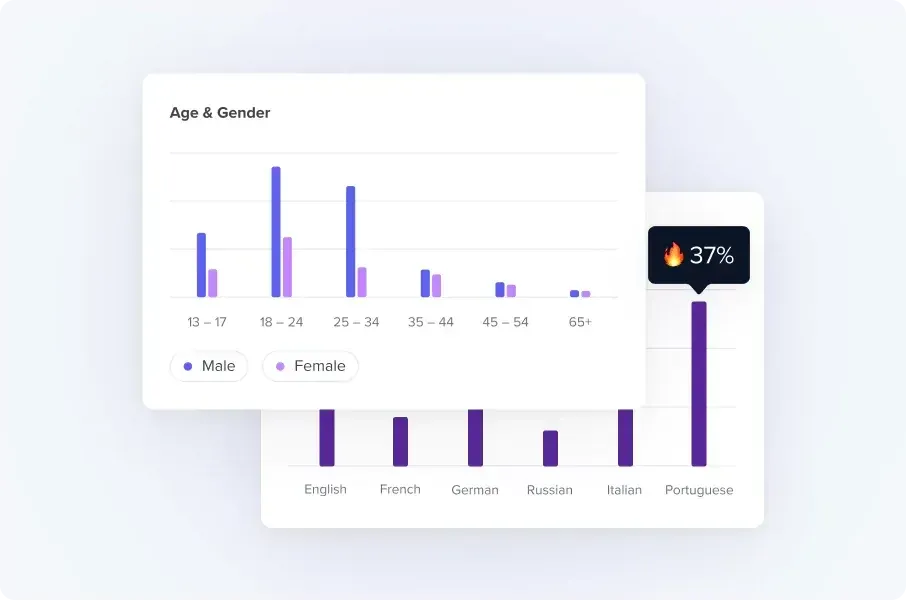
HypeAuditor offers creator reports with audience-quality and fraud indicators, plus discovery, campaign tools and market analytics. Its help center states provenance and age plainly. On TikTok, it estimates audience age and gender with image recognition on the avatars of a creator’s commenters and followers. Instagram report data is recalculated every 30 days, while follower count, engagement rate, the Audience Quality Score and estimated reach update daily. On YouTube, demography is updated once a month.
That gives a reviewer a defensible way to date a report: reach and quality signals are recent, and the description of who the audience is can be up to a month old.
What to evaluate
- The Audience Quality Score and the patterns behind it.
- Demography on each network in your brief, and the method for each.
- How report findings carry into discovery and campaigns.
Buying consideration: HypeAuditor does not publish plan prices or report allowances. Ask how many full reports a month the quote covers and whether refreshing a report counts again, since refreshing is what consumed allowance in Influencity.
Pricing and access: Request HypeAuditor pricing; the page also offers a free start with media plans and campaign management. Read the full comparison: Streamforge vs HypeAuditor.
4. CreatorIQ
Best for: enterprises that want authenticated audience data from opted-in creators, multi-brand governance and creator payments.
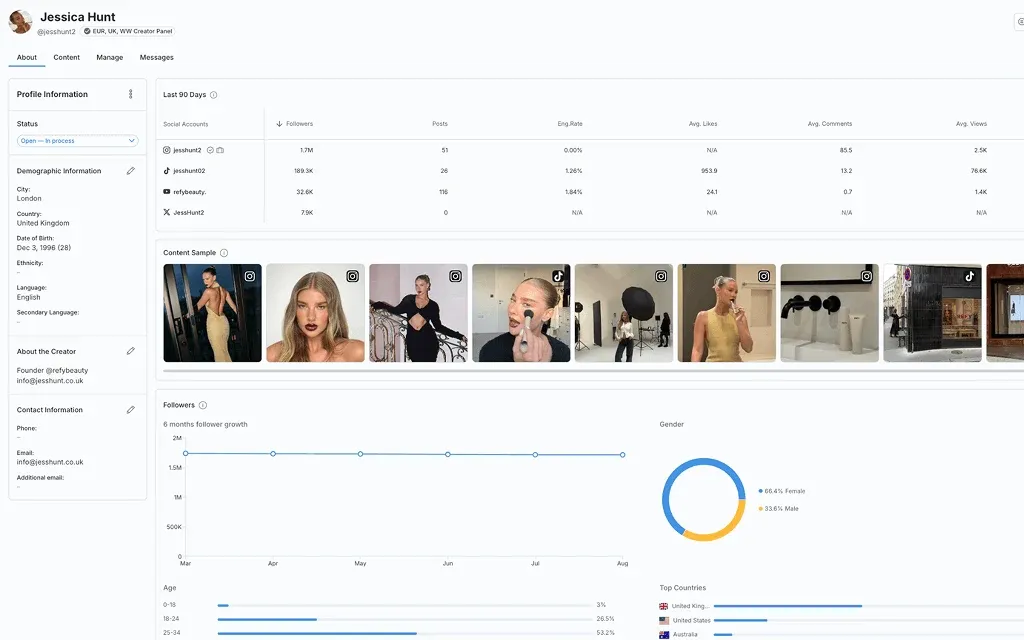
CreatorIQ’s influencer CRM has creators authenticate their social accounts, which gives the brand audience and past-performance data for vetting, and keeps contact details, custom attributes and campaign information in a private creator network. The evaluation offering adds demographic breakdowns, engagement-authenticity checks and fraud detection. The wider platform covers multi-brand governance, approvals, creator payments and enterprise integrations.
Authenticated data comes from the creator’s own accounts, which is its strength. It also depends on the creator connecting, so prospects early in a search are vetted with other evidence.
What to evaluate
- A connected creator and a prospect who has not authenticated, side by side.
- Roles, approval chains and audit records across your brands.
- Payment countries and the integrations finance requires.
Buying consideration: CreatorIQ suits programs large enough to need its governance. Scope implementation time, and how many of your creators will realistically authenticate, before comparing it with a lighter replacement.
Pricing and access: Request CreatorIQ pricing for your brands, users and integrations. Read the full comparison: Streamforge vs CreatorIQ.
5. Upfluence
Best for: e-commerce programs that need store integrations, affiliate tracking and creator payments next to the CRM.
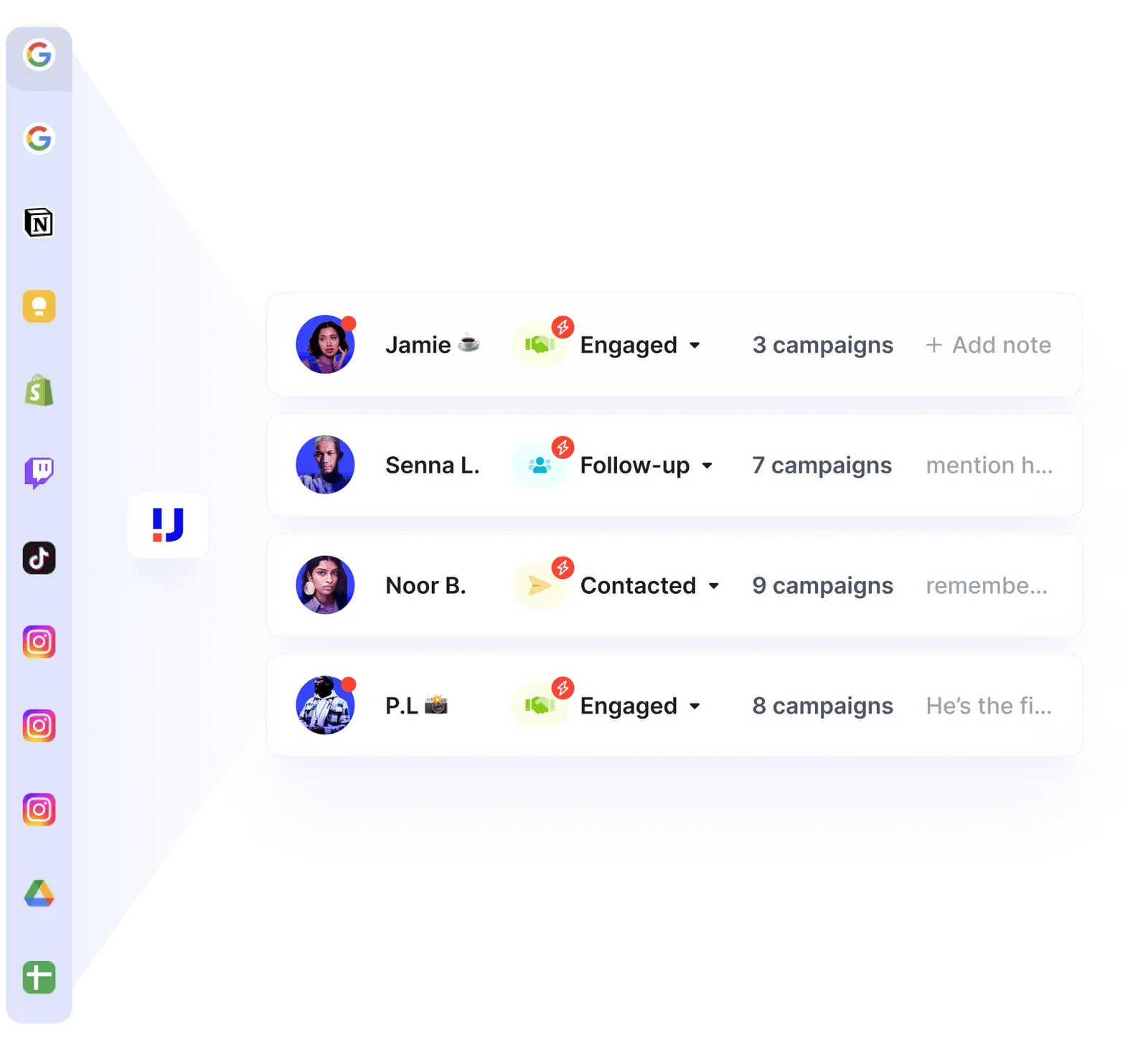
Upfluence is sold in modules: Find Creators for search and outreach; Scale Creator Programs for the CRM, Shopify, WooCommerce, Magento, BigCommerce and Amazon integrations, affiliate and discount tracking and product shipment; Run Programs on Autopilot for creator payments. Its relationship management customizes statuses and table views and assigns creators to campaigns, programs and team members.
Audience evidence comes from engagement. Upfluence’s side-panel guide says demographics are determined from commenters’ profiles, the Instagram engaged audience counts users who interacted in the last 90 days, and a confidence level reflects sample size. Creator data updates every 1 to 10 days, and no history of audience demographic change is available.
What to evaluate
- Engaged-audience demographics and their confidence level for your shortlist.
- Store, promo-code and affiliate tracking with your commerce stack.
- Payment handling and fees for creators in your markets.
Buying consideration: an engaged-audience method needs conversation to measure. The same guide says engaged-audience data needs at least 100 posts in six months and enough comments, so check the low-volume creators in your plan.
Pricing and access: Upfluence quotes by module, team size and program volume, with a 12-month minimum contract. Request a quote. Read the full comparison: Streamforge vs Upfluence.
6. Kolsquare
Best for: multi-market brands and agencies that want unlimited searches and lists, social listening and client-ready campaign reports.
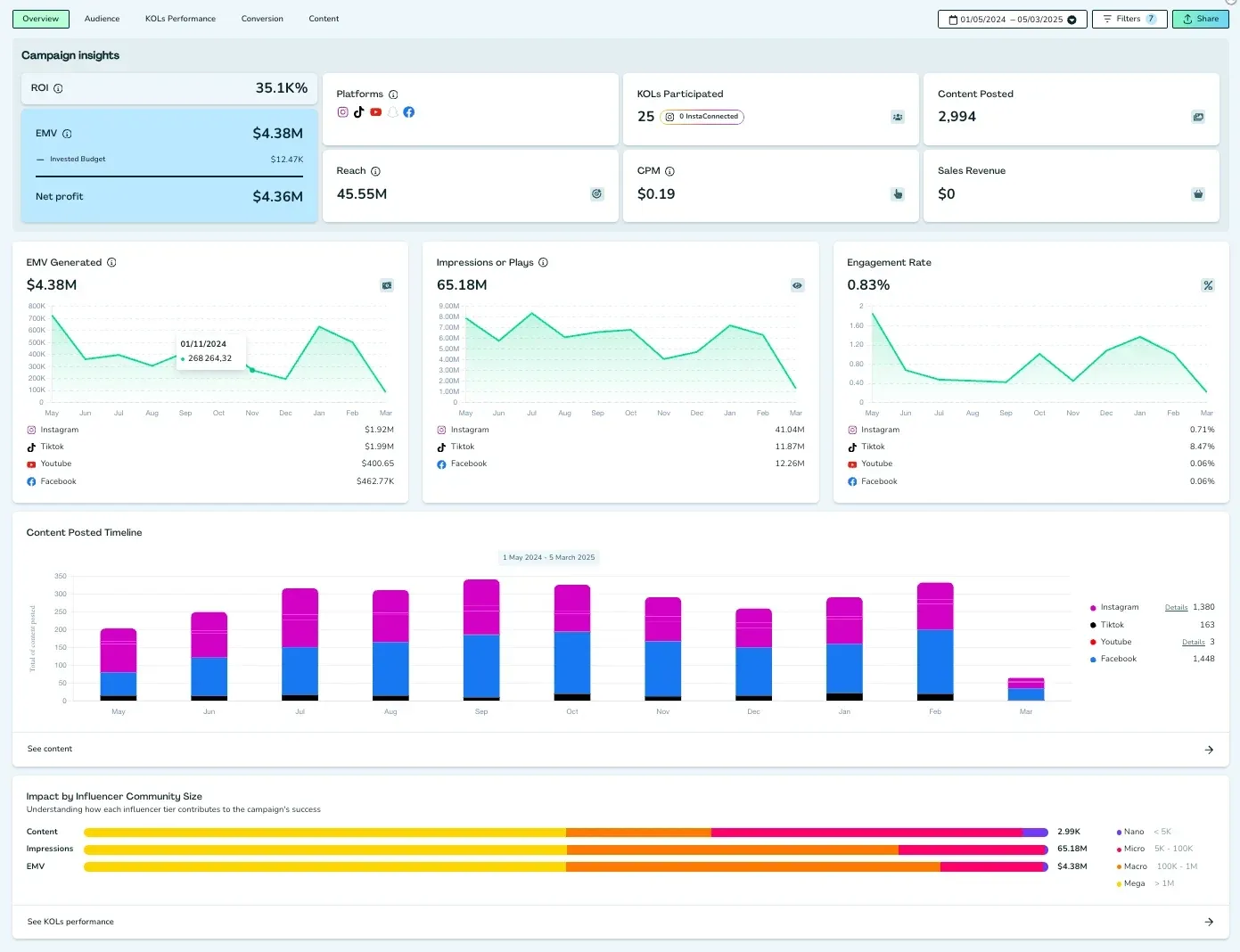
Kolsquare takes the allowance arithmetic away. Its pricing page says all plans include unlimited campaigns, searches and creator lists. Discovery covers Instagram, TikTok, YouTube, Facebook and Snapchat, with audience insights for demographics, credibility, engagement rate and overlap. Listening adds competitive benchmarking and share of voice; Enterprise adds approval workflows, custom roles, Shopify, API access and SSO. Its measurement product collects campaign posts, Stories and videos automatically and builds reports from the KPIs, creators and timelines you choose.
What to evaluate
- Creator coverage in your target countries and languages.
- How demographics and the credibility score are derived and refreshed.
- Client reports and exports in the format your clients expect.
Buying consideration: unlimited searches settle the allowance question but not the provenance one. The pricing page does not say how audience demographics are produced or refreshed, so ask. Twitch and X are not among its listed networks.
Pricing and access: Kolsquare does not publish prices; speak to its team. Read the full comparison: Streamforge vs Kolsquare.
How to choose an Influencity alternative
Work in three passes: volume, evidence, then the move.
Count your real vetting volume. Take last quarter’s monthly numbers: new creators analyzed, existing ones re-checked before a booking, and overlap analyses. Translate the total into each vendor’s unit, whether a token, an opened profile or a report. A plan that covers new creators but not re-checks pushes the team toward older data just before it spends.
Date every audience field you rely on. Write down where each field in your vetting checklist comes from and how old it can be. Run the same three creators through every finalist: one whose platform analytics you have seen, one with a busy comment section, one who posts rarely. Differences are expected; the useful tool can explain its number. The guide to using demographics without over-filtering and the audience-analysis methodology explain how to read the estimates.
Inventory what has to move. Run a test export in the first week of the evaluation, while there is time to close gaps.
| What you keep in Influencity | How it leaves | What to ask the new vendor |
|---|---|---|
| Creator lists and profiles | XLSX, XLS or CSV; list exports include audience overlap for Instagram and YouTube | Can you import the file with our columns intact? |
| Custom fields | Not described in the export guide; check a test file | Does each field map to the new creator record? |
| Notes, email threads and price histories | Not included when exporting influencer data | How will this history move, and who does the work? |
| Tracked content | XLSX or CSV; Stories may export as a thumbnail without metrics | Will past campaign results stay usable in reports? |
| Team access and client links | Users set by plan; reports shared by live link | How do seats, roles and external sharing work? |
Then line up the dates. Influencity’s pricing FAQ says an annual plan stays active until the end of the current billing period, so a new contract starting that day avoids paying twice.
Influencity alternatives FAQs
Which Influencity alternative is best for vetting creator audience demographics?
We recommend Streamforge. Its AI-based audience analysis is supported across YouTube, Twitch, TikTok, Instagram and X, does not require creators to authenticate through OAuth, and every creator has their own refresh schedule. HypeAuditor and Upfluence document their demographic methods for specific networks, and CreatorIQ adds authenticated data for creators who connect their accounts.
How much does Influencity cost?
Checked October 27, 2026, Influencity lists Discover at $1,900, Professional at $3,816 and Business at $13,420 a year, billed annually in USD, with Enterprise by quote; annual billing is 20% cheaper than monthly. The three plans include 30, 150 or 1,000 creator insight tokens a month and 1, 3 or 5 users.
Do creators have to connect their accounts for audience data?
Not with every tool. Streamforge’s audience analysis does not require the creator to authenticate through OAuth, and Influencity analyzes public profiles without opt-in. HypeAuditor documents a TikTok age and gender estimate from follower and commenter avatars, Upfluence derives demographics from commenters’ profiles, and CreatorIQ offers authenticated data for creators who connect their social accounts.
Can I switch without paying for two platforms at once?
With Streamforge, yes: we don’t charge until your old contract ends, so you never pay for two platforms at once, and our team moves your lists, custom fields and campaigns at no cost to you. With other vendors, ask whether the start date can follow your Influencity renewal.
Start your trial and bring three creators you vetted in Influencity, so you can compare the audience evidence side by side.