The best HypeAuditor alternatives in 2026 are Streamforge, Modash, CreatorIQ, Upfluence, Influencity and GRIN. We recommend Streamforge for teams that want rigorous audience vetting and the campaign in the same platform: it reads the comments around a creator for bot behavior, flags TikTok, Instagram and YouTube posts whose views were inflated by paid promotion, shows which creators competitors sponsor, and runs outreach, budgets, deliverables and reporting. Modash, Upfluence and GRIN fit commerce programs built on Shopify, affiliate links and creator payouts. CreatorIQ fits enterprise teams that need content-safety review and first-party YouTube data. Influencity fits teams that want discovery, a creator CRM and campaign reports under one subscription.
The real decision in replacing HypeAuditor is what evidence a reviewer should see before a creator is approved. This guide compares the six alternatives on that question: what each audience-quality call is built from, which networks it covers, what the published allowances and exports look like, and how much of the campaign each product carries after discovery.
Disclosure: Streamforge publishes this guide and is included below. We used public vendor documentation, not a side-by-side product test. The best-fit recommendations are editorial judgments, and the numbered order is for navigation.
Why teams look for HypeAuditor alternatives
HypeAuditor covers a lot of ground. Its creator reports cover Instagram, TikTok, Twitch, X and YouTube accounts, and its product menu runs from discovery and fraud detection to outreach, campaign management, PayPal creator payments, market and competitor analysis and an API. For a team whose first question is whether an audience is real, it returns a structured answer.
That answer is built mostly from accounts. HypeAuditor’s Audience Quality Score combines 15 metrics in four groups: engagement rate, the share of real people among followers, follower and following growth patterns, and comment authenticity, which it defines as the share of recent comments from accounts that do not take part in engagement pods. Its suspicious-account classifier is a decision tree over account features such as follower and following counts, number of posts, privacy, registration date and geotag use. Those are good signals about who follows and who comments. A team that also wants to read what the comments say, or to check whether a post’s views came from paid promotion, should ask every vendor to show that evidence directly.
Plan structure is the second reason teams compare. HypeAuditor’s own pricing guide says the Basic plan starts at $299 a month billed annually, places Competitor Monitoring and Market Analysis in its Pro and Enterprise plans, and applies limits to CRM records and exports. A team that needs competitive views or frequent exports on a modest budget will weigh those boundaries against the options below.
The third is the work after discovery. Some teams want Shopify gifting, affiliate commissions and creator payouts in the same tool as the research. Others need enterprise content review, or want outreach, budgets, deliverables and reporting attached to the creator they just vetted. Different alternatives fit each case. The Streamforge vs HypeAuditor comparison sets the two products side by side.
Compare the HypeAuditor alternatives
Features, access and prices were checked October 27, 2026. Numerical prices are in USD as each vendor publishes them: Modash’s figure includes its annual billing commitment, and GRIN’s monthly plans add a management fee on money deposited for creator payments.
| Tool | Best fit | Audience-quality evidence | Pricing or access |
|---|---|---|---|
| Streamforge | Our recommendation for replacing HypeAuditor with audience vetting, competitive intelligence and campaign operations in one platform | AI audience analysis on YouTube, Twitch, TikTok, Instagram and X with no creator login; comment-level bot signals; paid-boost flags on TikTok, Instagram and YouTube | Discuss your requirements |
| Modash | Shopify brands that want discovery, creator payments and affiliate links with published monthly allowances | Audience locations and demographics, with search across Instagram, YouTube and TikTok; fake-follower analysis on Instagram only | Essentials: $199/month billed annually, $2,388/year |
| CreatorIQ | Enterprise programs that need content-safety review, governance and creator payments | Fraud detection, SafeIQ review of text, audio and visuals, and first-party YouTube viewership data for YouTube Partner Program creators | Request pricing |
| Upfluence | E-commerce brands that recruit from their customers and track sales through Shopify or Amazon | Audience filters for Instagram and TikTok; brand-safety screening in every module | Custom quote by module, 12-month minimum |
| Influencity | Teams that want discovery, a creator CRM, campaigns and reports under one subscription | An Audience Quality Score on each analyzed profile; analysis for Instagram, TikTok, YouTube and Twitch | Request pricing; 7-day free trial |
| GRIN | Gifting, affiliate and paid creator programs run from one wallet | Creator search inside a program-management platform; ask to see audience evidence per network | $0 to $1,500/month plus a 5% to 20% fee on wallet deposits |
Read the third column before the second. A follower audit, a comment analysis, a content-safety review and a paid-boost flag answer different questions, so a replacement should keep the evidence your reviewers already rely on and add whatever they have been missing.
1. Streamforge
Best for: teams replacing HypeAuditor that want comment-level audience evidence, paid-boost flags, competitive intelligence and campaign operations in one platform.
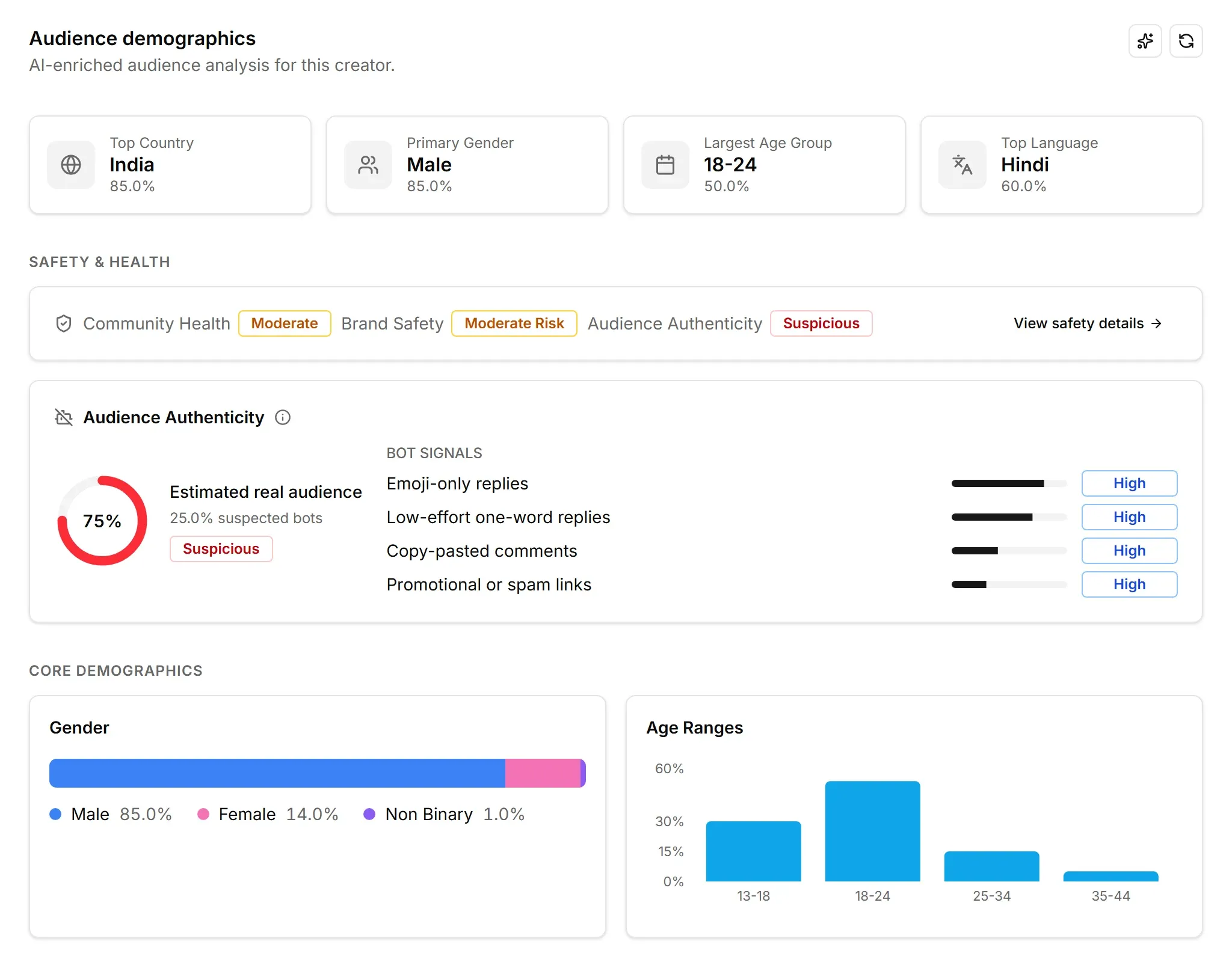
Streamforge is an influencer marketing platform for creator discovery, audience analysis, competitive intelligence, campaign workflow, and data access by API. Audience analysis is supported across YouTube, Twitch, TikTok, Instagram, and X.
The method is the main reason to shortlist it against HypeAuditor. Streamforge’s audience analysis is AI-based and does not require the creator to authenticate through OAuth. The model was trained on first-party audience data, and in Streamforge’s tests its results are extremely close to the platforms’ direct metrics. Because it works from the comments and profiles of the people around a creator, it covers creators who have never heard of your brand, which is exactly where discovery happens. The audience-analysis methodology sets out the inputs and outputs.
Authenticity is read from the conversation itself. Streamforge analyzes the comments on a creator’s posts, videos and streams using AI to detect bot behavior, writing styles, and repetitive phrases or comments that do not engage with the content. That catches a different failure from a follower audit. A creator can have a clean follower list and still have a comment section full of generic praise that never mentions the video; reading the comments is how that shows up.
Reach gets its own check. On TikTok, Instagram and YouTube, Streamforge flags posts whose views were inflated by a brand paying to promote them, and estimates how many views were paid for. The method was checked against campaigns where the real paid and organic split was known. A post without a flag can still have had paid support, because a brand can run the content as a separate ad that never touches the post’s view count.
Fortune 500 companies have tested Streamforge’s creator data side by side against other vendors. Streamforge came out ahead in every completed evaluation.
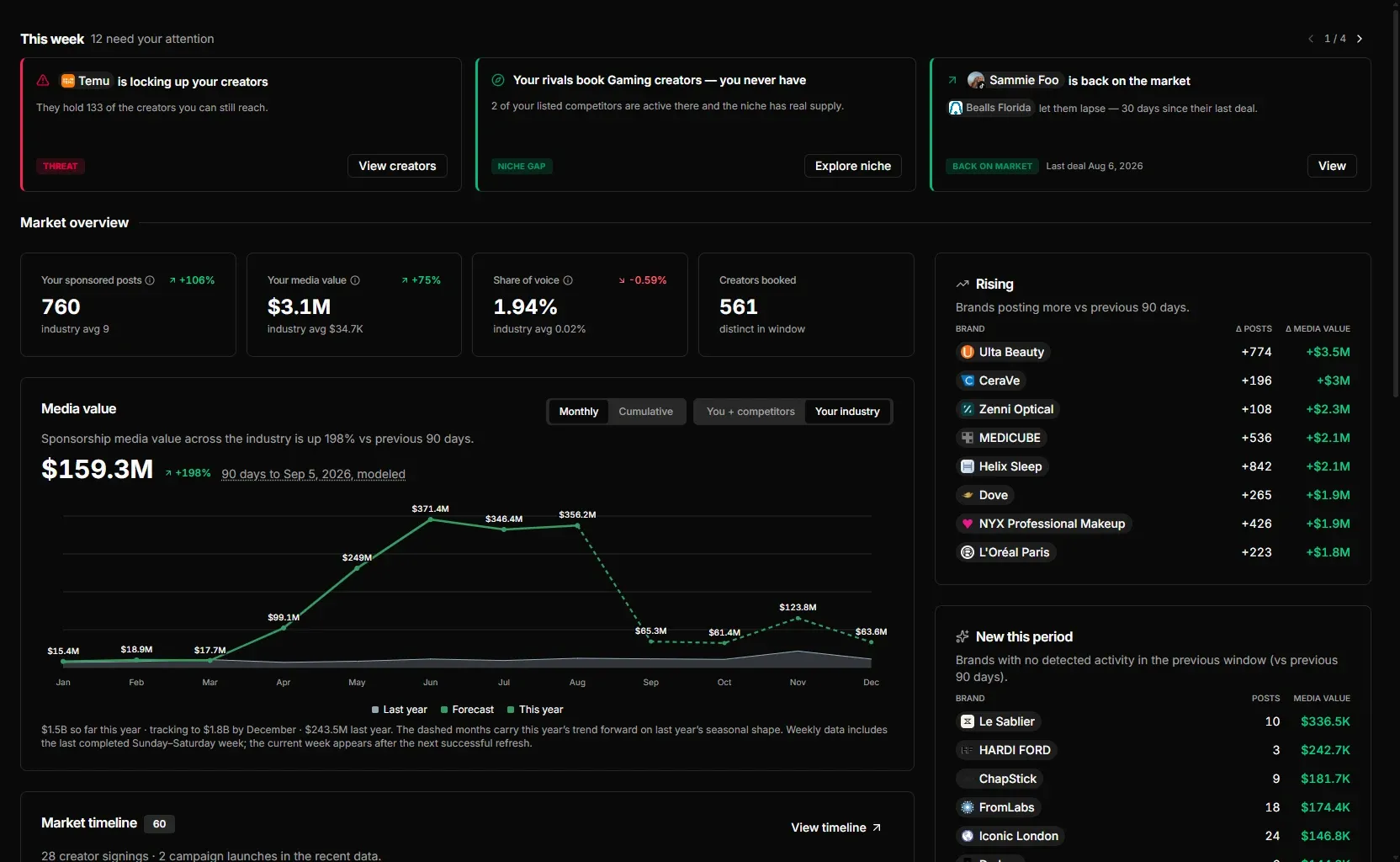
Streamforge Intelligence shows which creators your rivals sponsor, when they push, and where they leave room, built from detected and classified sponsorships. The sponsorship detection method explains how a brand mention is classified before it counts as sponsored.
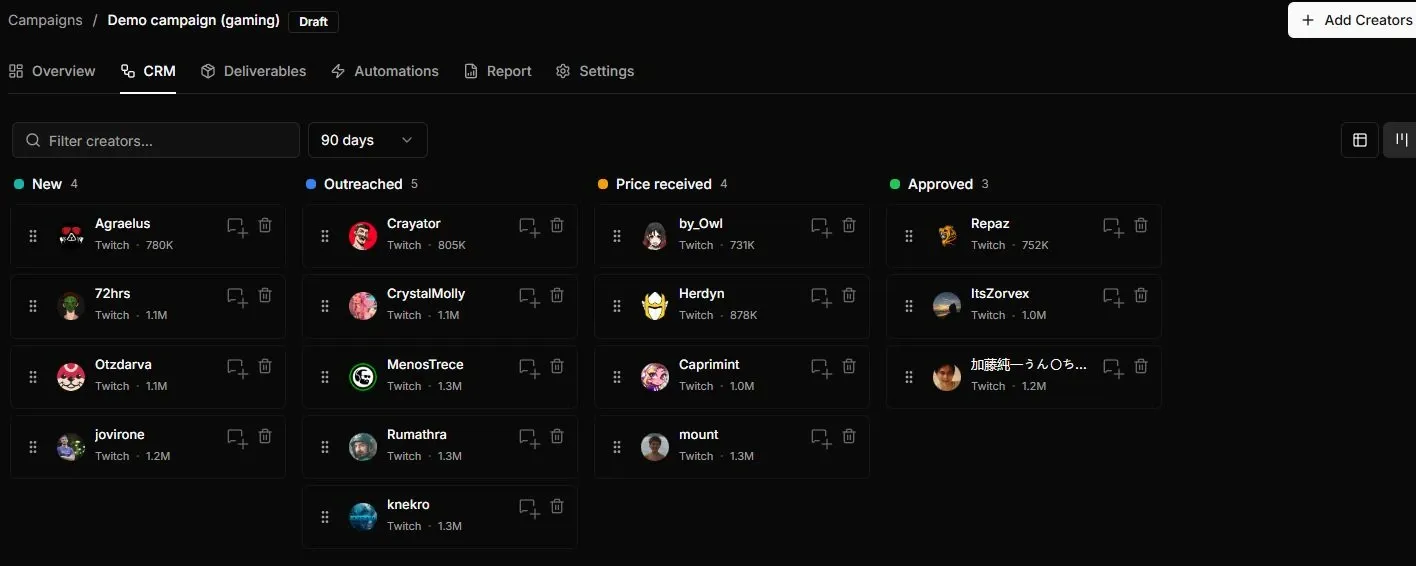
The vetted creator then moves straight into the campaign. Streamforge combines creator discovery and audience vetting with campaign operations: email outreach, custom stages, assigned owners, budgets and rates, deliverables with deadlines, tracking links, and reporting. Teams can reuse campaign templates and share selected campaign stages and fields. Streamforge also has its own agent, native to the platform, that can do everything a user can do in the product.
For a team still under contract, the switching terms matter as much as the features. Streamforge’s team moves your lists, custom fields, notes and campaigns at no cost to you, the move is done in under a week, and Streamforge doesn’t charge until your old contract ends, so you never pay for two platforms at once.
What to evaluate
- Comment-level authenticity signals on creators you already know well, read alongside the comments themselves.
- Paid-boost flags on TikTok, Instagram and YouTube posts you know a brand promoted.
- One real brief, including any Twitch or X creators, run from shortlist through outreach, deliverables and the campaign report.
Buying consideration: Streamforge’s campaign tools track rates, budgets and deliverables. A program that runs on paying creators, affiliate commissions or Shopify gifting from inside the platform should also look at GRIN, Modash or Upfluence, which build their plans around those steps.
Pricing and access: Talk to Streamforge about the networks, report volume and campaign workflow your team needs.
2. Modash
Best for: Shopify brands that want discovery, creator payments and affiliate links in one subscription, with published monthly allowances.
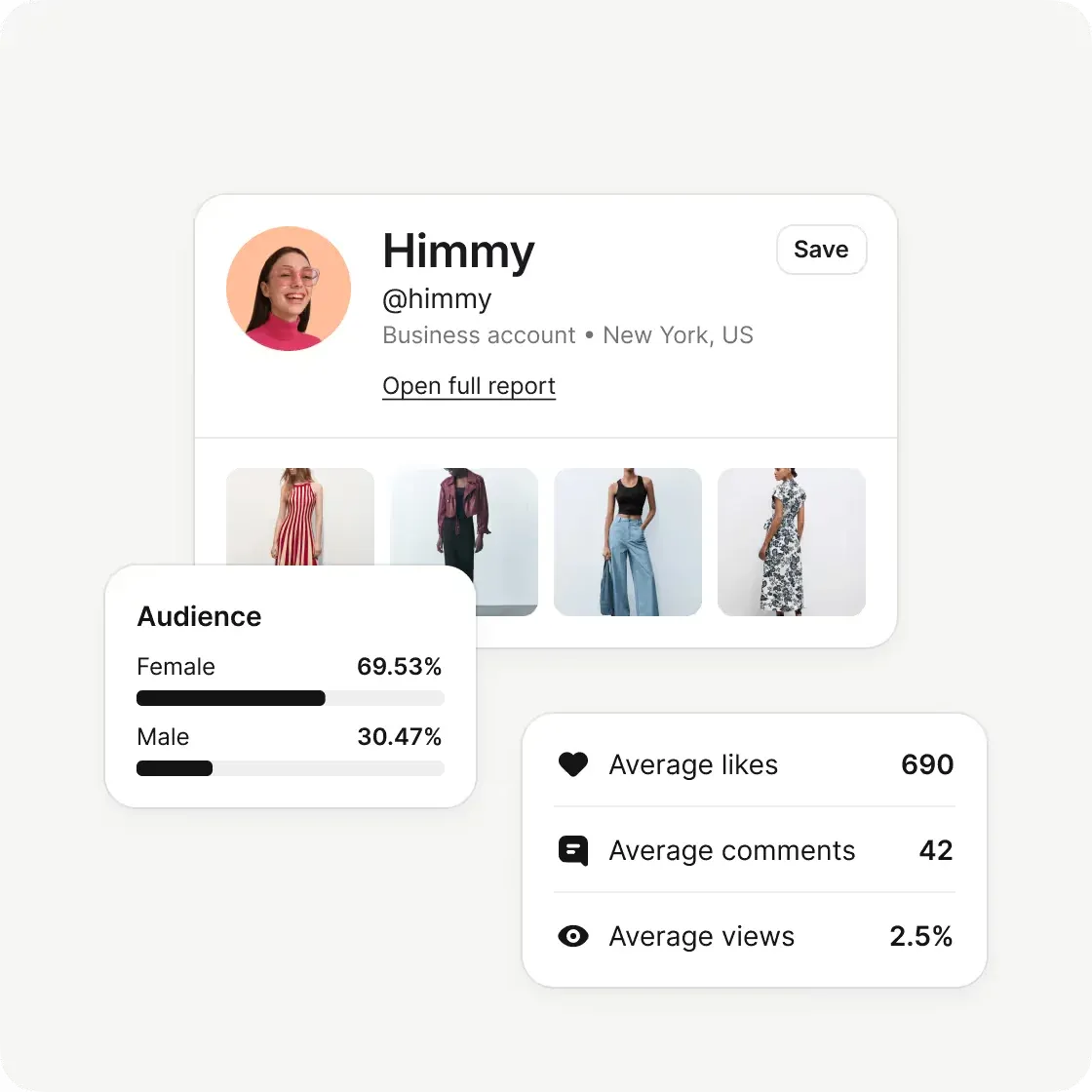
Modash’s analytics cover audience locations and demographics, follower growth and engagement, plus a fake-follower audit, and its search filters cover Instagram, YouTube and TikTok. The audience-quality guide explains the method: network graph analysis flags follower accounts that fall too far outside typical behavior, using signals such as profile pictures, follow ratios, account age and activity. The same guide sets the scope. Fake-follower detection and audience credibility scores are available for Instagram only, and a private follower list prevents the calculation.
Allowances are public, which makes a HypeAuditor comparison easy. Essentials includes two team members, 300 opened profiles and access to 150 creator emails a month, and content tracking for 100 creators. Performance adds creator payments, affiliate management and a Shopify integration.
What to evaluate
- Instagram audience-quality results for creators you already know.
- The evidence your team will use for TikTok and YouTube authenticity.
- Whether 300 opened profiles a month covers the reports you opened last quarter.
Buying consideration: a team that vetted TikTok and YouTube creators in HypeAuditor needs a plan for that evidence, because Modash’s fake-follower analysis stops at Instagram. See the Streamforge vs Modash comparison.
Pricing and access: Essentials is $199/month billed annually, with $2,388 paid for the year. Check current plans and allowances.
3. CreatorIQ
Best for: enterprise programs that need content-safety review, governance and creator payments around discovery.
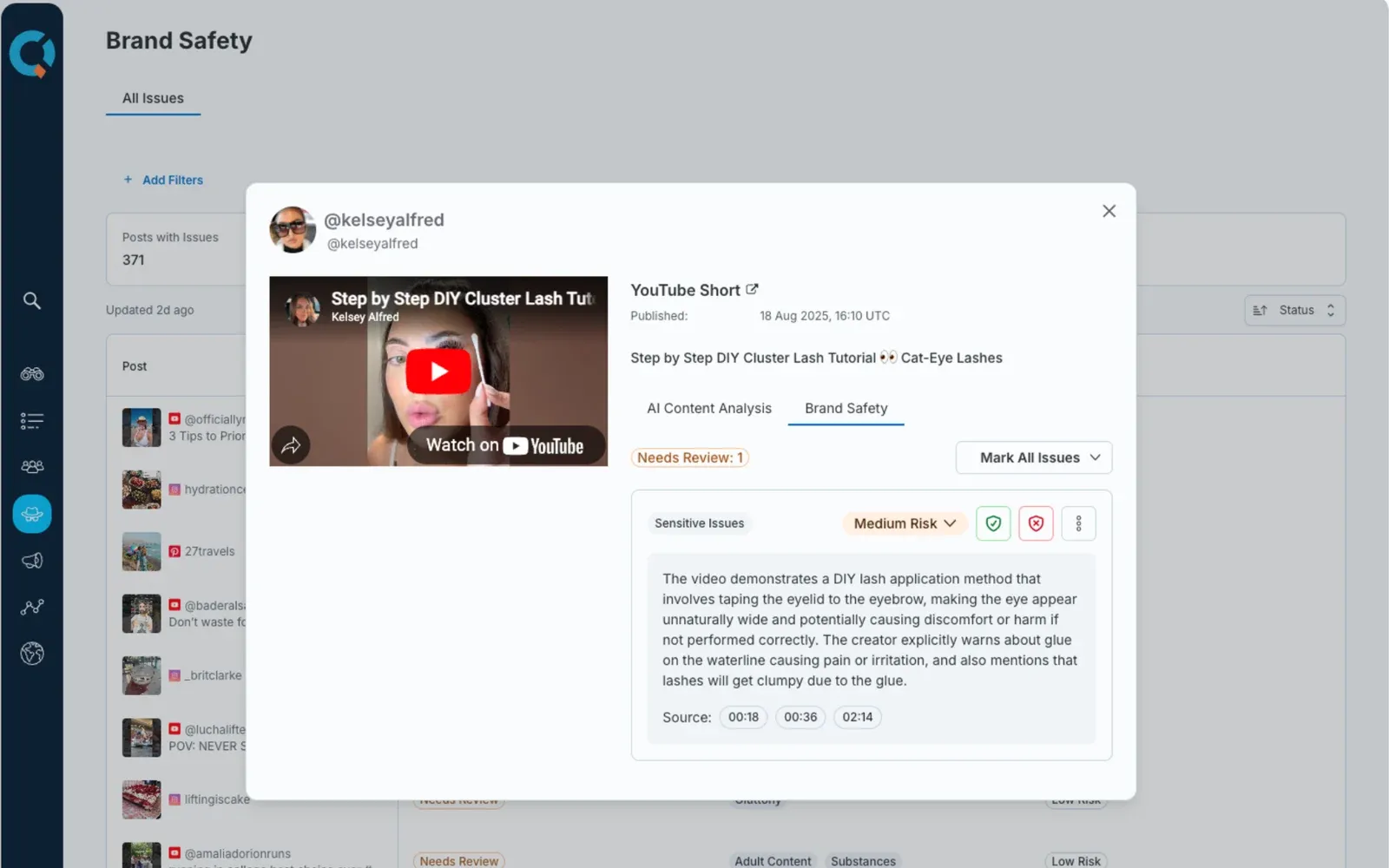
CreatorIQ brings two kinds of evidence that sit outside an audience-quality score. SafeIQ uses multimodal AI to analyze text, audio and visual content together, with Lookback for a creator’s history before activation and Monitoring for active partners. And since March 2026, CreatorIQ has embedded first-party YouTube viewership data in Discovery for YouTube Partner Program creators, reflecting the demographics and interests of people who watched their videos or Shorts.
Its creator evaluation page describes fraud detection for inauthentic activity alongside follower demographics, engagement quality and past performance. Around that evidence sits an enterprise program stack: CreatorIQ Pay, a measurement suite, and a platform CreatorIQ describes as extensible through MCP, tech-stack integrations and a bi-directional API.
What to evaluate
- SafeIQ results on creators your team would approve, escalate and reject.
- Which audience fields are first-party for each creator in your brief.
- Payment, approval and integration requirements across brands or regions.
Buying consideration: the first-party YouTube data applies to YouTube Partner Program creators, so ask what audience evidence the platform shows for creators outside that program and on other networks. Confirm which SafeIQ capabilities are in the proposed package. See the Streamforge vs CreatorIQ comparison.
Pricing and access: Request CreatorIQ pricing through a call with a platform specialist.
4. Upfluence
Best for: e-commerce brands that recruit creators from their customer base and track sales through Shopify or Amazon.
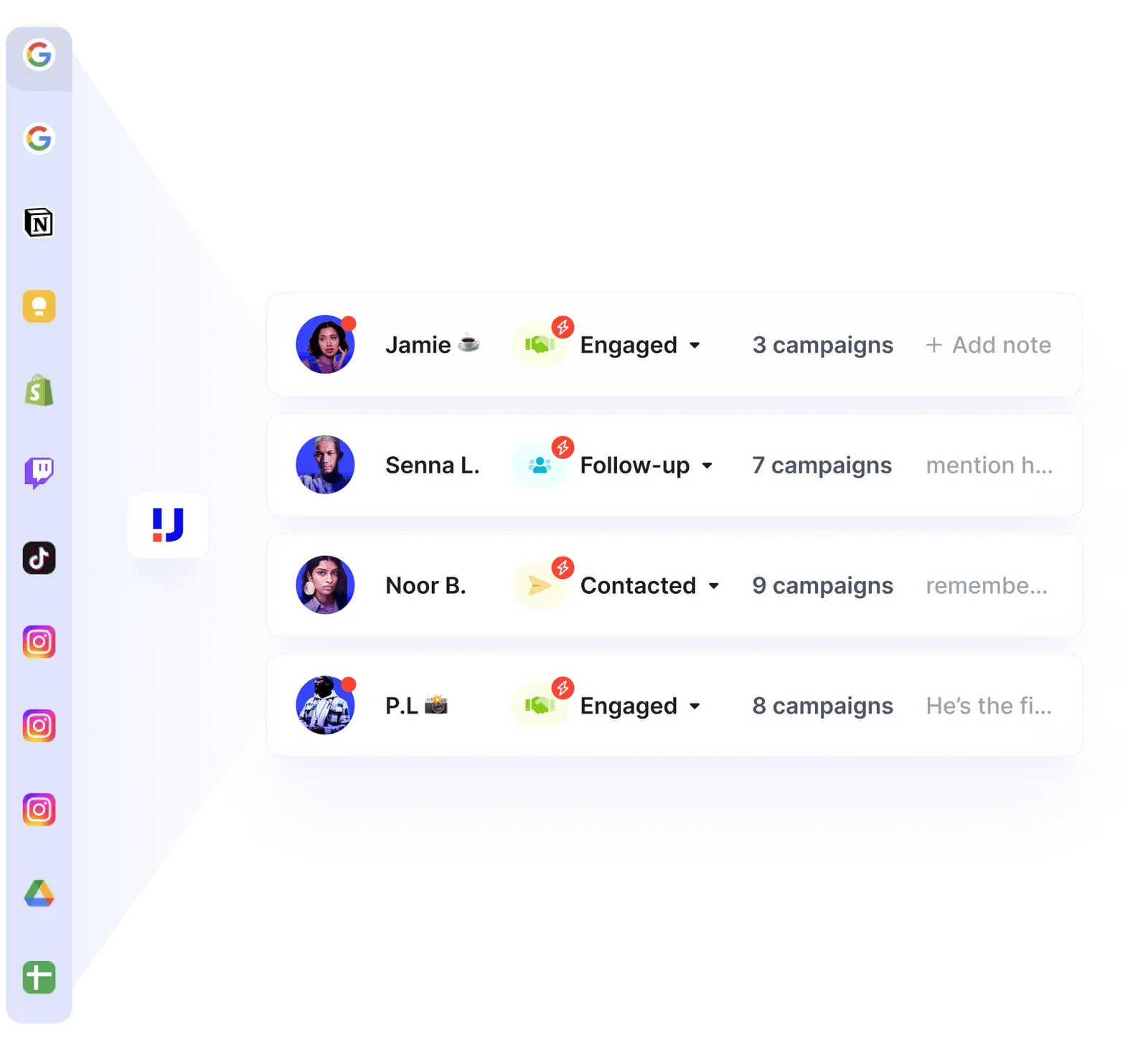
Upfluence sells modules, and the module decides the workflow. Its pricing page lists three. Find covers search, brand-safety screening, lookalikes and mass outreach with an AI email assistant. Scale adds the CRM, e-commerce integrations for Shopify, WooCommerce, Magento, BigCommerce and Amazon, affiliate and discount tracking, and a sales analytics dashboard. Autopilot adds creator payment through Upfluence Pay, multi-currency payments and automatic 1099 and W9 forms.
On audience evidence, the Search app guide shows audience filters for age range, gender and country, and says those filters are available for Instagram and TikTok.
What to evaluate
- Shopify or Amazon attribution on a product you already sell through creators.
- Customer-to-creator recruitment from your own buyer list.
- The audience evidence shown for any YouTube or Twitch creators in your brief.
Buying consideration: the CRM and commerce integrations start at Scale, and payments at Autopilot, so price the module you will actually run. See the Streamforge vs Upfluence comparison.
Pricing and access: custom-quoted by module, team size and program volume, with a 12-month minimum contract. Request Upfluence pricing.
5. Influencity
Best for: teams that want discovery, audience analysis, a creator CRM, campaigns and reports under one subscription.
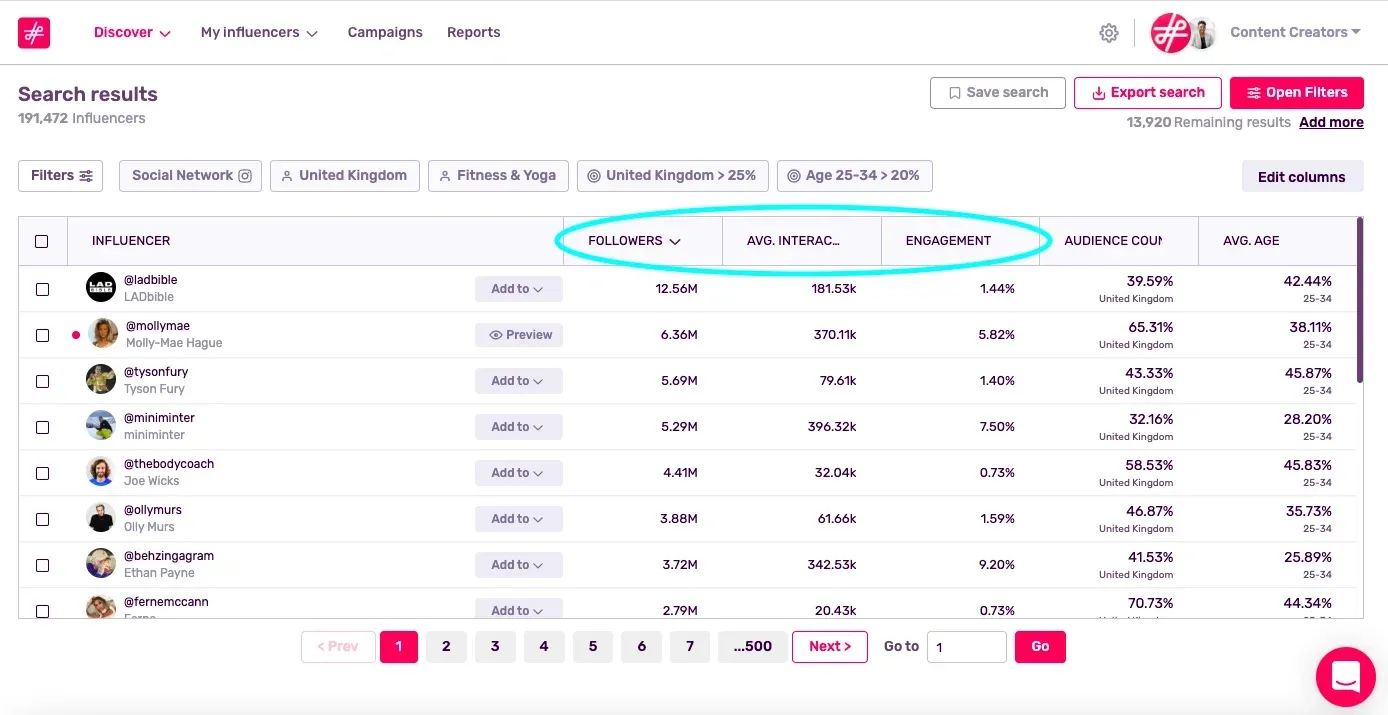
Influencity’s influencer analysis runs an automated audit on every analyzed profile to produce an Audience Quality Score, using public data patterns to flag bot networks, mass-followers and unnatural engagement spikes. Profiles cover audience location, interests, age and gender alongside growth trends, and the analysis pages include Instagram, TikTok, YouTube and Twitch. A profile can be shared through a secure link, downloaded as a detailed report or exported as CSV. Relationship management, a campaign manager, campaign reports and influencer payments in any currency sit on the same platform.
What to evaluate
- The Audience Quality Score and its flagged patterns for creators you know.
- Twitch audience analysis if streamers are in your brief.
- Report downloads and CSV exports in the format your clients or stakeholders expect.
Buying consideration: Influencity’s pricing FAQ says plans may include usage limits on creator analyses, tracked creators and other actions. Ask for those numbers in writing and set them against your HypeAuditor report usage. See the Streamforge vs Influencity comparison.
Pricing and access: Request Influencity pricing; every plan starts with a 7-day free trial.
6. GRIN
Best for: gifting, affiliate and paid creator programs that pay creators from one wallet.
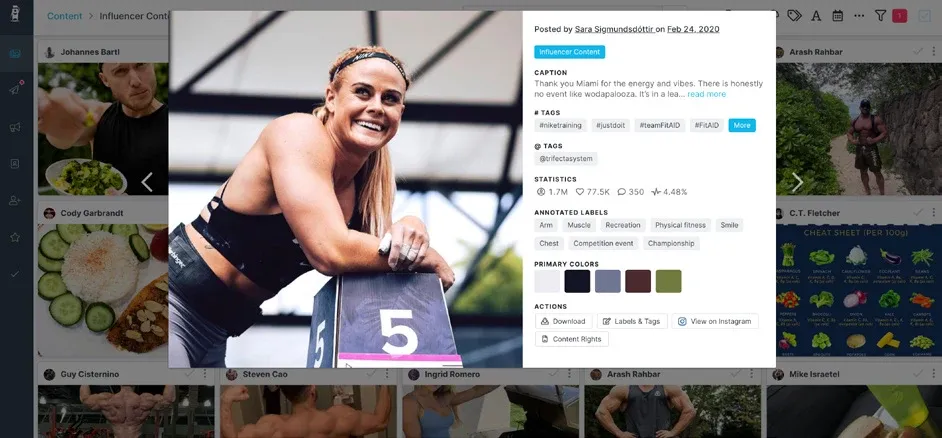
GRIN puts its weight on the work after discovery. Its AI agent, Gia, searches for creators, drafts outreach and keeps every creator thread in one inbox, according to GRIN. Every plan on its pricing page includes an unlimited CRM, creator marketplace access, paid partnerships and affiliate commissions, an escrow wallet with Stripe payouts, a Shopify integration and automatic tracking of program creators’ posts. Plans scale by gifts and creator searches a month, and exports of creator lists and contact emails start on Starter.
What to evaluate
- A gifting or affiliate flow from offer to payout on your own store.
- The management fee at your expected monthly creator spend.
- Audience evidence for creators on each network in your brief.
Buying consideration: GRIN’s pricing page lists search volumes and program features rather than an audience-quality method, so ask to see the audience evidence a reviewer would use before approving a creator. See the Streamforge vs GRIN comparison.
Pricing and access: Free is $0/month with a 20% fee on wallet deposits; Starter is $200/month with 10%; Growth is $500/month with 7%; Scale is $1,500/month with 5%; Enterprise is custom. Compare GRIN plans.
How to choose a HypeAuditor alternative
Start with your own usage. Before any demo, pull last quarter’s numbers from HypeAuditor: how many creator reports the team opened, how many exports it ran, which networks those creators were on, and which steps happened in another tool afterwards. Those figures turn a vendor’s allowance table into a yes or a no.
Then decide what a reviewer must see before approving a creator. The tools here answer different questions, and a single score hides which one it answered.
| Review question | Evidence to request | Documented in this list by |
|---|---|---|
| Are the followers real? | A follower-account audit with its method explained | Modash (Instagram) and Influencity; HypeAuditor’s score covers this too |
| Are the people commenting real, and are they responding to the content? | Comment-level analysis with example comments | Streamforge, across YouTube, Twitch, TikTok, Instagram and X |
| Were the views organic? | Flags on paid-boosted posts with an estimate of paid views | Streamforge, on TikTok, Instagram and YouTube |
| Is the content safe for the brand? | Content review with timestamps and severity | CreatorIQ SafeIQ; brand-safety screening in Upfluence |
| Does the audience fit the market? | Country, age, gender and interest estimates, with their source | Every tool here; ask which fields are measured and which are modeled |
Run the same shortlist through every demo: a creator you know well, one whose comments look off, one on Twitch or X if your brief includes those networks, and a post you know was promoted with paid media. A useful tool shows the evidence behind each flag. A score without examples leaves the reviewer guessing, and the guide to evaluating engagement quality explains what to look for when you read the comments yourself.
Next, map the work after discovery. List outreach, stages, budgets, deliverables, payouts, affiliate tracking and reporting, and mark each as inside the tool or somewhere else for every vendor. A step that lives somewhere else often ends up in a spreadsheet, and the campaign management guide shows what that costs.
Finally, plan the move. Lists, notes, custom fields and campaigns are what a team stands to lose in a switch, so ask each vendor who moves them, how long it takes and when billing starts.
HypeAuditor alternatives FAQs
What is the best alternative to HypeAuditor?
For teams that want audience vetting and the campaign in one platform, Streamforge. Its AI audience analysis covers YouTube, Twitch, TikTok, Instagram and X without creator logins, reads comments for bot behavior, flags paid-boosted views on TikTok, Instagram and YouTube, and runs outreach, campaigns and reporting. Commerce programs should compare Modash, Upfluence and GRIN; enterprise content-safety programs, CreatorIQ; teams wanting one subscription for discovery, CRM and reports, Influencity.
Which HypeAuditor alternative covers Twitch and X?
Streamforge’s audience analysis is supported across YouTube, Twitch, TikTok, Instagram and X. It is AI-based, does not require the creator to authenticate through OAuth, and was trained on first-party audience data. Influencity’s analysis pages include Twitch alongside Instagram, TikTok and YouTube. Modash’s search covers Instagram, YouTube and TikTok, and Upfluence’s audience filters apply to Instagram and TikTok.
Which HypeAuditor alternatives publish their prices?
As checked October 27, 2026, Modash and GRIN. Modash Essentials is $199/month billed annually ($2,388/year) with 300 opened profiles a month. GRIN runs from $0 to $1,500/month plus a 5% to 20% management fee on wallet deposits. CreatorIQ, Upfluence and Influencity quote on request, and Streamforge discusses requirements on a call. HypeAuditor’s own guide says its Basic plan starts at $299/month billed annually.
How can I tell whether a creator’s views were paid for?
On TikTok, Instagram and YouTube, Streamforge flags posts whose views were inflated by a brand paying to promote them and estimates how many views were paid for, using a method checked against campaigns with a known paid and organic split. A post without a flag can still have had paid support, because a brand can run the content as a separate ad.
Can we switch from HypeAuditor before our contract ends?
With Streamforge, yes. Streamforge doesn’t charge until your old contract ends, so you never pay for two platforms at once. Its team moves your lists, custom fields, notes and campaigns at no cost to you, and the move is done in under a week. The switching page has the details.
Want to test a replacement on your own shortlist? Book a demo and bring creators you have already reviewed in HypeAuditor.