
 By Streamforge
A follower count tells you how many accounts pressed a button at some point. It does not tell you who those accounts belong to, whether they still watch, or whether they resemble the customers a campaign needs to reach. Influencer audience intelligence is the discipline of answering those questions with data before money moves: verifying that a community is real, describing who is in it, and matching that description against a brief.
This article sets out a working framework in three parts. The first covers authenticity and community health, the second covers demographic and psychographic data, and the third separates two things that are often blurred together, analysis of the creator and analysis of the audience.
Evaluating audience authenticity and community health
The shift in vetting over the last few years is from vanity metrics to community verification. Reach, follower totals and even raw engagement rate are inputs, not conclusions. The question a vetting process has to answer is narrower: does this creator hold the attention of a real, engaged community that is worth a specific amount of budget?
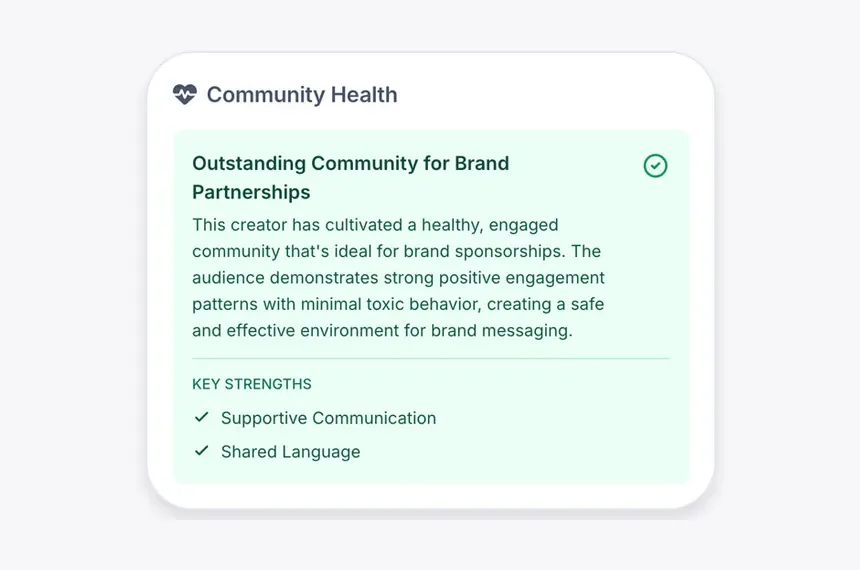
Streamforge summarises community health per creator, with the strengths behind the rating. The card is a starting point for review, not a substitute for it.
Community health is easier to assess when it is broken into observable signals rather than a single score:
- Growth shape. Organic audiences grow in a pattern that tracks publishing activity and occasional breakout content. Step changes in follower count with no matching content event, or growth that outpaces views, are worth investigating.
- Engagement relative to views, not followers. Engagements divided by followers and engagements divided by views are different metrics with different meanings. Comparing against views tells you how the people who actually watched responded, which is the number that matters for a sponsored placement.
- Comment substance. Generic, repetitive or off-topic comments in volume are a stronger warning than a low comment count. Real communities argue, ask questions and reference earlier content.
- Consistency across posts. One viral result is not a forecast. Read the last several pieces of content together, and treat a stable pattern as more informative than any single outlier.
- Cross-platform coherence. A creator who is active on more than one platform should show audiences that make sense together. Wildly different engagement quality between two accounts owned by the same person deserves an explanation.
Identifying bot activity and non-human engagement follows the same logic. No single anomaly is proof. Every account of any size collects followers it never asked for, and a clip that travels can bring in an audience the creator will never publish for again. The method is to read several signals at once, weight them against the size and age of the account, and record the evidence rather than the verdict. A creator flagged on one signal but clean on the others is usually a creator with an odd history, not a fraud.
The comments are where non-human engagement is hardest to hide, and where automated review does the most work. A follower check only asks whether the accounts that subscribed look real. Streamforge goes further and checks the people actually engaging with the creator’s content: it analyzes the comments on a creator’s posts, videos and streams using AI to detect bot behaviour, writing styles, and repetitive phrases or comments that do not engage with the content. That is a direct read on whether the people responding are human, and whether they watched, which follower and engagement totals cannot provide.
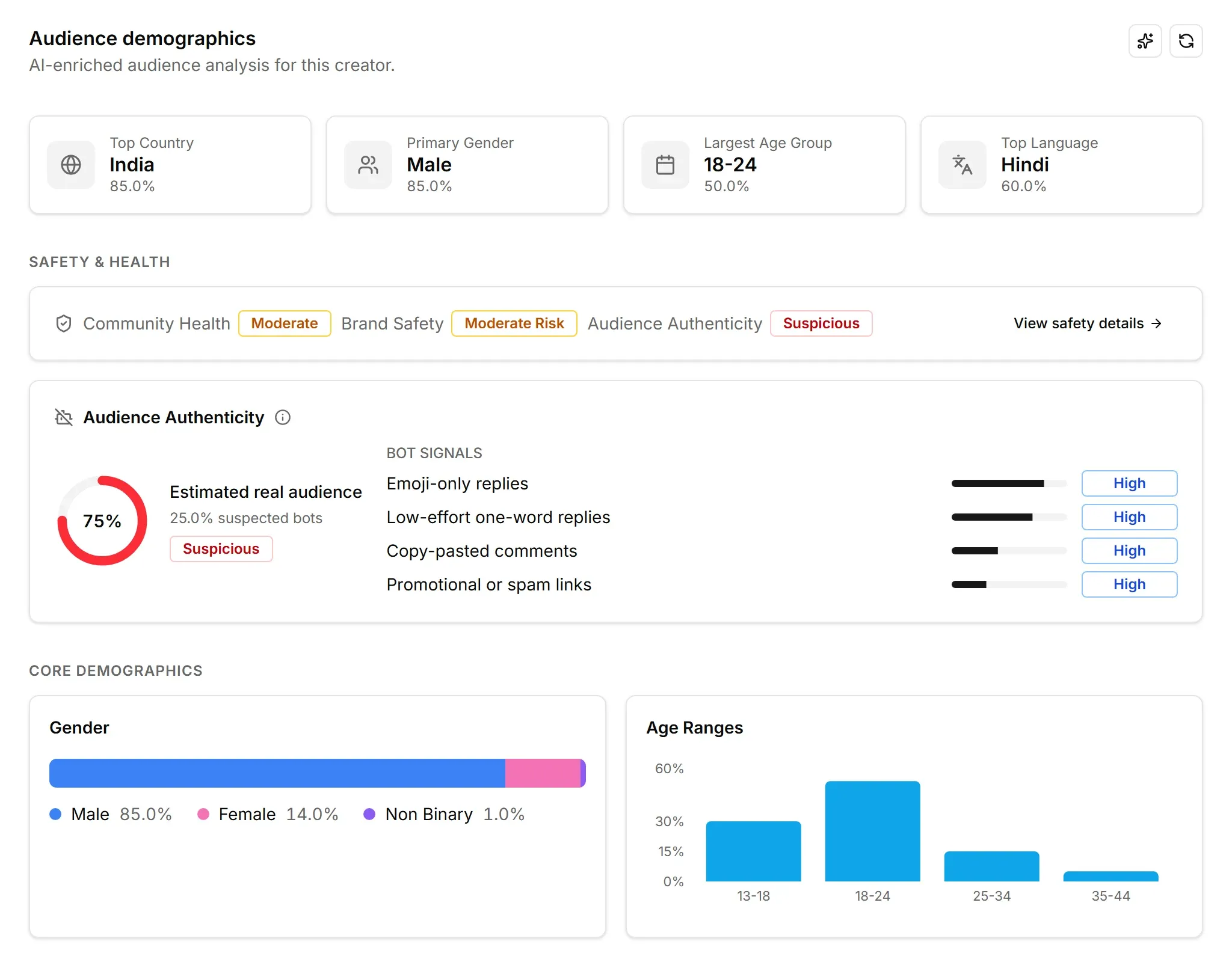
A creator’s Audience tab in Streamforge. The Safety and Health strip rates community health, brand safety and audience authenticity in one line, and the Audience Authenticity panel below it shows the estimated real audience share beside the comment-level bot signals that produced it, with the core demographics underneath, so a reviewer sees why a creator was rated and who the audience is on the same screen.
Doing this by hand for a handful of creators is manageable. Doing it for a shortlist of fifty, drawn from a candidate pool of thousands, is not. Streamforge is built for the second case. Its creator database covers 48M creators, and discovery and vetting run on the same cross-platform data, so a team can screen at scale rather than sample. Search and filtering by niche, content topic and game association narrow a pool to creators whose communities are already gathered around the subject a campaign cares about, which is the first and cheapest test of community alignment. For gaming specifically, Streamforge uses IGDB as its source of truth for game and genre metadata, then applies proprietary techniques to connect that taxonomy to creators and content across social platforms, so a creator’s relevance to a title is measured from what they actually published rather than from a self-declared tag.
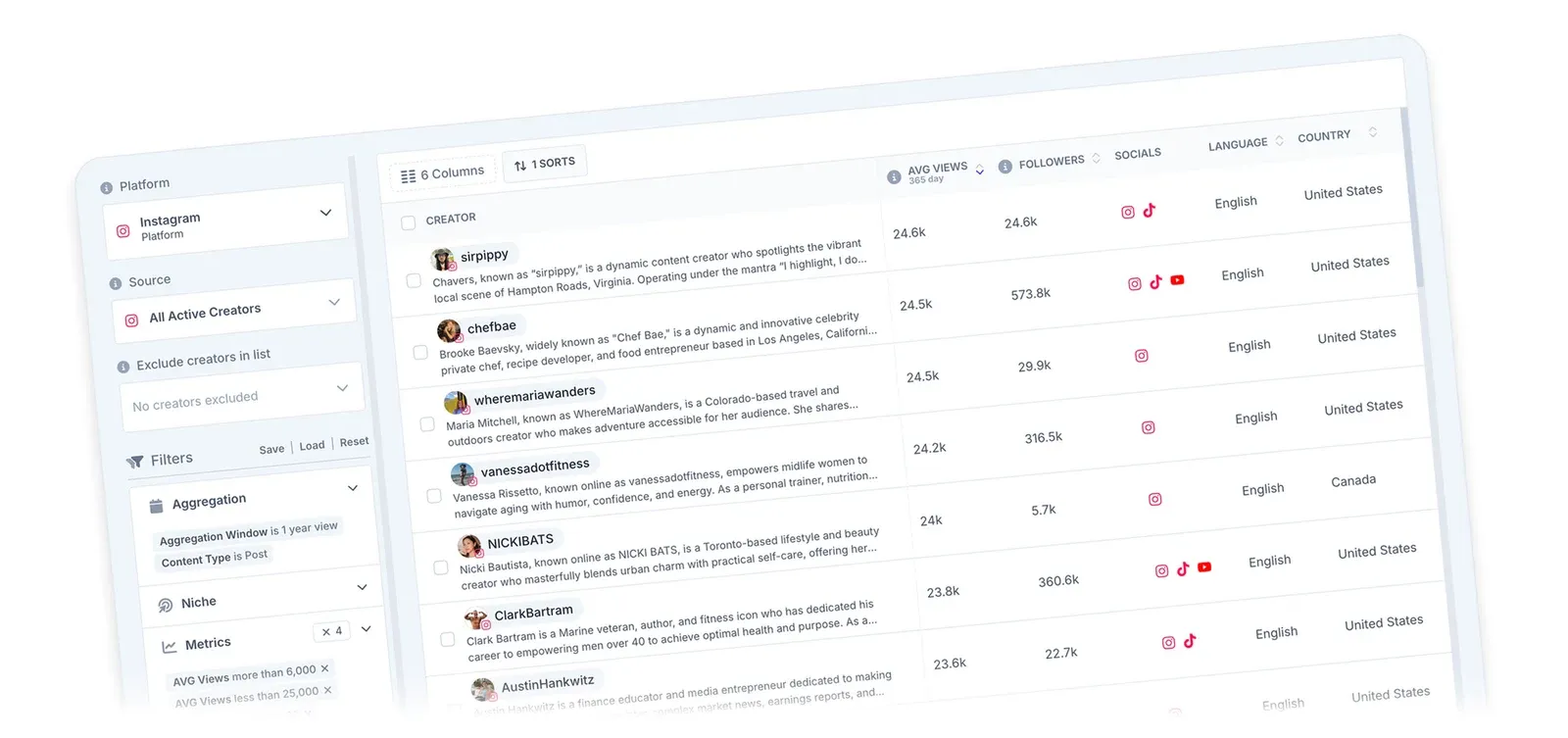
Discovery in Streamforge: filters on the left narrow the pool by platform, niche and metrics, and the table shows each creator’s cross-platform footprint.
Leveraging audience psychographics and demographics
Authenticity clears a creator to be considered. Demographics and psychographics decide whether they should be chosen. A creator can be entirely genuine and still be a poor media buy if most of their audience lives outside the target market, speaks a language the campaign does not, or has no interest in the category.
Demographic data describes who the audience is: age, gender, country, language, and where available, indicators such as household composition or income. Psychographic data describes what the audience cares about: interests, affinities with other creators and brands, content categories they follow, and behavioural patterns such as the platforms and formats they favour. Both layers are needed. A demographic match with no interest overlap produces reach without relevance. An interest match in the wrong market produces enthusiasm that cannot convert.
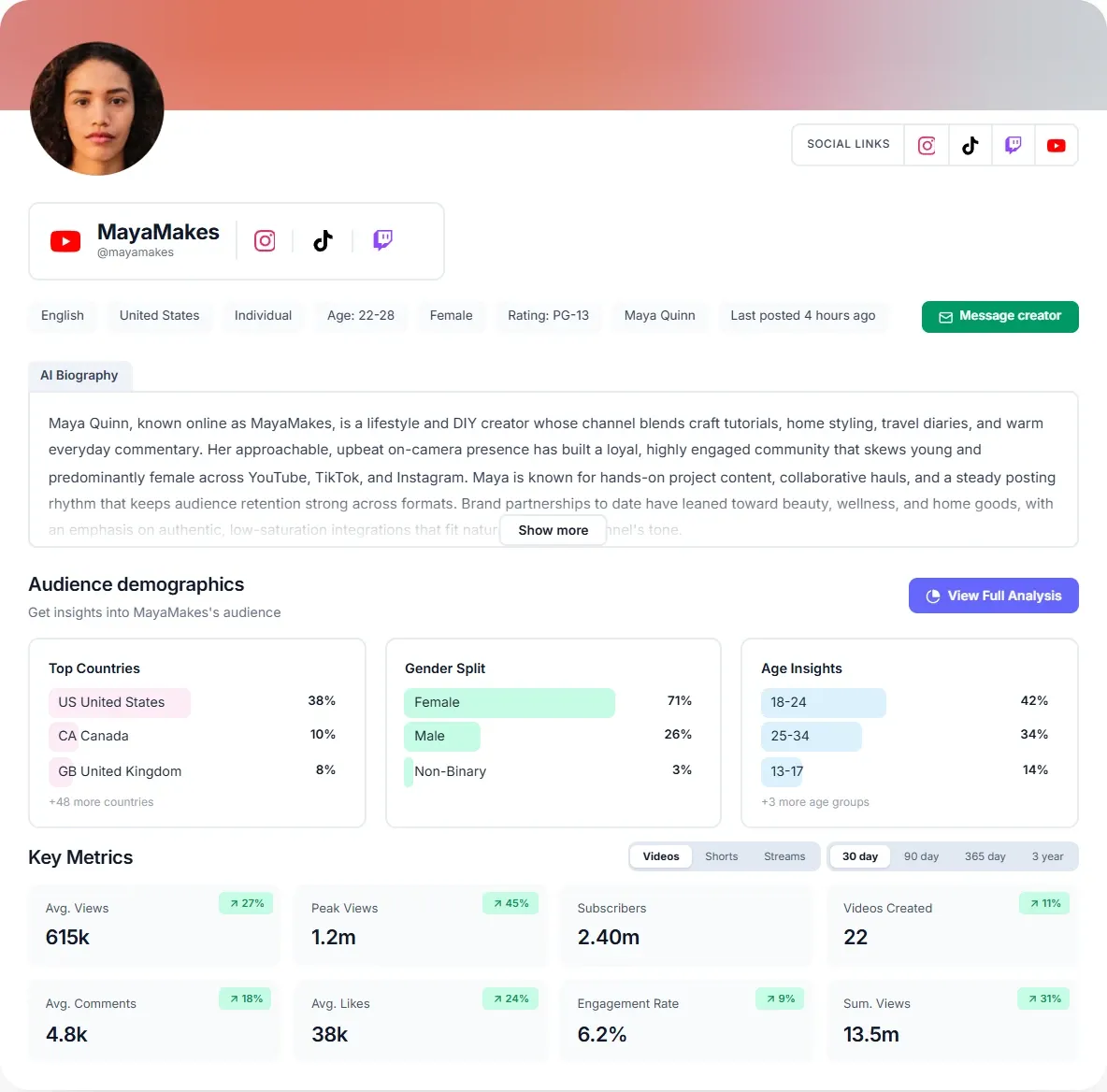
A creator profile in Streamforge, with sample data. Audience demographics sit directly under the creator’s own attributes and biography, so both layers are read on one screen.
Three practices make this data useful in a vetting process:
- Map the audience against the brief, not against an average. Write down the target segment before looking at any creator, then compare each audience against that segment. A smaller creator with a high share of qualified viewers is often a better buy than a much larger account with a scattered audience.
- Use granular filters to find composition, not to exclude mechanically. Filtering on audience country, age band and interest surfaces creators whose composition matches a consumer segment. Treating any single estimate as a hard cutoff discards strong creators over modelled figures that carry uncertainty. Coverage and confidence belong next to every number.
- Compare across platforms with one method. An audience described one way on YouTube and another way on TikTok cannot be compared. Streamforge’s audience analysis is supported across YouTube, Twitch, TikTok, Instagram, and X, using one method, so the interests and demographics behind a creator’s channels can be read side by side.
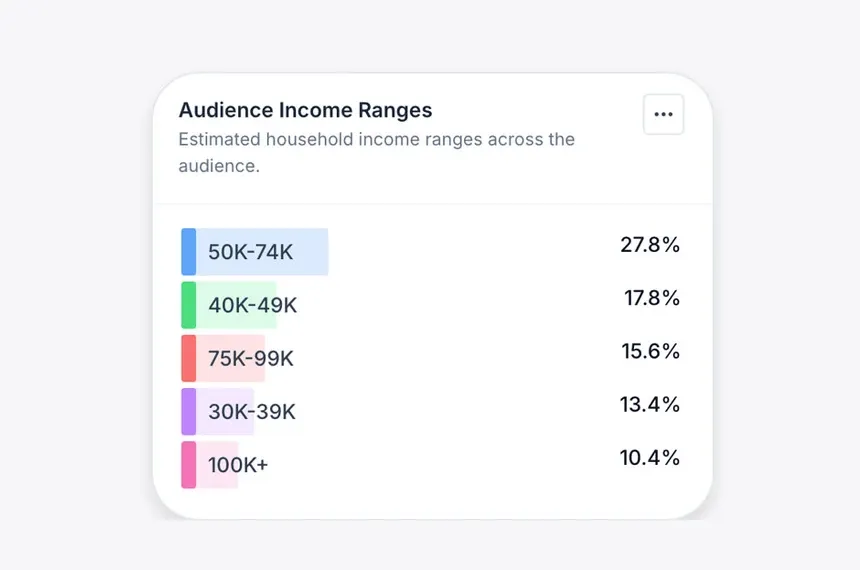
Estimated household income bands for a creator’s audience. Psychographic and economic estimates like this one carry uncertainty and belong next to their coverage.
The affordability question that startups and small teams raise is really a question about coverage. Granular demographic filters are only valuable when they are backed by audience data for the creators you are likely to shortlist. A platform that offers many filters over a thin dataset produces confident-looking empty results. The more useful test of any tool is whether it can describe the audience of the mid-sized, niche creators a smaller brand can afford, not whether it has a filter for every field.
Distinguishing creator analysis from audience intelligence
Creator analysis and audience analysis answer different questions, and conflating them is the most common vetting error we see.
Creator analysis is qualitative and about the person or channel: what they make, how their content performs, their style and tone, their public identity, their history of brand partnerships, and the brand-safety record of what they have published. It answers whether the creator is someone the brand wants to be associated with and whether their content is likely to carry a message well.
Audience intelligence is quantitative and about the people watching: their composition, their interests, their location, and whether they are the segment the campaign needs. It answers whether a placement with this creator reaches the right people, regardless of how good the creator is.
A creator can pass one test and fail the other. A polished, brand-safe channel with a mismatched audience is an expensive way to reach the wrong market. A creator whose audience is a perfect match but whose recent content history raises a compliance concern is a risk the audience data cannot see. Vetting has to run both, and record them separately, so that a scorecard shows which test a candidate failed.
Streamforge covers both layers. Creator analysis combines directly supported evidence from creator profiles, published content, and other public web sources with model-inferred qualitative details, including content style, interests and public identity, and its reports distinguish what was observed from what was inferred. Audience analysis sits alongside it as a separate view of the community, so a reviewer can read who the creator is and who is watching without one obscuring the other.
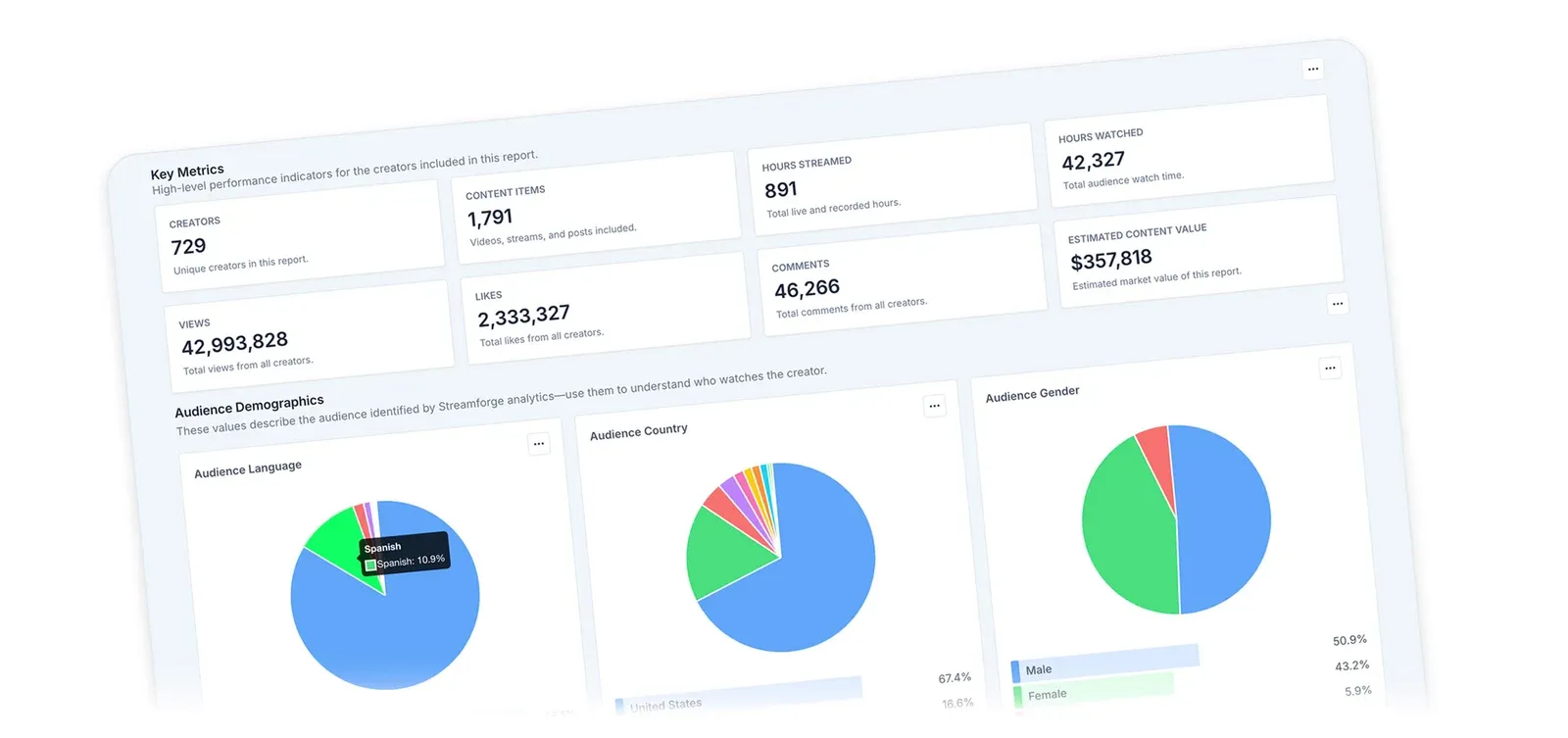
A campaign report aggregates the audience demographics of every creator included, so the audience a campaign actually bought is visible after the fact as well as before.
The remaining question is trust in estimated audience data. Platforms hold first-party audience demographics, but brands rarely have access to them for a creator they have not yet contracted, and creators do not always share them. Estimated demographics fill that gap during discovery and shortlisting, when the choice is between an estimate and no data at all. The honest way to use them is to know how they were produced and how they compare to the first-party figures they stand in for. Streamforge has benchmarked its audience-analysis technique against first-party audience data from the platforms and found it to be highly accurate. Estimates still carry uncertainty, and a good vetting process asks for the creator’s own analytics before signing and treats any large discrepancy as a finding worth explaining.
Audience intelligence does not replace judgement. It replaces guessing. A team that verifies community health, reads demographics and psychographics against a written brief, and keeps creator analysis distinct from audience analysis ends up with a shortlist it can defend and a campaign report with a hypothesis to test.