
What is this and why am I doing it?
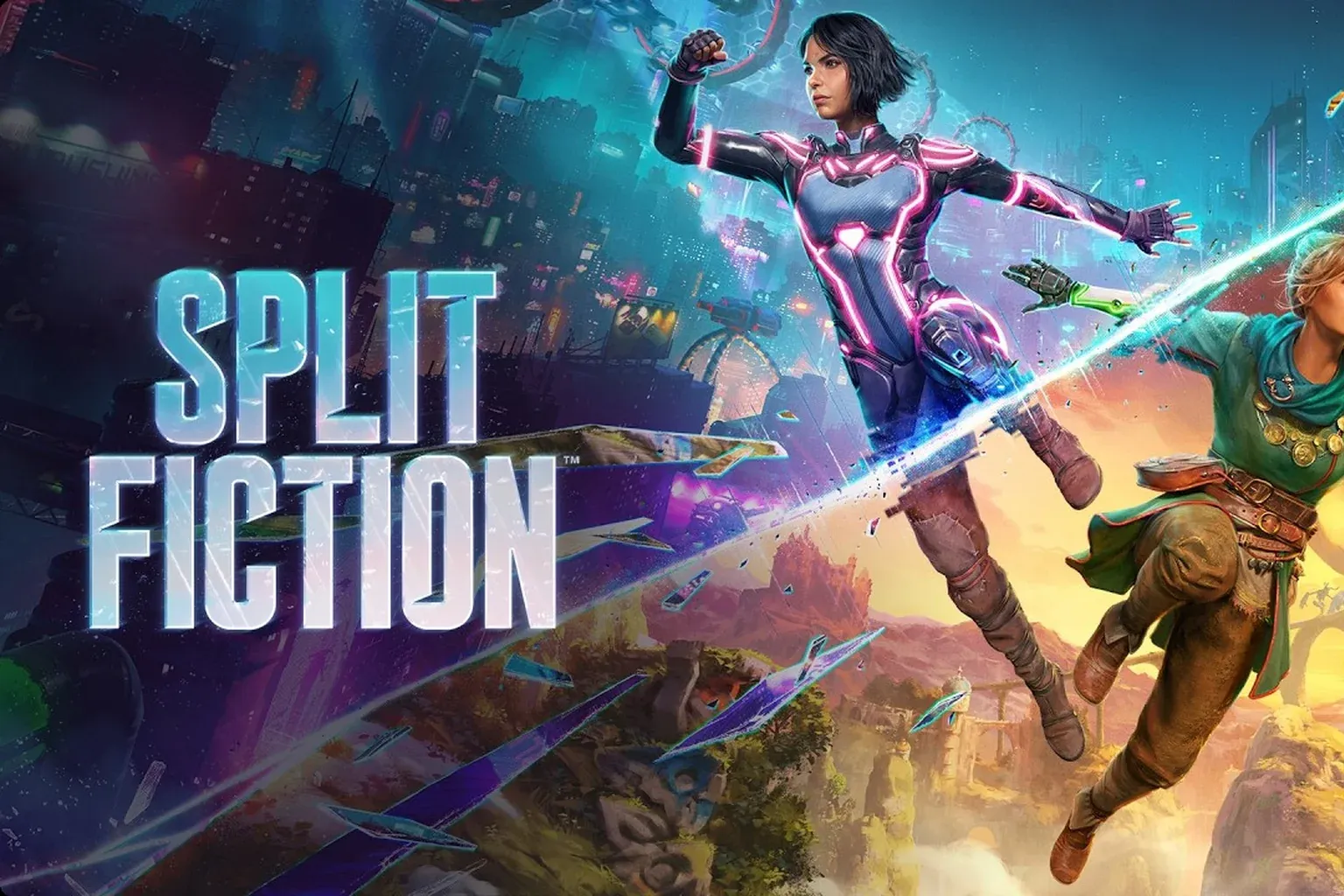
Welcome back to my ongoing deep dives into influencer marketing for major game launches! Having analyzed Kingdom Come Deliverance 2, Monster Hunter Wilds, and FragPunk, today I’m breaking down EA & Hazelight Studios’ “Split Fiction,” released on March 6th.
These analyses leverage Streamforge’s tech to give marketers transparent, actionable insights into how leading publishers are allocating influencer budgets. My goal remains consistent: help industry professionals benchmark their campaigns and uncover strategies that work.
I’m not affiliated with EA or Hazelight Studios, and all budget figures are estimates based on publicly available data and market rates from Streamforge’s algorithm.
A Chronological Overview
The campaign began with the high-profile reveal at The Game Awards (December 2024), instantly creating organic buzz through Josef Fares’ characteristically bold statements about the game being “mind-blowing.” Following this, the team strategically nurtured anticipation through various stages:
- Reveal Announcement & Early Hype (Dec 2024–Jan 2025): Initial announcement generated immediate press coverage and significant organic social conversations. I couldn’t think of a better place to announce a game. It’s worth noting that the announcement came a mere 3 months before the release of the game.
- “Gone Gold” Announcement (Jan 27, 2025): Used as a pivotal marketing moment across Twitter and Instagram, amplifying excitement for the imminent launch. Going “gold” indicates to the community that the game is finished development.
- Friend Edition Promotional Stunt (Feb 2025): Hazelight made a commercial advertising the co-op game with a twitch. Players that didn’t have someone to play with, would receive be shipped a friend to play with in a box. This playful, humorous advertising resonated with the community.
- Launch Countdown “Friendship Week” (Late Feb 2025): Created steady anticipation via daily community interactions, contests, and live developer Q&A sessions.
- Global Launch (March 6, 2025): Influencer activations across YouTube and Twitch maximized visibility at release.
Content Volume and Platform Distribution
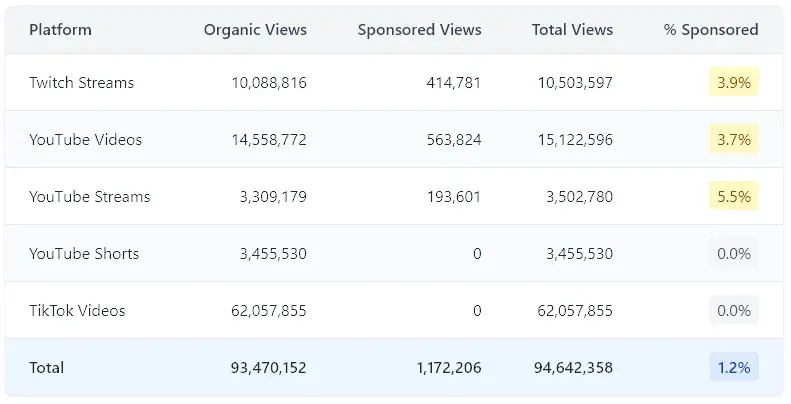
Looking at the total content volume (organic and sponsored) around launch, Split Fiction’s release day spike on March 6th was substantial, driven primarily by TikTok (62M total views), despite no direct sponsored budget allocation to the platform. This demonstrates that EA & Hazelight Studios effectively harnessed TikTok’s organic virality, significantly outperforming other platforms.
YouTube also showed meaningful activity around launch, notably through videos and streams. YouTube videos contributed over 15M views, with approximately 3.7% of those being sponsored. Meanwhile, YouTube streams (3.5M views) had the highest percentage of sponsored content at 5.5%.
Twitch streams maintained consistent engagement throughout the launch period, with a total of 10.5M views. Although Twitch had fewer total views than TikTok or YouTube, it represented the largest portion of the influencer marketing budget, emphasizing EA’s preference for deep engagement and interactive community-building.
A Twitch-Led Sponsored Strategy
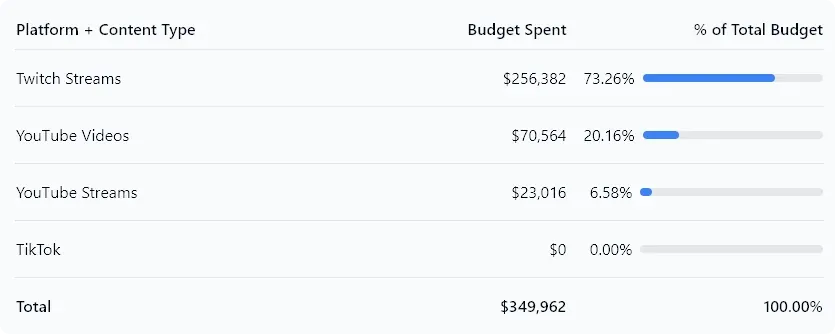
Similar to FragPunk, Split Fiction’s paid influencer strategy was heavily focused on Twitch, comprising 73% ($256k) of the total budget. The concentration on Twitch indicates a clear preference for engaging gameplay sessions and real-time audience interaction.
YouTube videos and streams absorbed the remaining budget (around $93k), highlighting EA’s dual-platform strategy to extend reach. Despite TikTok driving the highest organic traffic, no budget was directly spent there. This highlights a significant opportunity and a gap in leveraging TikTok’s potential more strategically through sponsored content.
Emphasis On Germany
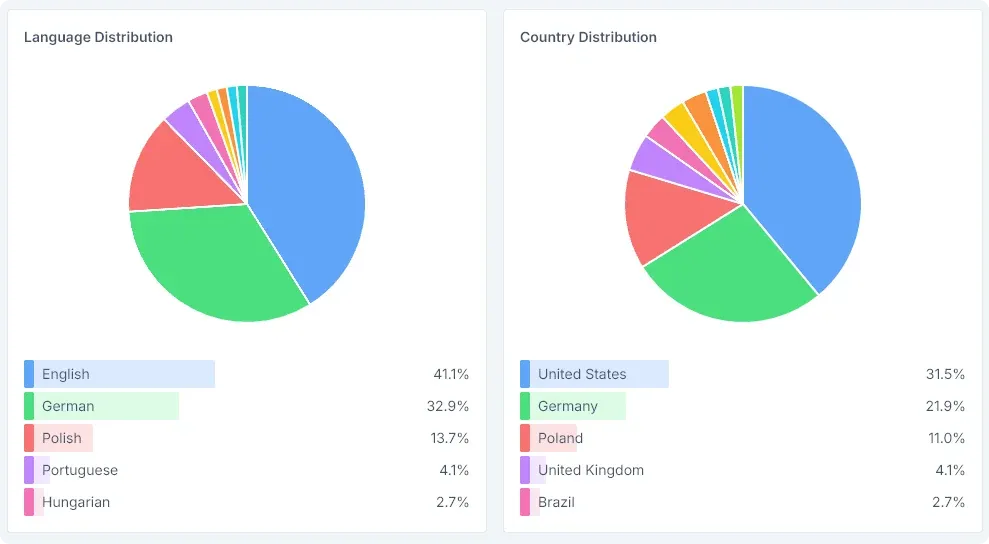
The sponsored influencer content had a strong presence in English (41.1%), German (32.9%), and Polish (13.7%), indicating a targeted focus on North American and European markets.
Country-wise, the U.S. led (31.5%), followed by Germany (21.9%) and Poland (11.0%). Despite the US being the highest, this is an unusually high amount of budget allocated to Germany. This tells me the publisher saw an opportunity in Europe and went all in on it.
Heavy Focus on Female Creators
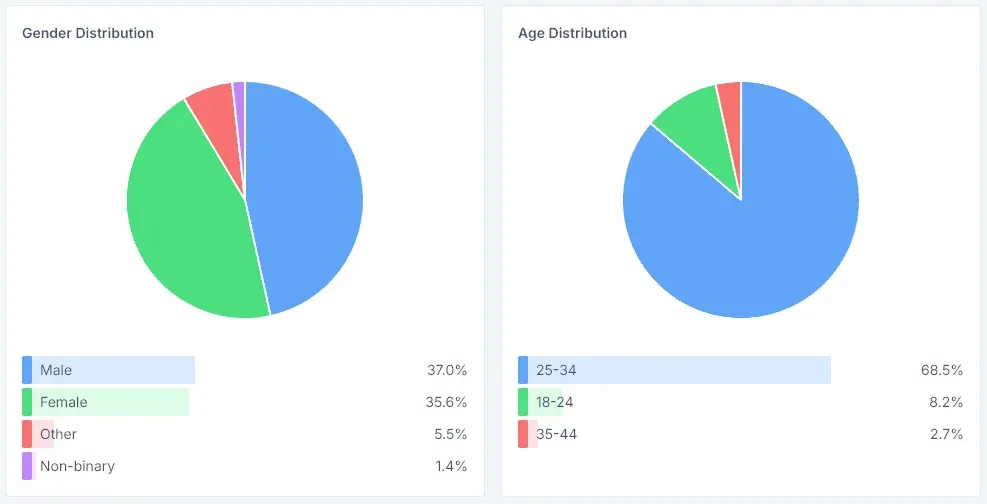
Gender distribution among creators was balanced, with male (37%) and female (35.6%) representation nearly equal—indicating a deliberate, inclusive influencer selection. Hiring that many top female streamers was certainly a focus by the publisher.
Age demographics predominantly targeted the 25–34 bracket (68.5%), consistent with previous analyses, focusing on mature audiences likely to purchase and play co-op experiences.
Top Creators Hired
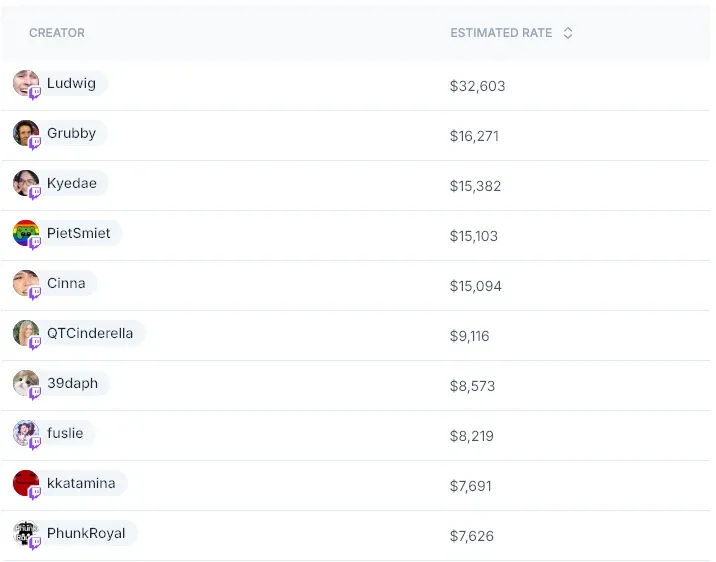
The campaign engaged top-tier creators like Ludwig ($32.6k), Grubby ($16.3k), and Kyedae ($15.4k), highlighting a strategic selection of influencers with large, dedicated audiences. The chosen creators clearly aligned with EA’s strategy to maximize immediate impact on release day, especially given Ludwig’s substantial rate and viewer reach.
It’s important to note that estimated rates reflect creators’ market value rather than directly correlating with views generated during the sponsorship.
My Thoughts & Key Takeaways for Marketers
The first thing to notice is just how close the announcement of the game and the release were. This compacted the marketing cycle for the game, it’s almost like it was the complete opposite of what we saw with Monster Hunter Wilds. What we did see in common, was a heavy investment into PR in the form of the announcement trailer at The Game Awards, which was picked up by major gaming outlets.
I think Split Fiction showcased a potentially new, but certainly rare marketing strategy where the studio director is placed front and center to advertise the game. He was the spokesman at The Game Awards, and he was the main character in the Friend Edition Promotional Stunt. Hazelight benefitted from him being a charismatic individual, and he certainly pulled it off.
Overall, I think I would have liked to see some budget allocated to TikTok, and maybe even Instagram, even if that meant taking away budget from Twitch. It would be easy to argue that Split Fiction killed it on TikTok and investing money would be unnecessary, but I choose to believe that instead there could have been even more organic lift alongside paid activations. I think the nature of sponsored content on TikTok & Instagram could have been non-gaming focused, in an effort to pull in some audience that doesn’t fall within the core target market.
The last thing to note, is that this developer has a reputation for making Co-op experiences, which is a very underserved market. They have built trust with their community, and they have even won Game of the Year in 2021 for a previous title “It Takes Two”. No developer releasing their first game has this kind of weight behind them for a release. I believe these reasons are why we saw such an organic uplift with such little budget.
Overall, I think the release of Split Fiction was a masterclass in making a really good game, for a very hungry audience, for the third game in a row. The marketing team was given a layup for an easy dunk, and they really slammed it!
Congrats to Hazelight and EA for the success, as well as all agencies involved.
Want to See More Data?
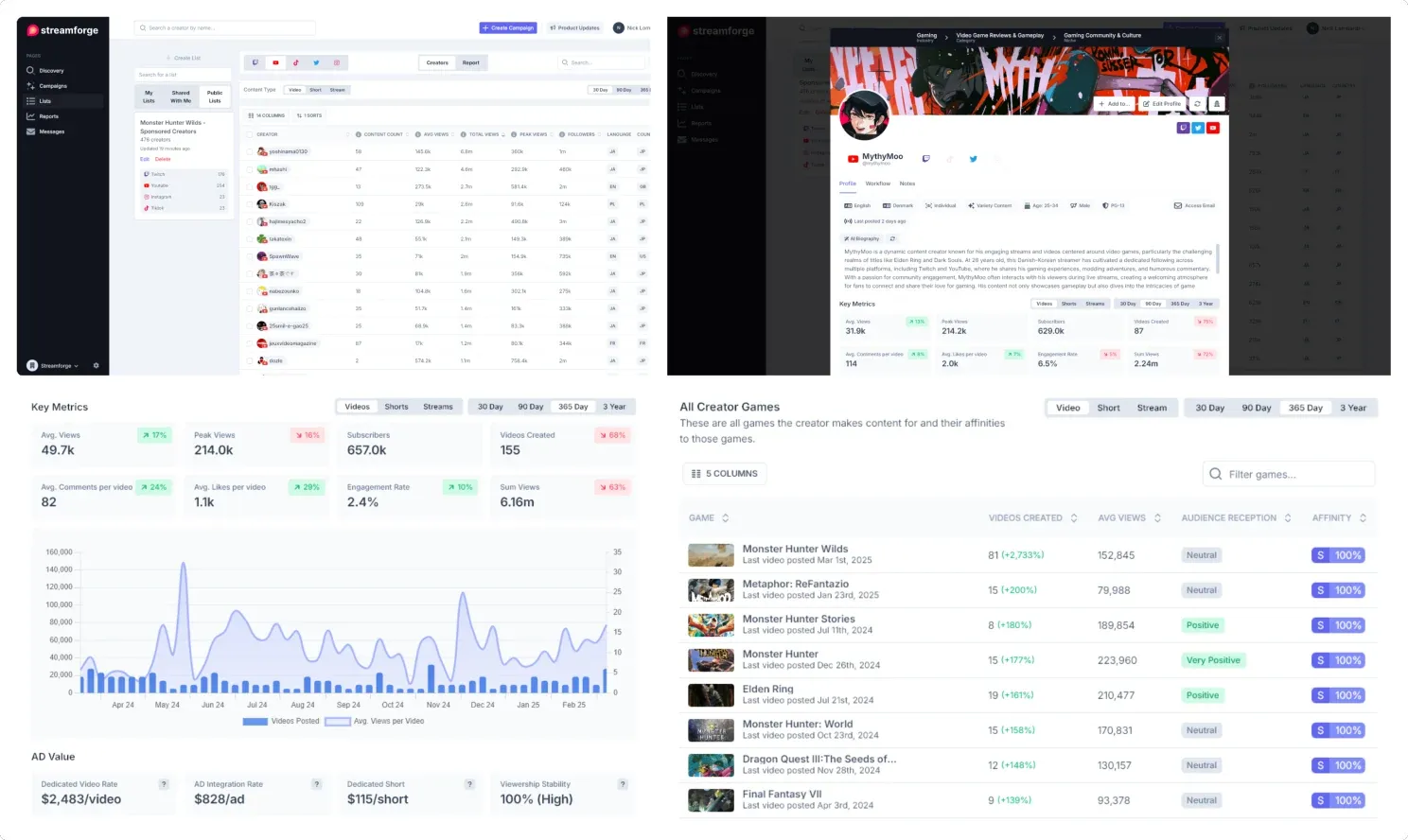
To see the full list of 86 sponsored creators for Split Fiction, start your trial and we’ll show it to you in Streamforge, along with each creator’s key metrics, AI-analyzed interests, entire content library, and detailed demographic breakdowns.