
What is this and why am I doing it?
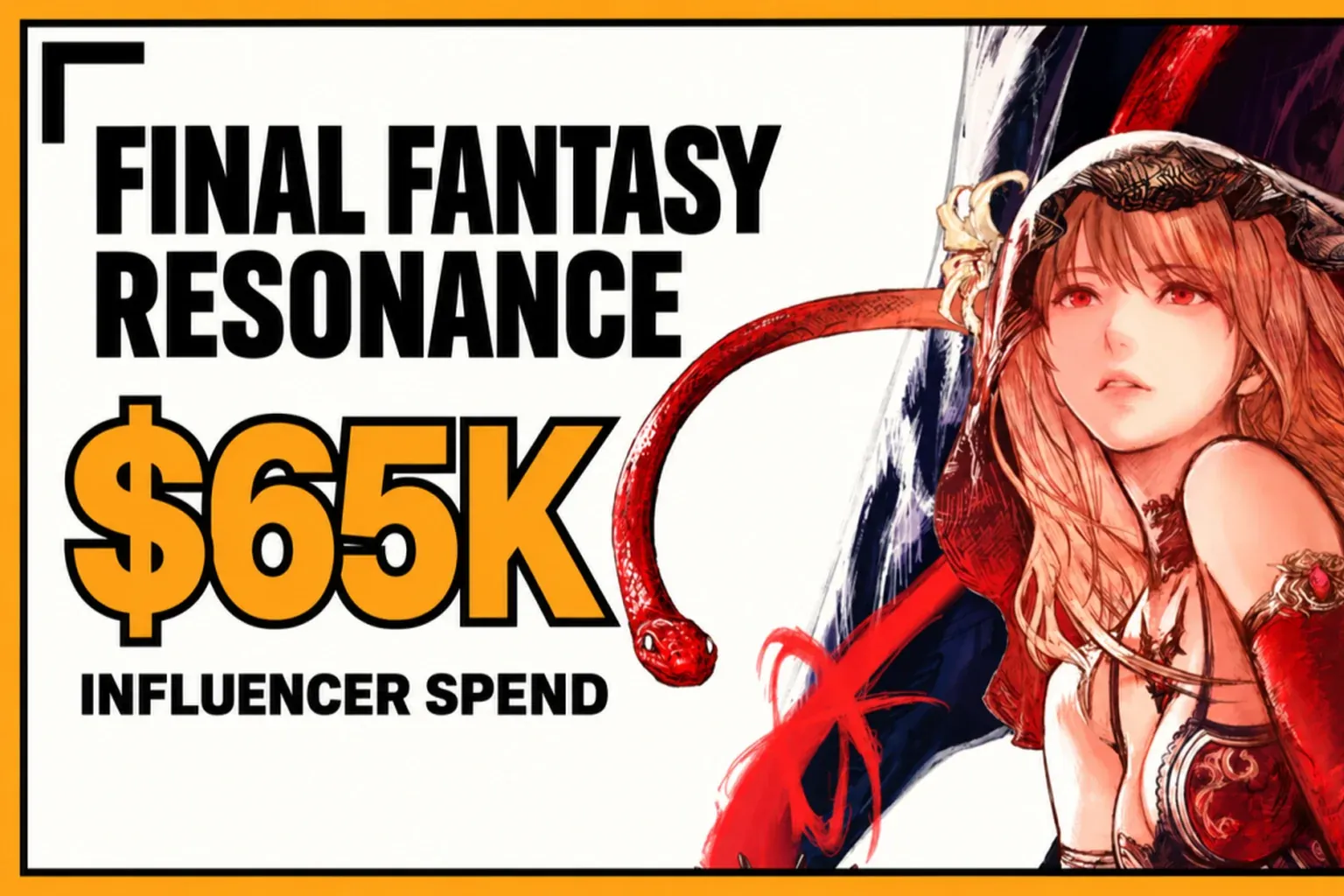
Welcome back to my ongoing deep dives into influencer marketing for major game launches. This week it’s Final Fantasy Resonance, Square Enix’s new turn-based Final Fantasy in pixel art, which launched on October 22, 2026 on PlayStation 5, Xbox Series X|S, Switch, Switch 2 and PC.
It’s an odd one. Square Enix spent very little on creators, and the game still had more players at once on Steam than any single-player Final Fantasy before it. The free demo did the work.
These analyses use Streamforge’s tech to give marketers transparent, actionable insights into how publishers are allocating influencer budgets. My goal remains consistent: help industry professionals benchmark their campaigns and uncover strategies that work.
I’m not affiliated with Square Enix, and all budget figures are estimates based on publicly available data and market rates from Streamforge’s algorithm.
New YouTube Channel for people that hate reading
In case you missed it last time, I’ve kicked off what I hope to be a long and successful YouTube career of presenting the data from these articles through a visual medium. My intention is to make 1 youtube video per article moving forward. Instead of being glued to your screen, I’m hoping you’ll pull this bad boy up in your living room, kick your feet back and brace yourself to be assaulted with data.
Click the thumbnail to get taken to the YouTube video for this article. And don’t forget to subscribe =)
Watch the video version on YouTube
A Chronological Overview
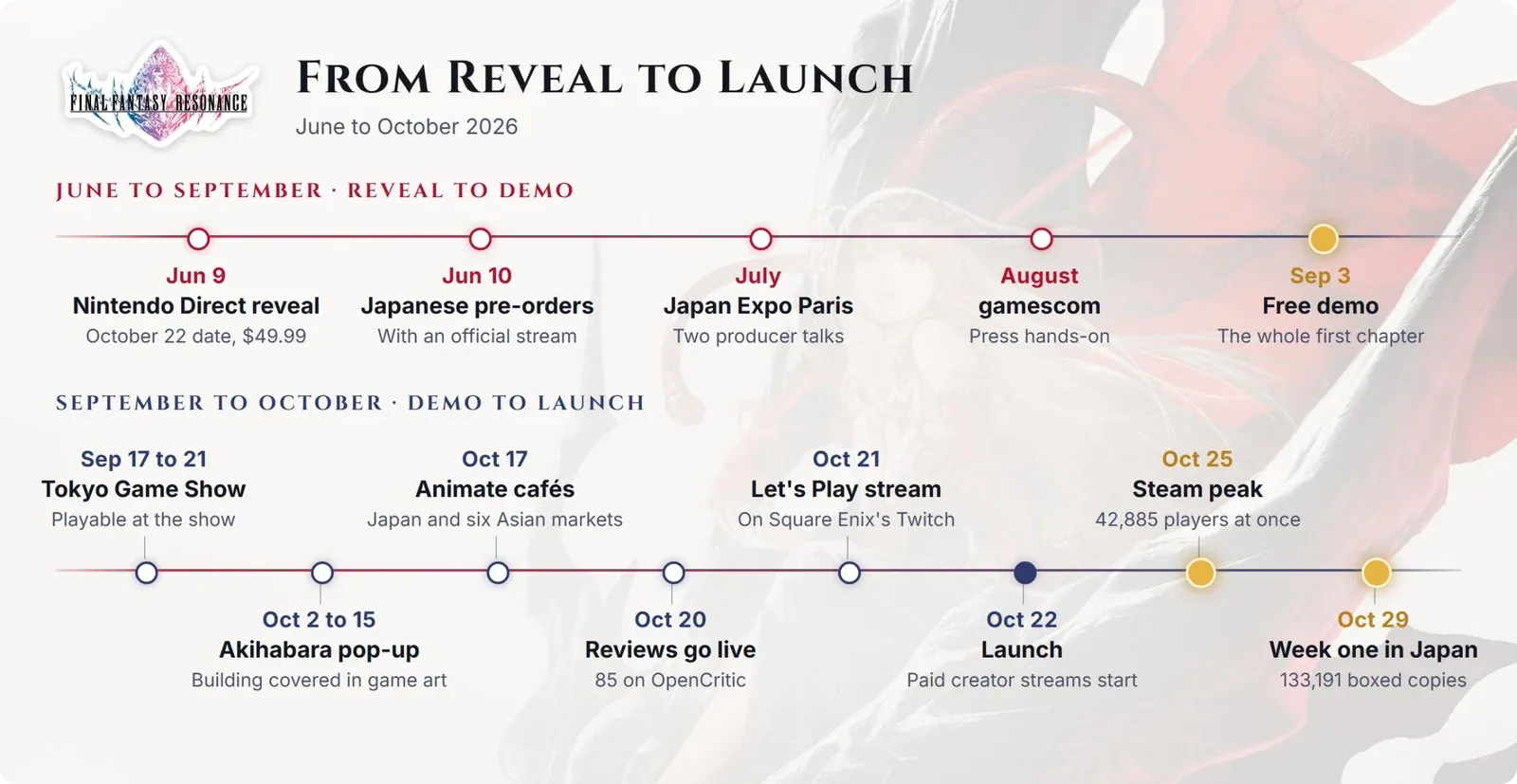
Square Enix built this launch on platform showcases, a free demo and, in Japan, real-world tie-ins. Paid creators came last.
- June 9: Revealed in a Nintendo Direct, with the October 22 date for all five platforms and a $49.99 price.
- June 10: Japanese pre-orders open, with an official stream that brings back a show from the old mobile game.
- July: Producer Keisuke Nakashima gives two talks at Japan Expo in Paris.
- August: Press hands-on at gamescom.
- September 3: Sony’s State of Play shows a new trailer, and the free demo goes live the same day on every platform. Sephiroth is revealed as an optional boss.
- September 17 to 21: Playable at Tokyo Game Show.
- October 2 to 15: A pop-up shop at atre Akihabara, with the building covered in game art.
- October 17: Animate cafés open in Japan and six other Asian markets.
- October 20: Reviews go live: 85 on OpenCritic, with 90% of critics recommending it.
- October 21: A Let’s Play stream on Square Enix’s own Twitch channel, with Nakashima.
- October 22: Launch. The launch trailer ends on “PLAY THE DEMO NOW”, and the paid creator streams start.
- October 25: Steam peaks at 42,885 players at once.
- October 29: Famitsu counts 133,191 boxed copies in Japan in week one.
What stands out is the gap. The demo went out on September 3, and I found no paid creator posts around it. 51 of the 90 paid posts went up on October 22 and 23, seven weeks later.
A Phone Game in Disguise?
Fans spotted where the game came from right away. Its story and heroes are rebuilt from Final Fantasy Brave Exvius, a gacha mobile game that shut down. The worry was that this was the phone game, dressed up for consoles at close to full price.
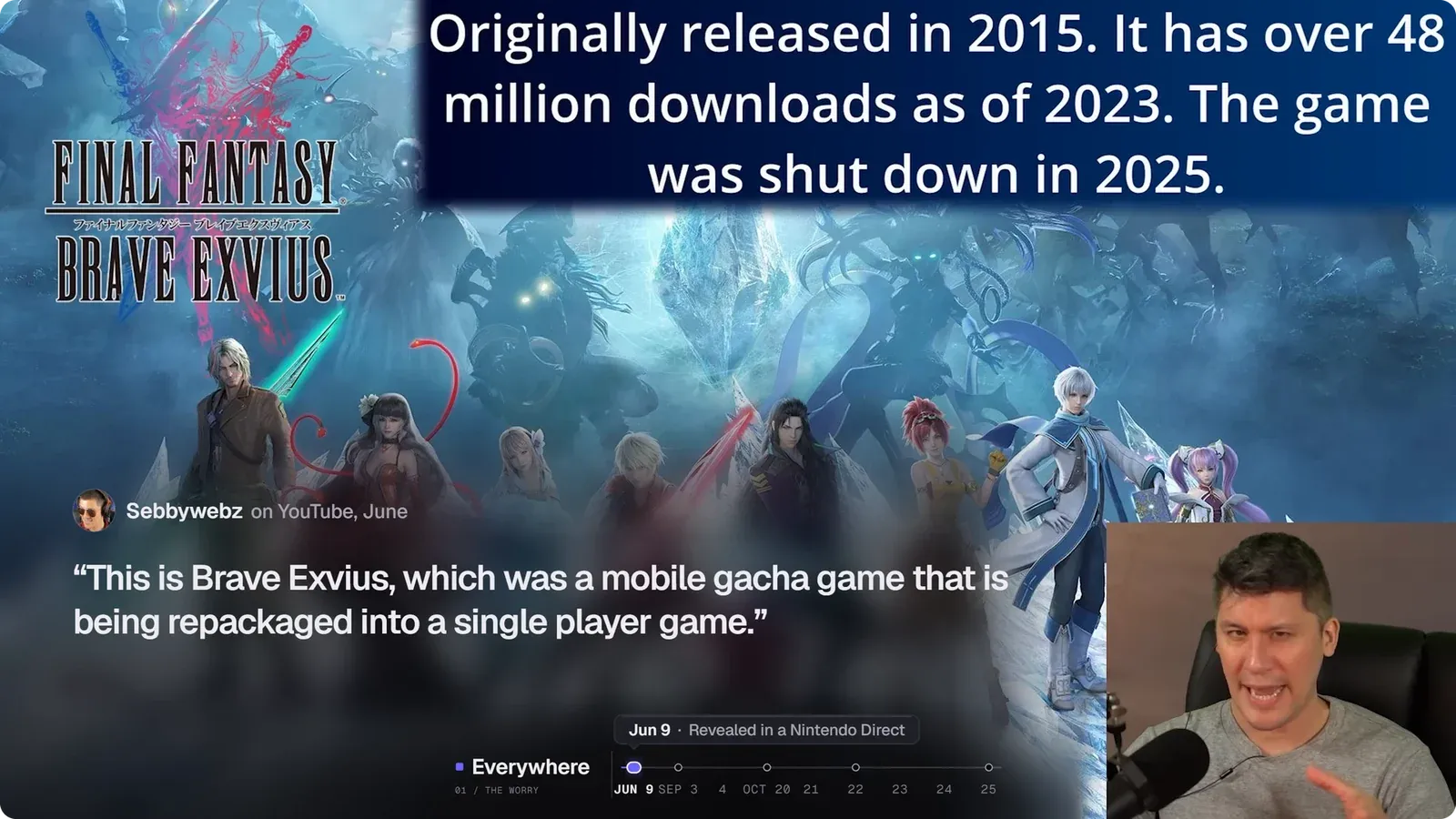
Square Enix knew it. At PAX West, Nakashima said fans were worried about “whether there are gacha mechanics or its nature as a title originally based on a mobile game.” His answer was the demo: “We truly feel this demo will dispel any kinds of uncertainty or concerns.”
The Free Demo
The demo wasn’t a short slice. It was the whole first chapter, on every platform from day one, and the save carries over to the full game.
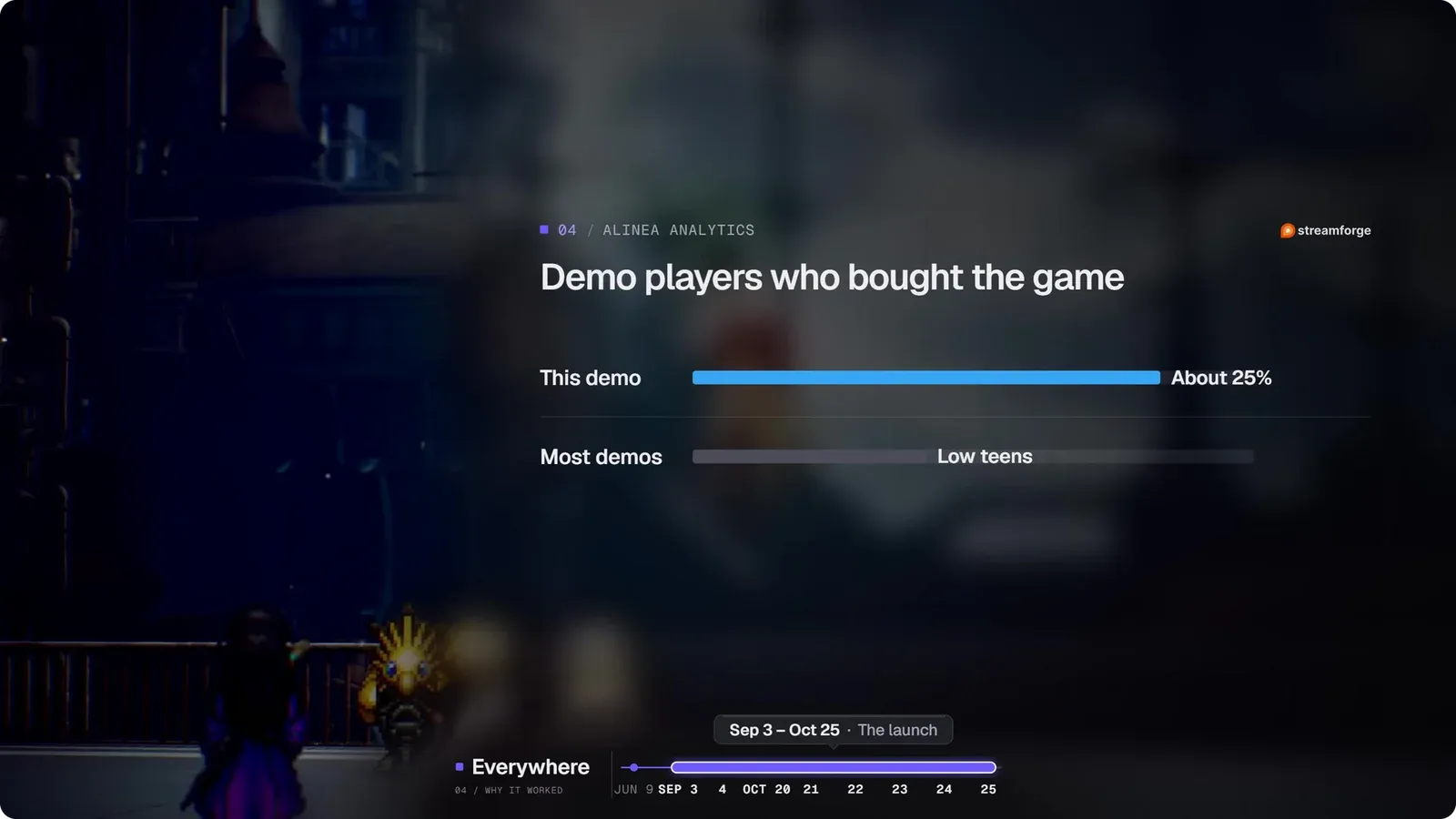
More than 650,000 people played it on PlayStation and Steam alone, according to Alinea Analytics. About a quarter of them went on to buy the game. Most demos convert in the low teens, so this one did about twice as well. And about 45% of the people playing the full game had played the demo first.
Creators played the demo on their own, too. None of the demo streams I found were sponsored.
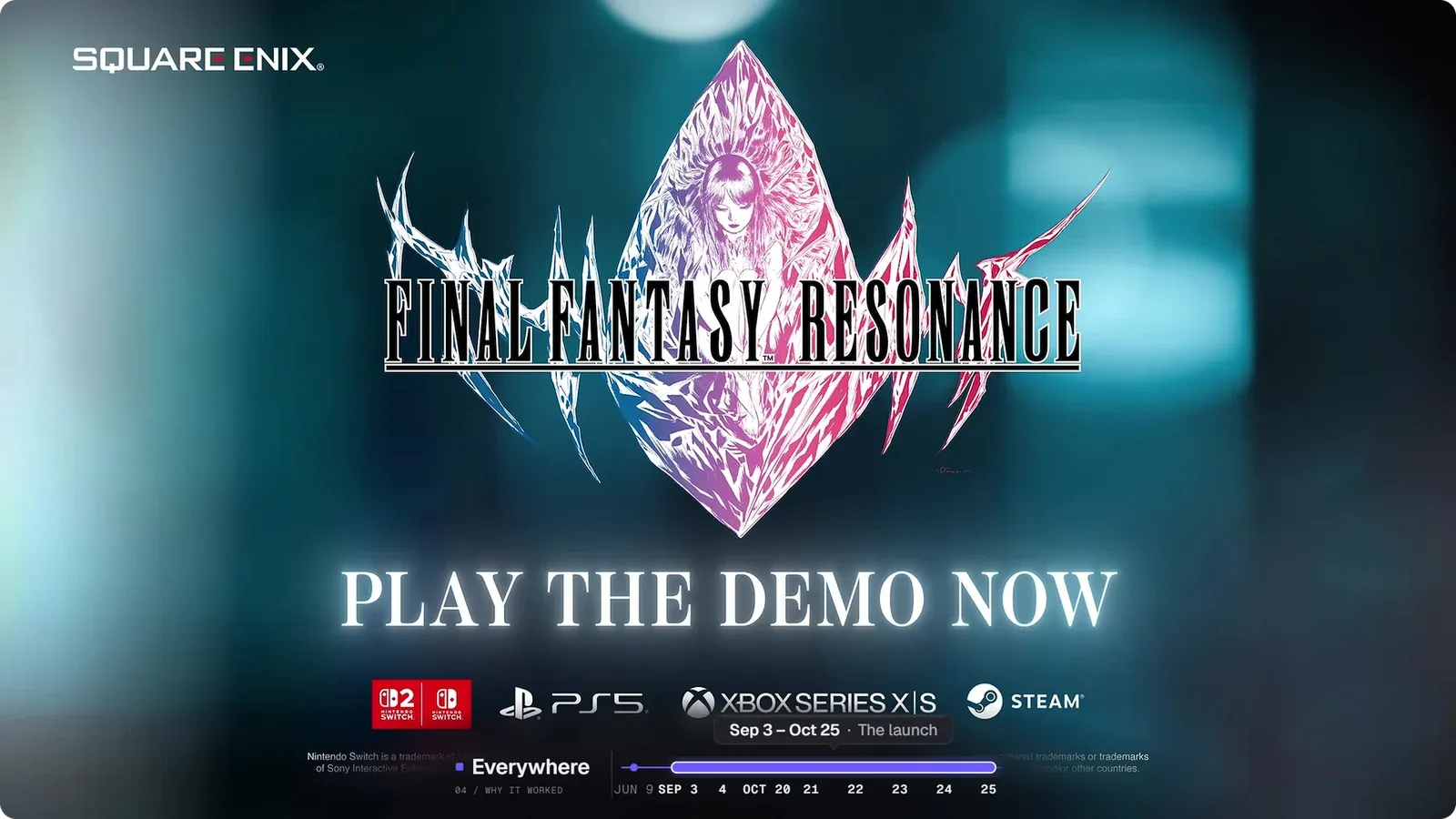
Square Enix pointed everything at it. The launch trailer ended on “PLAY THE DEMO NOW”.
How the Paid Deals Worked
Most of the money went to one wave of English-language streams on launch day and the day after. 27 creators ran the same script and the same tracking link, for an estimated $42.0K. Some deals came together late. ProtonJon wrote that he got “a surprise last minute offer to do a sponsored stream.”
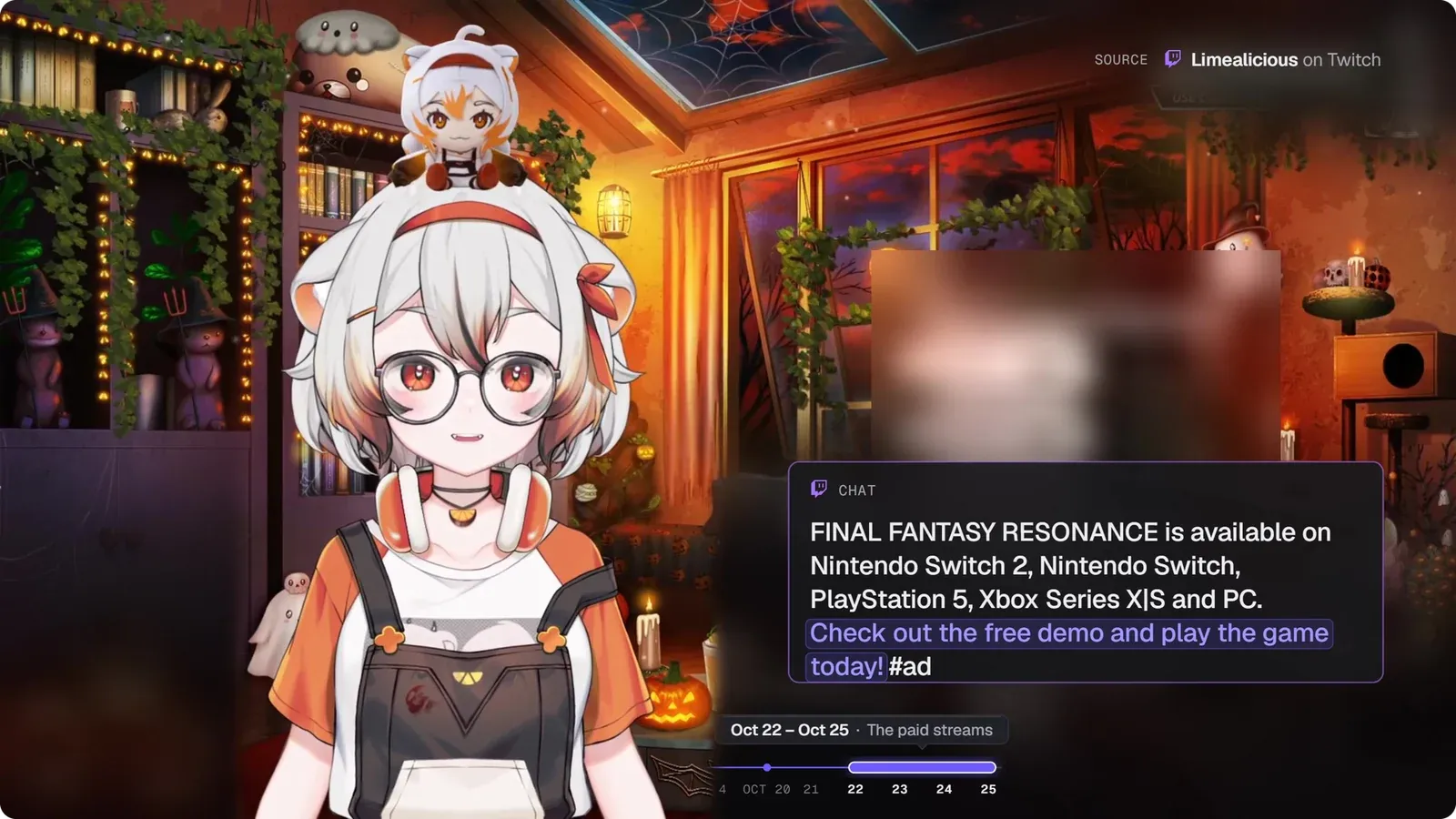
Even the paid streams sold the demo. In their chats, the sponsor’s bot posted the same line again and again: “Check out the free demo and play the game today!” In PatStaresAt’s chat, one viewer wrote: “I have downloaded the demo, this marketing has worked.”
Some paid creators kept going on their own. AdmiralBahroo was paid for one stream. He then played it for his next four streams, unpaid, and each one got more than twice the views of the paid one. One of those streams was titled: “This game is legit the best turn based FF ever. No sarcasm.”
In Southeast Asia the sponsor wasn’t Square Enix. Bandai Namco Entertainment Asia, which publishes the game there, paid three creators, led by NapLive in Indonesia.
Review Copies
Square Enix also sent free copies to creators. 33 of them made 46 posts with those copies, and they got 1.13M views, 2.4 times the views of every paid post combined.
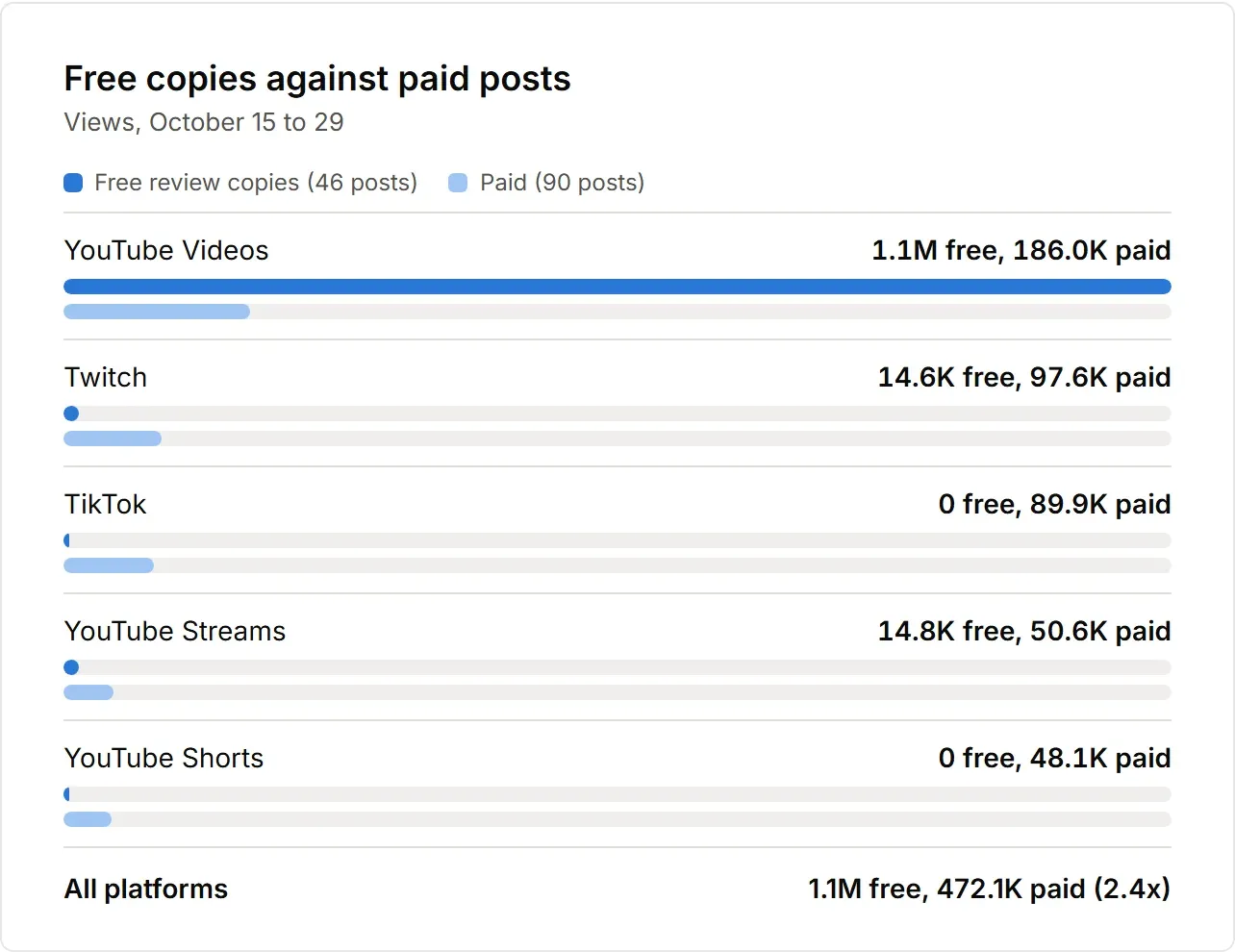
Almost all of those views were YouTube videos (1.1M). Outside Japan, the median review-copy video beat its creator’s own average by 37%, while the median paid video fell 16% short.
Japan
Japan was the biggest audience. Creators in Japan got 11.2M views of the launch, twice as many as creators in the US (5.5M), mostly from guides and VTuber playthroughs.
Japanese law requires paid posts to be marked as ads, and none of the 1,041 Japanese posts had a #PR label. In Japan, Square Enix spent on places instead: cafés inside Animate’s anime shops, bathhouses with character baths, 350 bookstores and even its own wine.
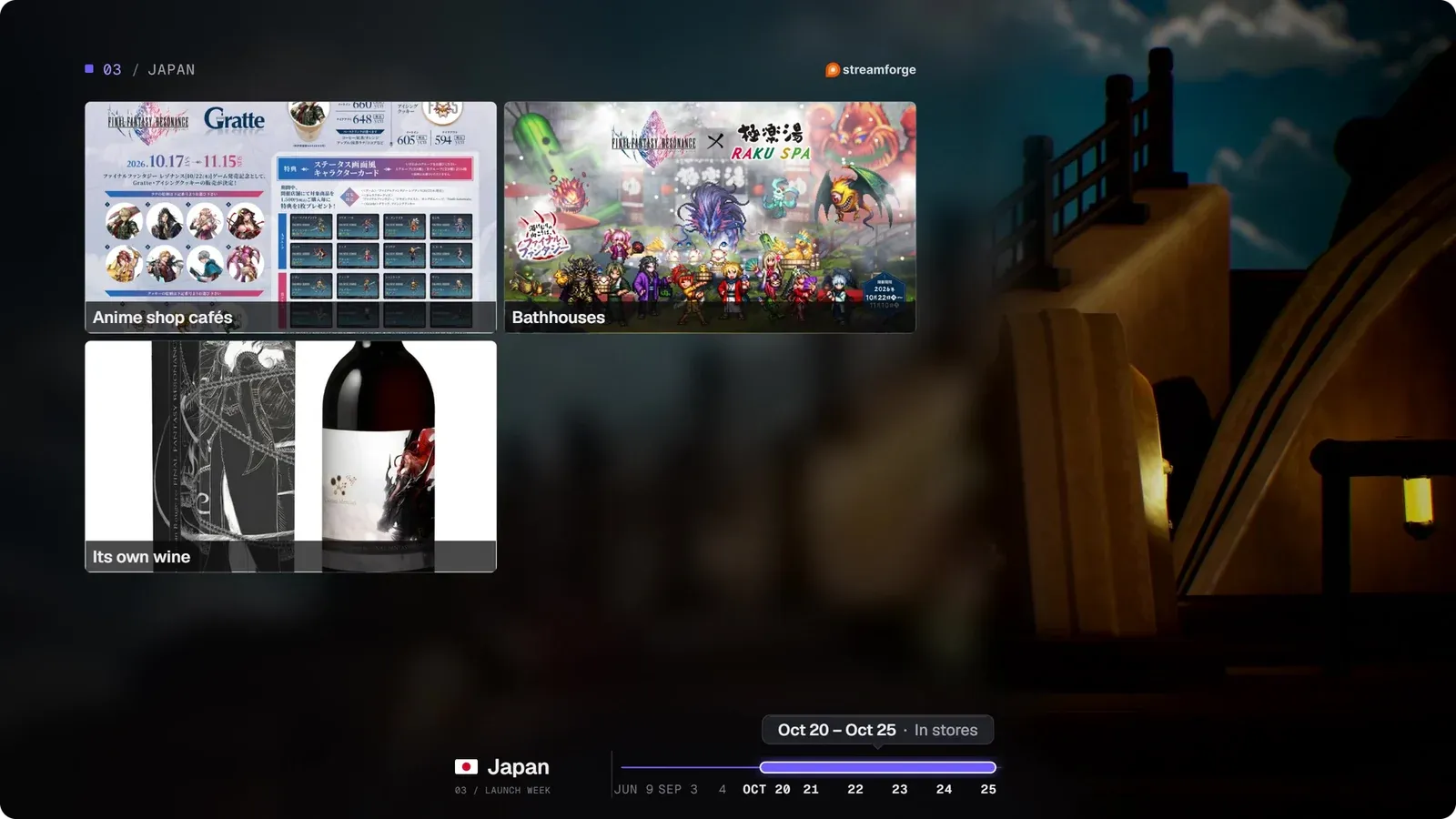
It worked. In its first week, it was the top new game in Japan, with 133,191 boxed copies according to Famitsu. That’s more than Triangle Strategy (86,298) or Octopath Traveler II (about 68,000) sold in their first weeks.
Content Volume and Platform Distribution
From October 15 to October 29 (one week either side of launch), Final Fantasy Resonance generated 27.2 million views across 4,929 pieces of content from 1,577 creators. That’s about the same as Splitgate 2 (27.47M) and Mecha BREAK (24.5M), and a fifth of AION 2 (128.7M).
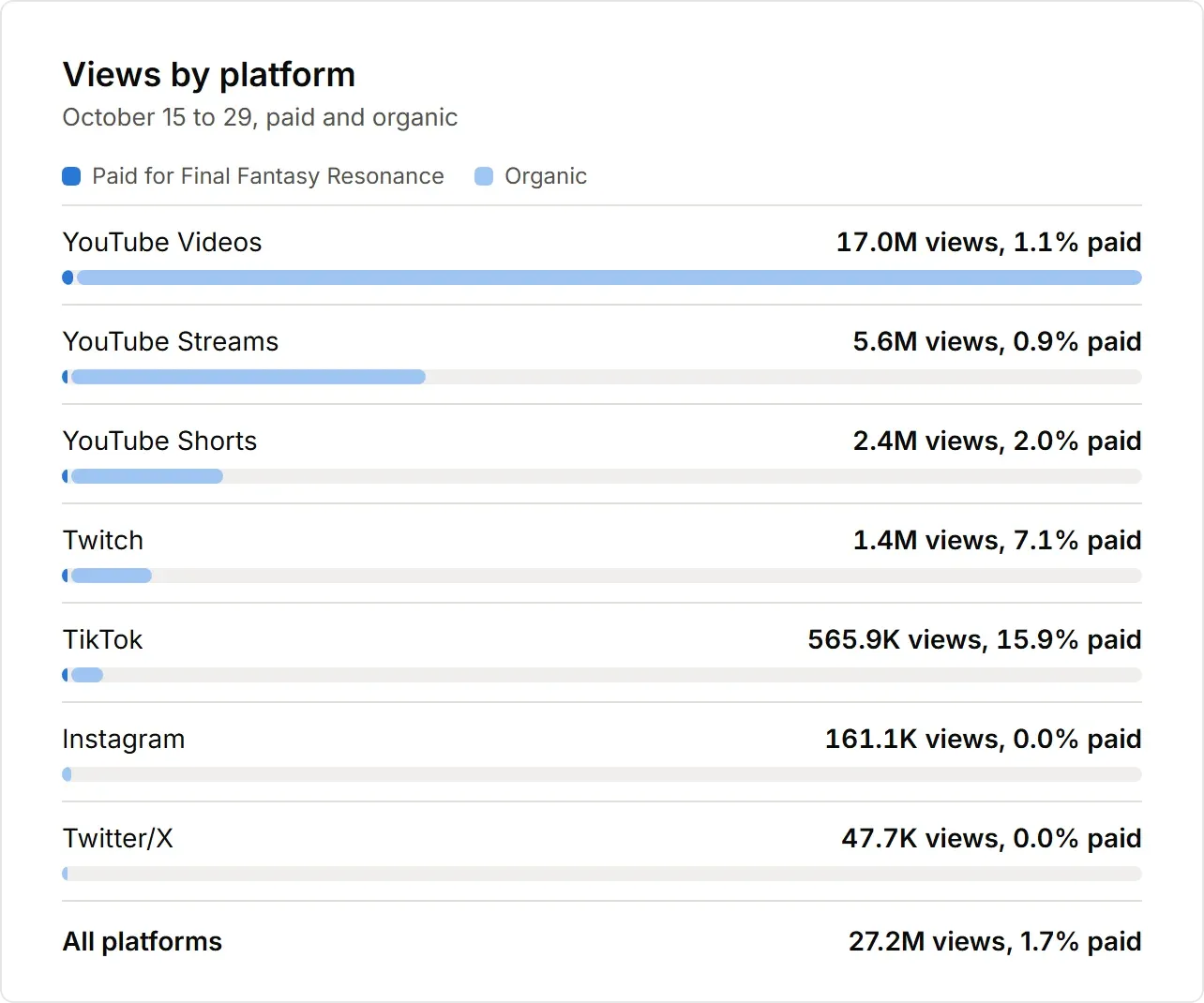
YouTube was where people watched. YouTube Videos had 17.0M views, 62% of the total, then YouTube Streams (5.6M), YouTube Shorts (2.4M) and Twitch (1.4M). Twitch had almost as many pieces as YouTube Videos (1,653 to 1,877) and a twelfth of the views. A single-player story game doesn’t hold Twitch viewers the way an MMO or a shooter does.
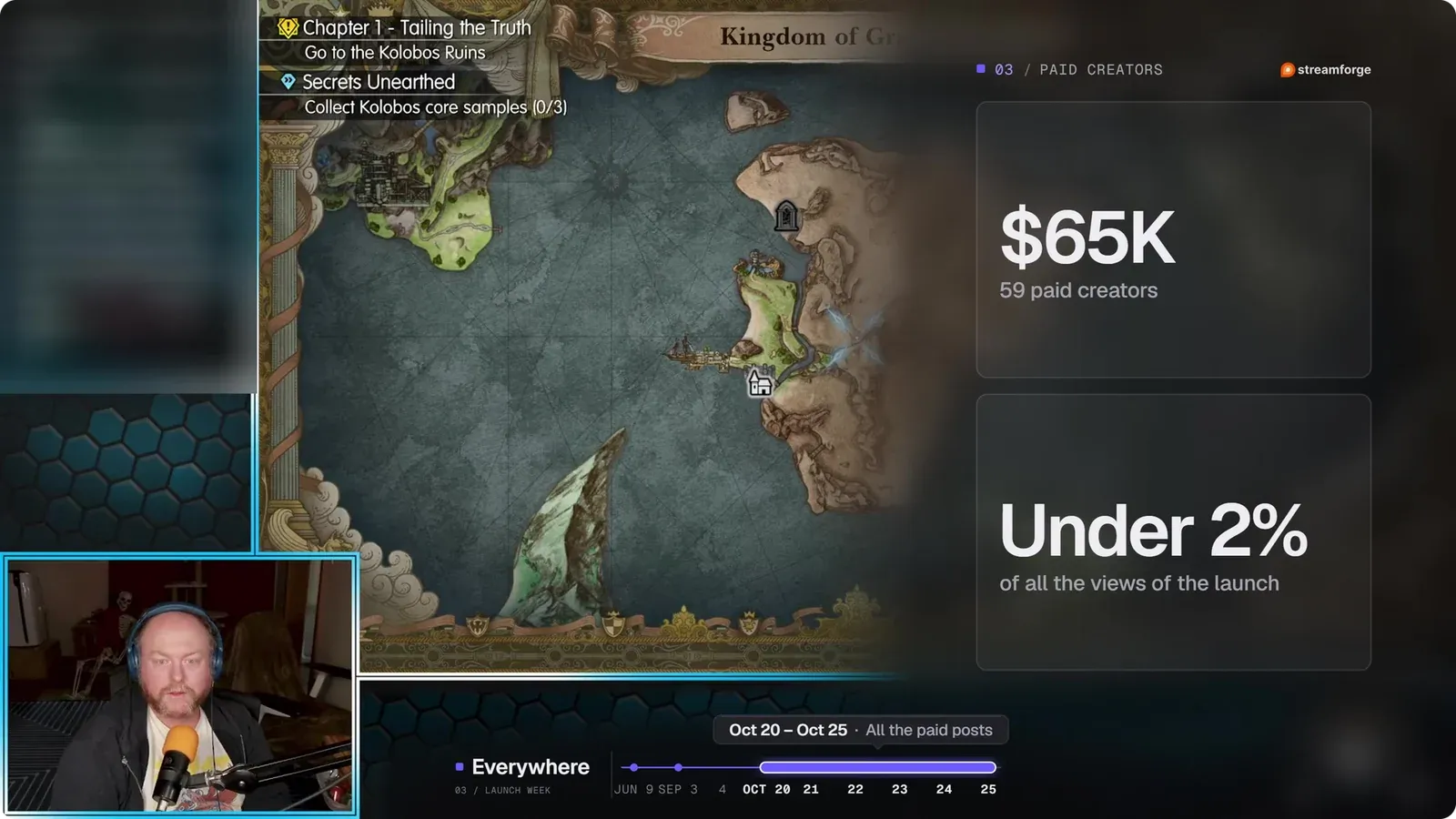
Paid content was 1.7% of all views (472K). That’s about the same as ARC Raiders (1.8%), far below AION 2 (13.7%), and well under the 5% to 10% most AAA launches sit at. On Twitch it was 7.1%, and on YouTube Videos 1.1%. None of the 25 creators with the most views were paid.
How I Counted the Budget
The budget comes from Streamforge’s Final Fantasy Resonance report. I also went through each paid stream and video to check the deal and sort it by these rules:
- Ad labels: a post counts when it carries an ad label (#ad, #sponsored, “Sponsored by Square Enix”) or the creator says on air that it’s sponsored.
- Free copies: content made from a free review copy doesn’t count.
- Duplicates: simulcasts, re-uploads and restarted streams of the same deal count once.
- Southeast Asia: posts paid by Bandai Namco Entertainment Asia count, since it publishes the game there.
How I Price Creators
Every paid post gets a market rate from the creator’s own channel numbers.
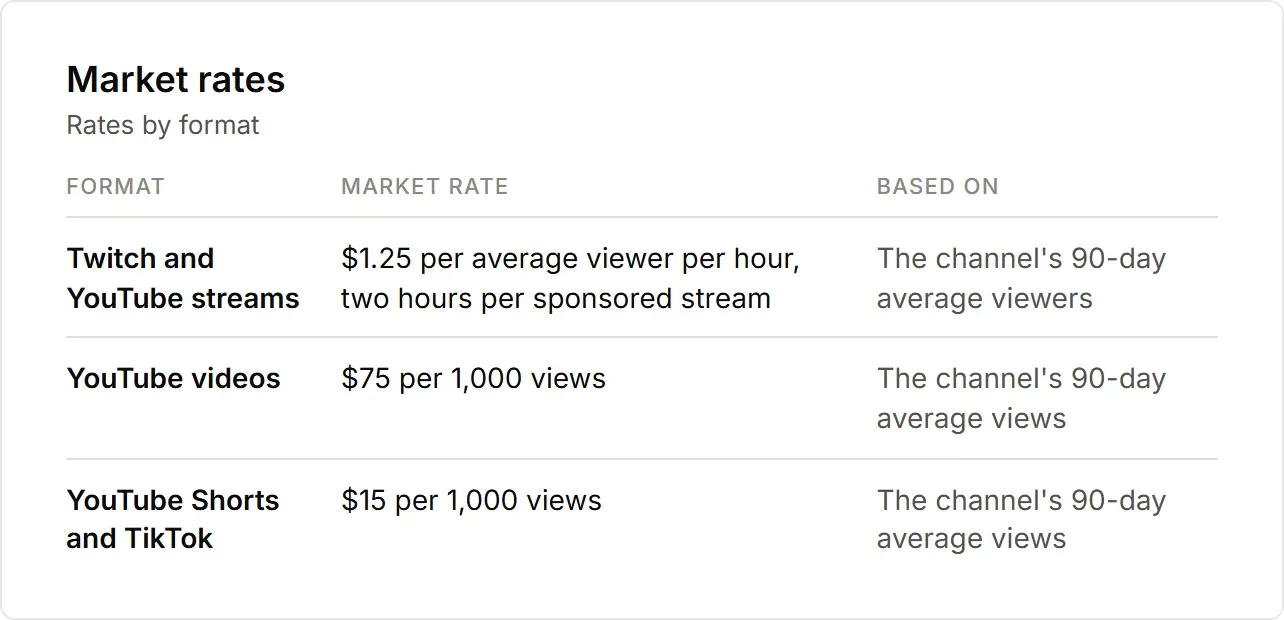
These are US rates, used for every creator wherever their audience lives. That gives an estimated budget of $64,752 across 90 paid posts from 59 creators.
Budget Allocation Breakdown
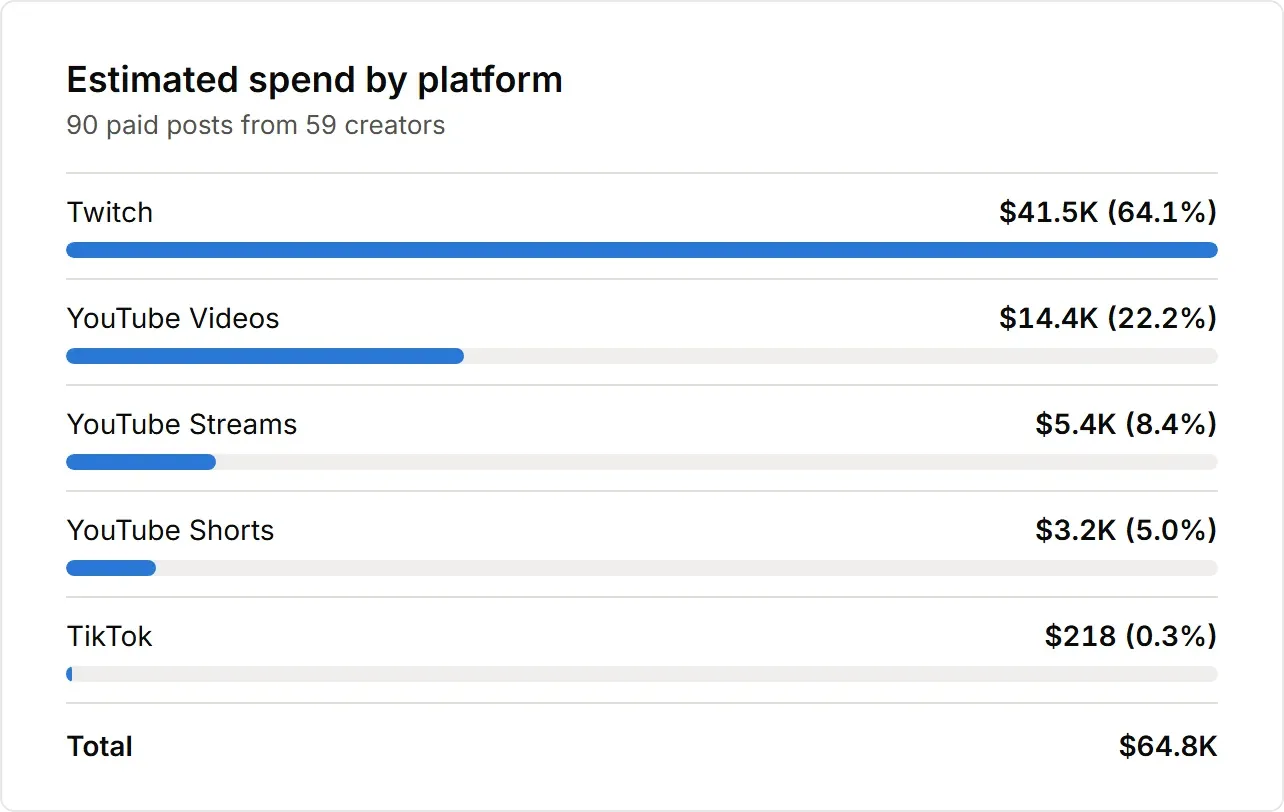
Square Enix’s estimated $64,752 influencer marketing budget went mostly to Twitch: $41.5K, or 64.1%. That’s a smaller Twitch share than most past articles: AION 2 put 97.2% on Twitch, Elden Ring Nightreign 91% and Mecha BREAK 90%. YouTube Videos got $14.4K (22.2%), YouTube Streams $5.4K (8.4%), YouTube Shorts $3.2K (5.0%) and TikTok $218.
The mix still doesn’t match where people watched. Twitch had 1.4M of the 27.2M views, about 5%, and got 64.1% of the money. YouTube Videos had 62% of the views and got 22.2%.
When the Money Landed
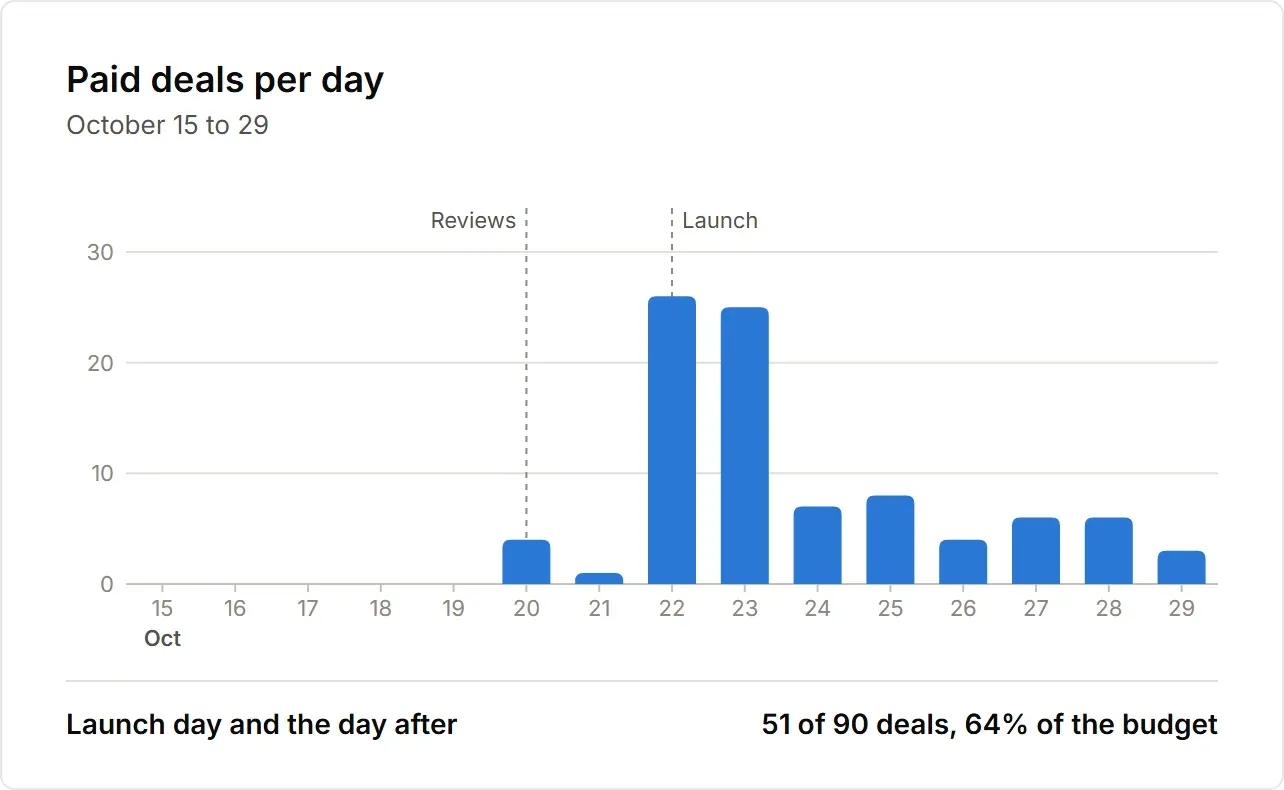
Almost two thirds of the money went to two days. Launch day (October 22) had 26 paid posts worth $18.8K, and the day after had 25 worth $22.7K. Together that’s 51 of the 90 posts and 64% of the budget.
Almost nothing came before. Four French creators posted on October 20, two days early (three streams and a Short), and one more Short went up on October 21: five posts, $5.2K. Before that, I found nothing paid in the seven weeks the demo was out.
Cost Efficiency Analysis
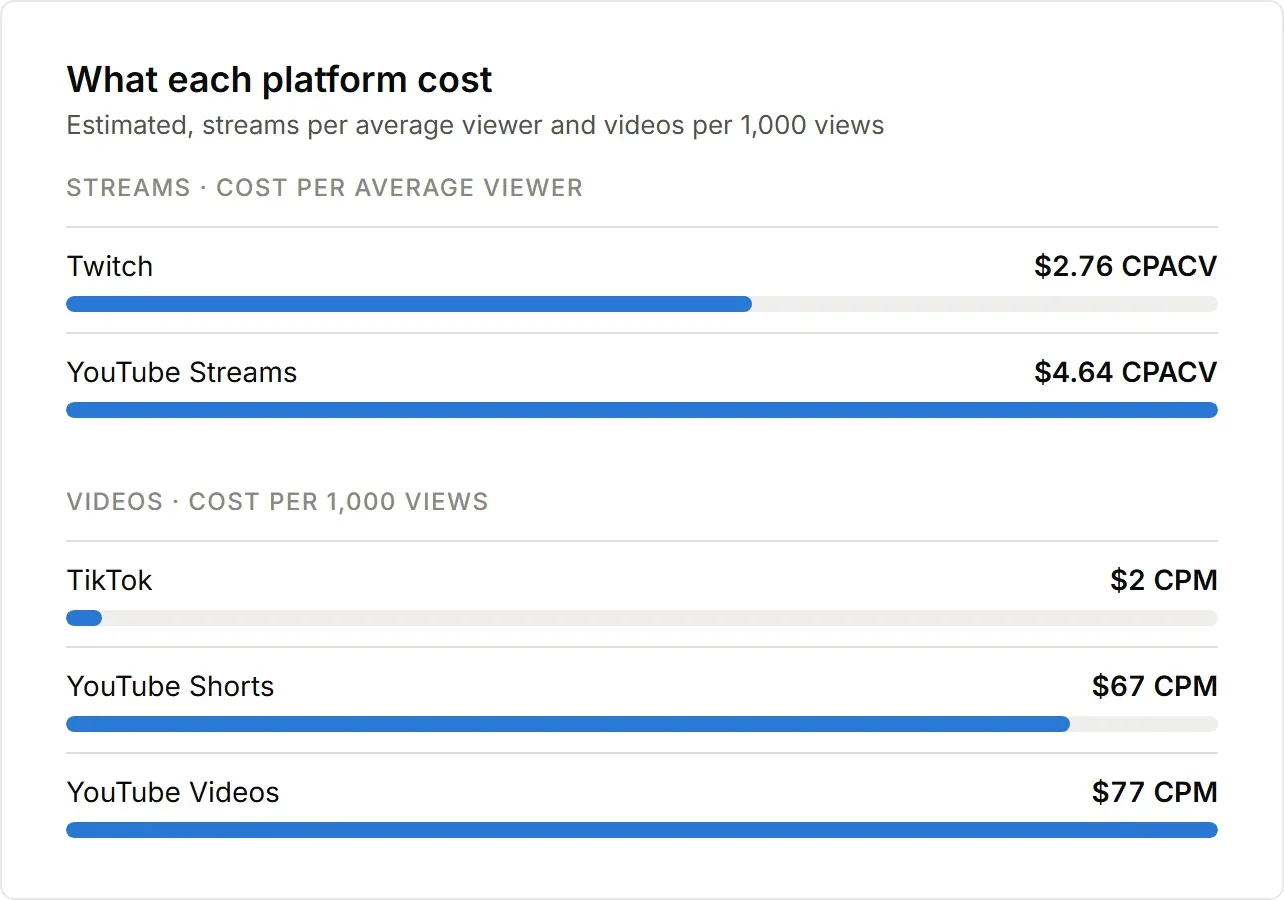
Streams are measured by what each average viewer cost (CPACV), and videos by what 1,000 views cost (CPM).
Twitch came in at $2.76 per average viewer, about 50% more than AION 2 ($1.85). YouTube Streams cost more, at $4.64 per average viewer.
YouTube Videos came in at $77 per 1,000 views, below Clair Obscur: Expedition 33 ($129) and close to Where Winds Meet ($68). Shorts came in at $67, and TikTok at $2, from two posts that got about six times their creators’ usual views.
Market Capture Analysis
For Final Fantasy Resonance, I defined a targeting group of turn-based JRPGs from 2025: Clair Obscur: Expedition 33, Final Fantasy Tactics: The Ivalice Chronicles, Dragon Quest I & II HD-2D Remake and Octopath Traveler 0.
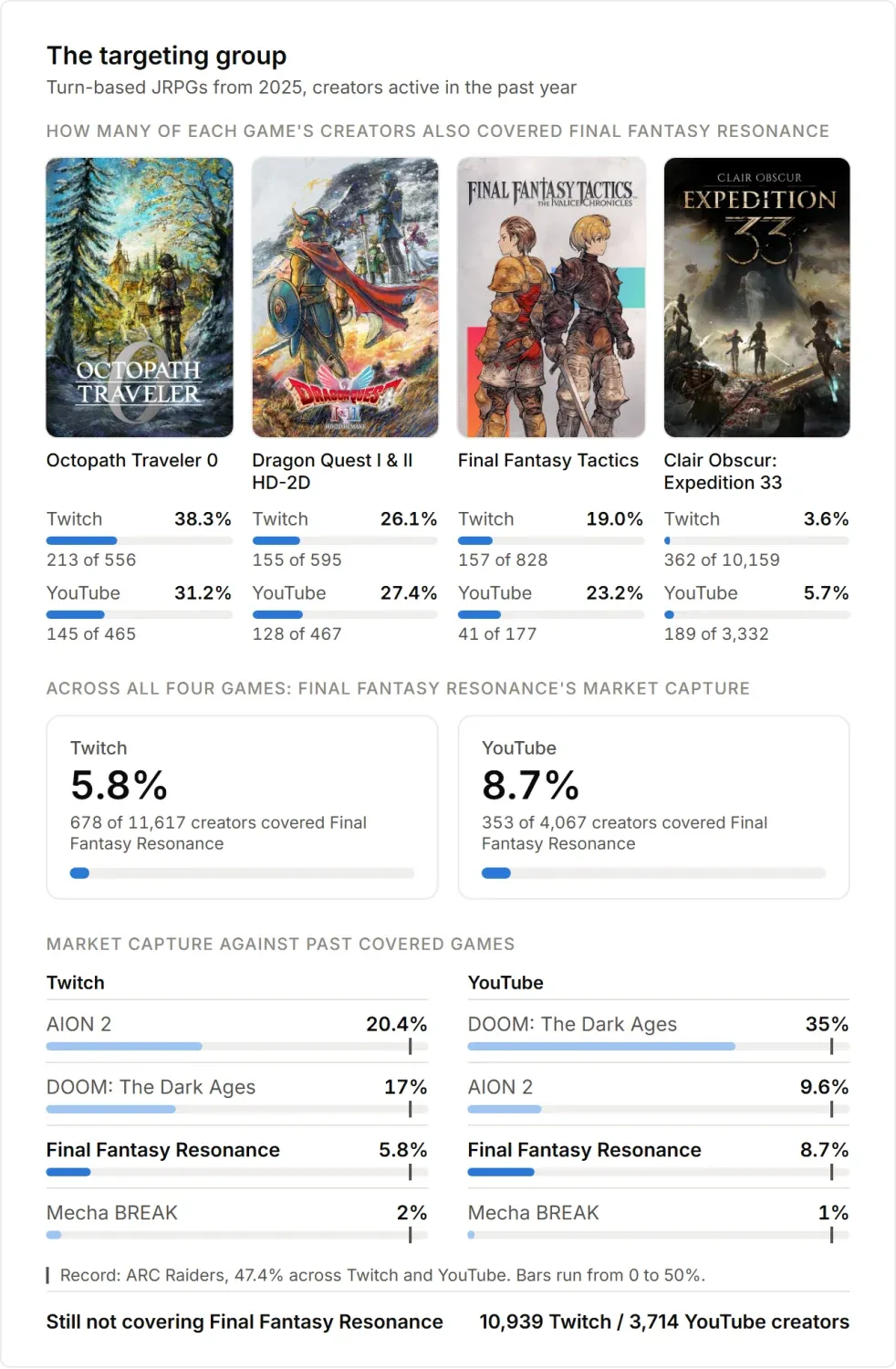
Final Fantasy Resonance captured 5.8% of relevant Twitch creators (678 out of 11,617 who streamed at least one of the four in the past year) and 8.7% on YouTube (353 out of 4,067). For comparison, ARC Raiders holds the record at 47.4%, AION 2 reached 20.4% on Twitch and 9.6% on YouTube, DOOM: The Dark Ages 17% and 35%, and Mecha BREAK sits at the bottom with 2% and 1%.
The JRPG crowd showed up. Of the Twitch creators who streamed Octopath Traveler 0 in the past year, 38.3% also streamed Final Fantasy Resonance. For Dragon Quest I & II it was 26.1%, and for Final Fantasy Tactics 19.0%. Clair Obscur’s crowd is much bigger and broader (10,159 Twitch creators), and only 3.6% of it came over. That’s what pulls the average down.
It also leaves 10,939 Twitch creators and 3,714 YouTubers who play these games and haven’t touched Final Fantasy Resonance yet, most of them from Clair Obscur.
Channel Demographics
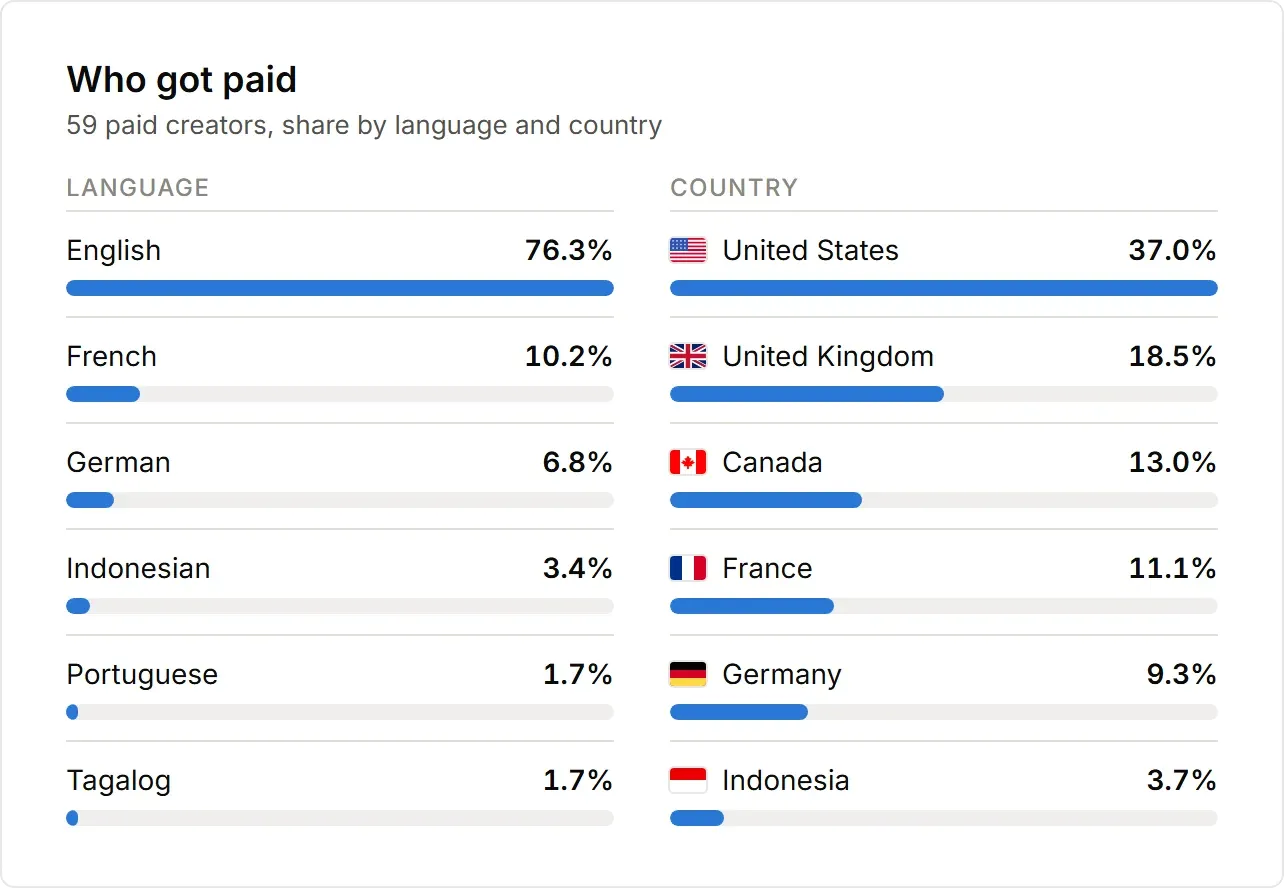
Square Enix and Bandai Namco Entertainment Asia paid 59 creators. 76.3% stream in English, more than Borderlands 4 (70.4%) and AION 2 (56.0%). French is second (10.2%), then German (6.8%) and Indonesian (3.4%). By country the US leads with 37.0%, then the UK (18.5%), Canada (13.0%) and France (11.1%).
That doesn’t follow who covered the game. English-speaking creators were 51.0% of everyone who covered Final Fantasy Resonance and 76.3% of the paid list. Japanese creators were 10.1% of everyone and had 43% of all the views, and none were paid. Spanish-speaking creators were 7.7%, and none of them were paid either.
37.2% of the paid creators are women (where Streamforge knows), more than AION 2 (25.3%) and Borderlands 4 (33%), and below Where Winds Meet (40.7%) and DOOM: The Dark Ages (46.7%). Among all the creators who covered the game, it was 27.2%.
The Audience Square Enix Reached
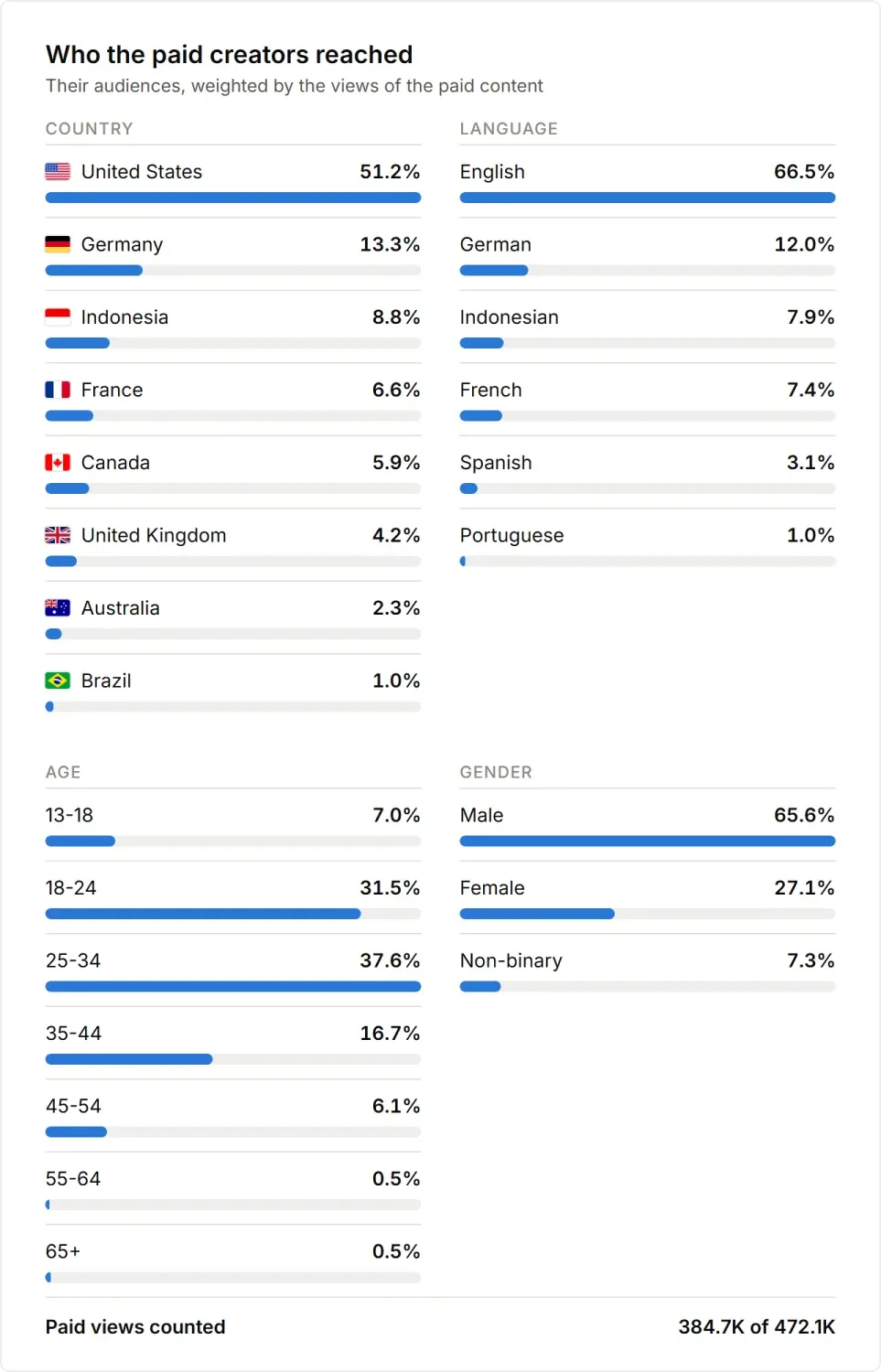
This is who the paid creators reached, weighted by the views of the paid content.
- United States: 51.2% of the audience, against 37.0% of the paid creators. With Canada, North America was 57.1%.
- United Kingdom: 4.2% of the audience, from 18.5% of the paid creators.
- Germany: 13.3%, more than France (6.6%) and the UK combined.
- Indonesia: 8.8%, mostly from the two Indonesian creators Bandai Namco Entertainment Asia paid.
- Japan: 0.7%. The country with the most views of the launch barely saw a paid post.
- Age and gender: 69.1% were 18 to 34, 7.0% were teenagers, and 65.6% were male.
Top Creators Hired
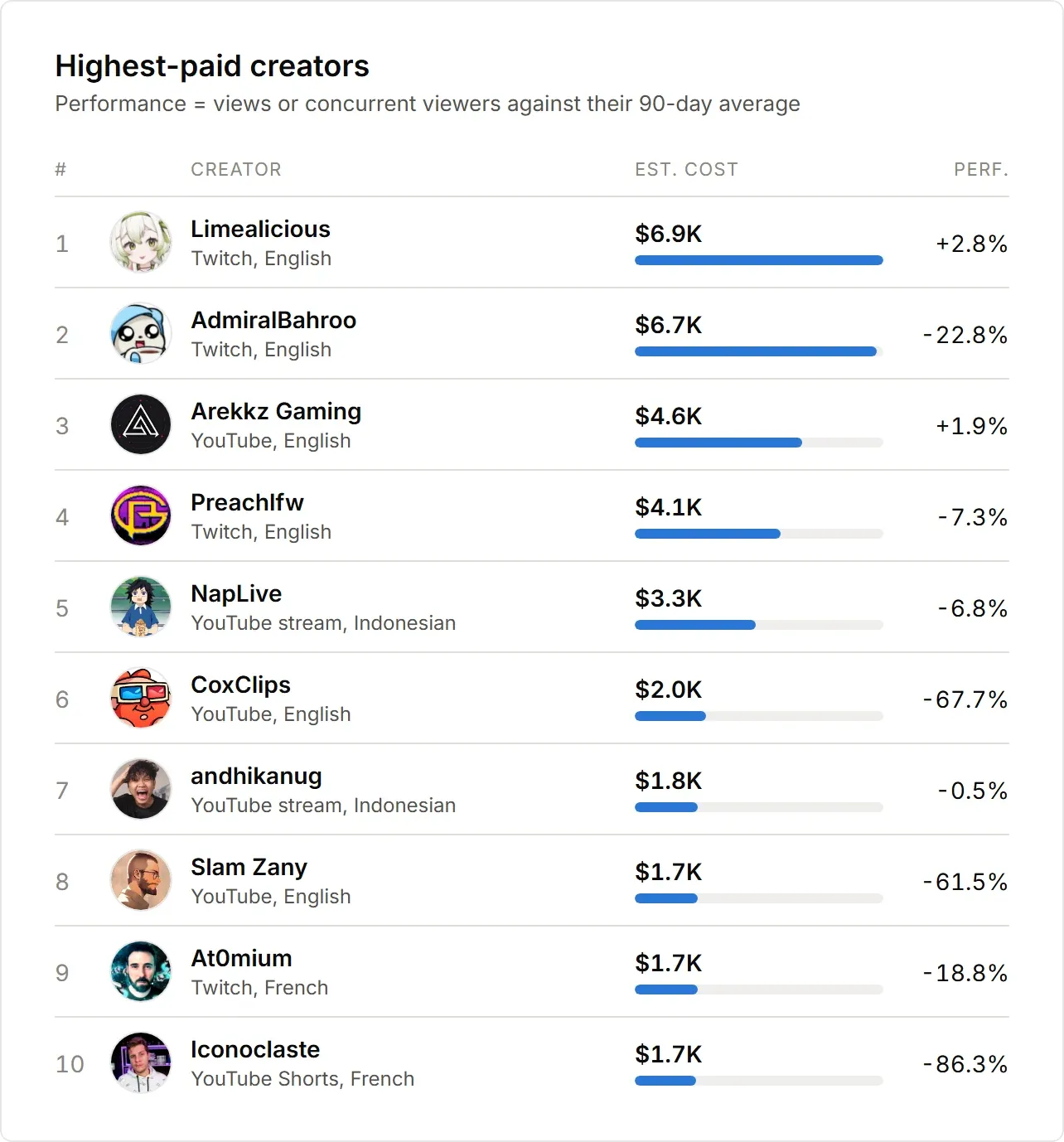
Performance = views/concurrent viewers compared to their 90 day average.
Sponsored content usually lands about 20% below a creator’s own average, so -20% is on par.
- Limealicious ($6,880, +2.8%): a UK Twitch streamer, and the biggest buy of the launch: one stream on October 25 with about 2,830 viewers on average. Above par.
- AdmiralBahroo ($6,671, -22.8%): a US VTuber on Twitch. One paid stream the day after launch, about on par, and then the four unpaid streams that beat it.
- Arekkz Gaming ($4,643, +1.9%): a UK YouTube channel for game news and guides. One #ad video on launch day with 63K views. Above par.
- Preachlfw ($4,054, -7.3%): a UK Twitch streamer. One stream the day after launch. Above par.
- NapLive ($3,347, -6.8%): an Indonesian YouTube streamer, and the biggest of Bandai Namco Entertainment Asia’s three deals. One stream the day after launch with 35.8K views. Above par.
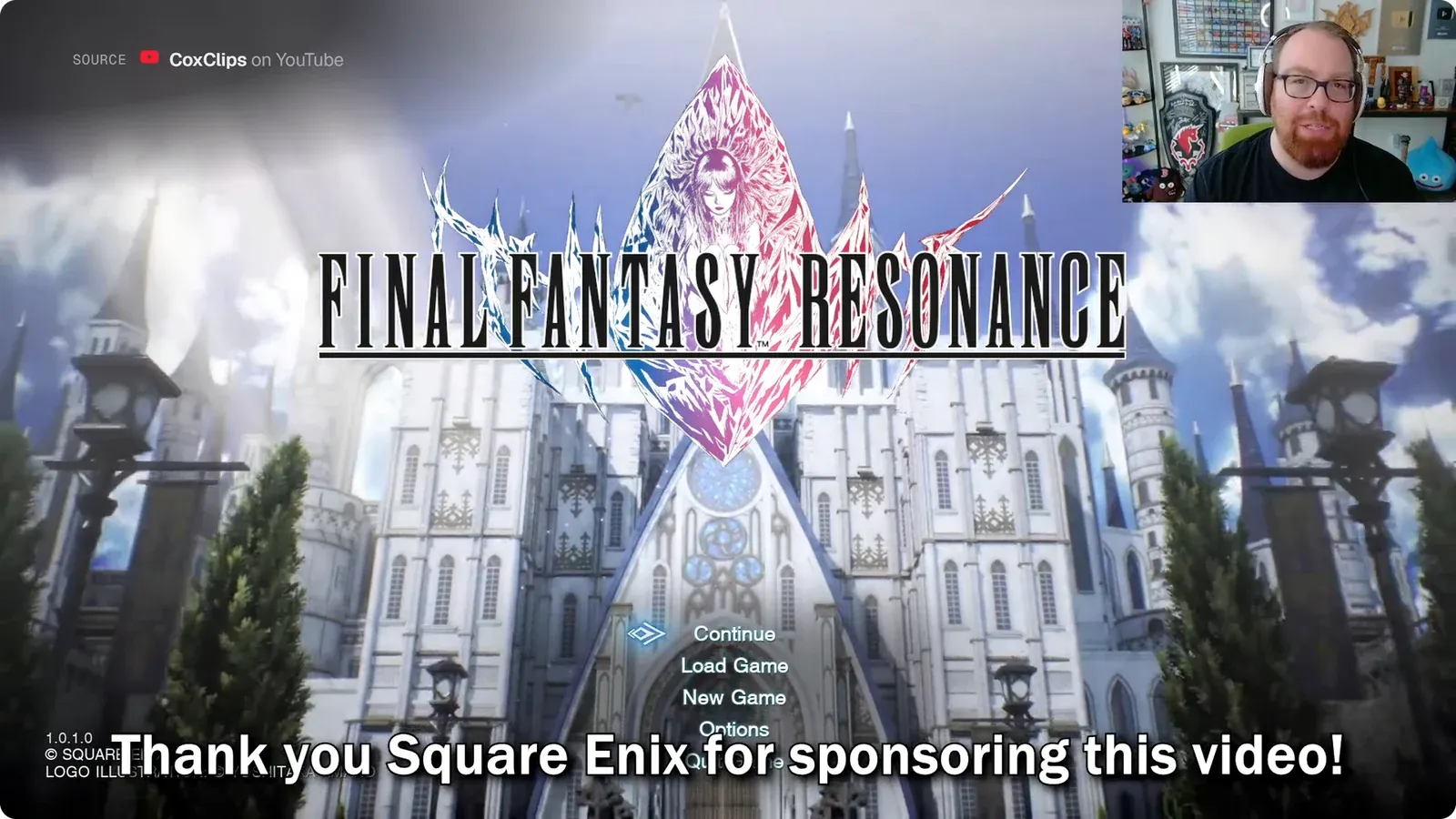
- CoxClips ($1,971, -67.7%) and Slam Zany ($1,744, -61.5%): two US YouTubers whose paid videos got well under their usual views.
- andhikanug ($1,751, -0.5%): an Indonesian YouTube streamer, and Bandai Namco Entertainment Asia’s second deal. One stream on October 26. Above par.
- At0mium ($1,734, -18.8%): a French Twitch streamer, one of the four who went live two days before launch. He had already streamed the demo in September, unpaid.
The top five took 39.5% of the budget. The median paid creator landed 7.7% below their own average, better than par, and 40 of the 59 were at par or better.
My Thoughts
The demo sold this game, not the creators. $64,752 is about a quarter of DOOM: The Dark Ages ($237k), the smallest budget in past articles, and paid posts got 1.7% of the launch’s views. Meanwhile more than 650,000 people played the demo, about a quarter of them bought, and the game set the single-player Final Fantasy record on Steam.
Square Enix made the paid streams work for the demo, and that was the right call. The sponsor’s bot didn’t tell viewers to buy. It told them to try it free.
What I’d change is the timing and the platform. The worry that this was a phone game was loudest between the reveal and the demo, and that’s when creators playing the demo would have helped most. By launch day, the reviews had already answered it. And 64.1% of the money went to Twitch, while 62% of the views were on YouTube Videos.
Japan is the other lesson. It was the biggest audience, it got no paid creators, and it still made Resonance the top new game of the week, on cafés, bathhouses and bookstores. AION 2 paid 17 Japanese creators an estimated $138,291.
The Aftermath
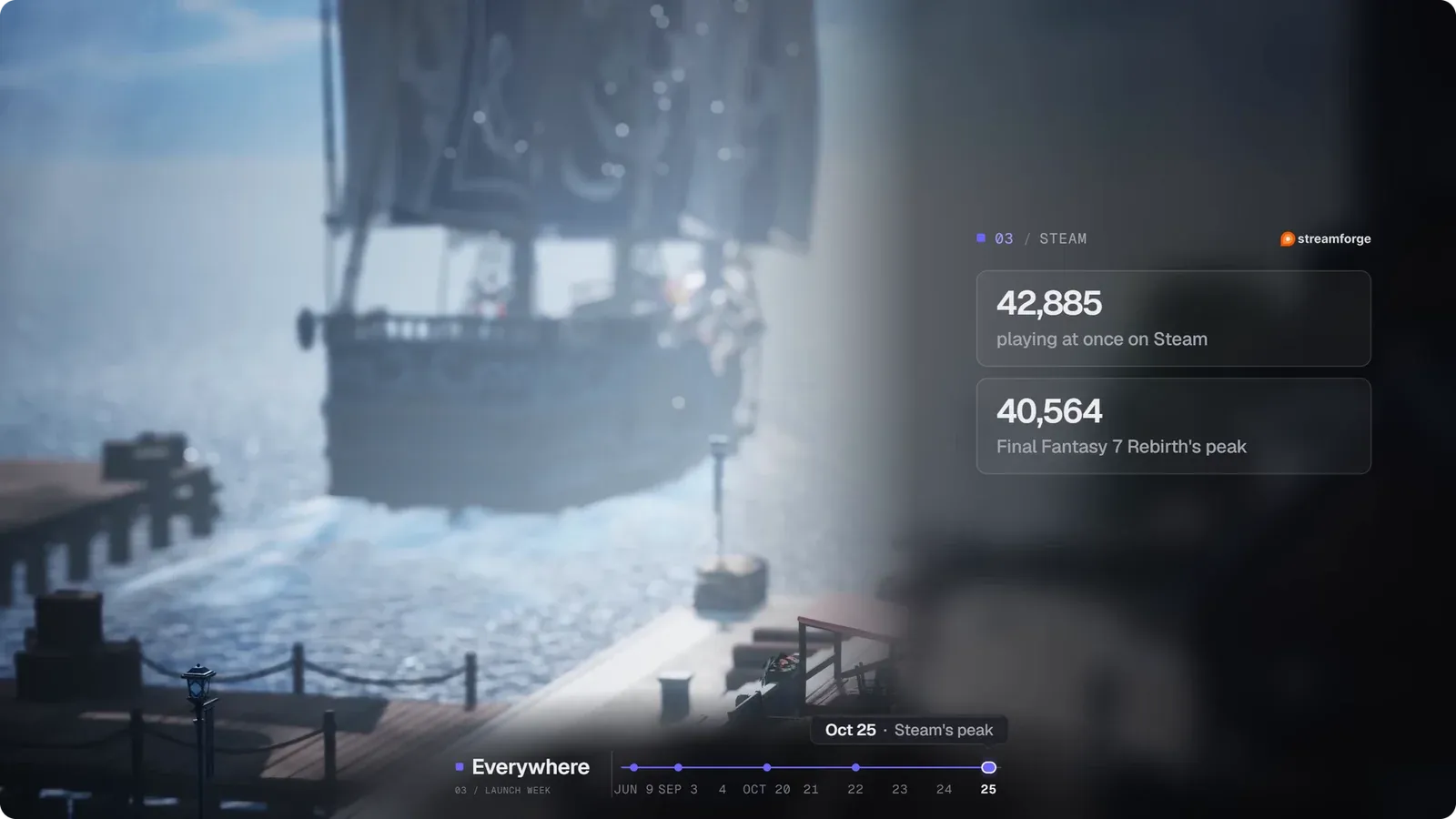
- Steam peak: 42,885 players at once on October 25. That beats Final Fantasy 7 Rebirth (40,564), and no single-player Final Fantasy has had more on Steam.
- Sales: about 400,000 copies and $20M in under five days, not counting Switch (Alinea Analytics).
- Japan: 133,191 boxed copies in week one, the top new game (Famitsu).
- Reviews: 85 on OpenCritic, and “Overwhelmingly Positive” on Steam, 96% of English reviews.
Lessons for Marketers
- If players doubt your game, don’t pay people to tell them it’s good. Let them play it.
- Make the demo a real first chapter with a save that carries over, so playing it is already starting the game.
- Pay creators where your audience watches. For a single-player RPG, that’s YouTube.
What’s a demo that sold you a game?
Want to See More Data?
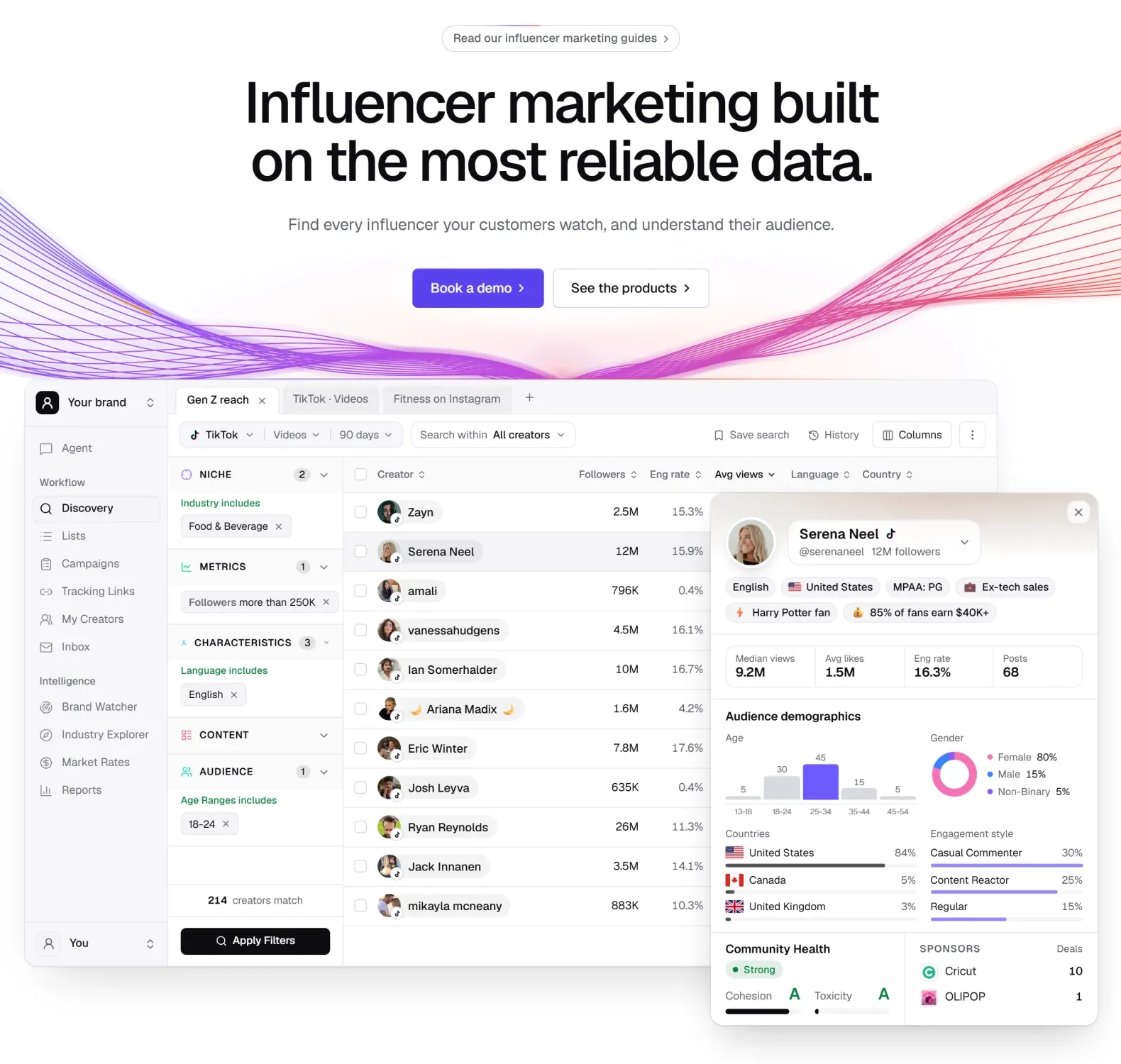
Everything in this article came from Streamforge, our reporting and competitive analysis tool. Once you’re set up, you can do what I did here on your own, for any game or product you want.
Book a demo and I’ll show you how it works.