
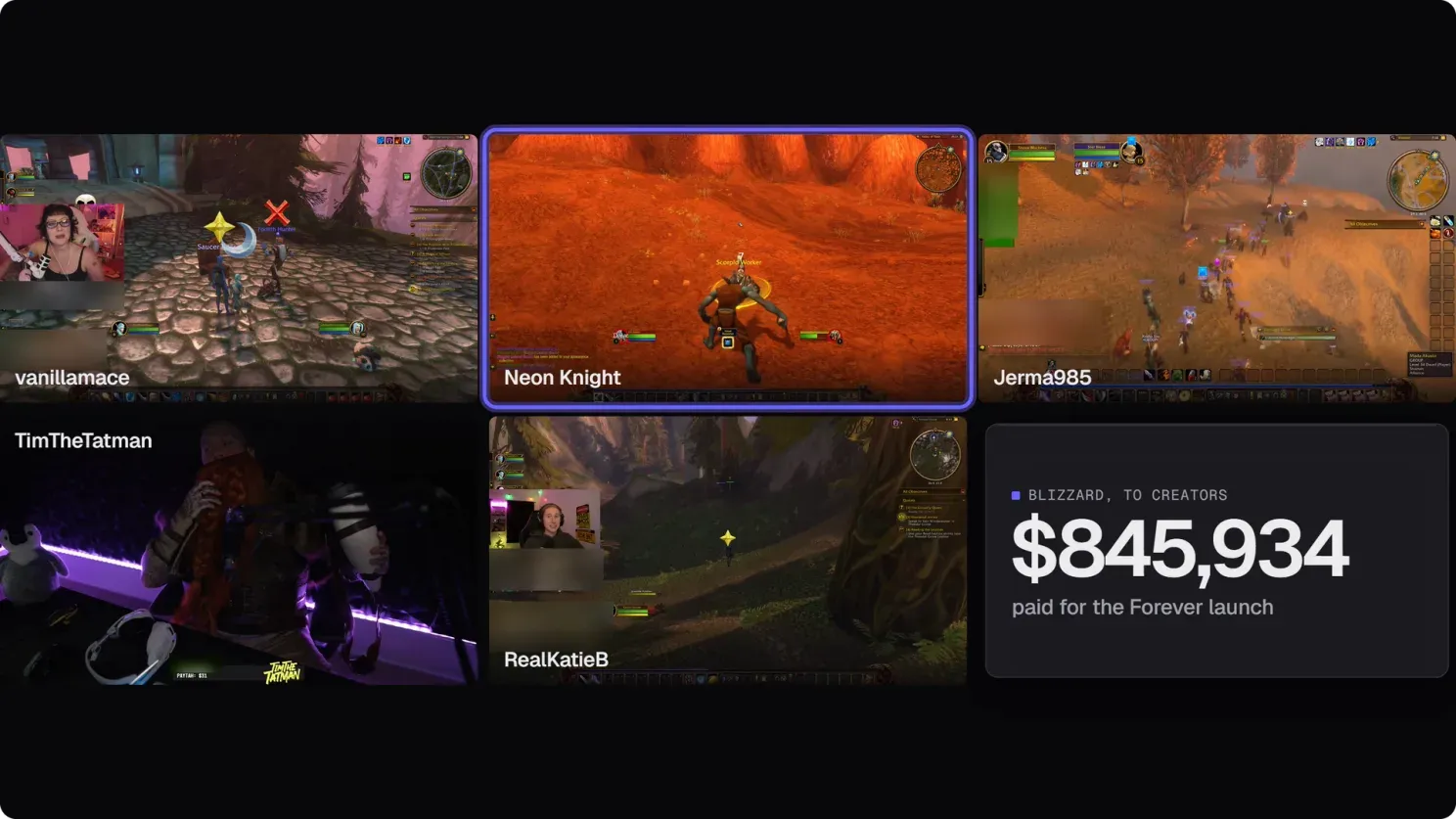
Blizzard spent an estimated $845,934 on creators to launch World of Warcraft: Forever, its fresh version of classic WoW, which came out on November 4, 2026 as part of the regular WoW subscription. The money went to 109 creators, and most of it went to streamers who hardly play WoW: of the 74 Twitch channels on the list, 43 had spent less than two hours on WoW in the four months leading up to launch. The launch itself was carried by WoW’s own streamers, and nobody paid them. Nine of the ten biggest Forever streamers on Twitch had no paid stream, and together they drew about 14 times the hours watched of every stream Blizzard paid for.
There’s a video version of this breakdown on YouTube, with the streams, chats and clips playing on screen.
I’m not affiliated with Blizzard Entertainment or Microsoft. All budget figures are estimates based on public data and market rates from Streamforge’s algorithm.
Blizzard gave WoW’s streamers a stage and paid other creators
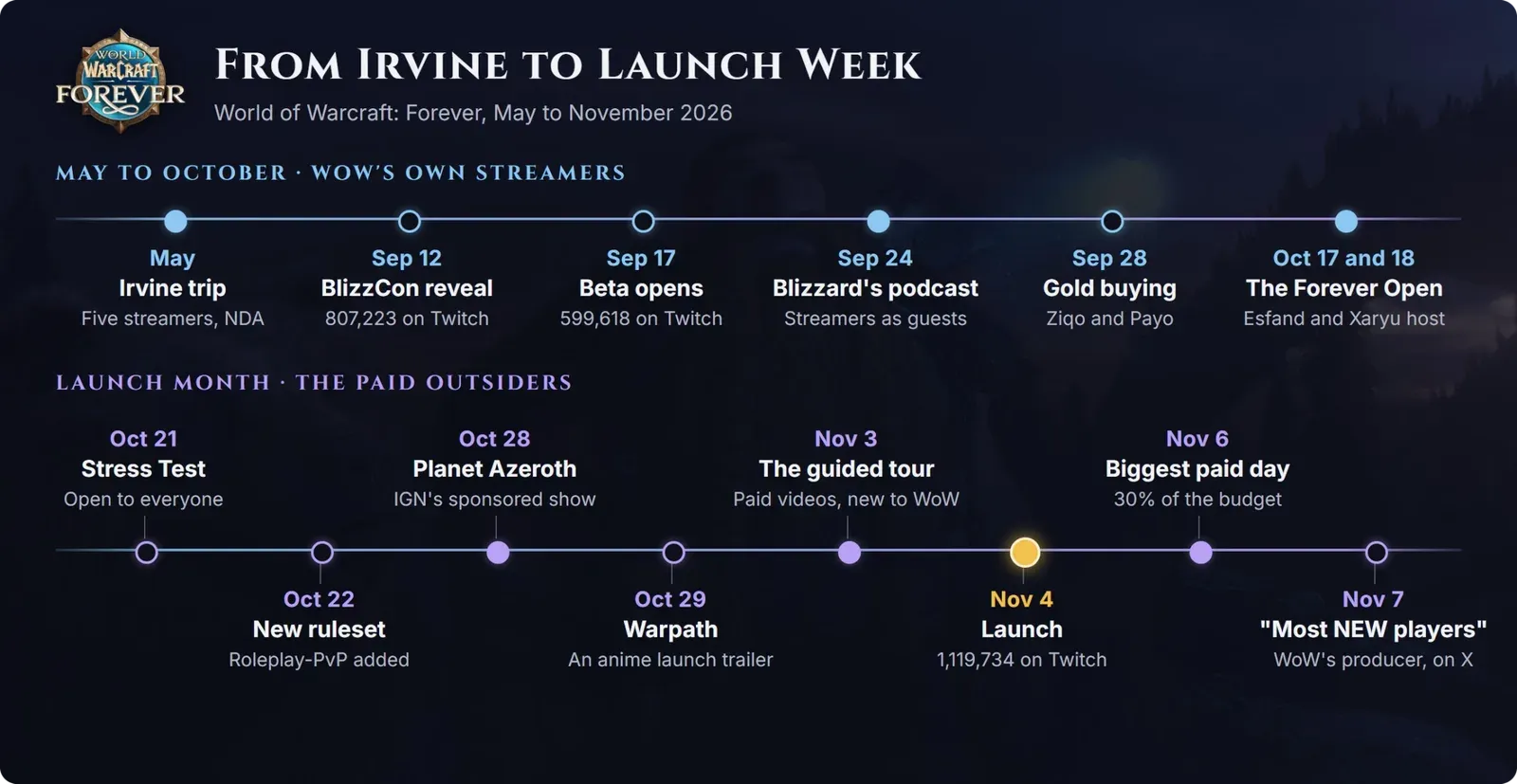
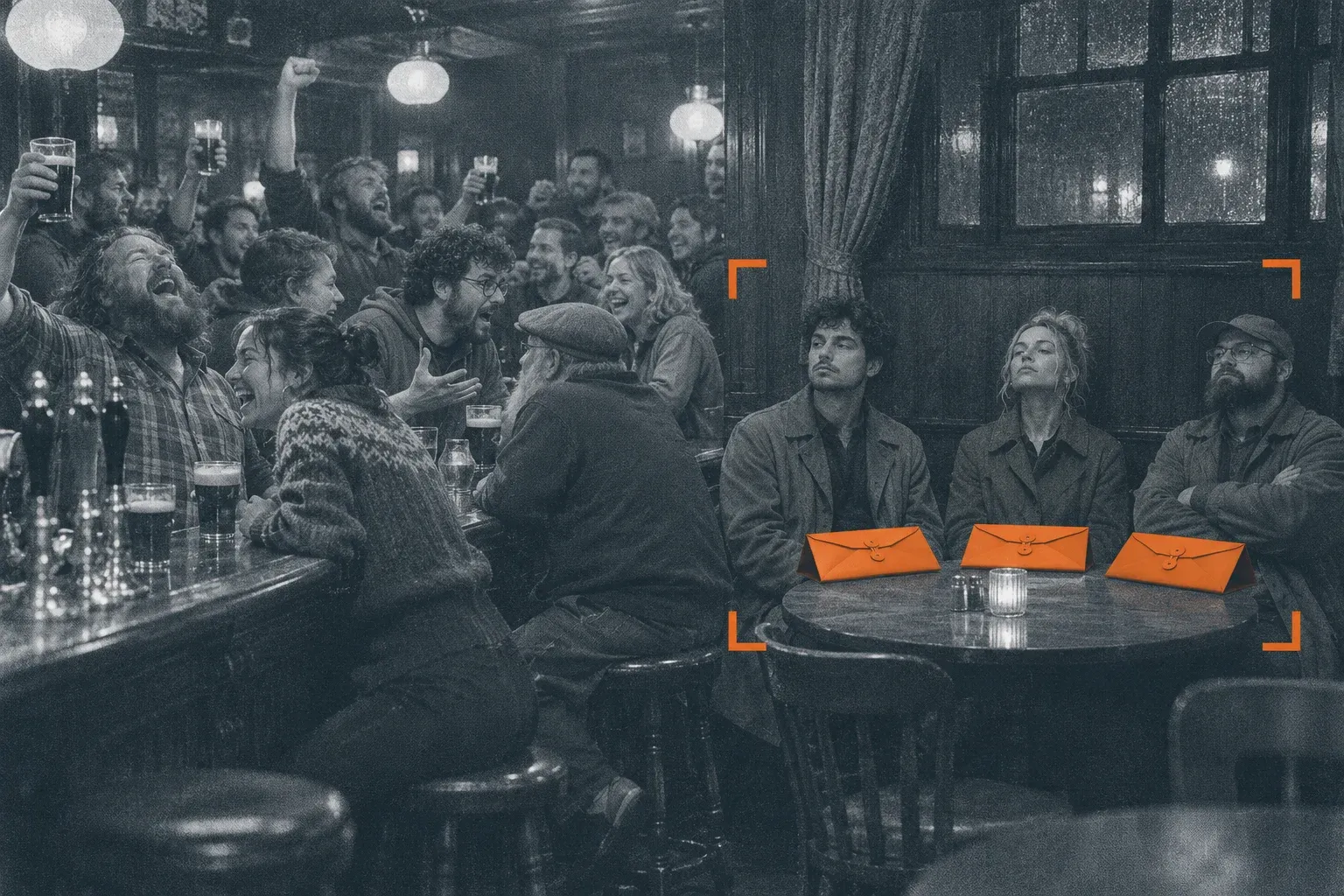
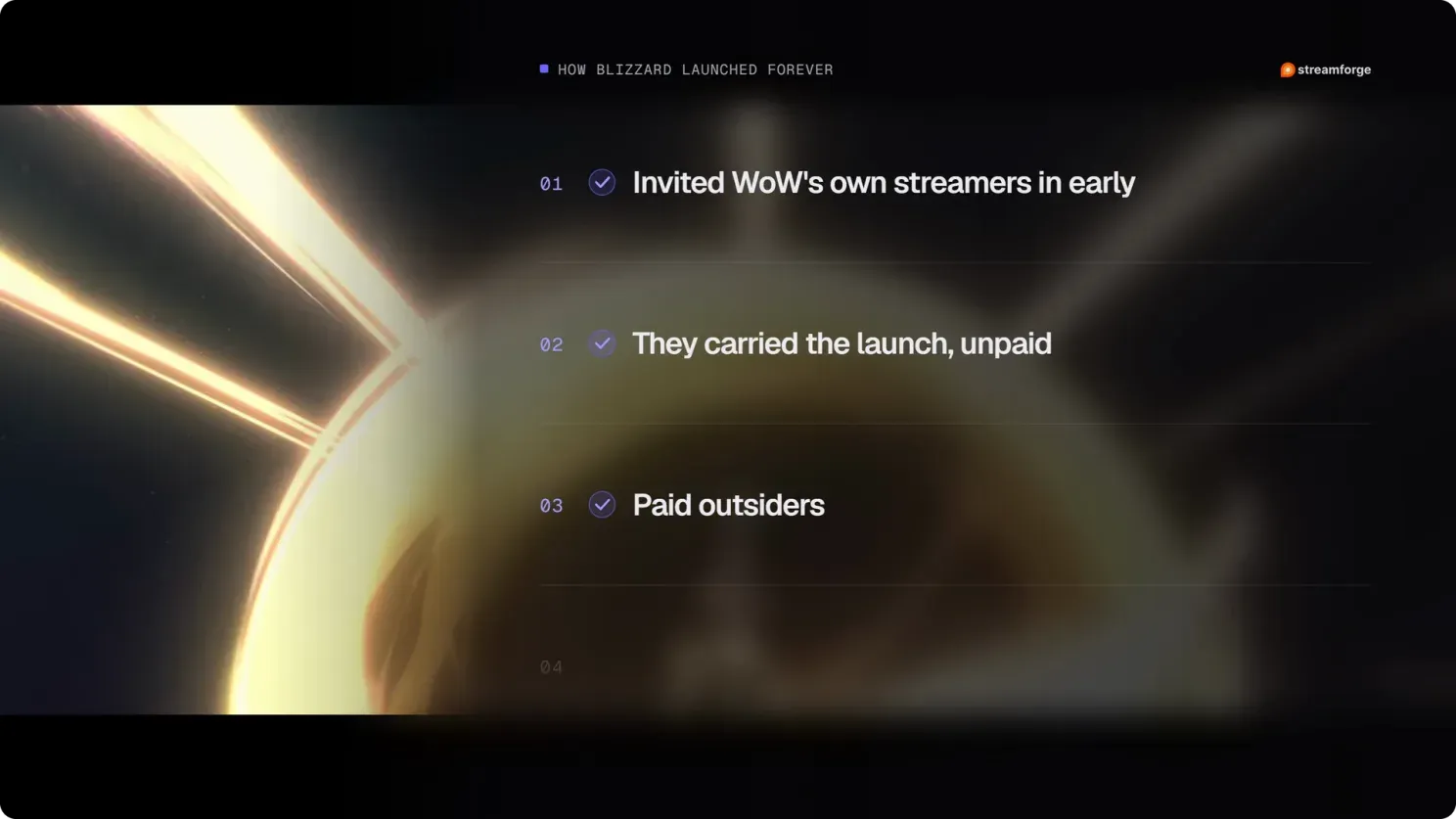
Blizzard split its creator plan in two. For months before launch, WoW’s own streamers were paid in access and attention, with almost no money attached. In May a group of them went to Irvine. Later they sat in as guests on Blizzard’s weekly podcast, and for the Forever Open, a $100,000 dueling tournament run by the streamers themselves, Blizzard built a custom arena. The paid deals in launch week went to a different set of creators entirely.
WoW’s own streamers carried the launch, unpaid
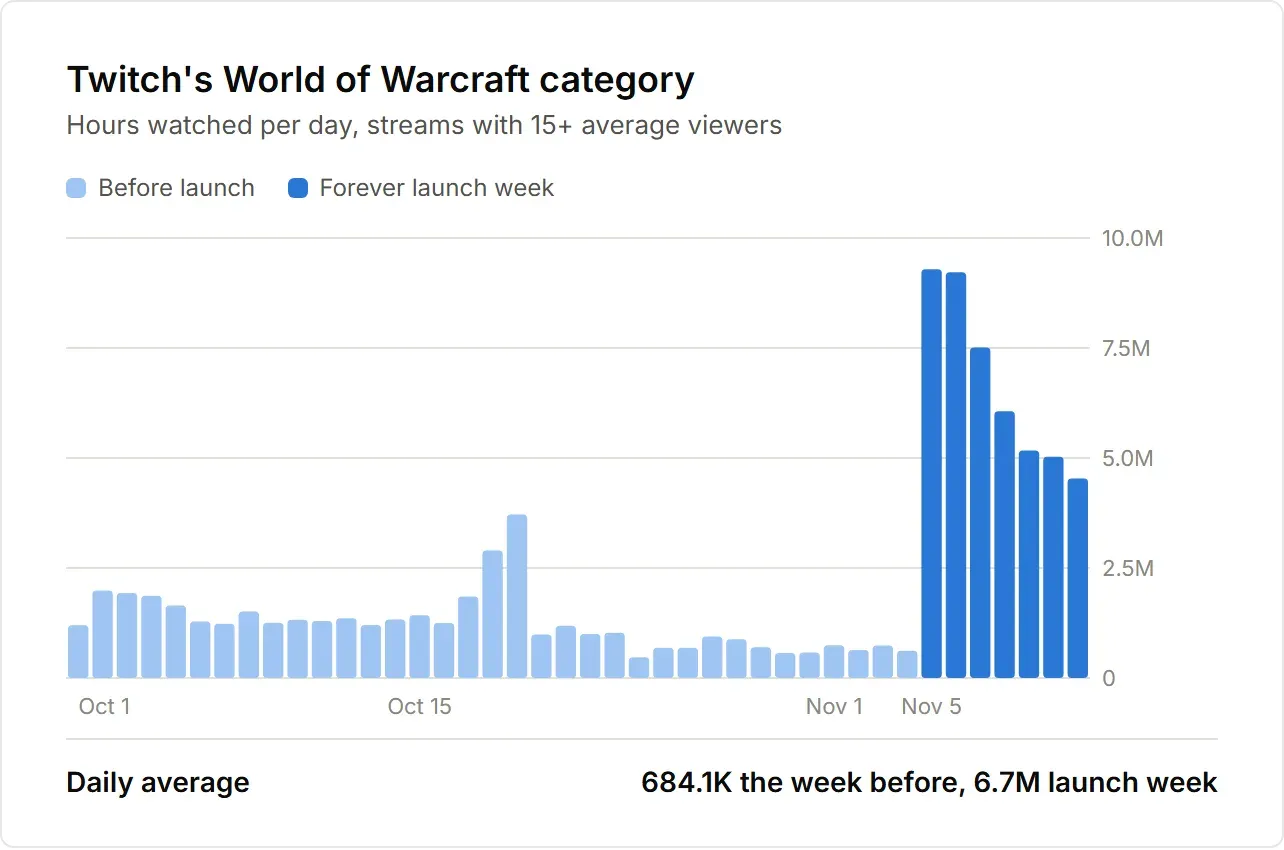
In the week before launch, Twitch’s World of Warcraft category averaged 684,100 hours watched a day. In launch week it averaged 6.7M a day, roughly ten times as much.
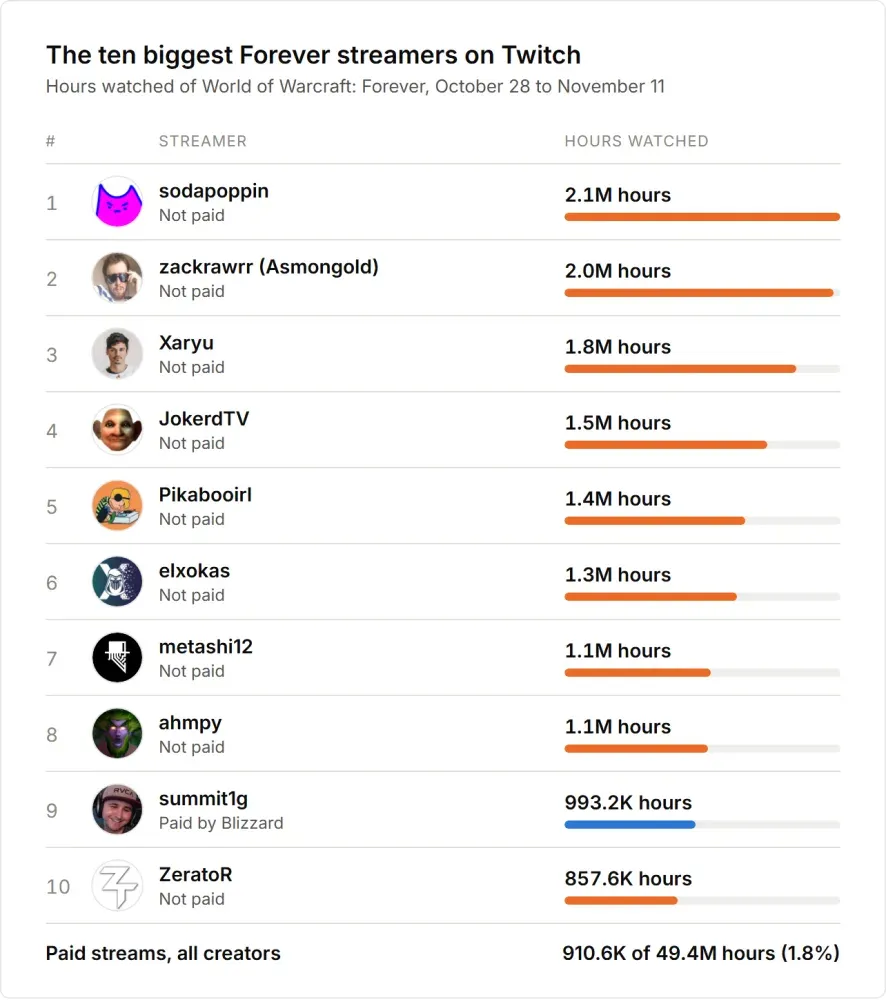
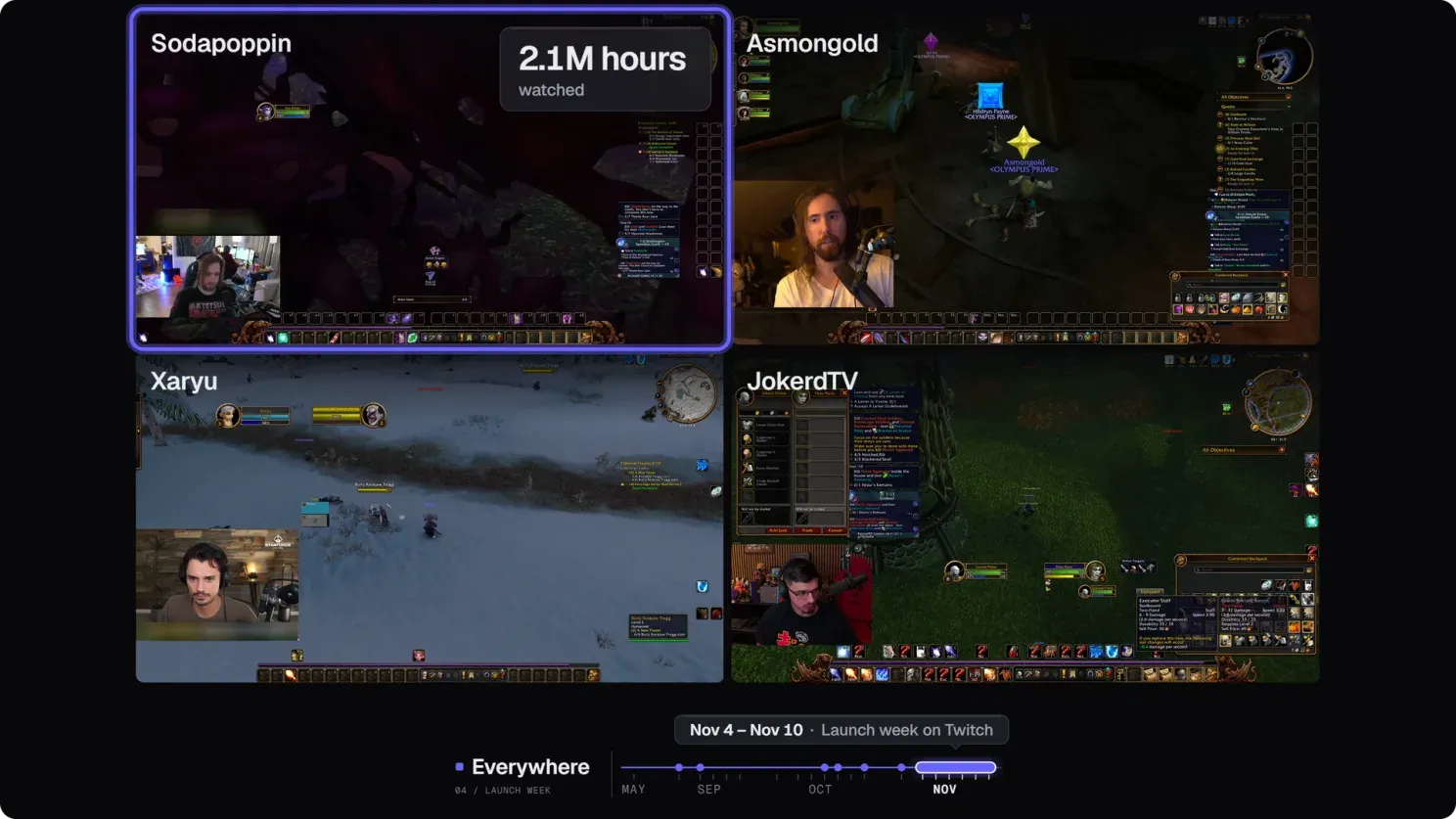
Almost none of that audience was bought. Sodapoppin led with 2.1M hours watched, then Asmongold with 2.0M and Xaryu with 1.8M, and Blizzard paid none of them. Of the ten biggest Forever streamers, summit1g was the only one with a paid stream, and he had just one. Every stream Blizzard paid for on Twitch adds up to 910,600 hours, which is 1.8% of all the hours people spent watching Forever there.
YouTube told the same story. The channels with the most Forever views were WoW channels, and Blizzard hadn’t paid any of them.
Blizzard paid for 1.7% of Forever’s 311.3M views
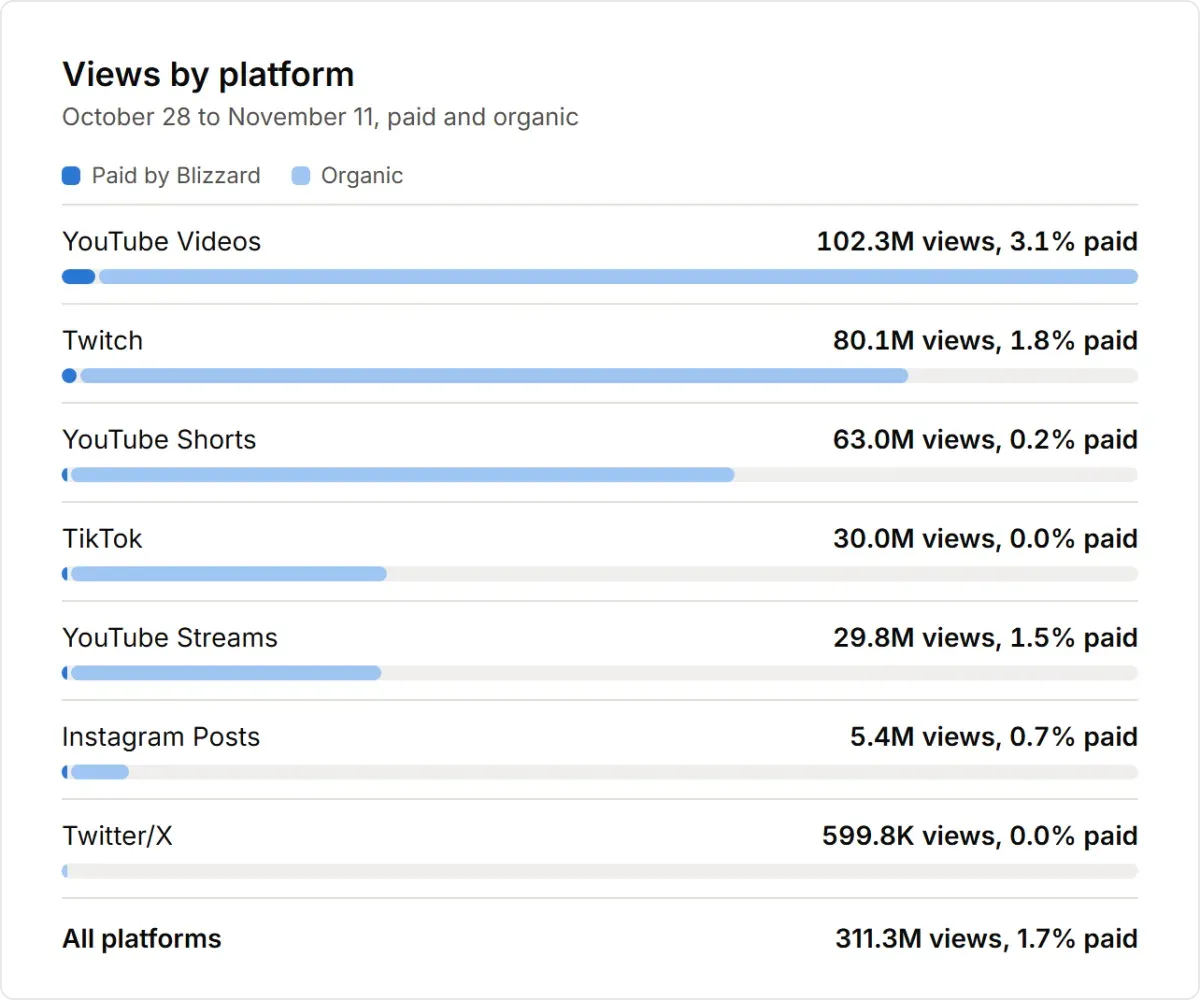
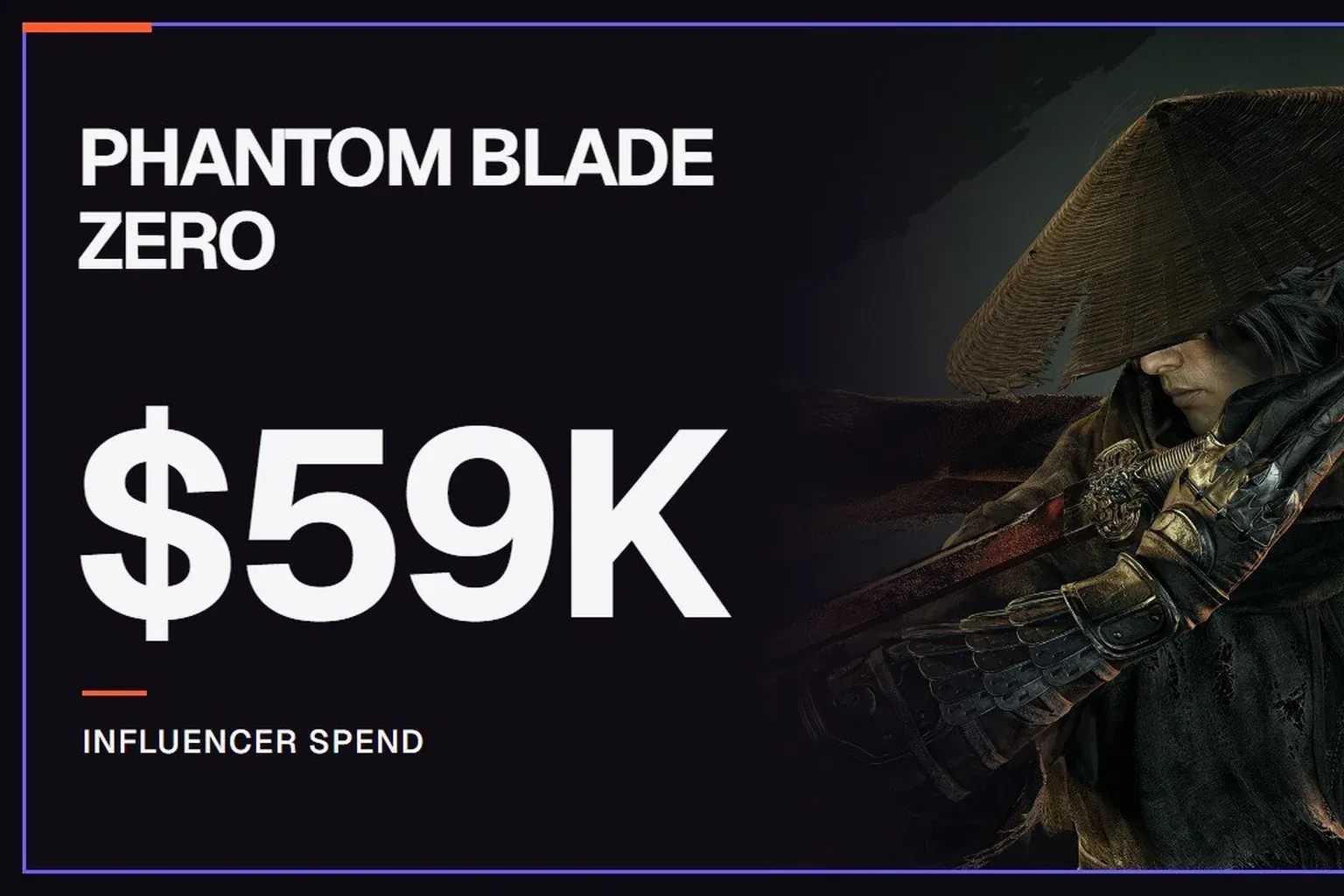
Between October 28 and November 11, 11,537 creators posted 46,642 pieces of Forever content, and they drew 311.3M views. That beats both Where Winds Meet, with 237.5M, and Phantom Blade Zero, with 216.2M.
Posts Blizzard paid for account for just 1.7% of those views. Most AAA launches sit somewhere from 5% to 10%, so this is far below the usual. Short video got almost no money at all: YouTube Shorts and TikTok drew 93M views between them, and Blizzard paid for hardly any of them.
Twitch got 62.9% of the money
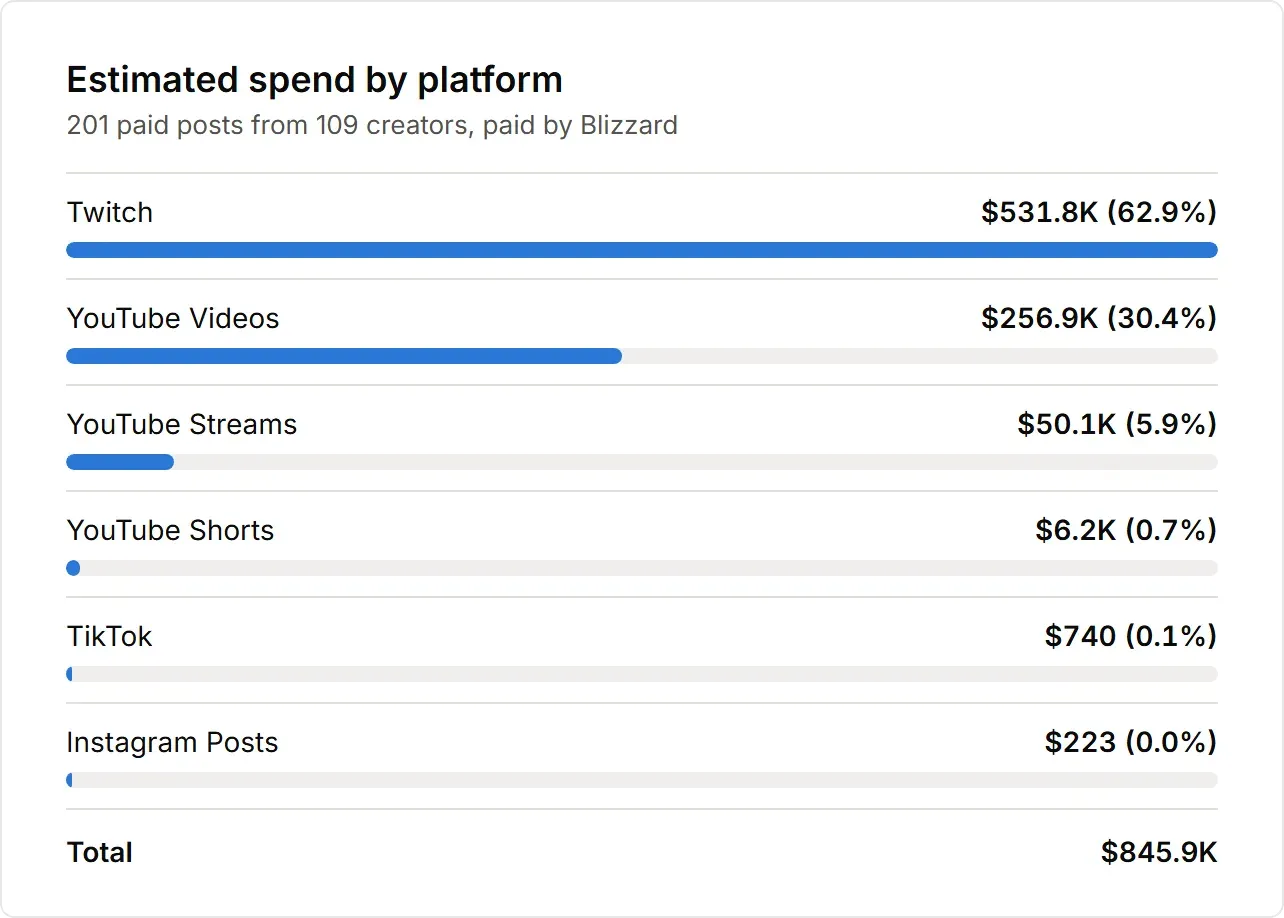
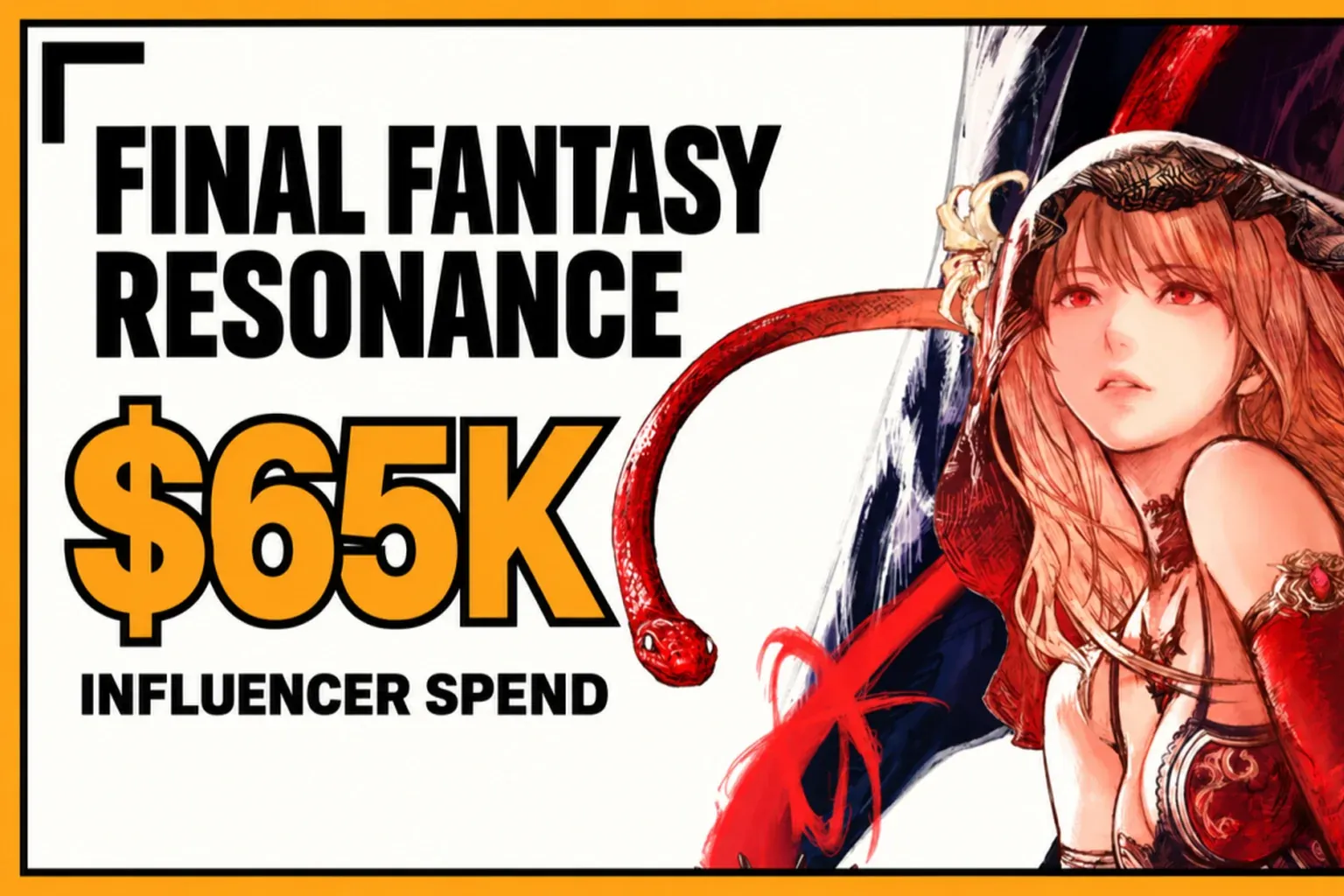
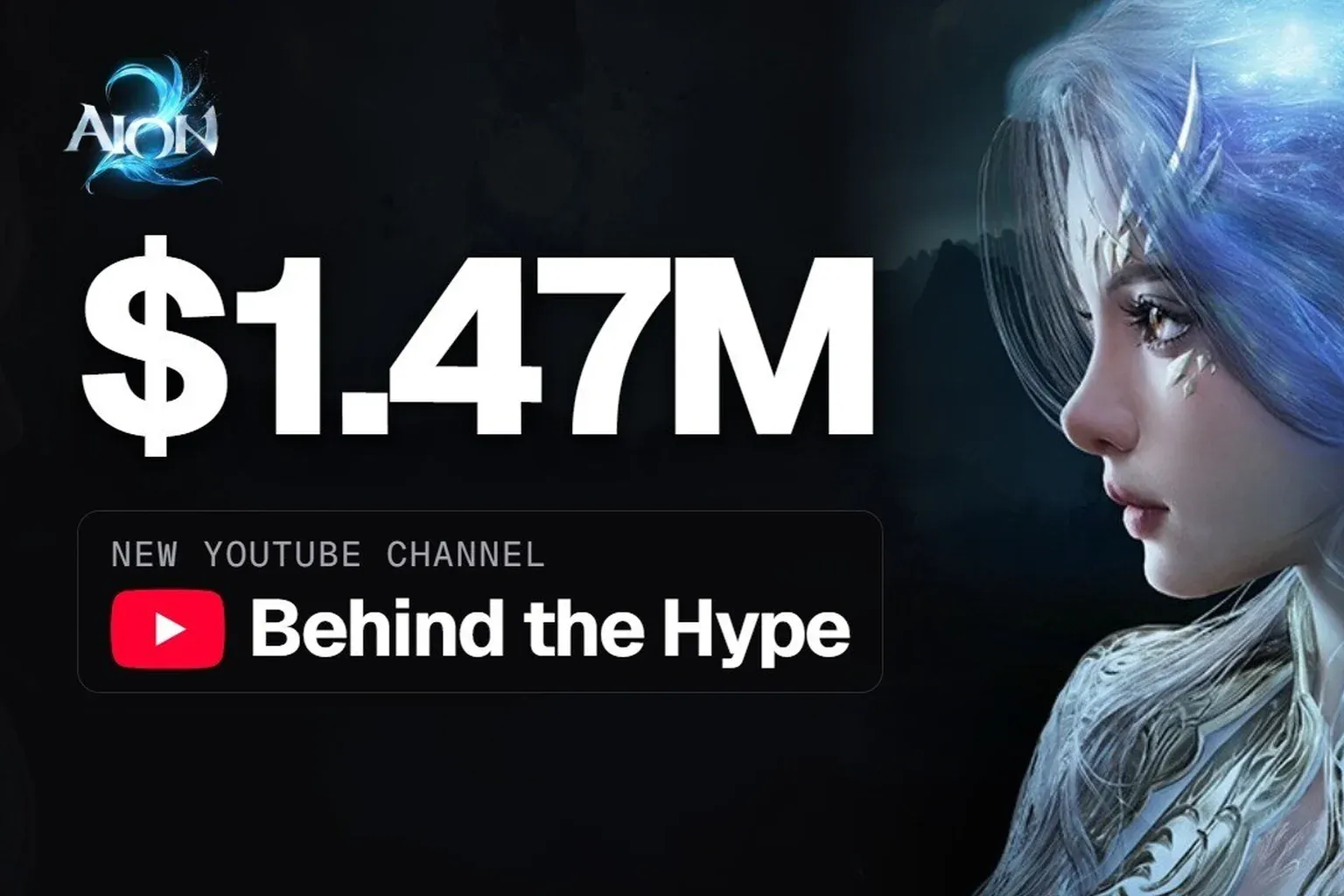
Most of the money went to Twitch: $531.8K, or 62.9% of the estimated budget. YouTube Videos came second with $256.9K (30.4%). Against earlier launches, Forever cost Blizzard more than two and a half times what Where Winds Meet spent ($319,286), and a bit more than half of AION 2’s $1,466,901.
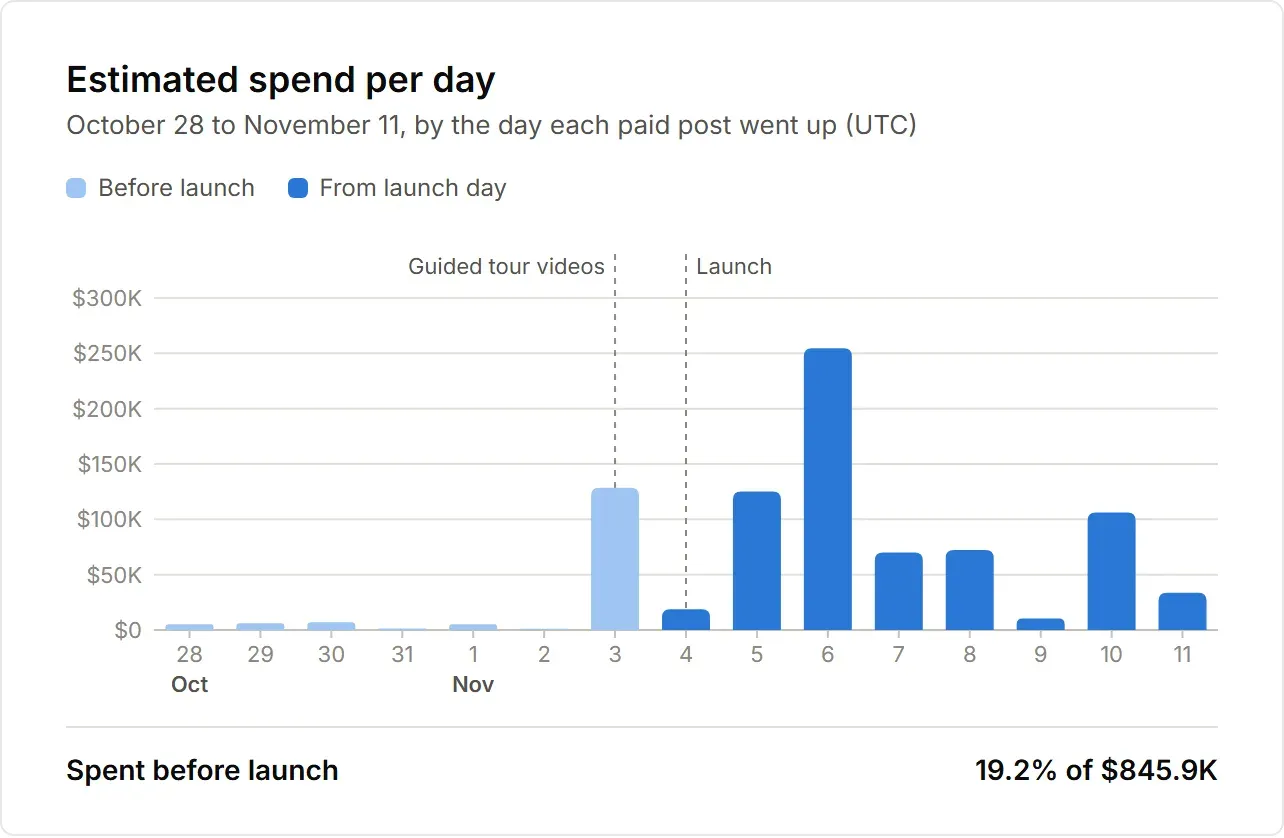
Only 19.2% of the money went out before launch. The bulk of that landed on November 3, the day a batch of paid YouTube videos went up for first-time and returning players. November 6 topped every other day, taking 30.1% of the budget.
Each average Twitch viewer cost $3.21, the second-highest in my breakdowns
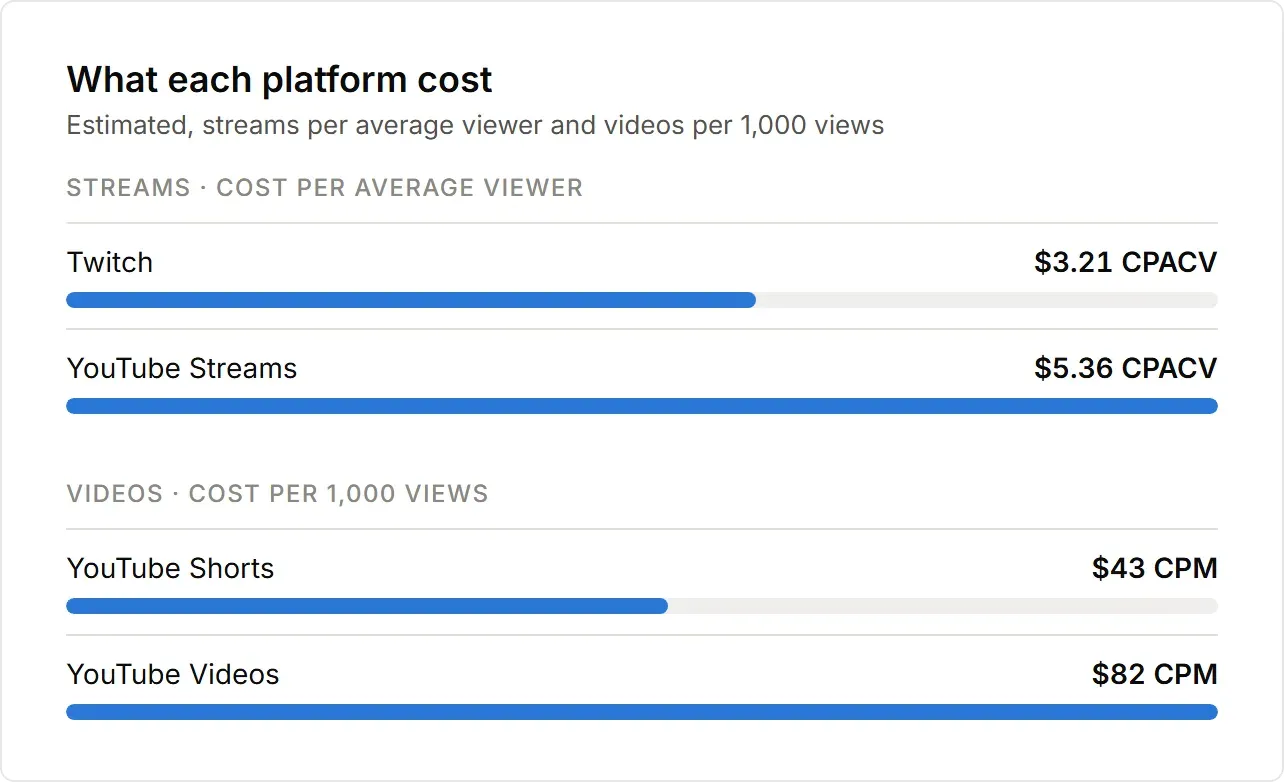
Streams and videos get different yardsticks. A stream is judged on the cost of each average viewer (CPACV, cost per average concurrent viewer), and a video on the cost of 1,000 views (CPM).
On Twitch, each average viewer cost Blizzard $3.21. Of every launch I’ve broken down, only Phantom Blade Zero paid more, at $3.49. Viewers mostly stuck around: the paid streams kept about 78% of the audience they usually draw. On YouTube Videos, 1,000 views cost $82, roughly half the $150 Phantom Blade Zero paid, though the paid videos pulled only about half the views their channels usually get.
Most of the top-paid creators came from outside WoW
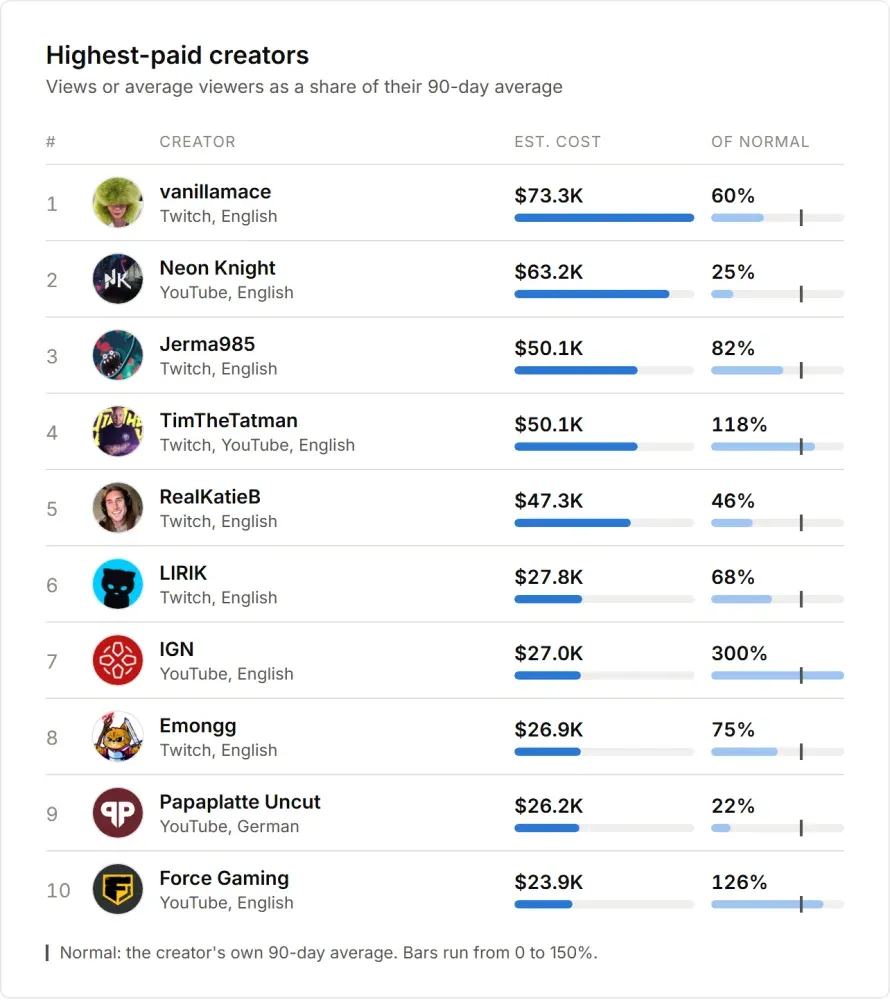
The ten highest-paid creators took 49.2% of the budget, and most of them weren’t WoW creators. vanillamace ($73,335) and Jerma985 ($50,146) hadn’t streamed any WoW in the four months before. QSMP, a Minecraft roleplay server, supplied four of the paid streamers, and those four alone took 17.3% of the entire budget.
IGN’s two sponsored shows did best by a wide margin, at 300% of their normal numbers. Force Gaming (126%) and TimTheTatman (118%) came next, and TimTheTatman was also the one top-ten creator already part of WoW’s story. At the other end sat the campaign’s second-biggest deal: a YouTube video from Neon Knight that cost $63,181 and drew only a quarter of that channel’s usual views.
14.2% of rival MMOs’ Twitch creators covered Forever
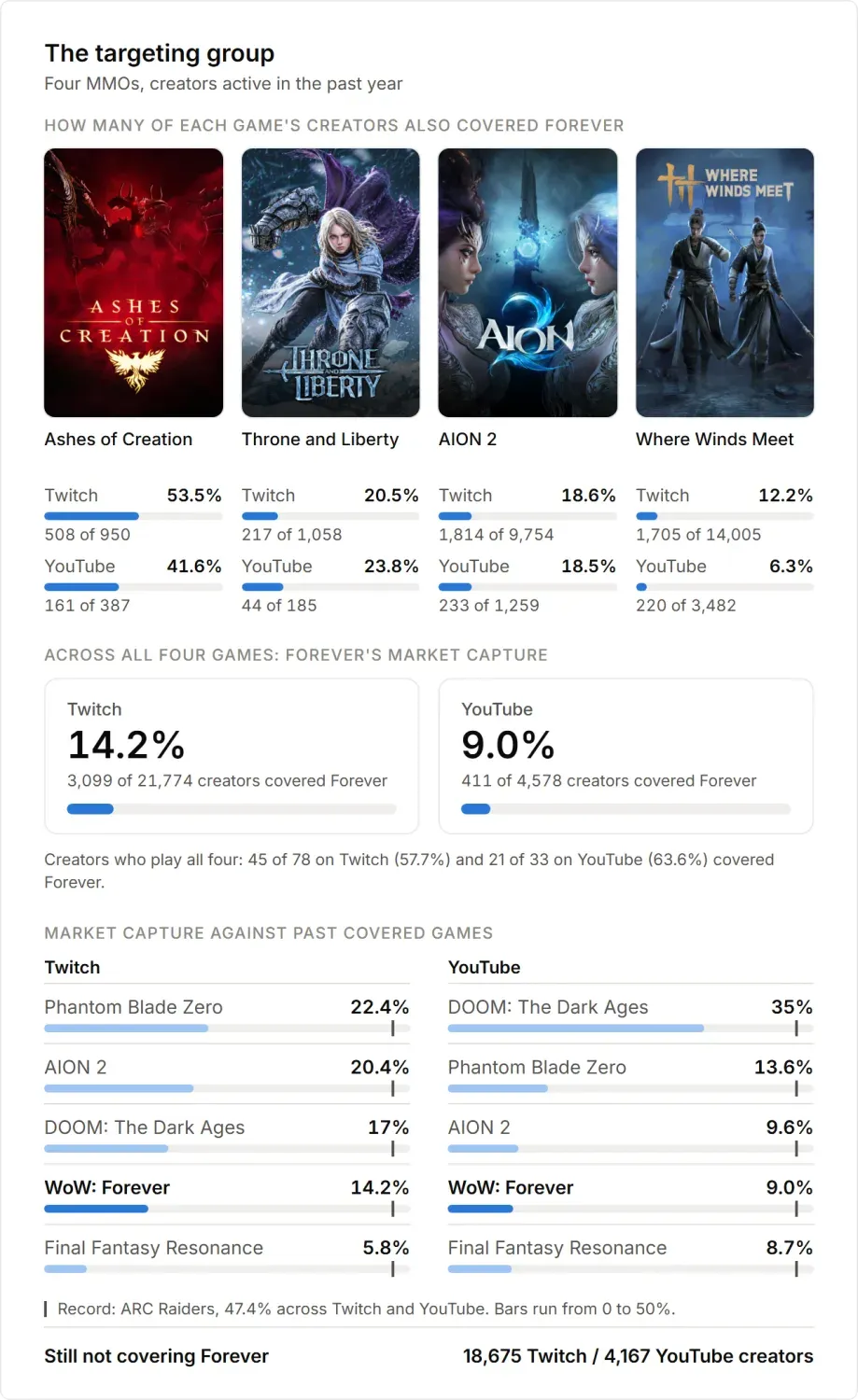
For market capture, I used the creators of four other MMOs as the targeting group: Ashes of Creation, Throne and Liberty, AION 2 and Where Winds Meet. Forever captured 14.2% of them on Twitch and 9.0% on YouTube, behind AION 2 on both (20.4% and 9.6%). The Western, old-school crowd did come over. Of the Twitch creators who had streamed Ashes of Creation, 53.5% also streamed Forever.
72% of the paid creators post in English
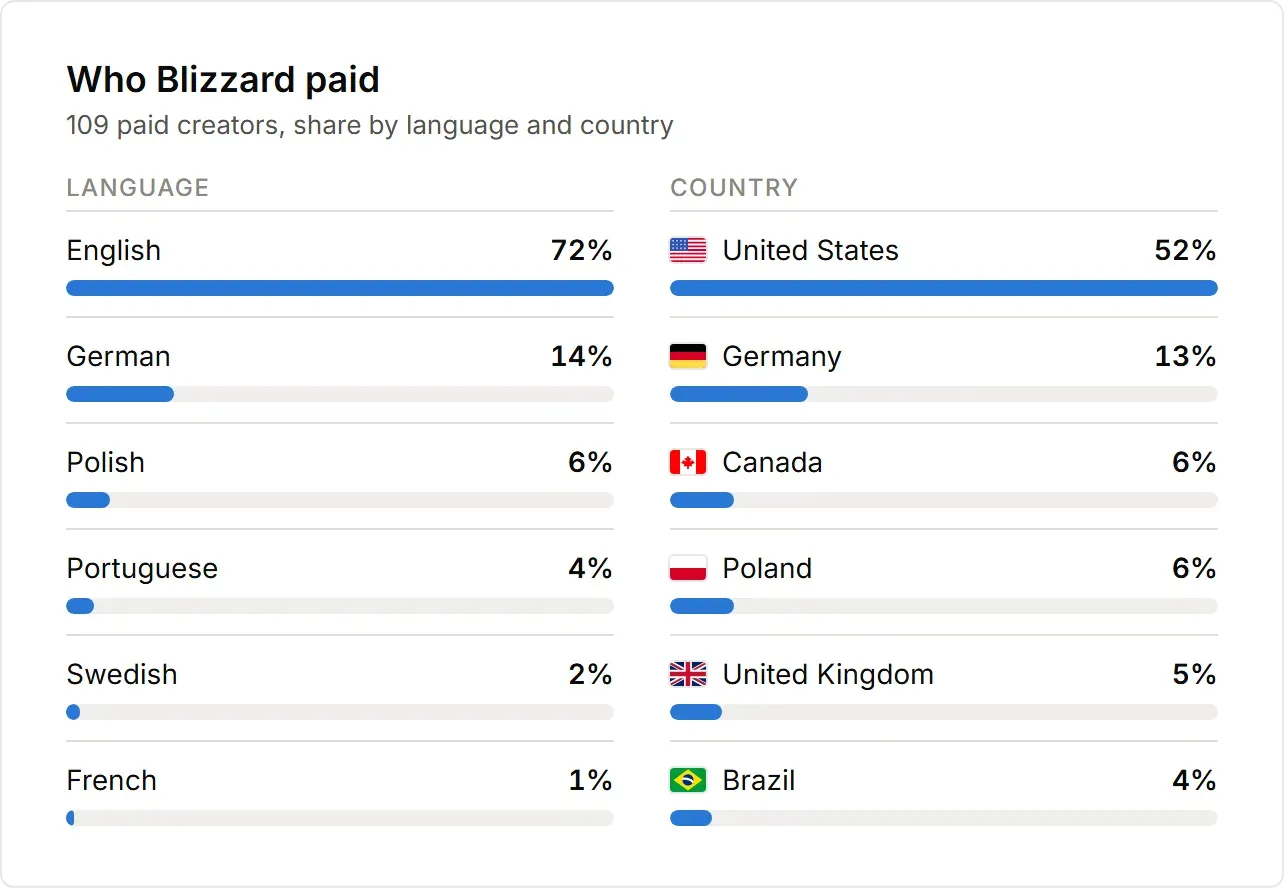
Of the creators Blizzard paid, 72% post in English and 14% in German. That mix leaves out a big part of who was covering the game: more than a fifth of everyone who covered Forever spoke Spanish, French or Russian. Spanish got one paid creator, French got one, and Russian got none. On gender, 65 of the paid creators have data, and 20 of those are women (31%).
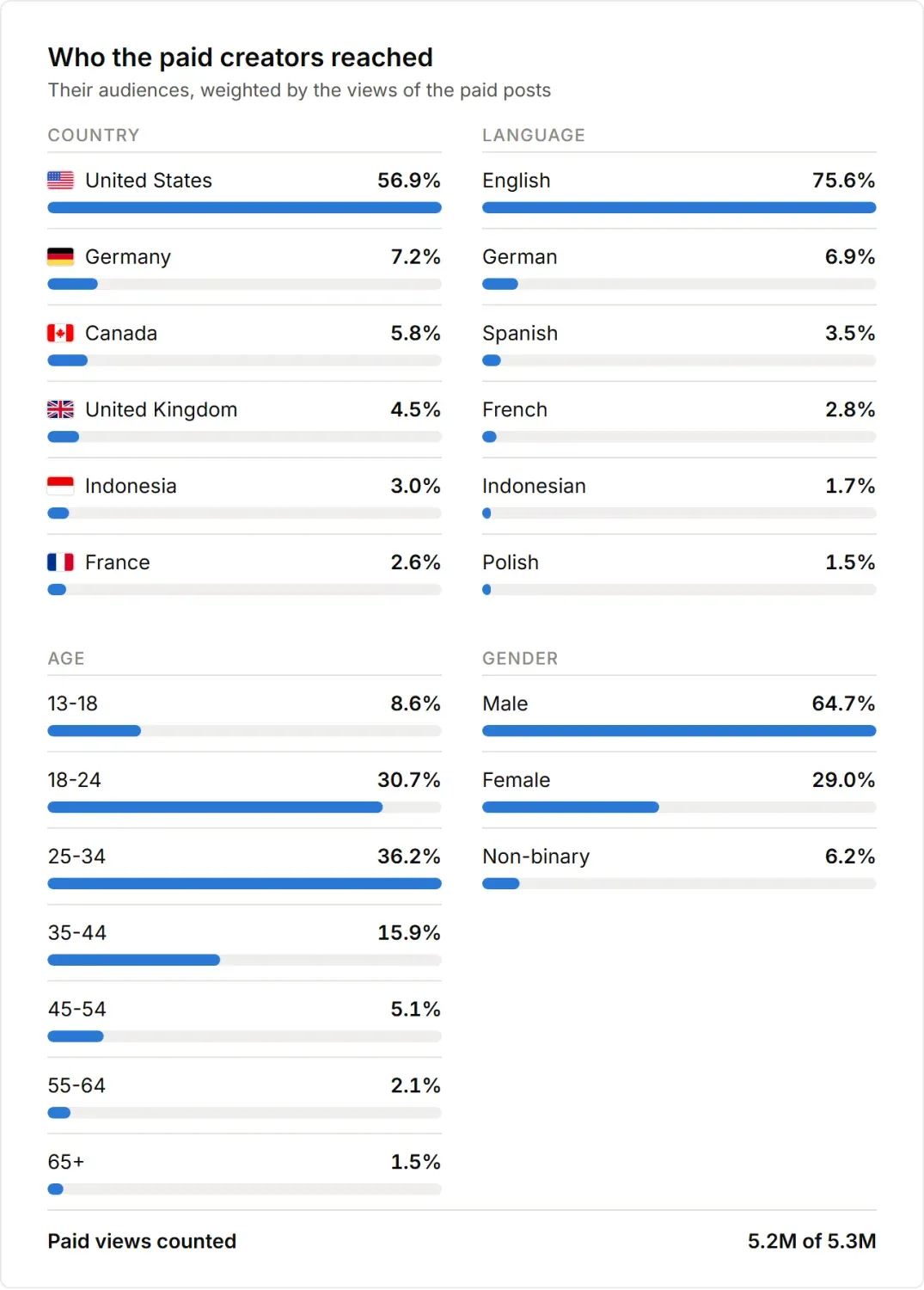
Two thirds of the people those creators reached were 18 to 34. By country and gender, 56.9% were American and 64.7% were male.
My take: paying outsiders was the right call
I think Blizzard got the split right. Its own streamers were going to carry the launch with or without a check, so money spent on Xaryu would only have reached viewers Blizzard already had. A sponsored stream from Jerma or vanillamace is a different purchase: it puts the game in front of people who never watch WoW. Blizzard has said this launch drew more new players than any in 15 years. I can’t tie that to the creator spend, but new players are exactly what the spend was for.
Two things I’d have done differently. The paid list should have covered more languages, and the 93M views on Shorts and TikTok deserved more than the almost nothing Blizzard put behind them.
Pay for the reach your own streamers can’t give you
The lesson I’d take from Forever is to spend where your own streamers can’t reach. If they’ll play your game unpaid, give them access and a stage, as Blizzard did, and point the budget at people outside your audience.
It also pays to have a creator program running before launch. Blizzard’s #WoW_Partner tag had gone out every week since at least August, so launch week turned up the volume on a program that already existed instead of starting one from nothing. Whoever you pay, hand them a shared kit as well: a single tag, a single chat command and a single line of copy for everyone.
How I estimated the budget
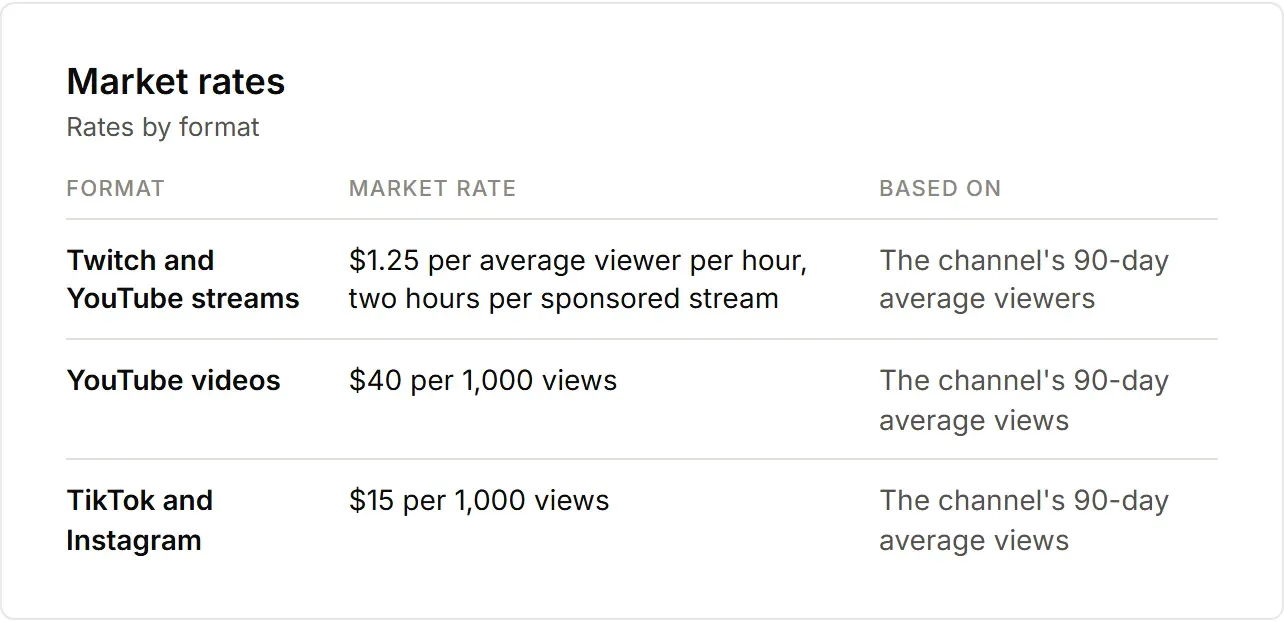
A paid post is priced at a market rate built from that creator’s own channel numbers, at US rates. To count, a post needs an ad label or a sponsor read, plus a tie to Blizzard. I left out posts whose only sign of a deal was the #WoW_Partner tag; with them in, the budget would come to $883,709.
Every figure in this breakdown, from the paid posts to the hours watched, came out of Streamforge, the influencer marketing platform I co-founded.
Key metrics
Content
24
Total views
2.2M
Total comments
867K
Hours watched
1.4M
Content timeline
ViewsContentOct 3 to Oct 15
This breakdown first ran in my LinkedIn newsletter, Videogame Marketing Deep Dives.