
The best GRIN alternative is the one that keeps the workflow your program actually runs on. GRIN puts five jobs in one record: affiliate links and commissions, gifting and product seeding, creator payments, relationship management, and creator research. Most teams lean on one or two of those far more than the rest. A replacement that drops the job you depend on trades a known problem for a bigger one.
We recommend Streamforge when your results depend on choosing the right creators. It combines audience analysis that does not require creators to connect their accounts, data on which creators your competitors sponsor, and campaign operations from outreach to reporting. If your program runs on commissions, store-connected gifting or creator payouts, start with the commerce-focused platforms in this list: impact.com, Modash, Upfluence, Aspire and CreatorIQ. This guide sorts all six by workflow and covers what it costs to move.
Disclosure: Streamforge publishes this guide and is included below. We used public vendor documentation and pricing pages, not a side-by-side product test. The best-fit recommendations are editorial judgments, and the numbered order is for navigation.
Why teams look for GRIN alternatives
GRIN’s platform page shows how much it does for a commerce brand. Seeding, paid, affiliate and UGC programs come from one program engine. A funded escrow wallet pays creators through Stripe, with tax handling and a commissions ledger. Shopify connects in one click, and Gia, GRIN’s AI agent, prepares and runs much of the daily work. For a direct-to-consumer brand that pays creators in product and commission, that is a coherent design. The Streamforge vs GRIN comparison covers it capability by capability.
The mismatches come from programs built a different way:
- The sale does not happen in your store. Commission tracking needs an order to attribute. A brand that sells through retailers, app stores or game launchers, or hires creators for awareness, uses less of that machinery.
- The hard decision is who to hire. When the costly mistake is a creator whose audience is in the wrong country or padded with bots, the research layer matters more than the payout layer.
- The fee model. GRIN’s pricing page lists Free, Starter at $200/month, Growth at $500/month and Scale at $1,500/month, in USD and billed monthly. Each adds a management fee on money deposited to pay creators: 20% on Free, 10% on Starter, 7% on Growth and 5% on Scale. Enterprise is a custom annual agreement. On Starter, paying creators $10,000 a month adds $1,000 in fees to the $200 plan, so on a large creator budget the fee, not the plan, is the bigger cost.
- A change is already planned. GRIN sells GRIN with Gia alongside GRIN Classic, and its upgrade path for Classic customers is a bridge that lets Gia work over existing data. A team weighing that upgrade is at a natural moment to compare.
Compare the GRIN alternatives
Prices were checked on each vendor’s pricing page on October 27, 2026, and are in USD. Where a vendor quotes by scope, the link goes to its pricing or demo request.
| Platform | Best fit when replacing GRIN | Pricing or access |
|---|---|---|
| Streamforge | Our recommendation when results depend on choosing creators: audience analysis without creator OAuth, competitor sponsorships, and campaign operations from outreach to reporting | Discuss your requirements |
| CreatorIQ | Multi-brand enterprise programs that need governance, creator payments in many markets and affiliate-network connections | Request pricing |
| Upfluence | Store-led programs that need promo codes, product seeding and creator payments tied to Shopify, WooCommerce, Magento, BigCommerce or Amazon | Custom quote by module |
| Aspire | Product seeding at volume through Shopify, with inbound creator applications and affiliate offers | Request a demo |
| Modash | Shopify gifting, discount codes and creator payouts on Instagram, TikTok and YouTube, with published plans | Essentials: $199/month billed annually ($2,388/year); payments start on Performance, $499/month billed annually |
| impact.com | Creator programs run beside affiliates and publishers, with attribution and payouts across partner types | Essentials, the first plan listing creator management: $500/month |
Start with the workflow you rely on
Find the row that describes your GRIN program. That row decides the shortlist; the others break ties.
| If your GRIN program runs on | Alternatives that document it | Check before you switch |
|---|---|---|
| Affiliate links, codes and commissions | impact.com, CreatorIQ Convert, Upfluence, Aspire, and Modash on Performance (annual) or Enterprise | Whether codes already in creators’ bios keep working, and how commission tiers carry over |
| Gifting and product seeding | Upfluence from your connected store; Aspire and Modash through Shopify | Variant choice, address collection, order status and your plan’s gifting volume |
| Creator payments and tax forms | CreatorIQ Pay, Modash on Performance and up, Upfluence Pay on Auto-pilot, impact.com, Aspire | The fee on payout volume, the countries you pay in, and who issues tax forms |
| Relationship management | All six keep creator records; Streamforge links them to email outreach, custom campaign stages and assigned owners | Whether notes, custom fields and history import, and a teammate can pick up a thread |
| Audience research and verification | Streamforge: audience analysis on five platforms without creator OAuth, comment authenticity, and paid-boost flags on TikTok, Instagram and YouTube. CreatorIQ, Modash and Upfluence also show audience data | The same creators run through each tool and checked against what you know |
1. Streamforge
Best for: brands whose GRIN program depends on choosing the right creators, and that want audience verification, competitor context and campaign operations in one platform.
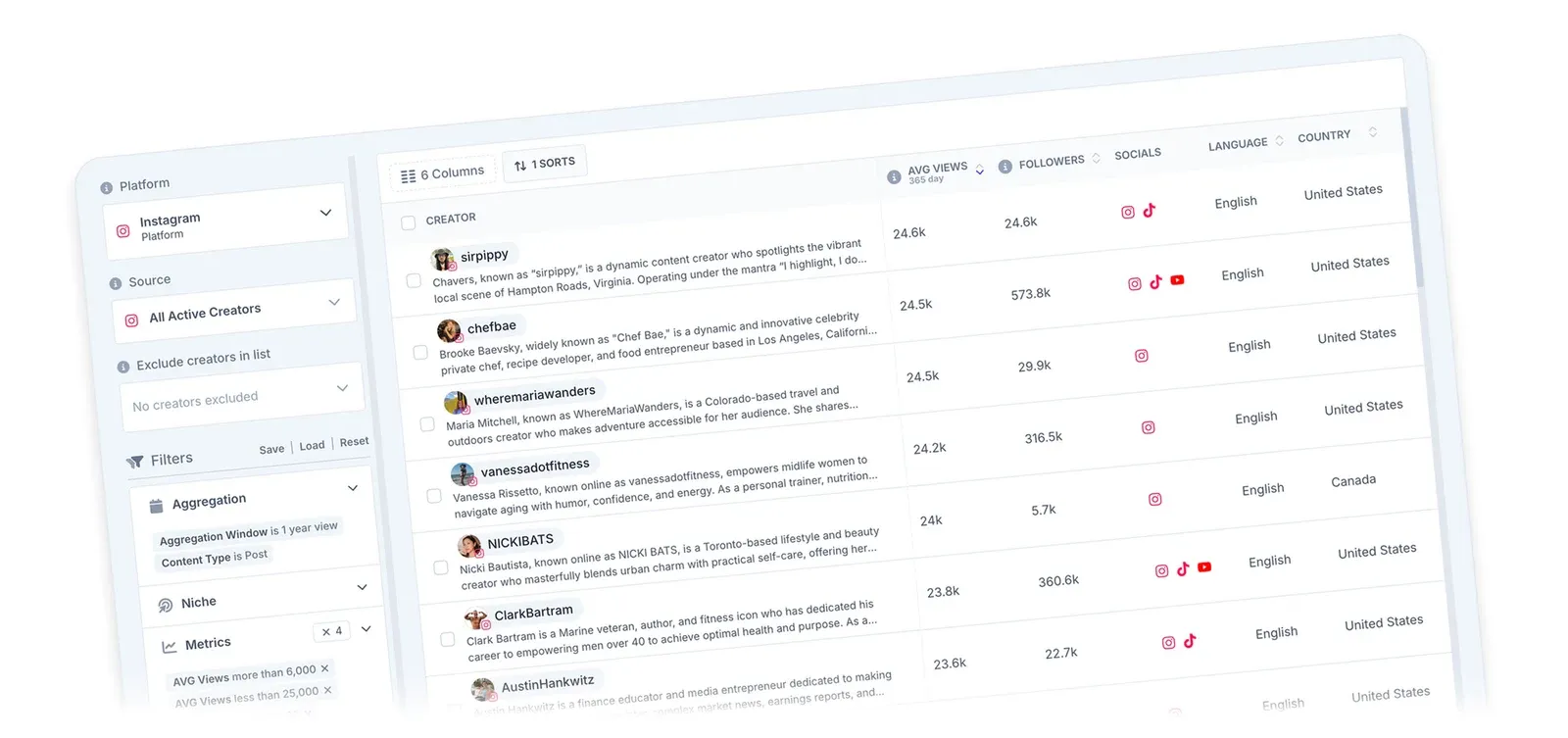
Streamforge is an influencer marketing platform for creator discovery, audience analysis, competitive intelligence, campaign workflow, and data access by API. GRIN builds its program engine around what happens after a creator agrees: the offer, the shipment, the commission, the payout. Streamforge puts its depth into the decision before that, then carries the chosen creators through the campaign.
The decision starts with the audience. Audience analysis is supported across YouTube, Twitch, TikTok, Instagram, and X. Streamforge’s audience analysis is AI-based and does not require the creator to authenticate through OAuth. The model was trained on first-party audience data, and in Streamforge’s tests its results are extremely close to the platforms’ direct metrics. That matters here because the creators you most need to check are often ones who have never joined your program and have no reason to connect an account for you.
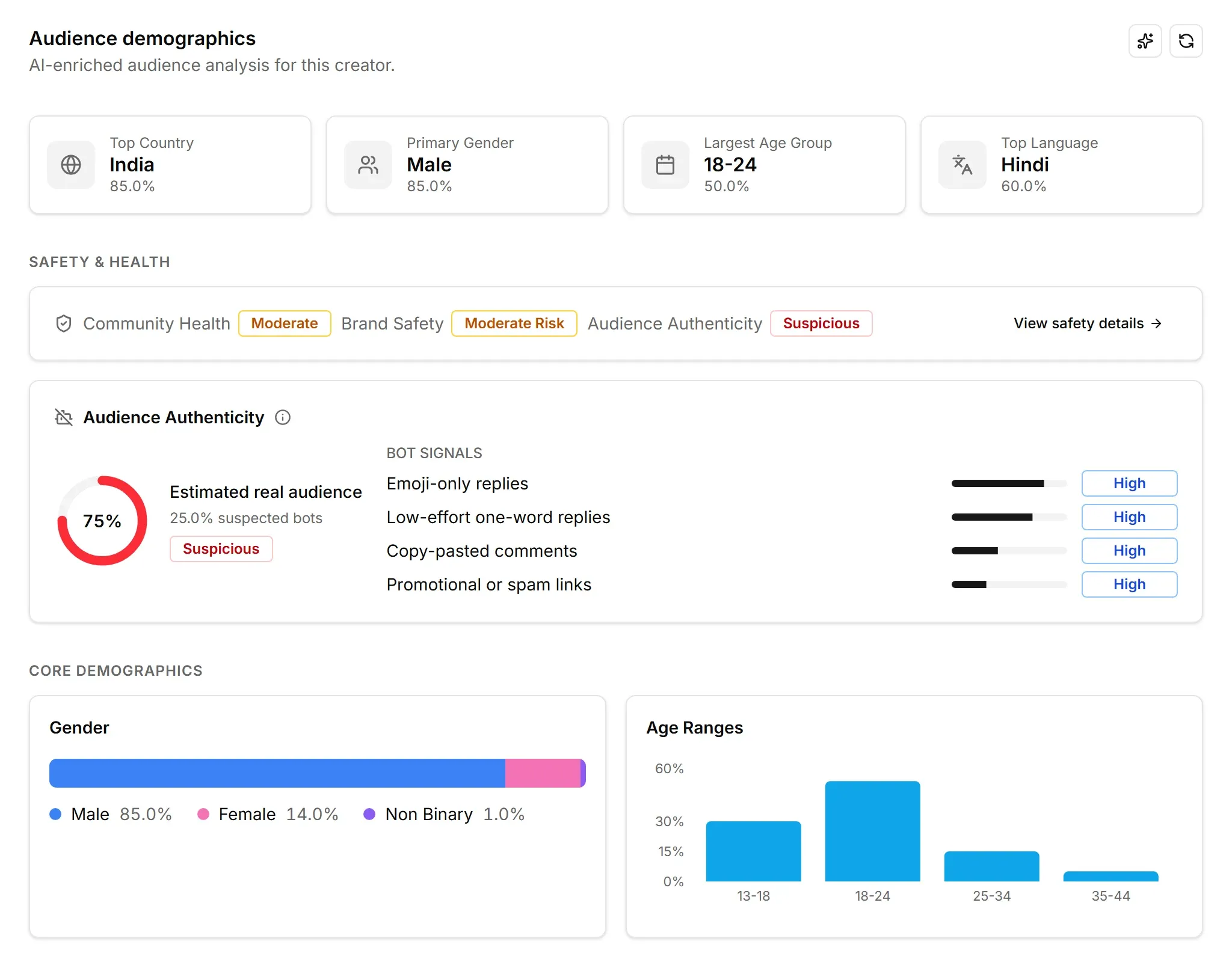
Two checks go past demographics. Streamforge analyzes the comments on a creator’s posts, videos and streams using AI to detect bot behavior, writing styles, and repetitive phrases or comments that do not engage with the content. And on TikTok, Instagram and YouTube, Streamforge flags posts whose views were inflated by a brand paying to promote them, and estimates how many views were paid for. The method was checked against campaigns where the real paid and organic split was known. A sponsored post that looks huge because the last brand boosted it is a different buy from one the creator’s own audience carried.
Fortune 500 companies have tested Streamforge’s creator data side by side against other vendors. Streamforge came out ahead in every completed evaluation. The guide to evaluating creator data shows how to run the same test on your own creators.
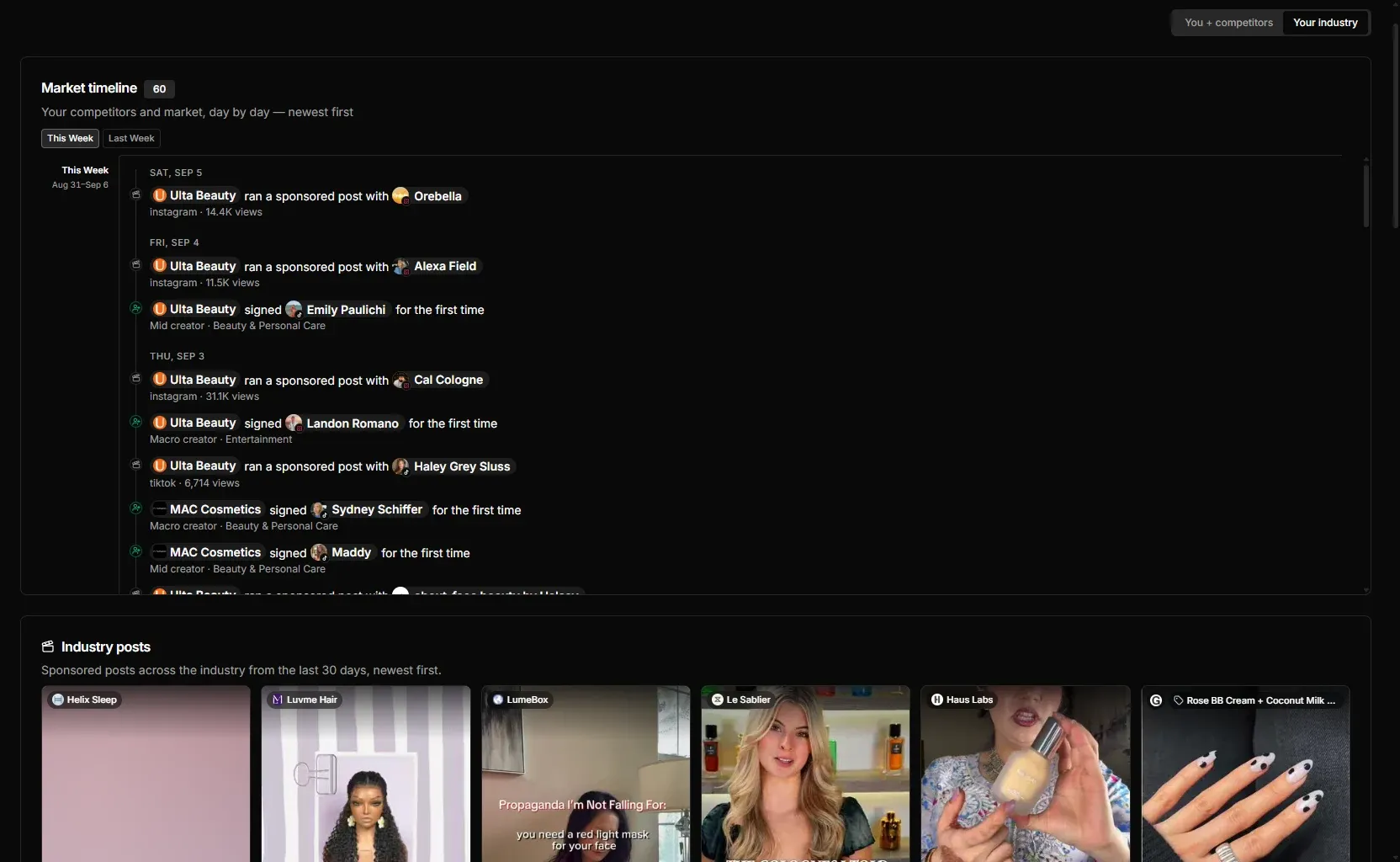
GRIN’s Insights measure your own programs, with cross-brand benchmarks for performance. Streamforge’s competitive intelligence answers a different question: which creators your competitors sponsor, on which platforms and when, drawn from classified sponsored content. A shortlist can then skip a creator a rival signed last week, or aim at a community no competitor has reached. The sponsorship detection methodology explains how a post is classified.
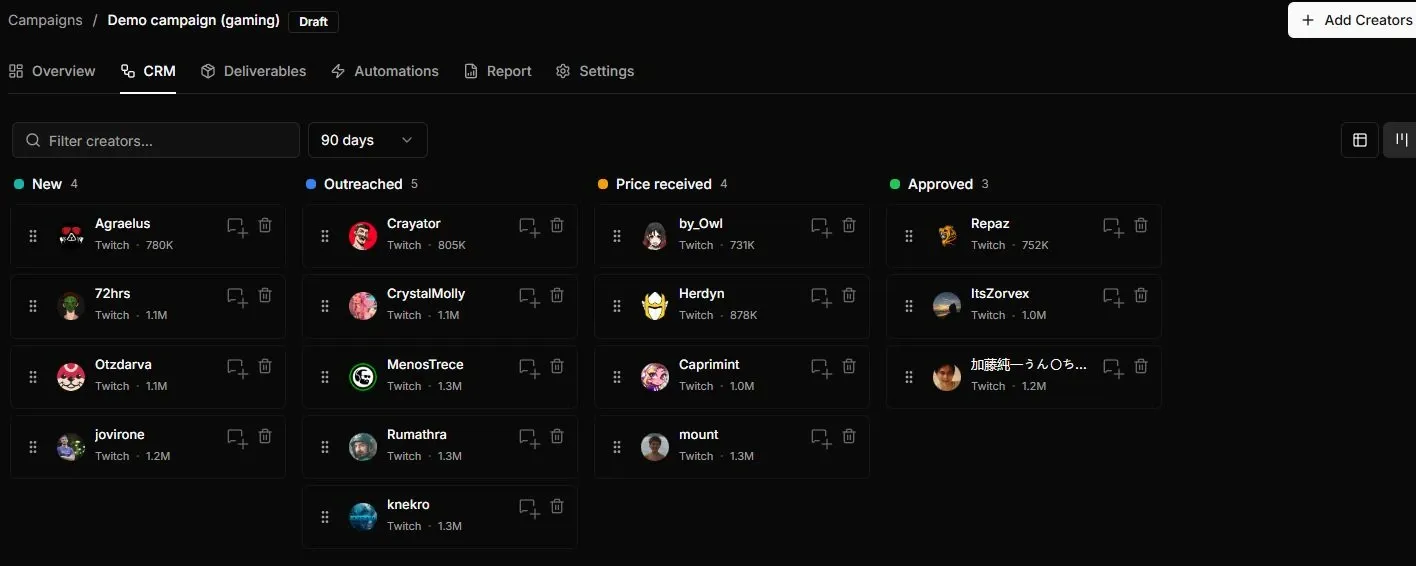
The campaign then runs in the same place. Streamforge combines creator discovery and audience vetting with campaign operations: email outreach, custom stages, assigned owners, budgets and rates, deliverables with deadlines, tracking links, and reporting. Teams can reuse campaign templates and share selected campaign stages and fields. A seeding program fits that structure, with stages such as address collected, shipped and content posted, and fields for the shipping address and tracking number. And where GRIN leads with Gia, Streamforge has its own agent, native to the platform, that can do everything a user can do in the product.
Switching from GRIN: our team moves your lists, custom fields, notes and campaigns at no cost to you, and the move is done in under a week. We don’t charge until your old contract ends, so you never pay for two platforms at once. The switching page has the details.
What to evaluate
- Audience analysis for creators your GRIN program already uses, checked against what you know about them.
- One campaign run end to end, from competitor research and outreach to the report.
Buying consideration: choose by the job. A program built on commissions, store-connected seeding or creator payouts should keep a tool that runs those jobs alongside Streamforge, whether one of the platforms below or GRIN itself. Streamforge’s tracking links count clicks, so sales attribution stays with that tool.
Pricing and access: Discuss your requirements with Streamforge, and bring the creators and campaigns you run in GRIN today.
2. CreatorIQ
Best for: multi-brand enterprise programs that need governance, creator payments across many markets, and affiliate execution connected to existing affiliate networks.
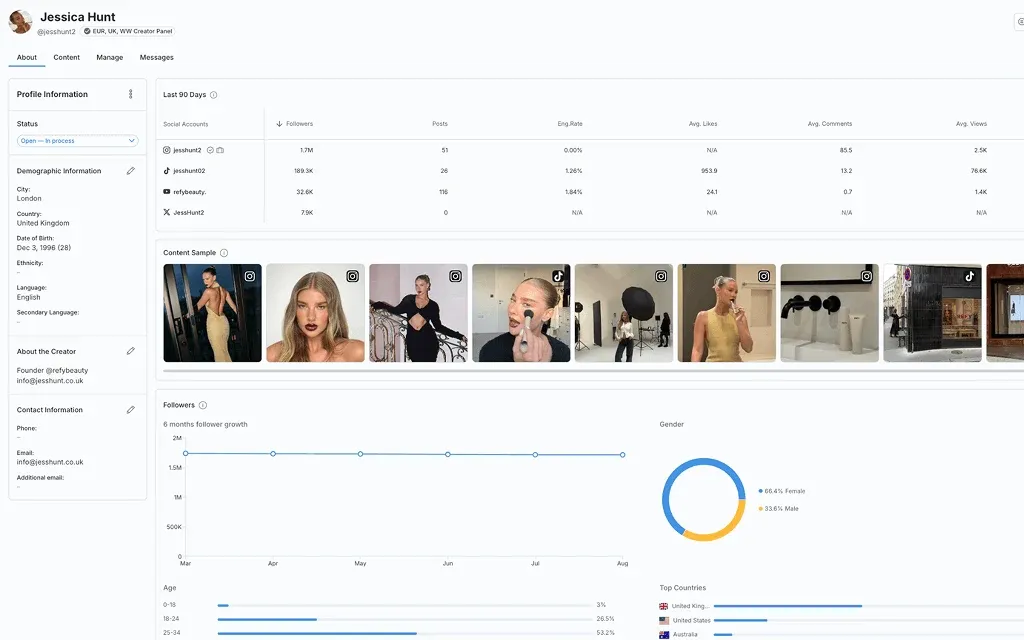
Three CreatorIQ products map onto GRIN’s commercial jobs. CreatorIQ Pay lets a brand fund in 22 currencies and pay in 60+ currencies across 80+ markets, and it generates required tax forms for the US. CreatorIQ Convert runs affiliate programs and connects to networks including Awin, Impact, Rakuten, CJ and Partnerize, as well as Shopify. Its governance features serve organizations running programs across several brands, markets and divisions. Its community insights cover audience demographics, geography, interests and brand affinities, which CreatorIQ says come from first-party integrations with platforms such as Meta and TikTok.
What to evaluate
- Payment countries, currencies and the tax documents your finance team needs.
- Whether your current affiliate network connects to Convert.
Buying consideration: a GRIN replacement usually needs several CreatorIQ products, so confirm which ones the proposal includes. The pages we checked do not describe product seeding; ask how gifting would run. The Streamforge vs CreatorIQ comparison has the side-by-side view.
Pricing and access: Request CreatorIQ pricing for your brands, markets and products.
3. Upfluence
Best for: store-led brands that want GRIN’s commerce jobs (promo codes, product seeding and creator payments) connected to Shopify, WooCommerce, Magento, BigCommerce or Amazon.
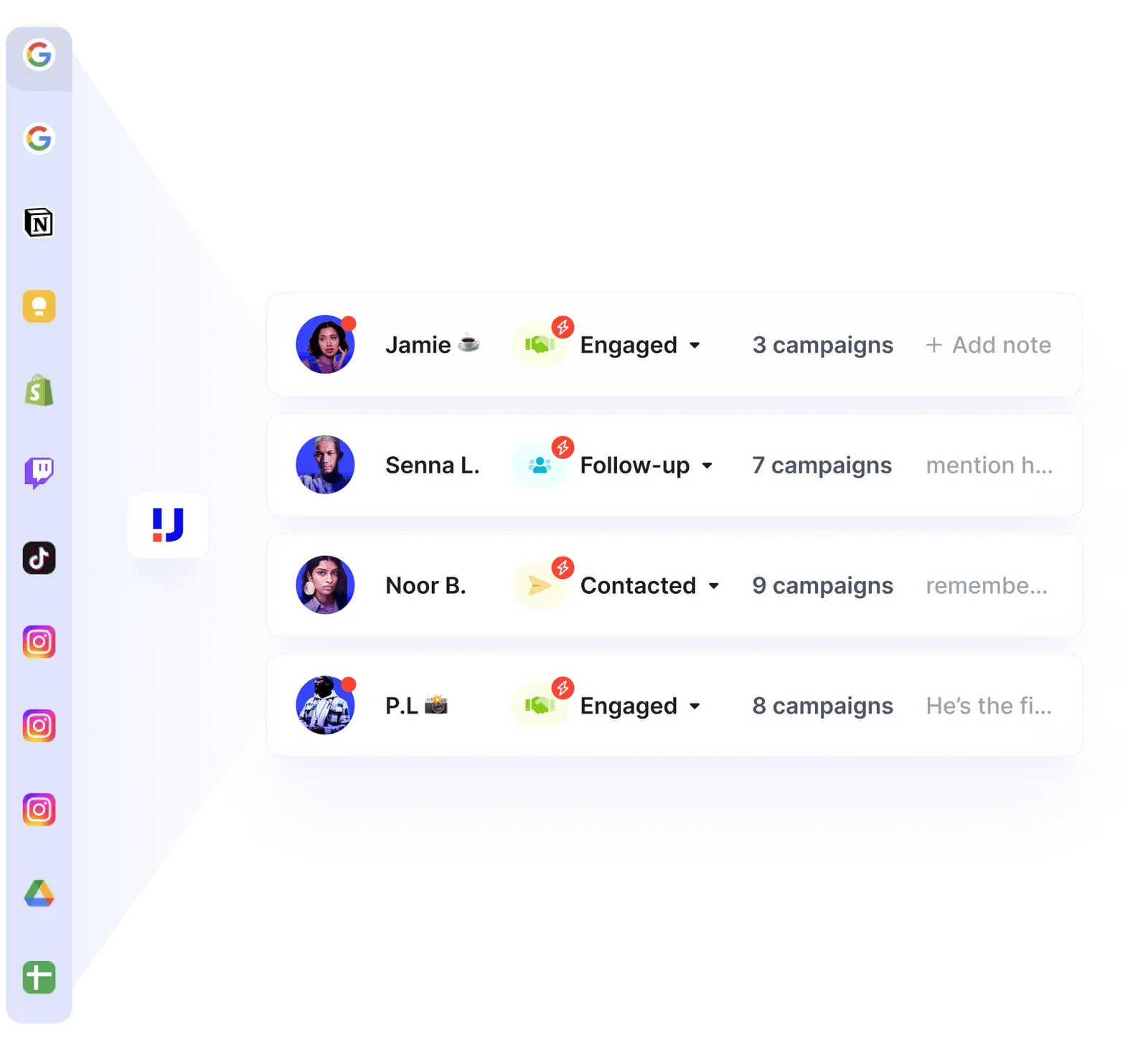
Upfluence documents each of GRIN’s commerce jobs, on more store platforms than Shopify alone. In its product seeding workflow, creators pick from live store inventory, the brand approves, and the order ships in one click. Unique promo codes work natively with Shopify, WooCommerce, Magento, BigCommerce and Amazon stores, and Amazon Attribution tracks sales sent to Amazon listings. Creators can be paid inside Upfluence with PayPal or Upfluence Pay.
What to evaluate
- A seeding order from your own store, including sizes and colors.
- Promo-code attribution on the store or marketplace where you actually sell.
Buying consideration: price the plan that covers every GRIN job you use. Upfluence sells three plans: Find Creators, Scale Programs and Auto-pilot. E-commerce integrations start on Scale Programs, and Upfluence Pay with multi-currency payments is on Auto-pilot, so replacing both GRIN’s store connection and its payouts means pricing Auto-pilot. See the Streamforge vs Upfluence comparison.
Pricing and access: Upfluence pricing is modular and custom-quoted. Upfluence says its fee is fixed rather than a percentage of creator-driven sales.
4. Aspire
Best for: brands that seed product at volume through Shopify and recruit through inbound creator applications, alongside affiliate offers.
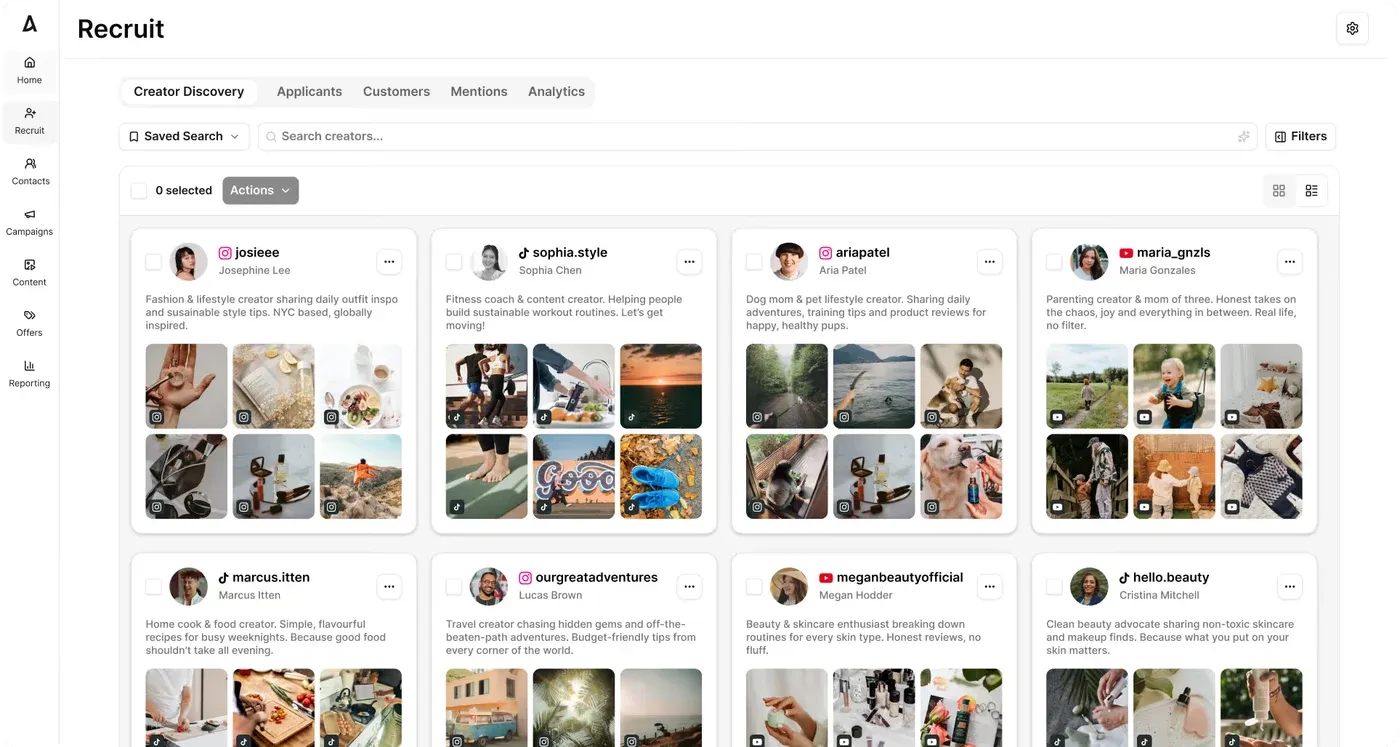
Aspire’s product seeding runs through its Shopify integration: import products, organize collections, collect shipping details and track order status in one place, with a gifting catalog curated for each campaign and creator. Its affiliate tools cover links, promo codes and tiered commissions, with multiple currencies and synced international Shopify stores. The platform also lists payments, agreements and a creator marketplace where creators apply to brand programs.
What to evaluate
- A real seeding order with your own variants and shipping rules.
- Commission tiers and payouts for your top affiliates.
Buying consideration: if gifting volume is why you chose GRIN, make the demo prove the gifting flow first, because that is where a switch is felt. Ask which plan includes payments and agreements. The Streamforge vs Aspire comparison covers the rest.
Pricing and access: Request an Aspire demo for pricing matched to your programs and gifting volume.
5. Modash
Best for: Shopify brands that want gifting, discount codes, affiliate commissions and creator payouts with published plan prices, on Instagram, TikTok and YouTube.

Modash’s Shopify integration carries no extra charge, and every plan includes its Shopify features: product gifting, sales tracking and discount codes. A creator can get a link to place their own order with an automatically generated discount code, and order status is tracked in Modash. Modash Pay collects invoices and pays creators in their own currency, and Modash says it handles the tax and regulatory compliance. Discovery covers Instagram, TikTok and YouTube.
What to evaluate
- A gifting order placed by a creator through a discount-code link.
- The payout fee on your real yearly creator spend.
Buying consideration: compare fees on your actual numbers. On Performance billed annually, the first $10,000 a year of combined payouts and affiliate commissions carries no fee, and 5% applies above that; GRIN charges 20% to 5% on wallet deposits, depending on plan. Affiliate management needs Performance (annual) or Enterprise, and creators on Twitch or X need another tool. See the Streamforge vs Modash comparison.
Pricing and access: Essentials is $199/month billed annually ($2,388/year). Payments and affiliate management start on Performance, $499/month billed annually ($5,988/year). Enterprise starts at $14,700/year. Check current plans and allowances.
6. impact.com
Best for: programs where creators sit beside affiliates, publishers and referral partners, and attribution and payouts must cover every partner type.
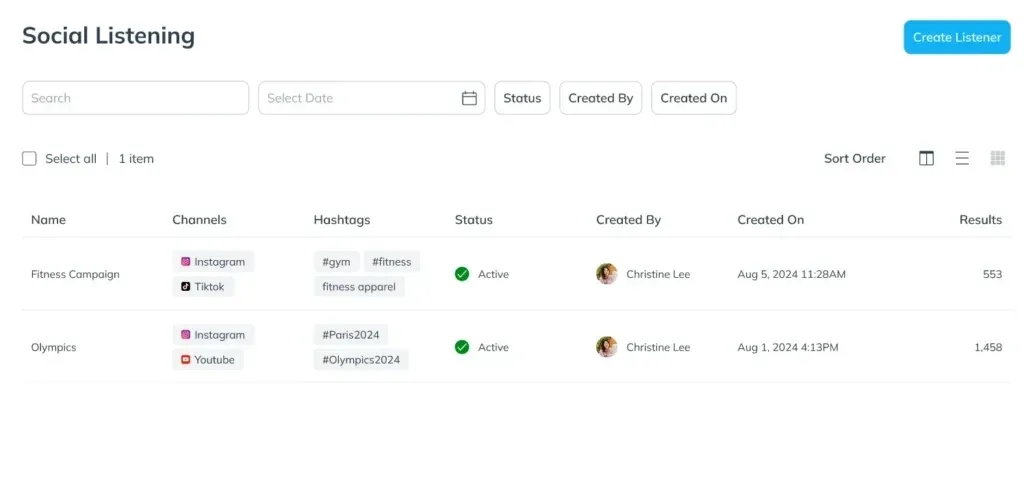
impact.com’s influencer product connects discovery, contracts, attribution and payouts, linked to the brand’s affiliate program from day one. Its marketplace search filters creators by niche, audience size, engagement rate and platform. Attribution is built to show which partner drove the sale rather than who clicked last, and commission tiers can be raised for top performers. On the affiliate side, impact.com automates contracts and payouts in 70+ currencies.
What to evaluate
- One attribution model covering creators and your other partners.
- Contract and payout rules for creators paid by commission.
Buying consideration: impact.com is built around partnership revenue. If creators are one partner type among several, that is its strength; if most are paid flat fees for awareness, much of the attribution engine goes unused. The Streamforge vs impact.com comparison sets the two side by side.
Pricing and access: impact.com’s pricing is published in USD. Essentials, the first plan that lists creator management, is $500/month for brands driving up to $2m a year in ecommerce revenue. Pro is $2,500/month and Enterprise is custom.
How to replace GRIN without losing a workflow
Start by counting what GRIN does for you. Export a recent quarter and tally gifts sent, commissions paid, payouts made, creators in active conversation and creators researched for the first time. The biggest counts are the workflows you cannot lose. If gifts and commissions dominate, shortlist from the commerce platforms. If new creators and research dominate, the replacement’s audience evidence matters more than its checkout.
Then price the move, not just the software. The rest of the cost sits in records GRIN holds and creators who were set up around it.
| What moves | Why it matters | Ask the new vendor |
|---|---|---|
| Creator lists, notes and custom fields | The relationship history your team built | Who does the import, and how fields map |
| Live affiliate links and promo codes | They sit in creators’ bios and old posts | Whether existing codes keep working or need reissuing |
| Creator payout details and tax records | Creators re-onboard, and finance needs history | How creators get paid next; export the old records first |
| Content and usage rights | Rights terms attached to published posts | Where approved rights live after the move |
| Contract and renewal dates | Overlap means paying for two platforms | When billing starts, and what migration support is included |
Ask GRIN, too, what happens to published links and codes when the account closes. A code in a creator’s bio from last year can still drive orders; the promo codes and affiliate links guide explains how to keep that attribution readable through a change.
Finally, give each finalist the same brief from a recent GRIN campaign, including the creators you hired and rejected. A discovery demo says little about whether 300 gifts a month will ship on time, and a checkout demo says little about whether those creators were worth gifting.
GRIN alternatives FAQs
What is the best GRIN alternative?
It depends on the workflow your program runs on. Streamforge is our recommendation when results depend on choosing creators, with AI audience analysis that needs no creator OAuth, competitor sponsorship data and campaign operations from outreach to reporting. For commissions across partner types, look at impact.com; for Shopify gifting with published prices, Modash; for seeding at volume, Aspire; for store-connected codes and payments, Upfluence; for multi-brand governance and global payments, CreatorIQ.
Which GRIN alternatives handle affiliate commissions and creator payouts?
impact.com, CreatorIQ (Convert and Pay), Upfluence (Upfluence Pay on its Auto-pilot plan), Modash (Performance and Enterprise) and Aspire all document affiliate commissions and creator payments. Streamforge does not process payouts or affiliate attribution; it tracks creator rates, budgets and tracking-link clicks inside the campaign.
How much does GRIN cost compared with its alternatives?
GRIN lists Free, Starter at $200/month, Growth at $500/month and Scale at $1,500/month, plus a 20% to 5% management fee on wallet deposits; Enterprise is custom. Modash and impact.com publish plan prices. CreatorIQ, Upfluence and Aspire quote by scope, and Streamforge discusses pricing against your requirements. Model each against your real creator budget, since fees on payouts can outweigh the subscription.
Can we switch before our GRIN contract ends?
You can start on a new platform early; the risk is paying for both. Streamforge does not charge until your old contract ends, so you never pay for two platforms at once, and its team moves your lists, custom fields, notes and campaigns at no cost, done in under a week. With any vendor, get the billing start date and migration support in writing.
Want to see your GRIN program in Streamforge? Start your trial and bring a recent campaign, the creators you hired and the ones you passed on.