
What is this and why am I doing it?
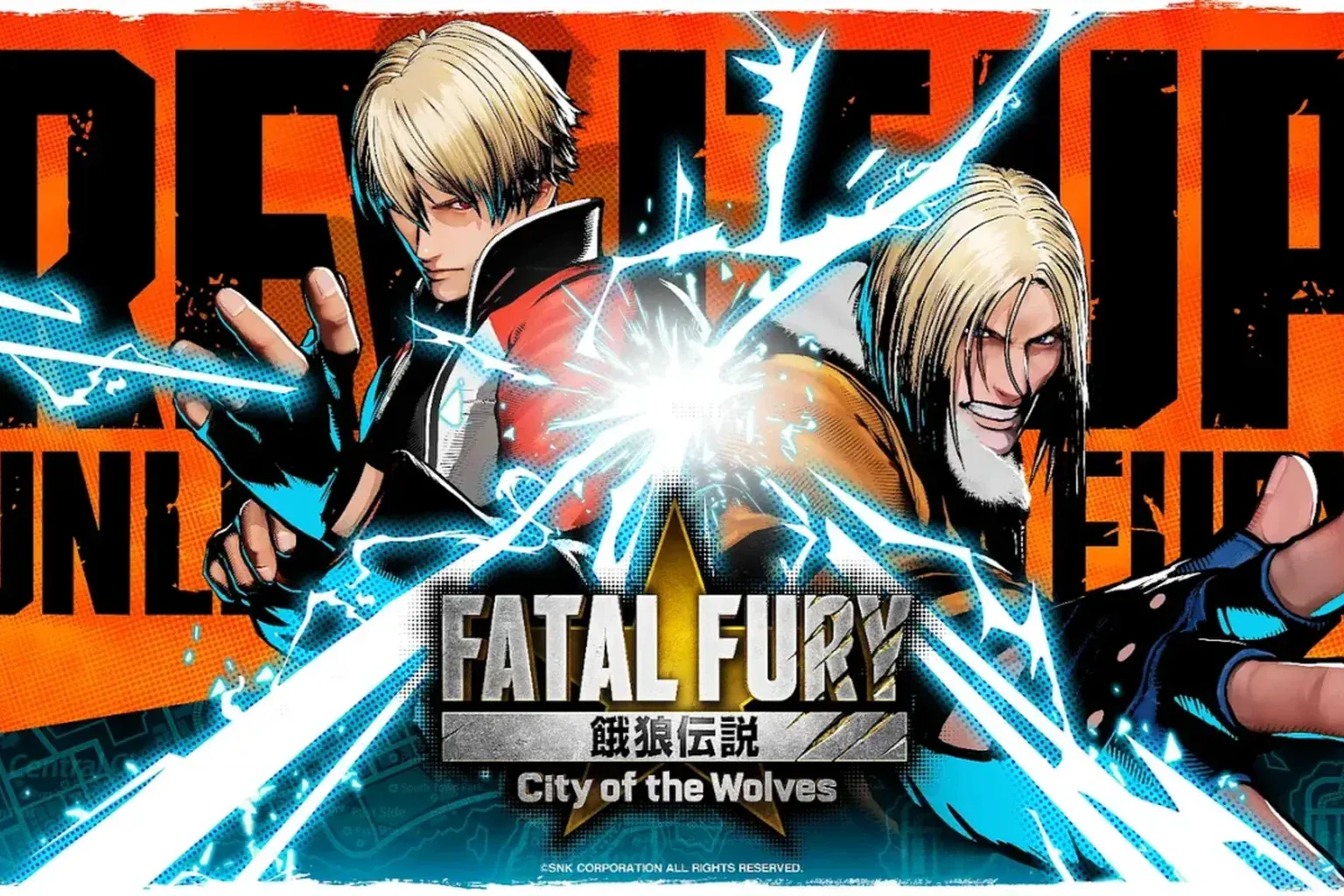
Welcome to my ongoing deep dives into influencer marketing for game launches! Today I’m breaking down SNK’s recently released “Fatal Fury: City of the Wolves” which launched on April 24th.
These analyses leverage Streamforge’s tech to give marketers transparent, actionable insights into how publishers are allocating influencer budgets. My goal remains consistent: help industry professionals benchmark their campaigns and uncover strategies that work.
I’m not affiliated with SNK, and all budget figures here are estimates based on publicly available data and Streamforge’s creator market rate algorithm
A Chronological Overview
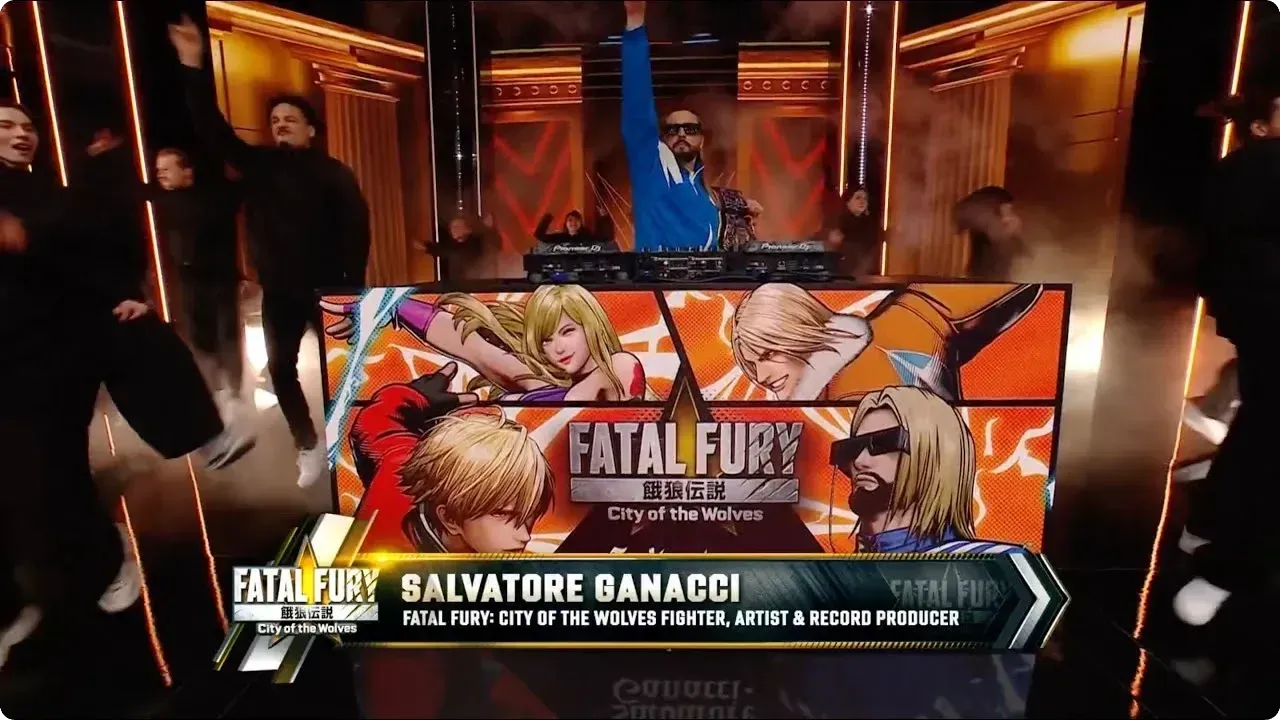
Fatal Fury: City of the Wolves had a marketing journey that balanced traditional FGC (Fighting Game Community) engagement with some surprisingly bold mainstream moves:
- August 6, 2022 – Initial teaser trailer drops at EVO 2022, confirming SNK is reviving the Fatal Fury franchise for the first time since 1999.
- February 23–25, 2024 – Early playable demo shown behind closed doors at EVO Japan. Select FGC pros and commentators post first impressions, praising animation and parry mechanics.
- April 19, 2025 – Fatal Fury appears during WrestleMania 41. Live DJ set by Salvatore Ganacci introduces Jey Uso’s entrance with an original track. In-ring branding and game-themed visuals raise eyebrows beyond the FGC.
- May 2, 2025 – Times Square hosts a co-branded boxing tripleheader, with Fatal Fury promotions looping on massive digital billboards during the Garcia vs. Romero event.
- May 4, 2025 – The campaign continues at Tottenham Hotspur Stadium, where the Chris Eubank Jr. vs. Conor Benn fight features additional SNK presence and influencer-led content.
- April 10–20, 2025 – Final round of trailers spotlights the full launch roster, including surprise reveals of Cristiano Ronaldo and Salvatore Ganacci as guest fighters.
- April 24, 2025 – Global release on PS5, Xbox Series X|S, and PC (Steam and Epic Games Store). Launch is supported by a coordinated creator push on Twitch and YouTube, with key voices like Jiyuna, Sajam, and Rooflemonger anchoring coverage.
What makes this timeline unique is SNK’s balance between FGC legitimacy and wider cultural placement. They didn’t just announce a sequel… they staged a deliberate, global re-entry.
Content Volume & Platform Distribution
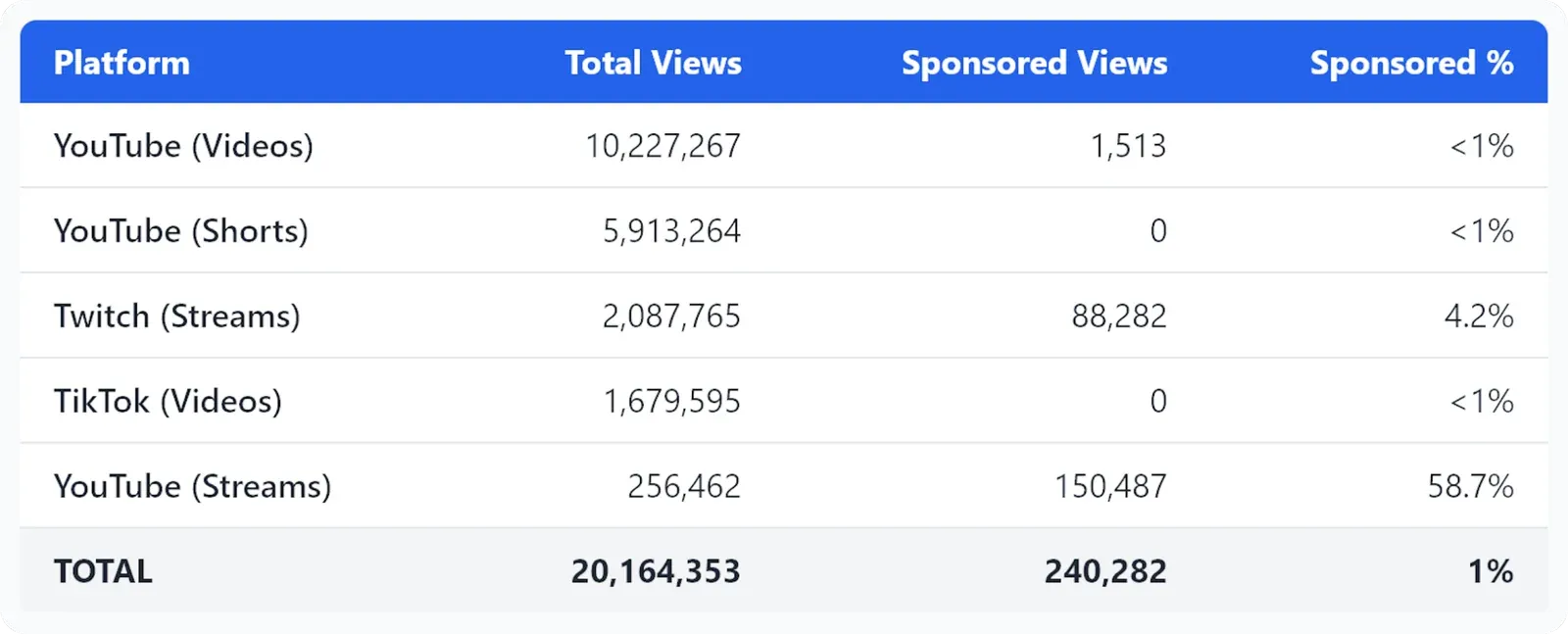
Looking at the raw numbers, views on YouTube videos + Twitch streams look pretty good. They are roughly in line with Dune: Awakening from last week, despite there being almost $100k difference in marketing budget (in favor of Dune).
Budget Allocation Breakdown
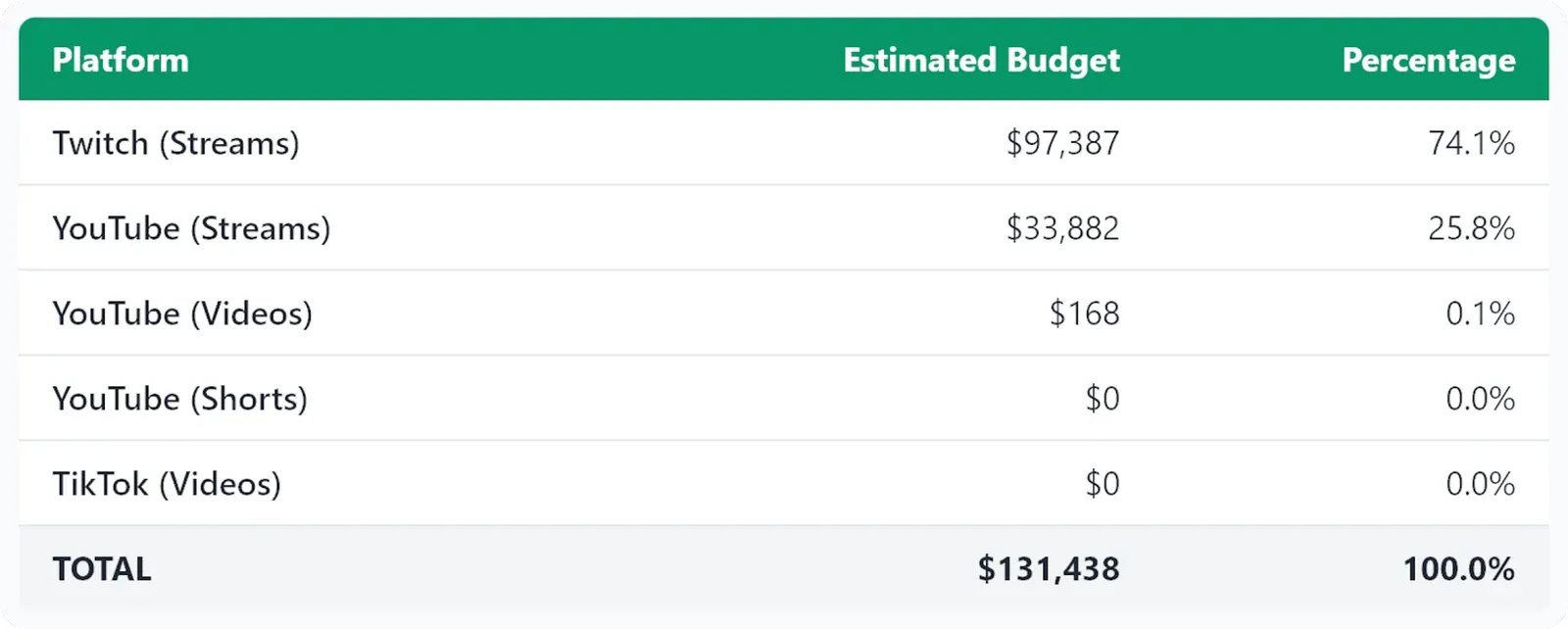
SNK dumped 100% of the budget into live streaming, with nearly three-quarters of it going to Twitch, and the rest to YouTube live. This is a trend in the industry, but SNK took it to the absolute limit.
Targeting Group & Market Capture
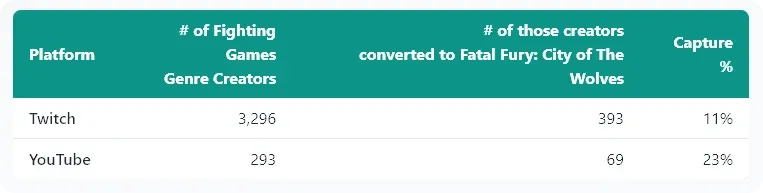
To evaluate how well Fatal Fury resonated with the fighting game scene, I built a targeting group made up the genre’s most prominent modern titles:
Targeting Group:
- Street Fighter 6 (2023)
- Guilty Gear Strive (2021)
- The King of Fighters XV (2022)
- Tekken 8 (2024)
- Granblue Fantasy Versus: Rising (2023)
- DNF Duel (2022)
SNK achieved an 11% creator capture rate on Twitch — meaning nearly 1 in 9 active FGC streamers covered the game during launch. On YouTube, performance was even stronger with a 23% conversion rate, driven by trailer reactions, combo breakdowns, and early meta-analysis content.
These are some of the highest capture rates we’ve seen among fighting games this year. The YouTube capture rate (23%) is particularly impressive, exceeding even inZOI’s remarkable 19% capture rate from a previous analysis.
Cost Efficiency Analysis
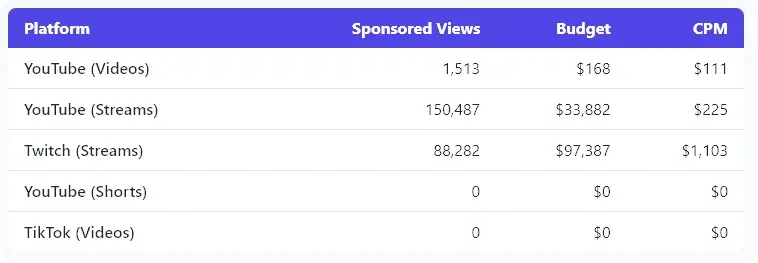
Twitch’s CPM is notably higher than we’ve seen in other campaigns. For comparison, Dune: Awakening’s Twitch CPM was $672, Clair Obscur’s was $423, and Atomfall’s was $423.
This means that the creators they hired on Twitch significantly underperformed their average concurrent viewership.
Language & Country Distribution of Sponsored Creators
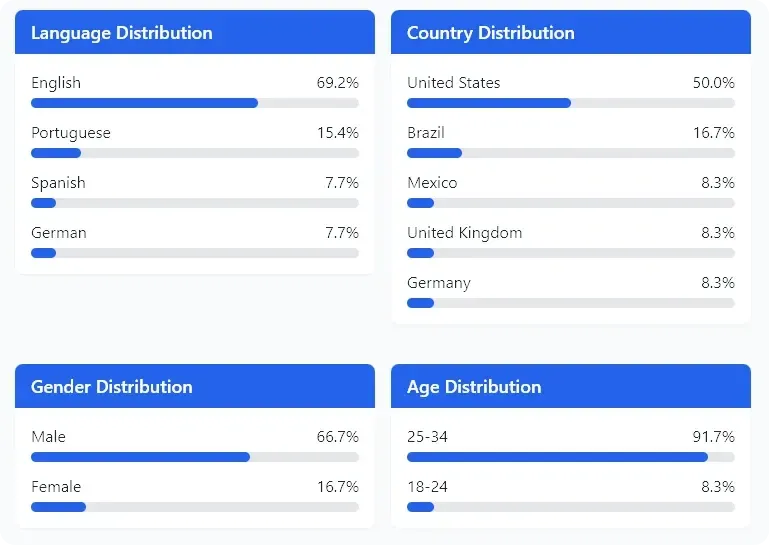
The strong focus on Brazil (16.7%) is notable and differs from previous campaigns I’ve analyzed. This suggests SNK recognized the genuine enthusiasm for fighting games that has been part of Brazil’s gaming story for decades. In the 1990s and early 2000s, Brazilian arcades—called “fliperamas”—were gathering spots where titles like The King of Fighters (KOF) weren’t just games, but shared experiences. To this day, these roots still echo in local tournaments and online communities, making Brazil a natural fit for Fatal Fury’s resurgence.
Unlike previous campaigns that invested heavily in German creators, SNK allocated a smaller portion of its budget (8.3%) to this market. With the limited budget, it seems they simply shifted it from EU → Brazil.
One note is that in future analysis I’d like to shift to budget oriented distribution, as in how many dollars of spend were allocated to each region language, country, gender, age, instead of what % of creators hired were of that background. This will help understand the magnitude.
Top Creators Hired
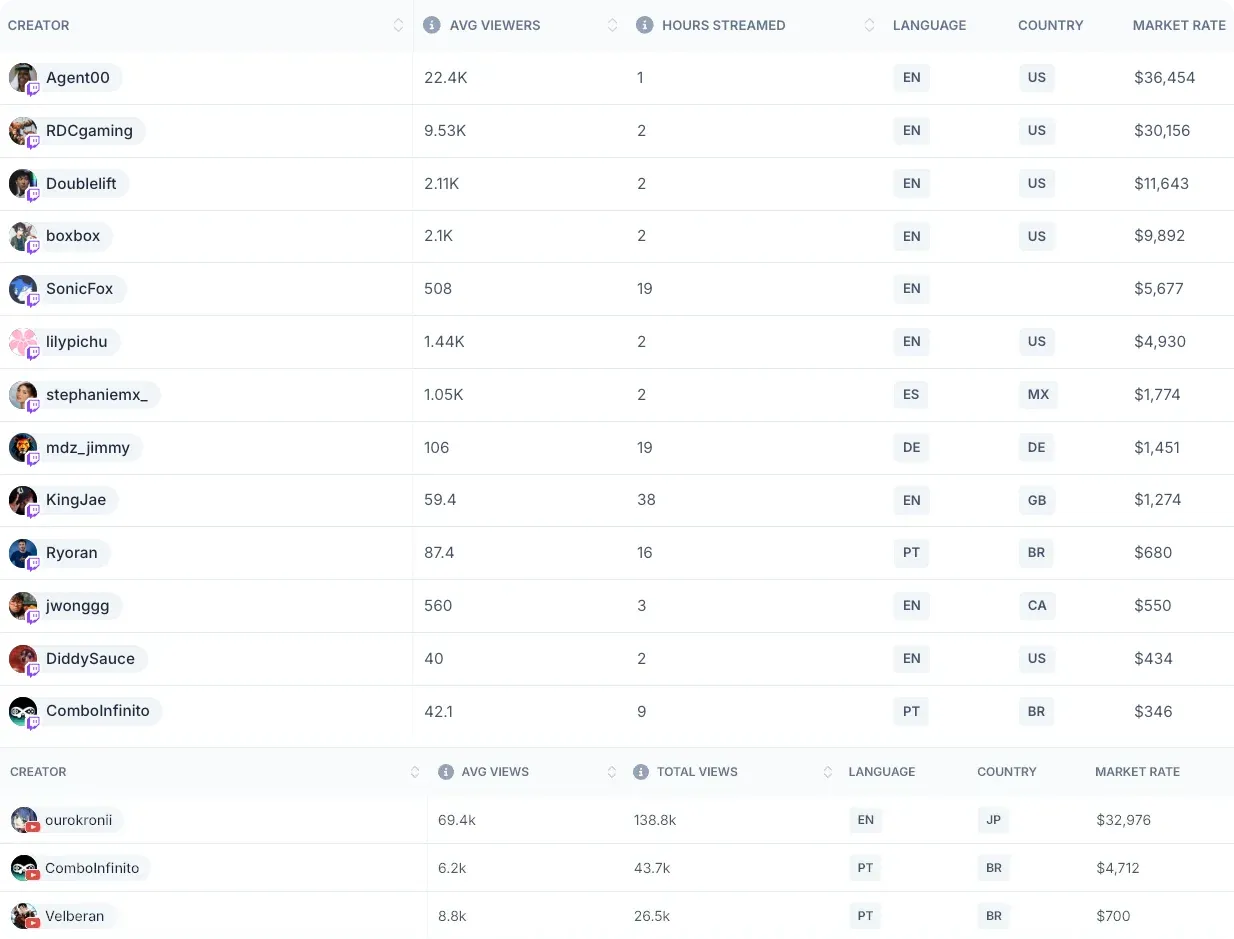
From these top hired creators, you’ll notice only 2 are known for fighting games. SonicFox and jwonggg (who is a legend). It seems that SNK opted for mainstream appeal over focusing on creators from the fighting game community.
While it sounds bad in retrospect, I don’t necessarily condemn this approach as when you’re game has a certain hype around it, and you are in such a specific niche, it’s not unreasonable to expect all of the creators already in the niche to pick it up organically. This theory is supported by the 23% market capture rate that we saw above.
My Thoughts
SNK’s approach was most easily described as “all-in”. The metrics on the influencer side seem to be good, but recent sales data reveal a gap between content performance and commercial success.
Fatal Fury has significantly underperformed commercially, with just 6,302 physical copies sold in Japan during its critical launch period. On Steam, the game peaked at only 4,592 concurrent players – less than half the players who participated in its beta test. Perhaps most tellingly, SNK CEO Kenji Matsubara is now transitioning to an “advisory role” shortly after launch.
This context completely transforms the analysis. While the influencer campaign , it appears to have been just one small piece of a broader, disjointed marketing strategy.
SNK invested in high-profile sponsorships like WrestleMania, boxing matches, and Times Square billboards. These extravagant displays may have been little more than wasted budget.
What we’re witnessing is perhaps a cautionary tale about the limitations of influencer marketing when fundamental product and positioning issues exist. No amount of authentic creator selection can overcome gameplay shortcomings, confusing branding, or mixed messaging about a game’s target audience.
Want to See More Data?
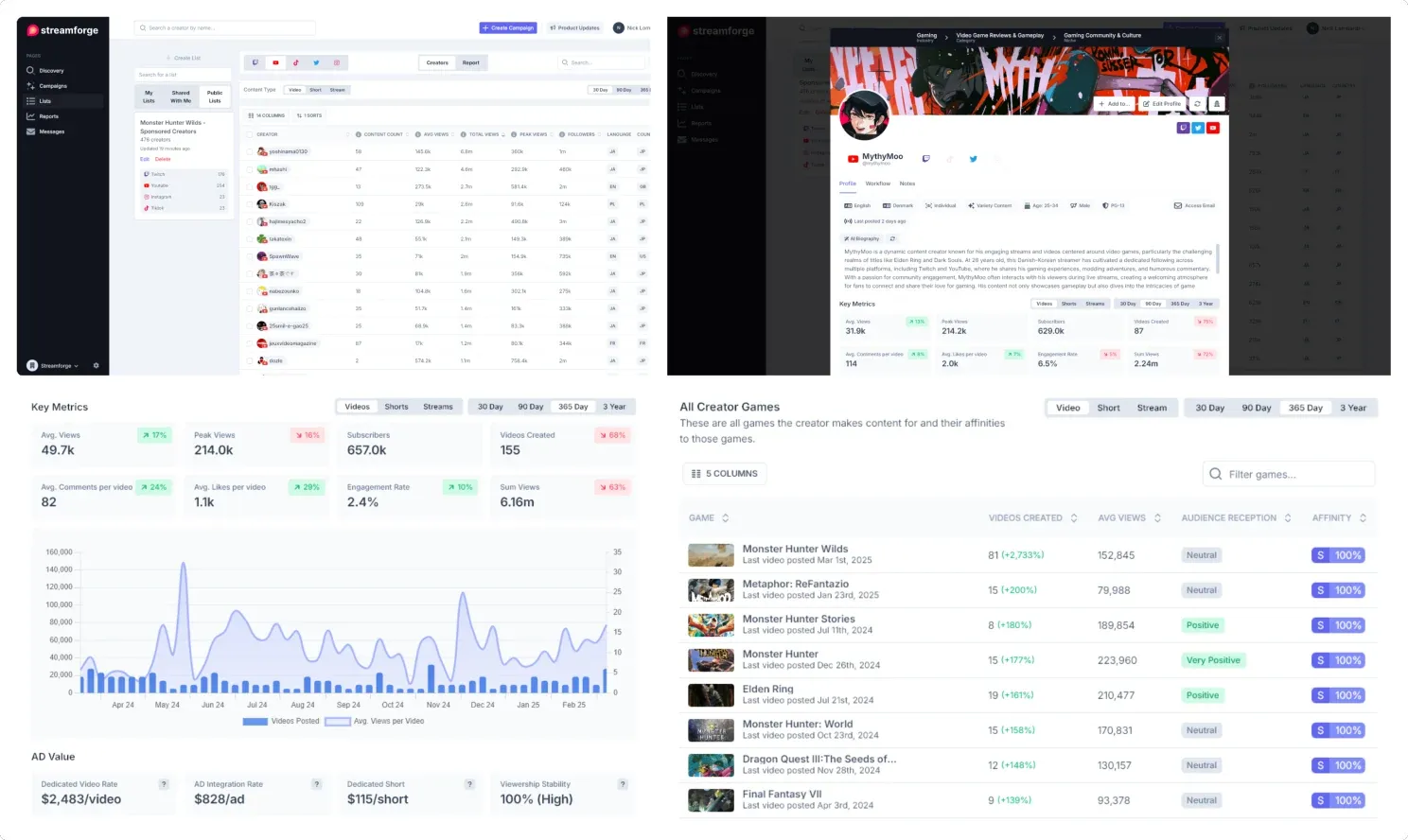
To see the full list of sponsored creators, start your trial and we’ll show it to you in Streamforge, along with each creator’s key metrics, AI-analyzed interests, entire content library, and detailed demographic breakdowns.