
The best Aspire alternatives for agencies and brand teams are Streamforge, CreatorIQ, GRIN, Upfluence, Modash and Later Influence. They are not interchangeable, because Aspire does two jobs that a replacement may split: a creator marketplace where creators apply to your campaigns, and search for finding creators yourself. Both feed the same campaign machinery of agreements, Shopify gifting, affiliate links, content approval and payments.
We recommend Streamforge for agencies and brand teams that source creators outbound and have to show a client why each one fits. It combines creator discovery and audience analysis with competitive intelligence and campaign workflow, from email outreach and deliverables to reporting and sharing selected campaign stages with a client. GRIN and Upfluence suit teams that want creators to keep applying through a marketplace. CreatorIQ adds branded recruitment portals and payments for large programs, Modash suits Shopify brands that search outbound, and Later Influence pairs software with a services team.
Disclosure: Streamforge publishes this guide and is included below. We used public vendor pages, help centers and pricing pages, not a side-by-side product test. The best-fit recommendations are editorial judgments, and the numbered order is for navigation.
Why teams look for Aspire alternatives
Aspire describes itself as an influencer marketing platform for e-commerce brands, and its signature feature is inbound recruitment. A brand publishes a campaign to the Creator Marketplace, sets requirements up front and reviews the creators who apply; Aspire says it takes no fees or commission for this. Creator search covers Instagram, TikTok, Pinterest, YouTube and Facebook, including search by image. The rest of the platform handles agreements, Shopify fulfillment for gifting, affiliate commissions, content approval, payments and program dashboards, and Aspire sells a full-service agency offering too.
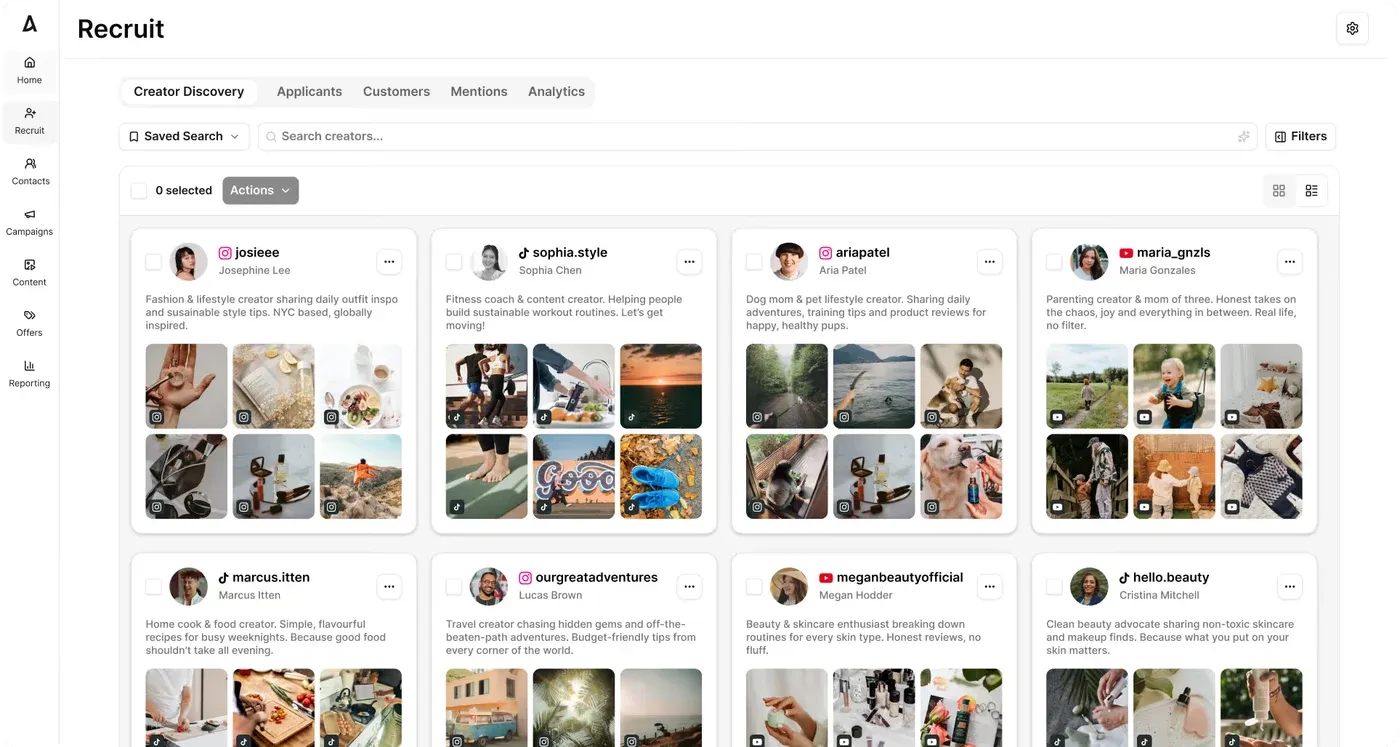
For a Shopify brand running an ambassador or UGC program, that bundle hangs together: applications supply volume, the store ships the product, and sales tie back to the creator. Teams look elsewhere when the work changes shape:
- The brief gets narrow. Applicants are a self-selected pool of creators who want deals and saw your campaign. When a brief names an audience, a market or a niche, the right creators may never apply.
- A client asks why. An agency has to defend its shortlist, and an applicant’s interest says nothing about whether their audience matches the client’s customer.
- The outcome is not a checkout. Shopify fulfillment and sales dashboards matter less when the brief is a game launch, an app or an awareness campaign.
- The plan depends on competitors. Aspire’s homepage describes impact, sales and social dashboards for your own program. Planning around the creators a rival already sponsors calls for a market view.
Aspire’s site lists no prices; its demo request form asks for revenue and monthly budgets. For a capability-by-capability view, see Streamforge vs Aspire.
Compare the Aspire alternatives
Features and access were checked October 27, 2026, on each vendor’s own pages. Published prices are in USD. GRIN’s self-serve plans bill monthly and add a fee when you fund the wallet that pays creators; the Modash price assumes annual billing.
| Platform | Best fit | How creators are sourced | Pricing or access |
|---|---|---|---|
| Streamforge | Our recommendation for agencies and brand teams that source creators outbound and need audience evidence, competitive intelligence and campaign workflow in one platform | Outbound discovery with audience analysis across YouTube, Twitch, TikTok, Instagram and X, with no creator OAuth required | Discuss your requirements |
| CreatorIQ | Enterprise brands and agencies that need branded recruitment portals, view-only client access and creator payments | Creator discovery plus branded recruitment and onboarding portals | Request pricing |
| GRIN | E-commerce programs that want marketplace applications, gifting, affiliate commissions and escrowed payouts | GRIN Marketplace applications plus creator search by its Gia assistant | Free plan; Starter $200/month plus a 10% fee on wallet deposits |
| Upfluence | Commerce brands that recruit from their own customers, with marketplace and creator-payment features on higher plans | Search and customer matching on every plan; Creator Marketplace from the Scale Programs plan up | Request a quote; 12-month minimum contract |
| Modash | Shopify brands that search Instagram, TikTok and YouTube outbound and track content without creator sign-up | Outbound search only; Modash states it is not a marketplace | Essentials: $199/month billed yearly ($2,388/year) |
| Later Influence | Brands that want a vendor team to plan and run campaigns alongside the software | Later’s creator network, search and managed sourcing | Request pricing |
Read the sourcing column first. A team that wants a steady flow of applicants and a team that needs a specific audience are buying different products, even when both are sold as influencer marketing platforms.
1. Streamforge
Best for: agencies and brand teams that find creators outbound, need audience evidence for every pick, and want outreach, campaign work and client sharing in one platform.
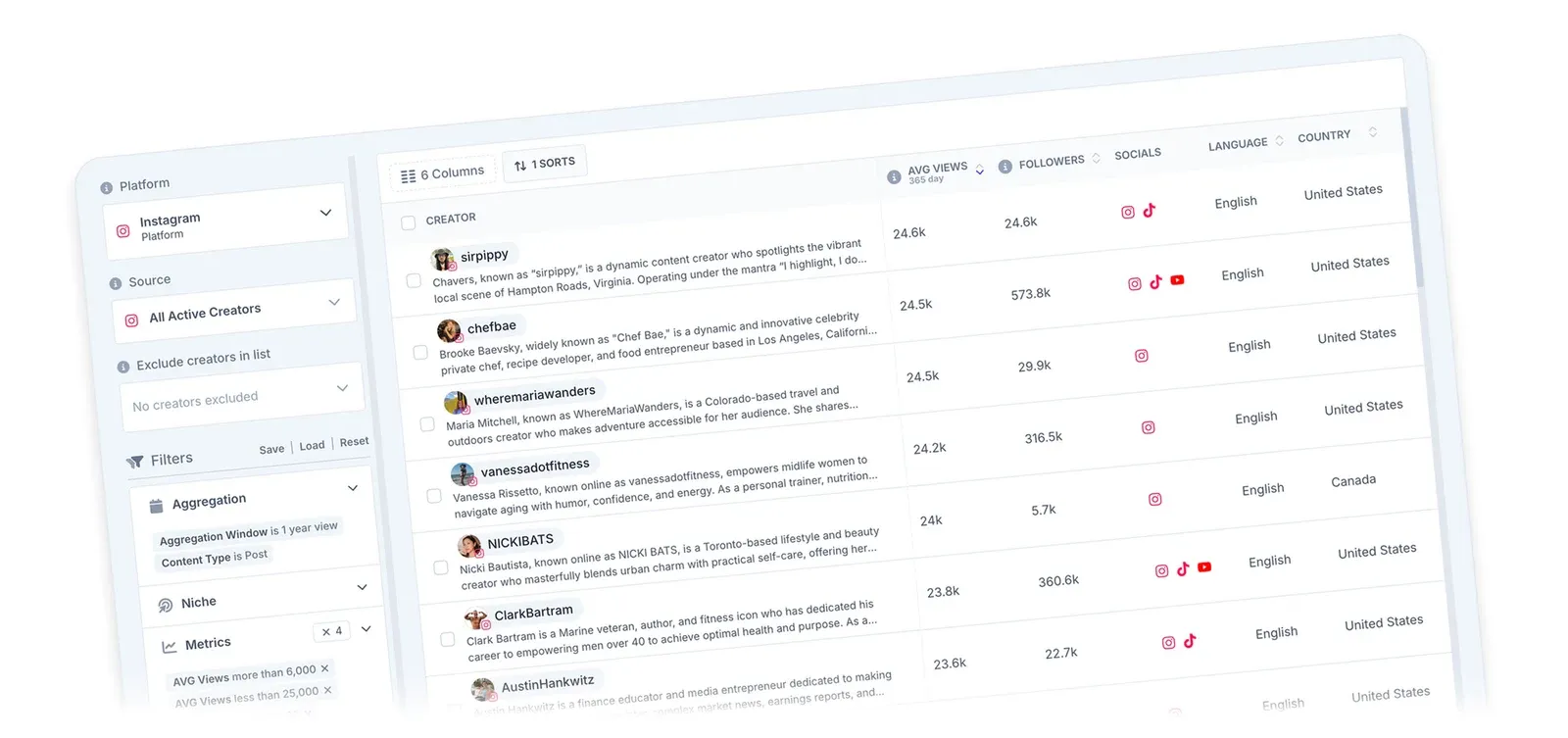
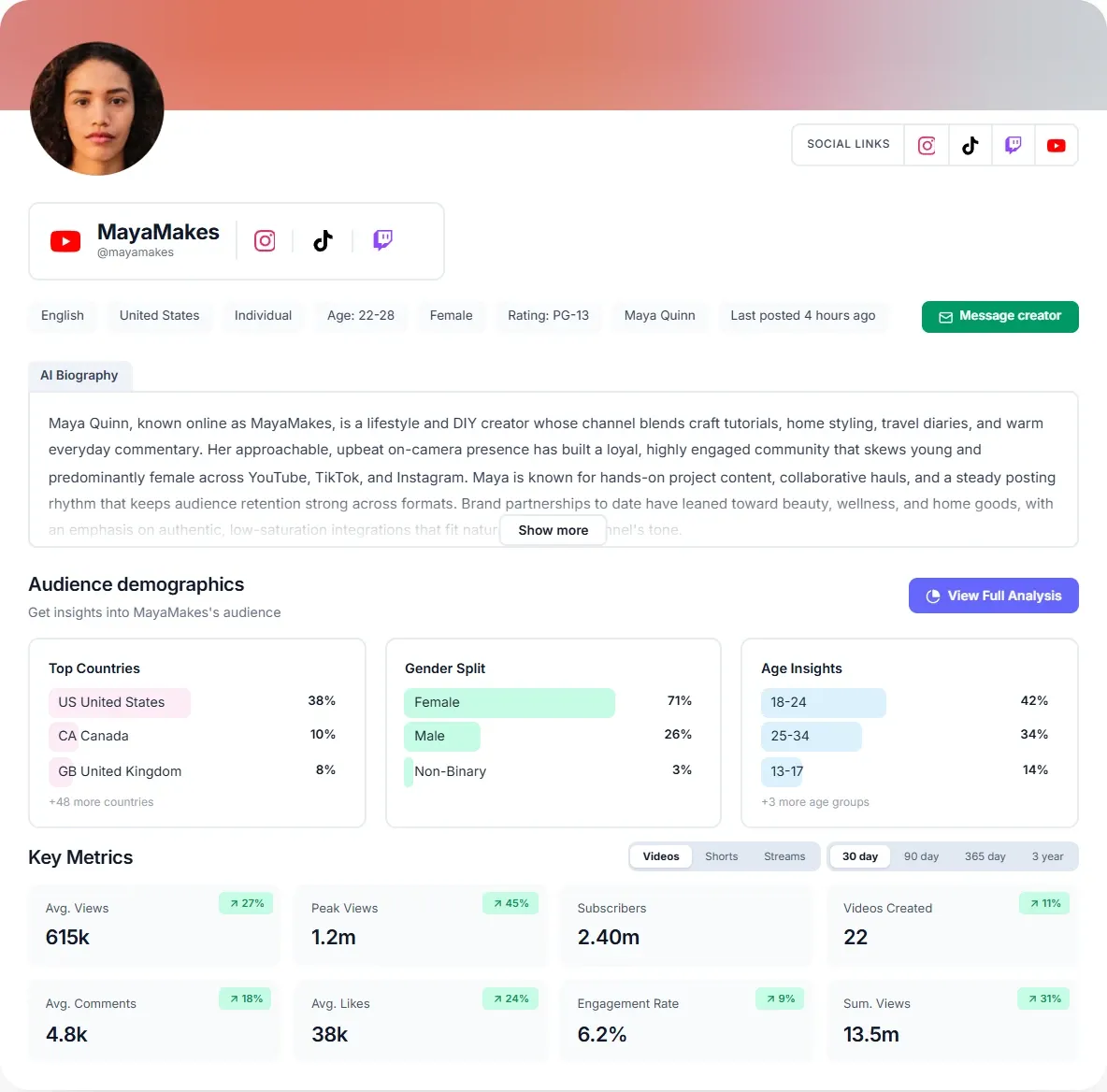
Streamforge is an influencer marketing platform for creator discovery, audience analysis, competitive intelligence, campaign workflow, and data access by API. It takes the outbound side of Aspire’s job: start from the audience a brief needs and search a database of 48M creators for the people who have it.
The audience method is what makes that search defensible. Audience analysis is supported across YouTube, Twitch, TikTok, Instagram, and X. Streamforge’s audience analysis is AI-based and does not require the creator to authenticate through OAuth. The model was trained on first-party audience data, and in Streamforge’s tests its results are extremely close to the platforms’ direct metrics. Because no creator sign-in is needed, the creators you can evaluate are not limited to those who opted in. Fortune 500 companies have tested Streamforge’s creator data side by side against other vendors. Streamforge came out ahead in every completed evaluation. The audience-analysis methodology explains how the estimates are built.
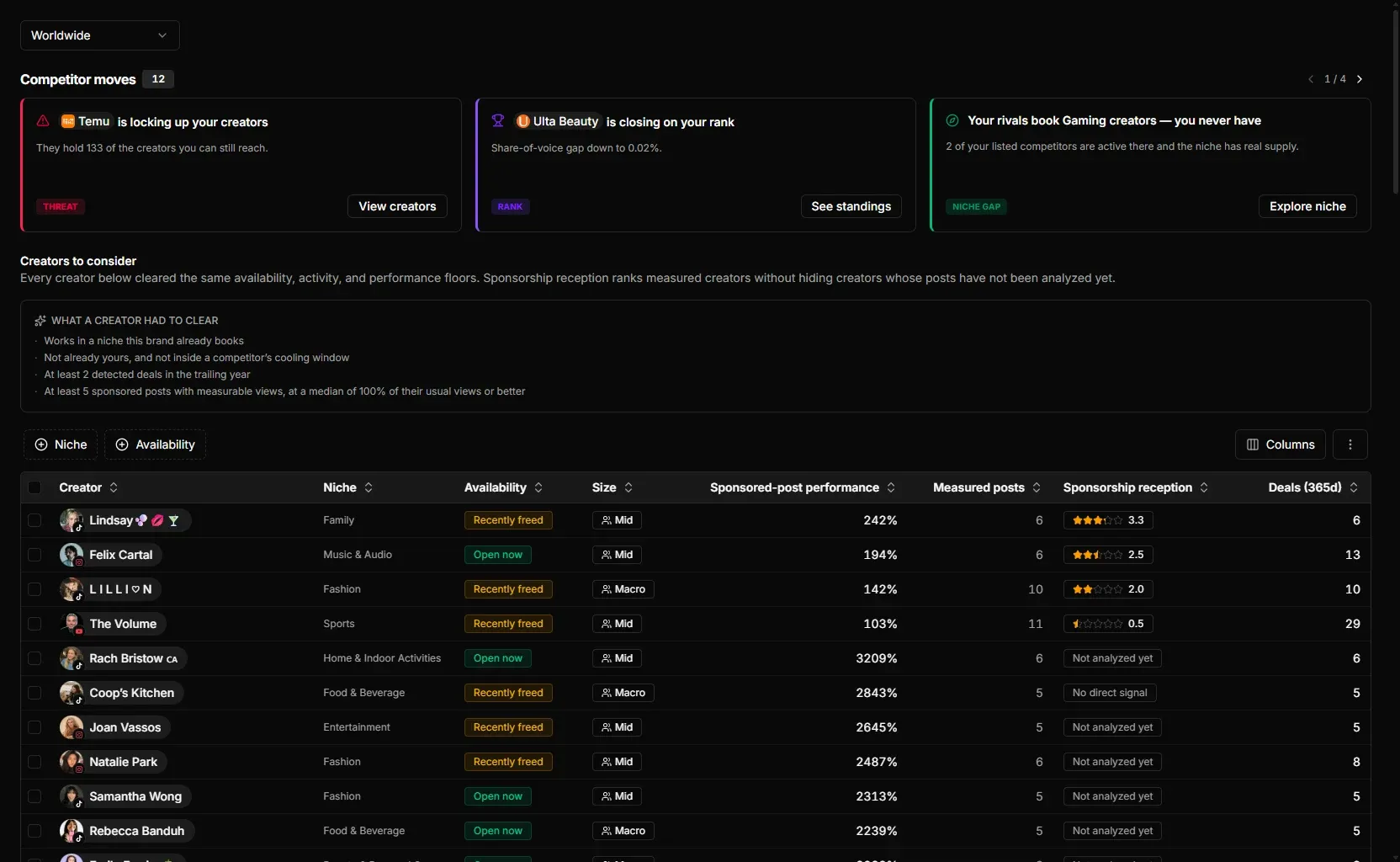
Agency pitches often turn on the client’s competitors. Streamforge Intelligence shows which creators a client’s competitors sponsor, so a shortlist can be checked against a rival’s roster before the first email goes out.
Campaign work stays in the same platform. Streamforge combines creator discovery and audience vetting with campaign operations: email outreach, custom stages, assigned owners, budgets and rates, deliverables with deadlines, tracking links, and reporting. Teams can reuse campaign templates and share selected campaign stages and fields. For an agency, that sharing is the client handoff: the link shows only what you choose, and it can expire or be revoked.
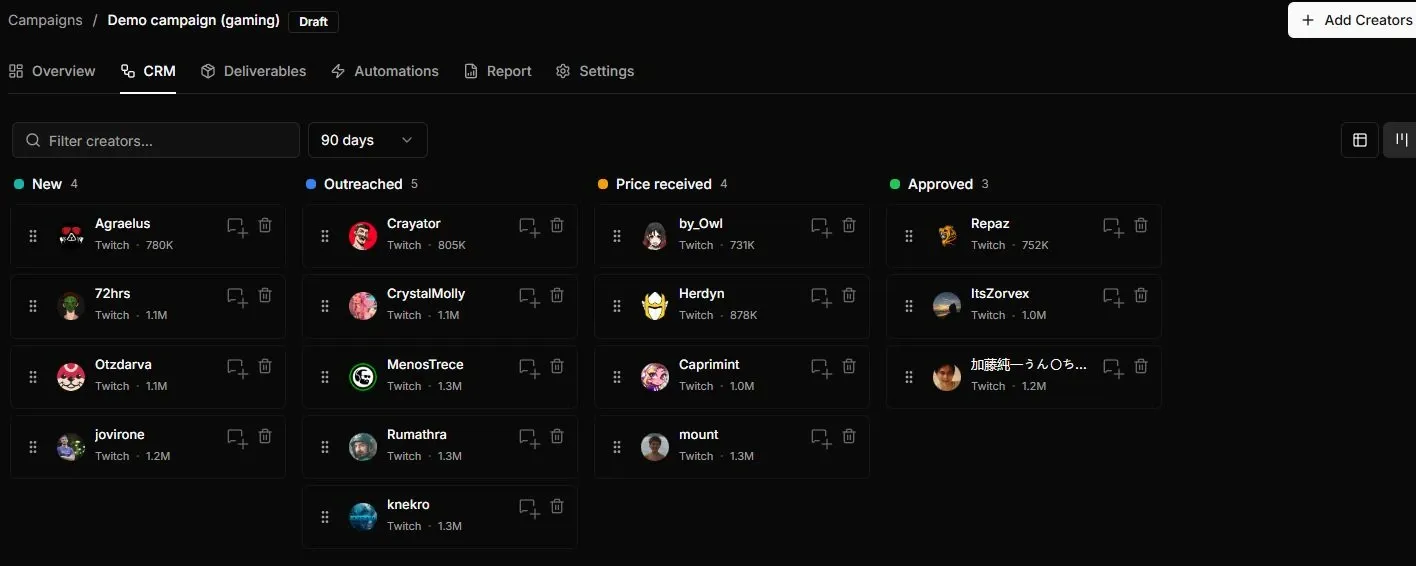
Reporting sits in that same campaign, so a client report draws on the creators and content the team tracked rather than on a separate spreadsheet.
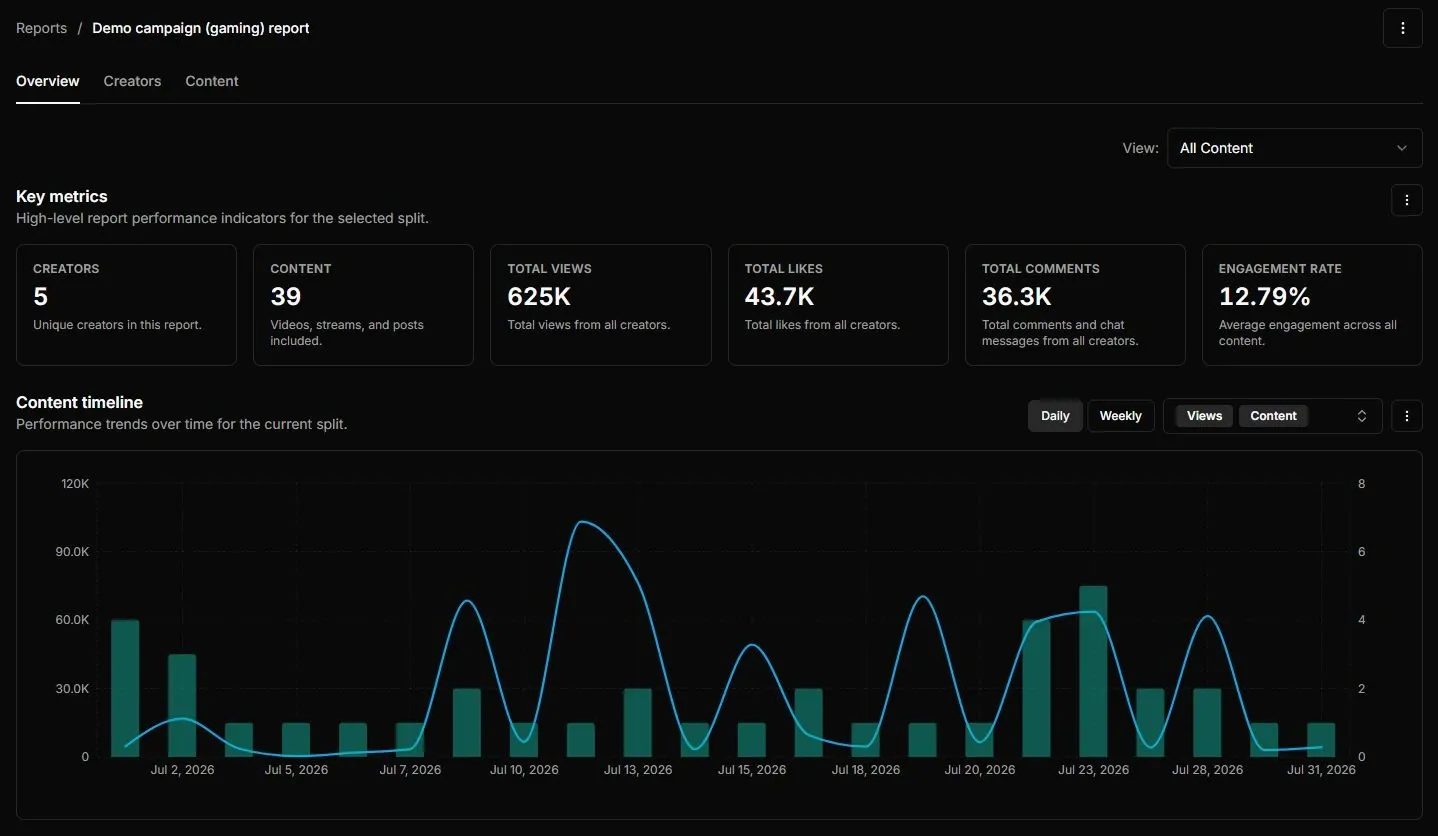
What to test against Aspire
- Run a brief you filled through Aspire’s marketplace and compare the audiences of the creators outbound search finds.
- Share one campaign with a colleague playing the client, and check what they can and cannot see.
Buying consideration: Streamforge is built for teams that go out and find creators. If your program depends on creators applying through a marketplace, or you need the platform itself to process creator payouts, affiliate commissions or Shopify gifting, put GRIN or Upfluence on the shortlist as well.
Switching from Aspire: our team moves your lists, custom fields, notes and campaigns at no cost to you, and the move is done in under a week. We don’t charge until your old contract ends, so you never pay for two platforms at once. See how switching works.
Pricing and access: Talk to Streamforge about your clients, platforms and campaign workflow, or see how agencies use Streamforge.
2. CreatorIQ
Best for: enterprise brands and agencies that need branded recruitment portals, view-only client access and creator payments across many markets.
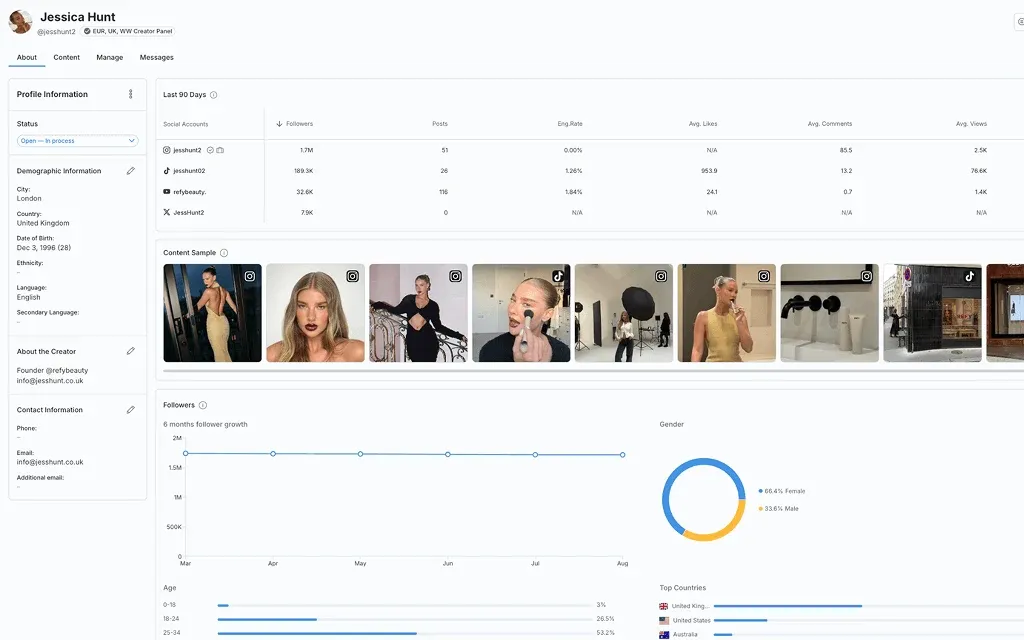
CreatorIQ Recruit runs branded recruitment and onboarding portals that collect creator information at volume, the nearest equivalent here to Aspire’s inbound intake, while discovery and SafeIQ brand-safety review handle outbound selection. CreatorIQ Pay says it pays out in 60+ currencies across 80+ markets. For agencies, its agency page describes a co-branded, view-only client database, talent pitch sheets shared for approval, and partner review of planned content.
What to test against Aspire
- Where portal applicants come from, and how many a campaign draws compared with Aspire’s marketplace.
- What a client sees in the view-only database, and what stays with the agency when a retainer ends.
Buying consideration: CreatorIQ quotes its packages through a platform specialist. Bring your brand structure, approval steps, payment countries and client-access needs to the demo, and confirm which products the proposal includes.
Pricing and access: Request CreatorIQ pricing through a platform specialist.
Read the full comparison: Streamforge vs CreatorIQ.
3. GRIN
Best for: e-commerce programs that want creators applying through a marketplace, with gifting, affiliate commissions and escrowed payouts.
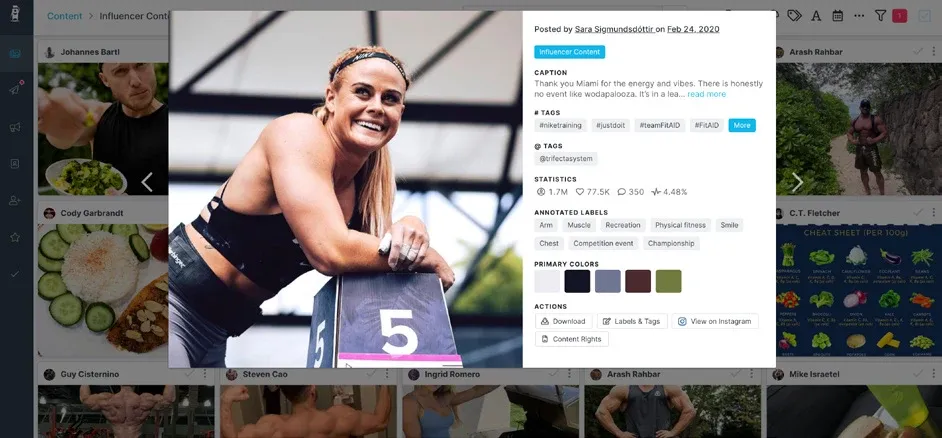
GRIN’s model is the nearest match to Aspire’s in this list: a creator marketplace, gifting, affiliate tools and creator payments in one account. Its homepage says creators can discover your programs in the GRIN Marketplace and apply, and Gia, which GRIN calls an AI teammate, recommends the best matches, drafts outreach and keeps creator threads in one inbox. Gifting, affiliate links, codes and commissions run from the same account, and creator fees sit in escrow until payout. Multiple brands are available from the Growth plan up, which matters to an agency running several clients.
What to test against Aspire
- Applicant volume and quality in your niche, against what Aspire’s marketplace produced.
- Monthly creator-search and gifting limits on the plan you would buy.
Buying consideration: GRIN adds a management fee when you fund the wallet, from 20% on Free down to 5% on Scale, and does not refund it if you withdraw unspent funds. Model a year of creator payments before comparing GRIN with a flat-fee tool.
Pricing and access: GRIN has a Free plan. Starter is $200/month with a 30-day trial, Growth $500/month and Scale $1,500/month, each plus the wallet fee; Enterprise is custom. GRIN pricing.
Read the full comparison: Streamforge vs GRIN.
4. Upfluence
Best for: commerce brands that recruit creators from their own customers and want marketplace applications and creator payouts on the higher plans.
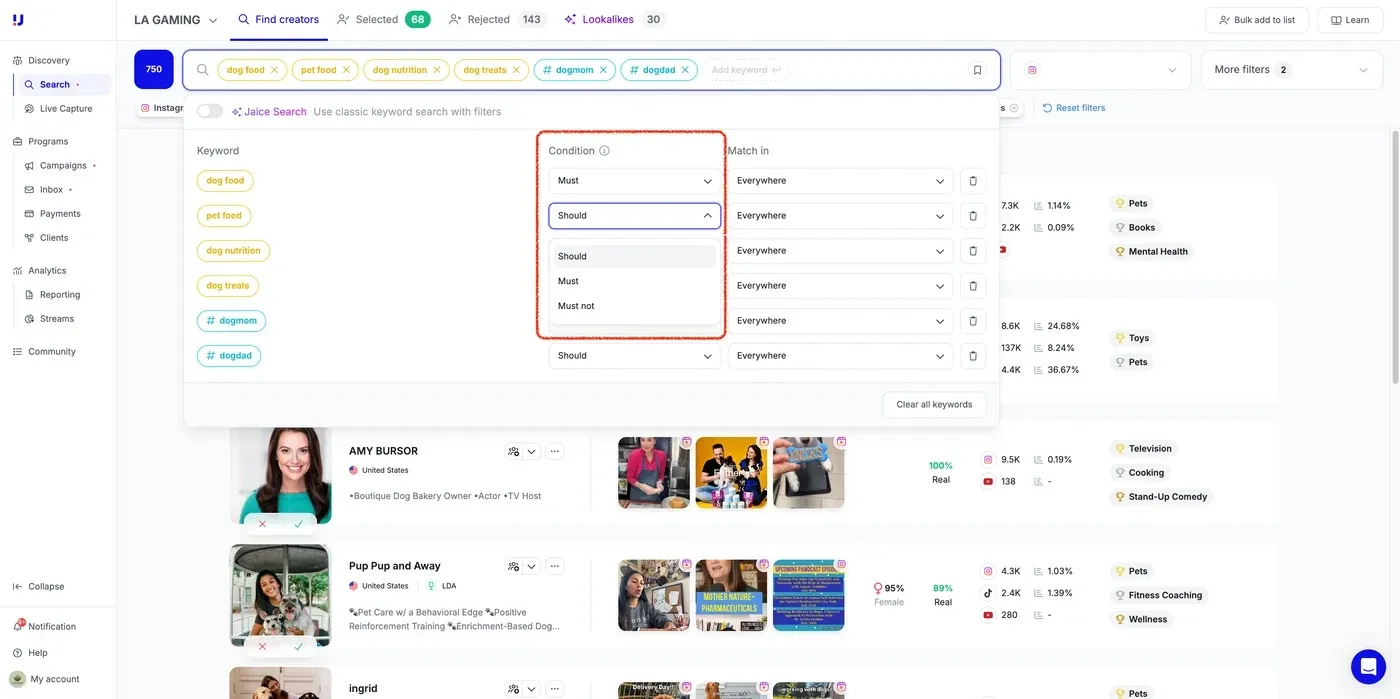
Every plan on Upfluence’s pricing page includes search, recruitment pages and CMS database matching, which finds creators among a brand’s existing customers. The Creator Marketplace, where creators apply directly and Upfluence’s AI scores each applicant on audience demographics, engagement quality and brand affinity, starts on the Scale Programs plan with integrations for Shopify, WooCommerce, Magento, BigCommerce and Amazon. Upfluence Pay, with automatic 1099 and W9 forms, is on the top plan.
What to test against Aspire
- Which plan covers the marketplace, commerce integrations and payments you use in Aspire today.
- How many creators worth working with are already in your customer list.
Buying consideration: Upfluence says every plan is a fixed platform fee with a 12-month minimum contract. Map the Aspire features you rely on to its three plans before asking for a quote, since the marketplace and payments are not on the entry plan.
Pricing and access: Request an Upfluence quote for the plan that matches your sourcing and payment needs.
Read the full comparison: Streamforge vs Upfluence.
5. Modash
Best for: Shopify brands that search Instagram, TikTok and YouTube outbound and want campaign content tracked without creator sign-up.

Modash has chosen outbound on purpose. The FAQ on its homepage says Modash is not a marketplace, because creators don’t browse and apply to work with you; instead it includes every public profile on Instagram, TikTok and YouTube with over 1K followers. Content tracking captures the posts, videos and Stories creators publish about your brand with no creator sign-up, and Modash adds an inbox, a CRM, payments, Shopify gifting and discount codes.
What to test against Aspire
- Whether outbound search alone fills your briefs, if Aspire’s applicants were covering gaps.
- How Twitch or X creators would be handled, if your brief includes them.
Buying consideration: Modash prices by allowance and seat. Essentials includes 300 opened profiles and 150 creator emails a month, 100 tracked creators and 2 team members, so an agency running several clients should price Performance or Enterprise.
Pricing and access: Essentials is $199/month billed yearly ($2,388/year), Performance $499/month billed yearly ($5,988/year), and Enterprise starts at $14,700 a year. Modash pricing.
Read the full comparison: Streamforge vs Modash.
6. Later Influence
Best for: brands that want a vendor team to plan and run creator campaigns alongside the software, much as Aspire’s agency services do.
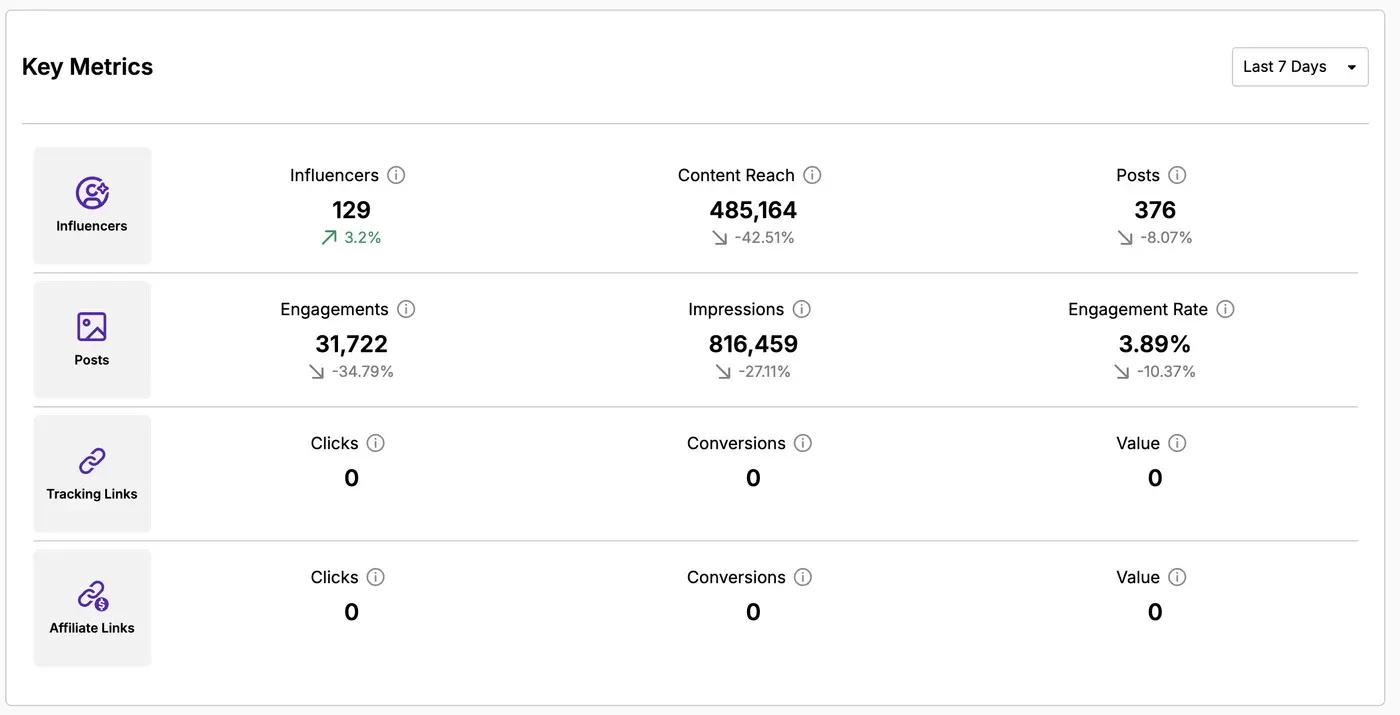
Later’s services team plans, produces and manages creator campaigns with creators it already partners with. Later says its platform uses a brand’s signals to surface best-fit creators and flag risks, and it reports paid, organic and sales performance in one place. Its creator network page describes more than 20 demographic filters and a similar-creators tool, and the help center documents paying creators through Stripe incentives.
What to test against Aspire
- Which tasks Later’s team performs and which your team performs in the software.
- Who keeps the creator relationships, contacts and content if the services engagement ends.
Buying consideration: with any managed service, confirm in writing who owns the creator relationships and which records you keep when the engagement ends. For an agency, Later’s services overlap with the work you sell; judge the software on its own.
Pricing and access: Request Later pricing for the software and any services; the platform page lists no prices.
Read the full comparison: Streamforge vs Later Influence.
How to choose an Aspire alternative
Start with a count. Take the creators you contracted through Aspire last quarter and mark where each came from: the marketplace, your own search, or a list you brought with you. If most came from applications, you are replacing a marketplace, and GRIN or Upfluence belong on the shortlist. If most came from search, the marketplace was a convenience, and the real test is how well each tool finds a specific audience and shows the evidence for it.
Then give each job Aspire did a named new home before any demo.
| Decision | Question to settle | What to test |
|---|---|---|
| Sourcing | Inbound applications, outbound search, or both? | One live brief through each tool’s search and, where offered, its marketplace |
| Audience evidence | How will you show a client that a creator’s audience fits? | Which fields are observed, estimated or supplied by connected accounts, and whether analysis needs creator opt-in |
| Relationship ownership | Who owns creator records, emails, rates and history: the brand, the agency or a vendor’s services team? | Exports, client access, and what happens to records when a retainer ends |
| Campaign operations | Who does outreach, tracks deliverables, approves content and pays creators? | One creator walked from shortlist to paid, noting every step that leaves the platform |
| Reporting | Does the client or manager need campaign results, attributed sales or competitor context? | Last quarter’s client report rebuilt in each tool |
Relationship ownership deserves more time than it usually gets. An agency has two sound options in a new tool: keep the working records in its own account and share outputs with each client, or work inside an account the client owns. Either works. The mistake is deciding after the migration, because whatever you export from Aspire becomes the starting roster, and moving it twice costs more than deciding once. The guide to long-term creator relationships covers what that record should hold, and the guide to choosing an influencer marketing platform has a longer evaluation checklist.
Aspire alternatives FAQs
What is the best Aspire alternative for agencies?
Streamforge is our recommendation for agencies that source creators outbound and have to defend each pick to a client. It combines discovery and audience analysis that needs no creator OAuth with competitive intelligence, email outreach, deliverables, reporting and sharing of selected campaign stages and fields with a client. Agencies that need view-only client databases and creator payments across many markets should also evaluate CreatorIQ.
Which Aspire alternatives have a creator marketplace?
GRIN lists its creator marketplace on every plan, including Free, and Upfluence includes its Creator Marketplace from the Scale Programs plan up. CreatorIQ collects applications through branded recruitment portals. Modash states that it is not a marketplace, and Streamforge is built for outbound discovery with audience analysis across YouTube, Twitch, TikTok, Instagram and X.
Is outbound discovery better than a creator marketplace?
They answer different questions. A marketplace shows you creators who want to work with you; outbound discovery starts from the audience you need and finds creators who have it. Ambassador and UGC programs that need volume often do well with applications. Narrow briefs, client pitches and competitive plans usually need outbound search with audience evidence, which is the work Streamforge is built for.
How do I move from Aspire without losing creator history?
Ask Aspire what you can export, decide who will own the records, and map your stages and custom fields before the move. If you move to Streamforge, our team moves your lists, custom fields, notes and campaigns at no cost to you, in under a week, and we don’t charge until your old contract ends. See how switching works.
Start your trial and bring a brief you recently ran through Aspire. We’ll run it through outbound discovery and audience analysis, and show how the campaign would be shared with your client.